Quiz · Hard
Applied questions on the Industrial Revolution, the New Imperialism in China, Japan and Africa, and the road to independence.
Which factor is most often cited for why the Industrial Revolution began in Britain?
A large standing army
Absolute control of industry by the monarch
A lack of overseas trade
Abundant coal and iron, capital, colonial markets and a growing urban labor force
Britain's mix of resources, finance and markets, plus enclosure that freed up labor, was key. The government was relatively stable and favored commerce.
What was the main significance of Watt's steam engine design?
It was the first machine to spin cotton
It replaced the need for coal
It made steam power efficient enough for factories, mines and later transport
It let ships cross the Atlantic in a week
Watt's separate condenser improved Newcomen's engine; steam freed industry from rivers and was later applied to rail and ships.
What event is associated with this building?
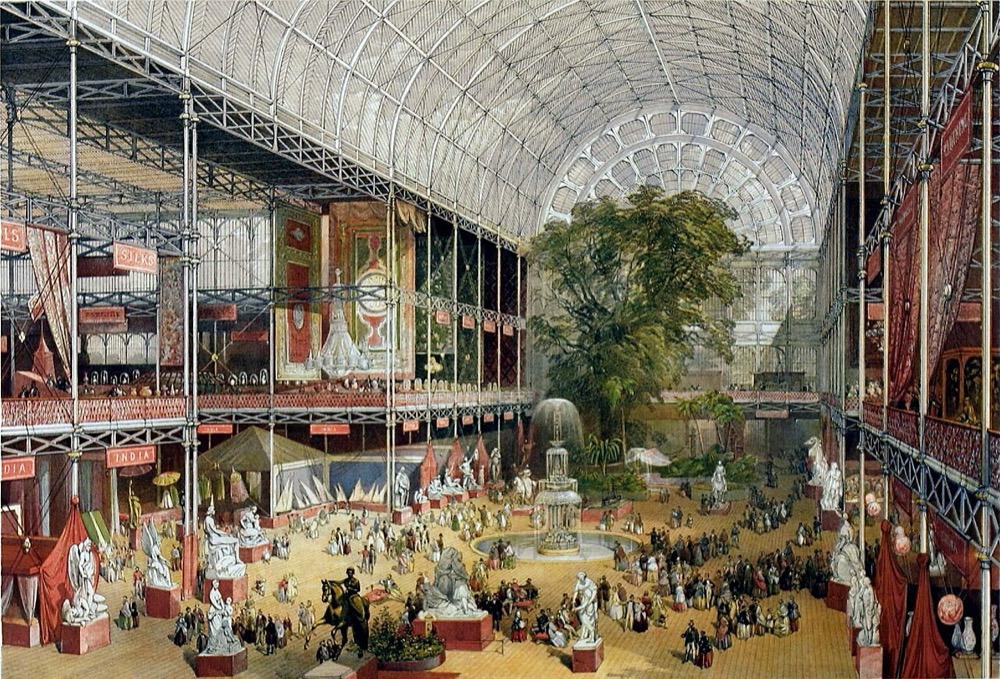
The Paris Commune of 1871
The Great Exhibition of 1851 in London
The Congress of Vienna
The opening of the Suez Canal
Joseph Paxton's Crystal Palace housed an exhibition that showed Britain's industrial leadership.
Marx and Engels' 'Communist Manifesto' (1848) argued that:
History is class struggle and the proletariat will overthrow the bourgeoisie
Free markets will create equality
Governments should never interfere in business
Nationalism is the key to peace
Free-market ideas are Adam Smith's laissez-faire. The Manifesto appeared in 1848, the year of European revolutions.
Which of these was NOT a motive for the 'New Imperialism' after 1870?
Securing raw materials and markets
National prestige and naval bases
The 'civilizing mission' and missionary zeal
Spreading democratic government to colonies
Colonial rule was typically autocratic and did not aim at democracy for the colonized.
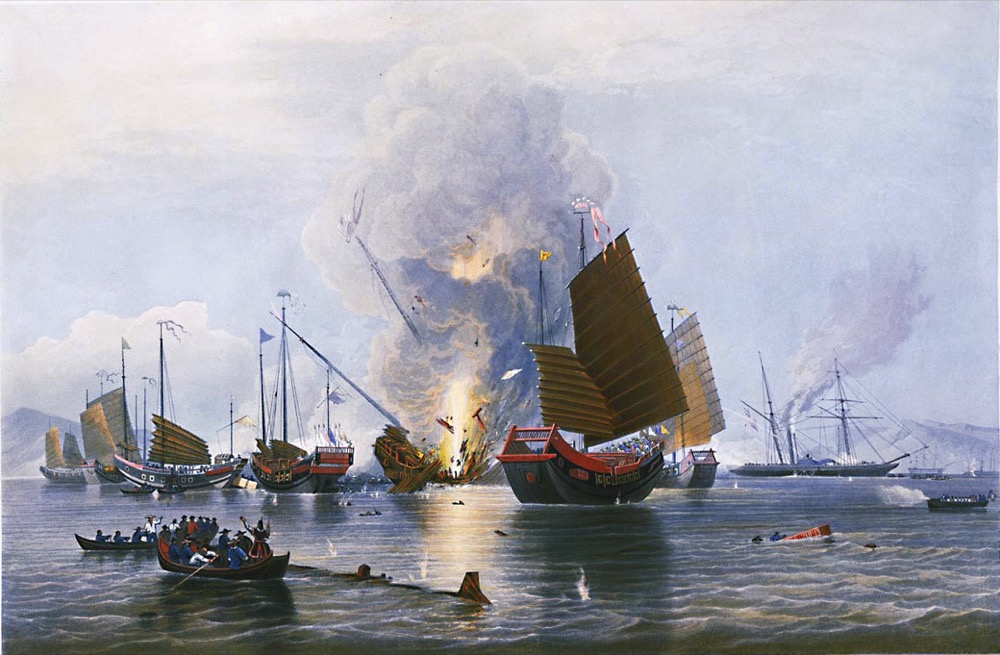
What was the main result of the First Opium War (1839-42)?
China annexed Burma
Britain was forced to abandon the opium trade
Britain gained Hong Kong and treaty ports in China
China's government was overthrown
The Treaty of Nanking (1842) was the first of the 'unequal treaties'. The opium trade continued and was effectively legalized after the Second Opium War.
Why did Japan avoid being colonized in the 19th century?
It had no valuable resources
It modernized rapidly after the Meiji Restoration, building industry and a modern army and navy
China protected it
It refused to trade with any country
Commodore Perry's arrival (1853-54) showed Japan its weakness, and reformers chose rapid westernization of institutions.
What was the main purpose of the Berlin Conference (1884-85)?
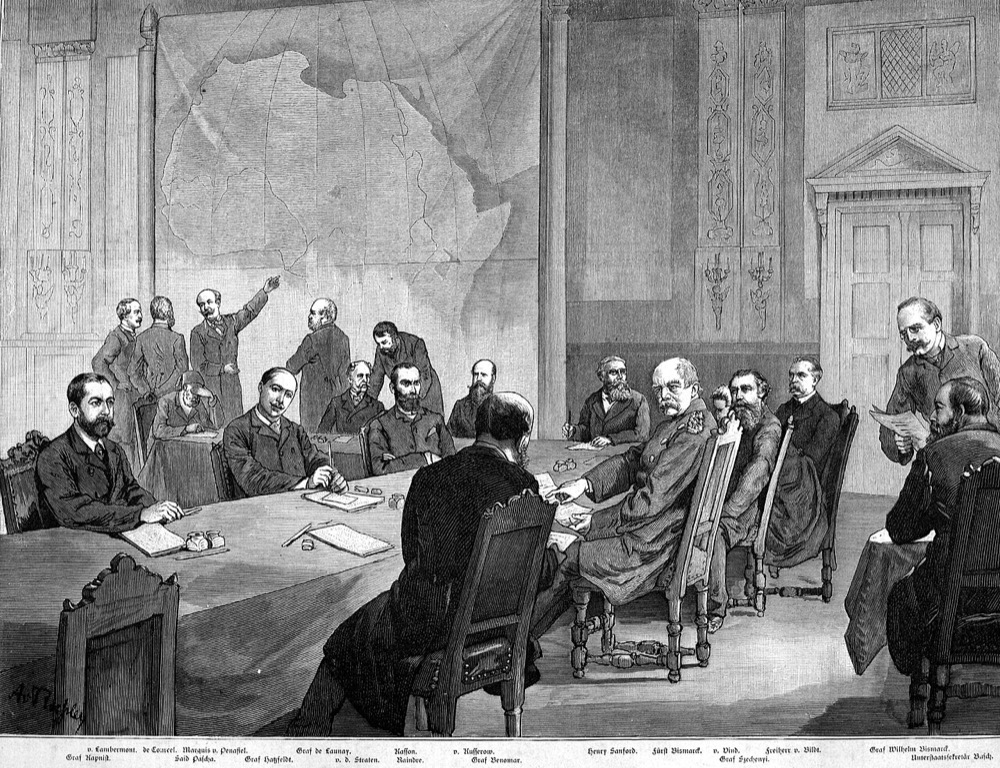
To set rules for European claims in Africa, including 'effective occupation'
To end the slave trade in Africa
To recognize African self-government
To plan the division of China
No African representatives attended. The conference sped up the scramble and recognized Leopold II's Congo Free State.
Which African country defeated a European army at Adwa in 1896, preserving its independence?
Liberia
Egypt
South Africa
Ethiopia
Emperor Menelik II's army defeated Italy. Liberia was also independent but not through a battle with a European power; Egypt was under British control.
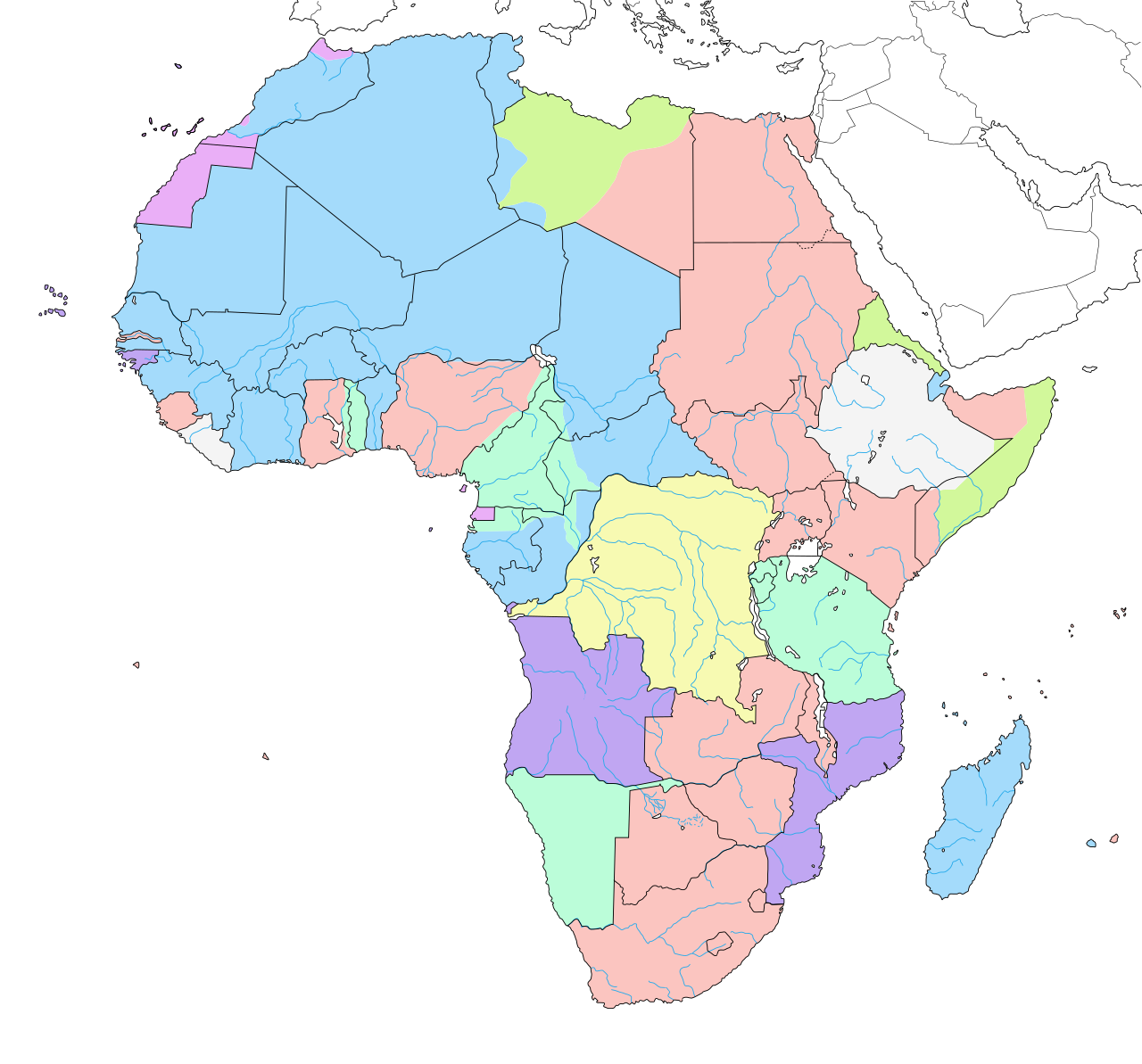
Which two countries were independent in Africa on this map?
Egypt and South Africa
Morocco and Libya
Ethiopia and Liberia
Sudan and Kenya
The rest of the continent was divided among European powers by 1914. Egypt was a British protectorate and South Africa was a self-governing British dominion. Image: Eric Gaba, CC BY-SA 3.0, via Wikimedia Commons.
What happened to the Congo Free State in 1908?
It became independent
Belgium took it over after international outrage at atrocities under Leopold II
France annexed it
It was divided between Britain and Germany
Leopold II's private rule (1885-1908) brought forced rubber collection and mass death. The Belgian Congo became independent in 1960.
The 1857 Indian Rebellion led directly to:
The end of East India Company rule and direct British rule through the Raj
Immediate Indian independence
The Partition of Bengal
The Salt March
The Government of India Act 1858 transferred power to the Crown. Partition of Bengal came in 1905; the Salt March in 1930.
The Salt March (1930) was a protest against:
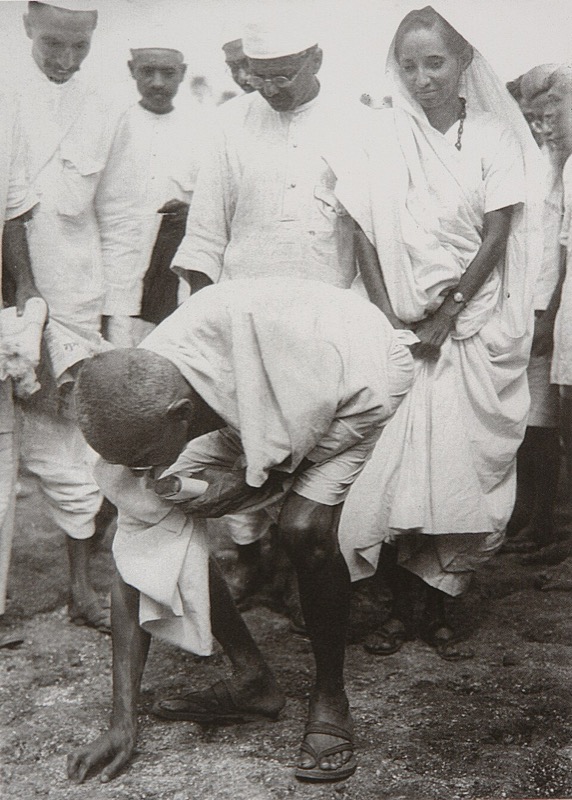
Japanese occupation
Partition
Hindu-Muslim violence
The British salt tax and monopoly
Gandhi's march to Dandi showed civil disobedience at scale. Partition was in 1947.
Ghana's independence in 1957 was significant because it was:
The first African country ever to be free
Won in a violent war against Britain
The first sub-Saharan African colony to gain independence
The end of French rule in North Africa
Kwame Nkrumah led Ghana; peaceful negotiation and mass protest, not war, produced independence.
What was the most important result of the Suez Crisis (1956)?
It won Egypt control of Israel
It showed that Britain and France could no longer act without US and Soviet approval
It led to Nasser's overthrow
It reunified Germany
Pressure from Washington (and Soviet threats) forced Britain, France and Israel to withdraw, while Nasser kept the canal.
Which pair of events is correctly linked?
Dien Bien Phu (1954) and the end of French rule in Indochina
Dien Bien Phu and the Algerian War
Evian Accords and the independence of Vietnam
Bandung Conference and the Suez Crisis
The Evian Accords (1962) ended the Algerian War; Bandung (1955) preceded Suez (1956) but was unrelated.
What was the Non-Aligned Movement?
A military alliance of newly independent states
A free-trade union of colonies
An alliance backed by China
A group of states refusing to join either the US or Soviet bloc
It formed in Belgrade in 1961 around Nehru, Nasser, Tito and others, building on the 1955 Bandung Conference.
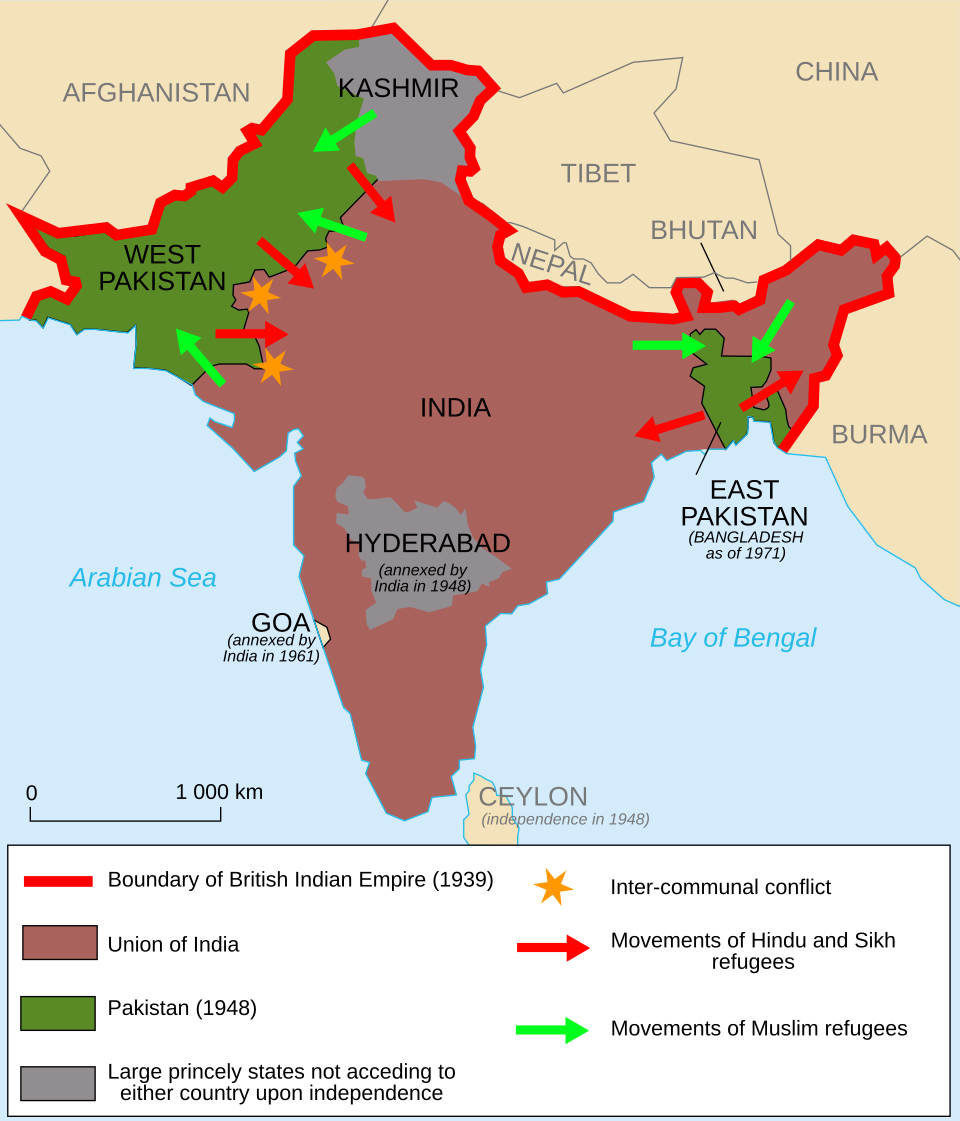
In 1947 the partition of British India:
Created one united dominion
Led to Indian membership in the League of Nations
Created India and Pakistan, with large-scale displacement and communal violence
Made Kashmir an independent kingdom
Millions crossed the new borders; Hyderabad and Kashmir were princely states that did not all accede peacefully. Image: historicair (French original), CC BY-SA 3.0, via Wikimedia Commons.
The Treaty of Nanking (1842) gave China control over British-held Hong Kong.
True
False
The reverse: China ceded Hong Kong to Britain after losing the First Opium War.
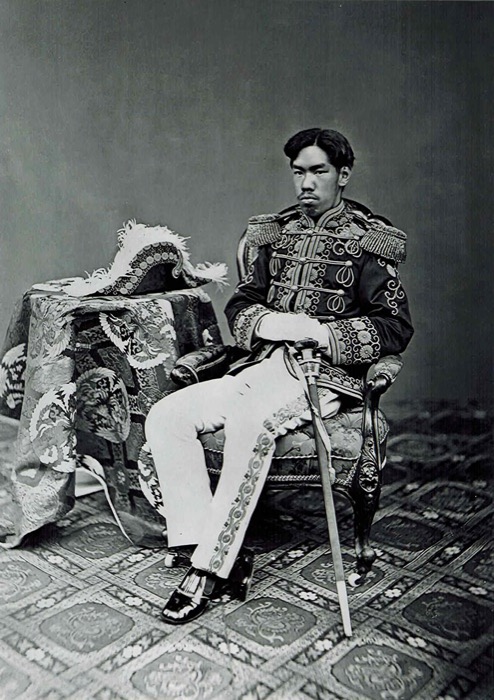
The Meiji Restoration is best described as:
A military coup by foreign powers
A shift of power from the Tokugawa shogunate to a modernizing imperial government
A return to isolation
A peasant revolt against the emperor
The emperor was restored as symbolic head of a state led by reformist samurai oligarchs.
