Quiz · Hard
Harder AP-style questions on why Reconstruction took the course it did, the Supreme Court, the 1876 election, and how historians interpret the era.
Which action by President Johnson most directly led Congress to take control of Reconstruction in 1866-1867?
Vetoing the Civil Rights Act and Freedmen's Bureau bills and urging Southern states to reject the 14th Amendment
Signing the 13th Amendment
Proposing the Ten Percent Plan
Appointing Radical Republicans to his cabinet
Johnson's vetoes and opposition to the 14th Amendment, together with Southern violence and Black Codes, helped Republicans win veto-proof majorities in 1866. The Ten Percent Plan was Lincoln's, not Johnson's.
A historian argues that the Republican Party's commitment to Reconstruction weakened in the 1870s largely because of which developments?
A Democratic president elected in 1872
The Supreme Court's decision in Brown v. Board
Northern economic distress after the Panic of 1873 and Republican scandals
The ratification of the 16th Amendment
The Panic of 1873, scandals in Grant's administration, and the Democratic gains in the 1874 midterms shifted attention away from the South. Brown (1954) and the 16th Amendment (1913) came much later; Grant (Republican) won in 1872.
The Supreme Court's decision in United States v. Cruikshank (1876) affected Reconstruction by
Extending the Freedmen's Bureau
Upholding the Civil Rights Act of 1875
Declaring the Reconstruction Acts unconstitutional
Ruling that the 14th Amendment limits states, not private individuals, weakening federal prosecution of racial violence
Cruikshank overturned convictions after the Colfax Massacre and said the amendment restrained only state action. The Civil Rights Act was struck down later (1883); the Reconstruction Acts were never invalidated.
Which pair correctly matches a policy with its main effect?
Wade-Davis Bill -- signed into law by Lincoln in 1864
Field Order No. 15 -- briefly gave freed families coastal land, later reversed by Johnson
Tenure of Office Act -- required the president to consult the Supreme Court
Amnesty Act of 1872 -- punished former Confederates
Field Order 15 gave land but Johnson returned it. Lincoln pocket-vetoed Wade-Davis. The Tenure of Office Act dealt with removing officials, and the Amnesty Act restored rights to most ex-Confederates.
Which statement about Reconstruction state governments is most accurate?
They all fell within one year of the 1867 Reconstruction Acts
They were controlled entirely by Black legislators
They permanently ended racial segregation
They created the South's first widespread public schools and wrote constitutions with male suffrage
Black men were a majority of legislators only in South Carolina's lower house (a short time), not entire governments. Segregation reappeared under Jim Crow, and Redemption took until 1877 in the last states.
Southern Democrats and white conservatives who regained control of state governments were known as
Radicals
Redeemers
Copperheads
Scalawags
Redeemers. Copperheads were Northern Democrats opposed to the war. Radicals and scalawags were Republicans.
Which of the following is the best example of how the 15th Amendment was undermined in practice?
Poll taxes, literacy tests, and grandfather clauses used from the 1890s
Its repeal by the Supreme Court in 1883
The Enforcement Acts of 1870-71
The 1875 Civil Rights Act
Southern states used race-neutral devices plus violence. The amendment was never repealed, and the Enforcement Acts were meant to support it.
Which election-related fact about 1876 is correct?
Grant ran for a third term and lost
Hayes won the popular vote by a wide margin
Tilden won the popular vote but a commission gave Hayes the disputed electoral votes
The House chose the president for the first time
Tilden won roughly 250,000 more popular votes. The 15-member Electoral Commission awarded all the disputed electoral votes (SC, LA, FL and one from Oregon) to Hayes 8-7, producing a 185-184 outcome.
This painting by William Aiken Walker is most closely connected with which economic arrangement after the war?
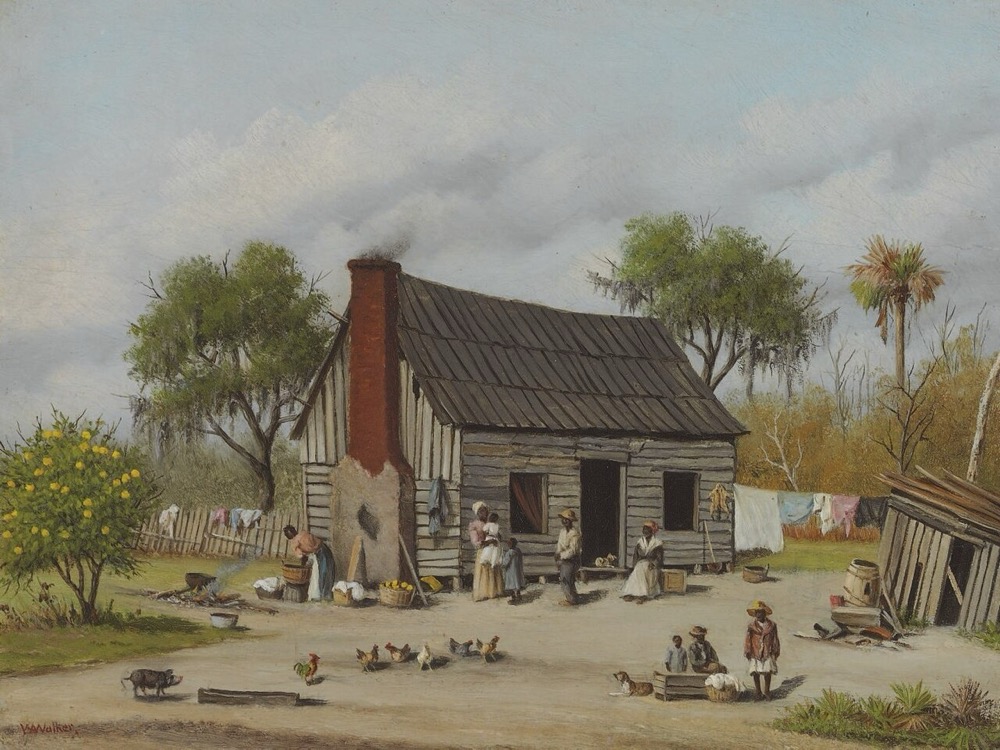
Sharecropping and tenant farming
Large-scale factory production
Homesteading in the Great Plains
Plantation slavery
Walker painted scenes of Black families on Southern farms, often seen as sharecropping. Slavery had ended in 1865. Image: William Aiken Walker, public domain, via Wikimedia Commons.
Which was a key difference between the 13th, 14th, and 15th Amendments?
All three dealt only with voting
The 13th gave voting rights, the 14th ended slavery, the 15th defined citizenship
The 13th ended slavery, the 14th defined citizenship and equal protection, the 15th protected male voting rights from race-based denial
Only the 14th was ratified before 1870
13th: freedom (1865). 14th: citizenship, due process, equal protection (1868). 15th: voting (1870). All three were ratified by 1870.
The Ku Klux Klan Act and Enforcement Acts (1870-1871) were most similar to which later development in goals?
Creating national banks
Expanding the right to vote to women
Regulating railroad rates
Using federal power to protect Black civil and voting rights
They used federal power to protect rights, as the Civil Rights Act of 1964 and the Voting Rights Act of 1965 did a century later.
The Freedmen's Bureau failed to give most freedpeople land mainly because
The Bureau refused to help Black families
President Johnson returned confiscated land to its former owners and Congress would not pass large-scale redistribution
The Supreme Court banned land grants
The Homestead Act had made land available everywhere
Johnson pardoned owners and restored property. Stevens's land redistribution plan never passed. The Bureau did try to help, but it lacked power and land.
Which person is correctly paired with their role?
Oliver O. Howard -- Confederate general
Horace Greeley -- Democratic president
Blanche K. Bruce -- author of the Reconstruction Acts
Thaddeus Stevens -- Radical Republican leader in the House
Stevens led House Radicals. Greeley was a newspaper editor and 1872 candidate who lost. Bruce was a senator, and Howard led the Freedmen's Bureau (Union general).
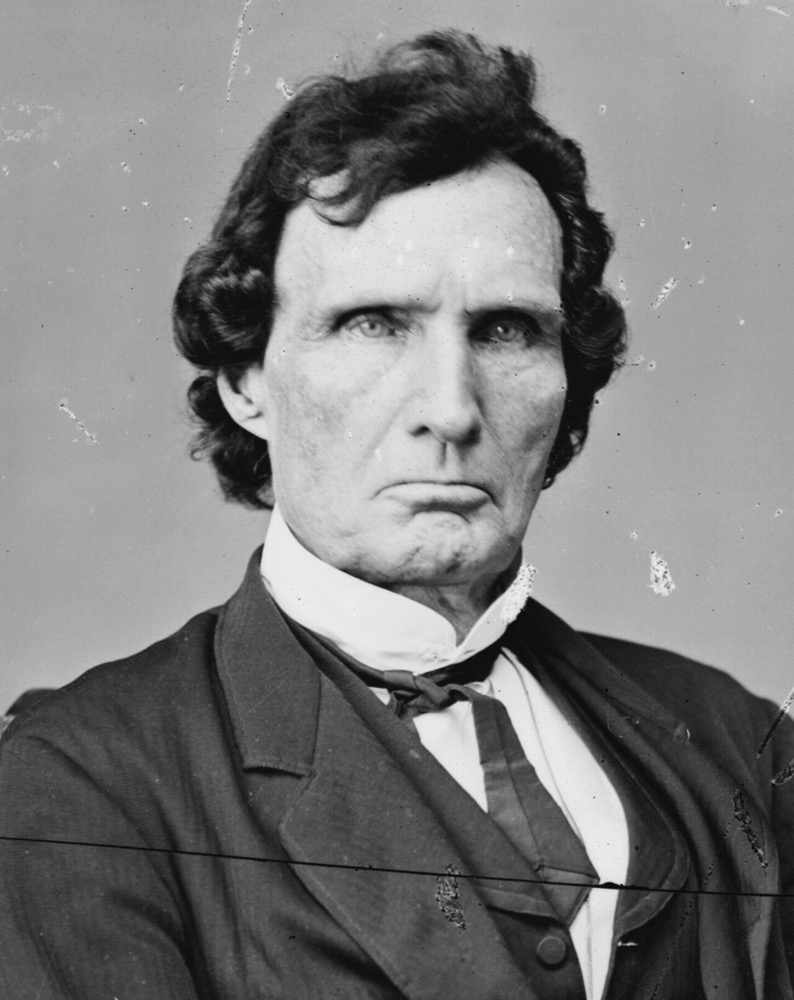
What is shown in this photograph?
Andrew Johnson
Thaddeus Stevens, who pressed for land redistribution and Black suffrage
Ulysses S. Grant
Frederick Douglass
Thaddeus Stevens, leader of the Radical Republicans in the House. Image: Mathew Brady / Levin Handy, public domain, via Wikimedia Commons.
Historians who call Reconstruction an "unfinished revolution" (Eric Foner) mean
It created major legal and political change in the 1860s-70s, but the promise of equality was not fully achieved
It was a complete success
It never changed anything
It was a military coup
Foner argues Reconstruction brought lasting changes (the amendments, Black political participation) but ended before racial equality was secured.
Which was NOT a result of the end of Reconstruction in 1877?
Federal troops withdrew from the last Southern states
Democrats controlled all Southern state governments
The 13th Amendment was repealed
Jim Crow laws and disfranchisement spread
The 13th Amendment was never repealed. The others followed from the end of federal support for Reconstruction governments.
