Quiz · Medium
Asch, Milgram, Zimbardo, compliance techniques, bystander effect and group processes.
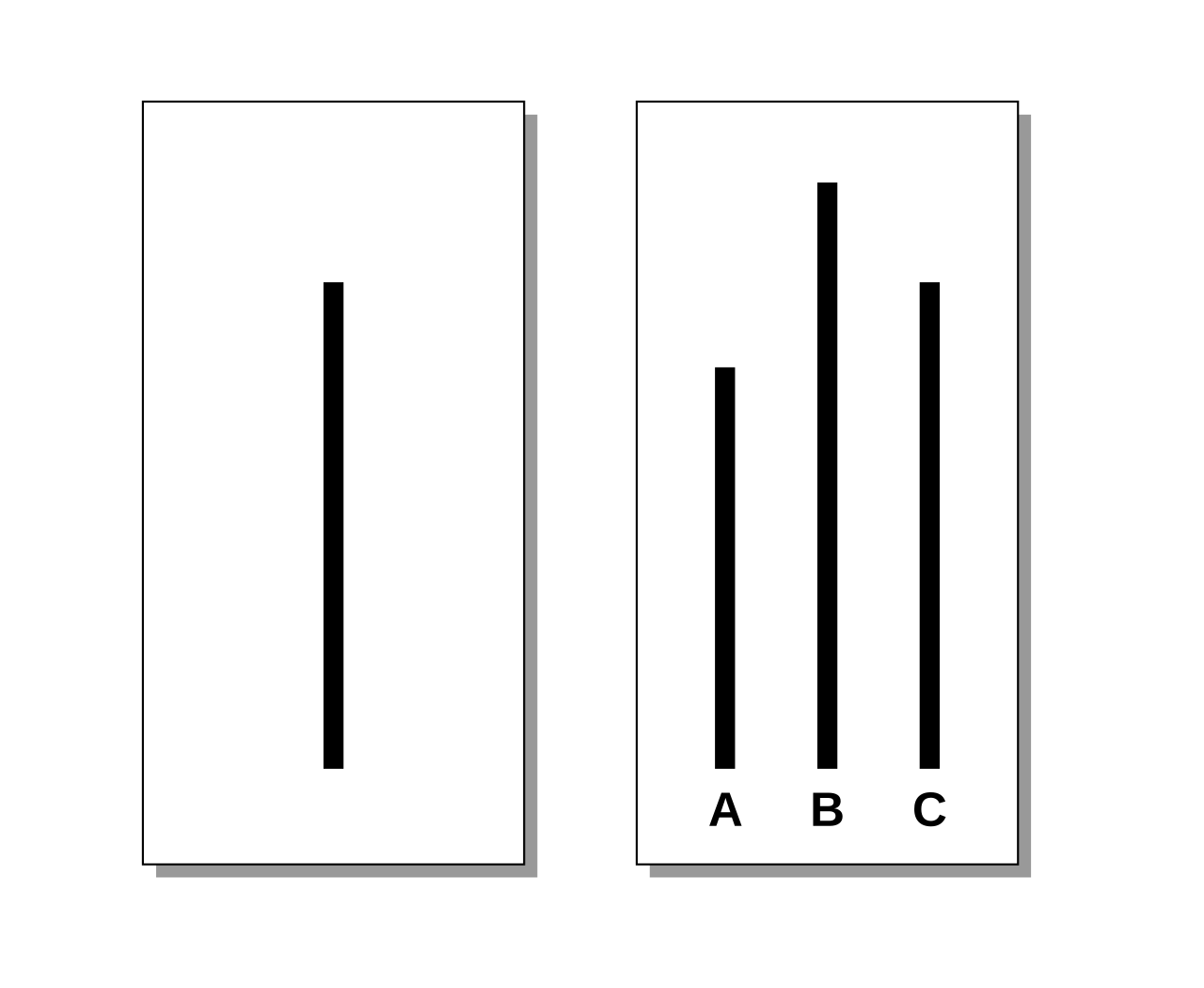
In Asch's line study, what happened when one confederate gave the correct answer?
Conformity increased
Conformity fell sharply
Conformity stayed unchanged
Participants refused to answer
A single dissenting ally greatly reduces conformity.
Sherif's autokinetic effect study primarily demonstrates:
Normative social influence
Informational social influence in an ambiguous situation
Obedience to authority
Social loafing
People relied on others' estimates because the task was ambiguous.
Which result is correct for Milgram's baseline study?
Most participants refused at 150 V
65 percent gave the maximum 450 V
Fewer than 1 percent continued
Everyone continued to 450 V
26 of 40 participants gave the full 450 V.
Obedience dropped most when:
The learner was in another room
The experimenter gave orders by phone
The setting was Yale University
The teacher wore a lab coat
Telephone orders reduced obedience to about 20 percent.
Which statement about the Stanford Prison Experiment is best supported by later evidence?
It proves people will act as their roles dictate
It was a rigorously controlled experiment
Guards were influenced by instructions and expectations
It was conducted with 100 participants
Later analyses suggest guards were coached and demand characteristics shaped behavior.
A manager asks you for a favor that is large, you refuse, then they ask for a smaller one and you agree. This is:
Foot-in-the-door
Door-in-the-face
Low-ball
Reactance
A large request followed by a smaller one is door-in-the-face.
The 'Drive Carefully' sign study (Freedman and Fraser) illustrates:
Foot-in-the-door technique
Social loafing
Groupthink
Deindividuation
Agreeing to a small request increased later compliance with a big one.
Group members in a rope-pulling task exert less effort per person as the group grows. This is:
Social facilitation
Social loafing
Polarization
Deindividuation
Individual effort drops when contributions are not identifiable.
Which condition makes groupthink more likely?
A leader who invites criticism
Outside experts consulted
A cohesive group with a directive leader
Anonymous voting
Cohesion plus directive leadership and insulation encourage groupthink.
After discussing a risky investment, a group becomes even more in favor of it than members were individually. This is:
Group polarization
Social loafing
Normative influence
Groupthink only
Discussion strengthens the initial leaning.
In Darley and Latané's seizure study, participants who thought four others were present:
Reported more often than lone participants
Reported less often than lone participants
Never helped
Always helped
31 percent reported compared with 85 percent of lone participants: diffusion of responsibility.
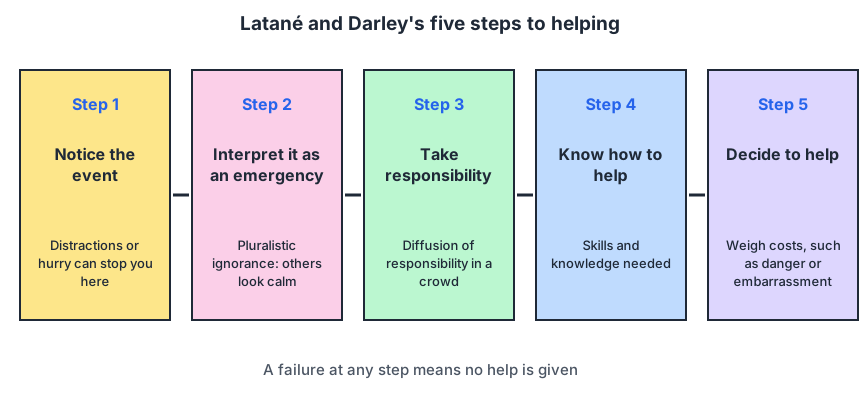
Which step of the bystander model is most affected by pluralistic ignorance?
Noticing the event
Interpreting it as an emergency
Knowing how to help
Deciding to help
If nobody reacts, everyone may conclude it is not an emergency.
According to Zajonc, the presence of others usually improves performance on:
Complex new tasks
Simple or well-learned tasks
All tasks
Only creative tasks
Others increase arousal, which enhances the dominant response.
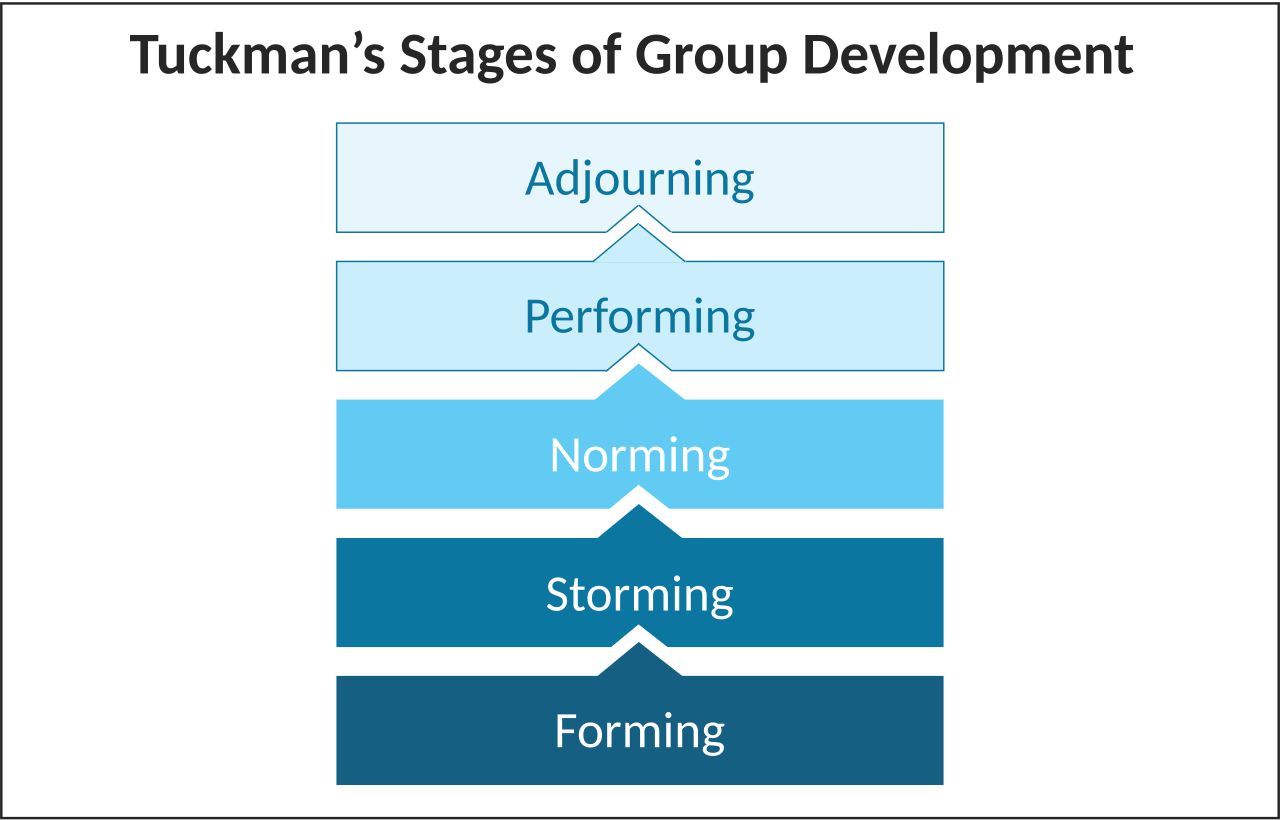
In Tuckman's model, which stage comes right after 'storming'?
Forming
Norming
Performing
Adjourning
The sequence is forming, storming, norming, performing, adjourning.
Which research finding best supports the importance of a minority being consistent?
Moscovici's blue-green study
Asch's line study
Milgram's baseline study
Hofling's nurse study
A consistent minority changed some majority judgments.
Which is a valid criticism of Milgram's findings?
No participants were distressed
Participants were fully informed in advance
Some participants may have doubted the shocks were real
The sample was too large
Doubts about the cover story have been raised, though many participants appeared to believe it.
