Quiz · Medium
SDLC models, Scrum, Kanban, requirements, estimation and project management.
Which model runs phases strictly one after another without feedback loops?
Spiral
Waterfall
Scrum
Kanban
Waterfall completes each phase before the next begins.
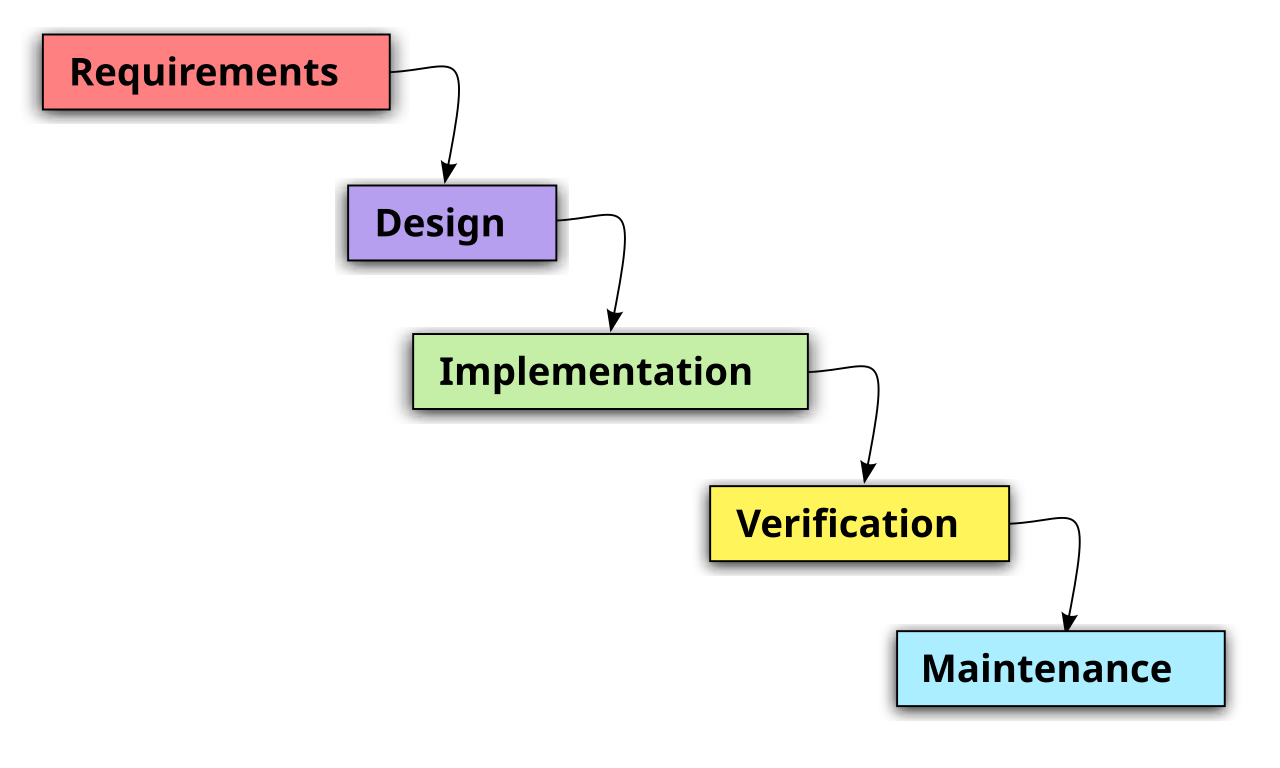
In the diagram, which phase comes immediately after Design?
Verification
Implementation
Maintenance
Requirements
Waterfall order: Requirements, Design, Implementation, Verification, Maintenance.
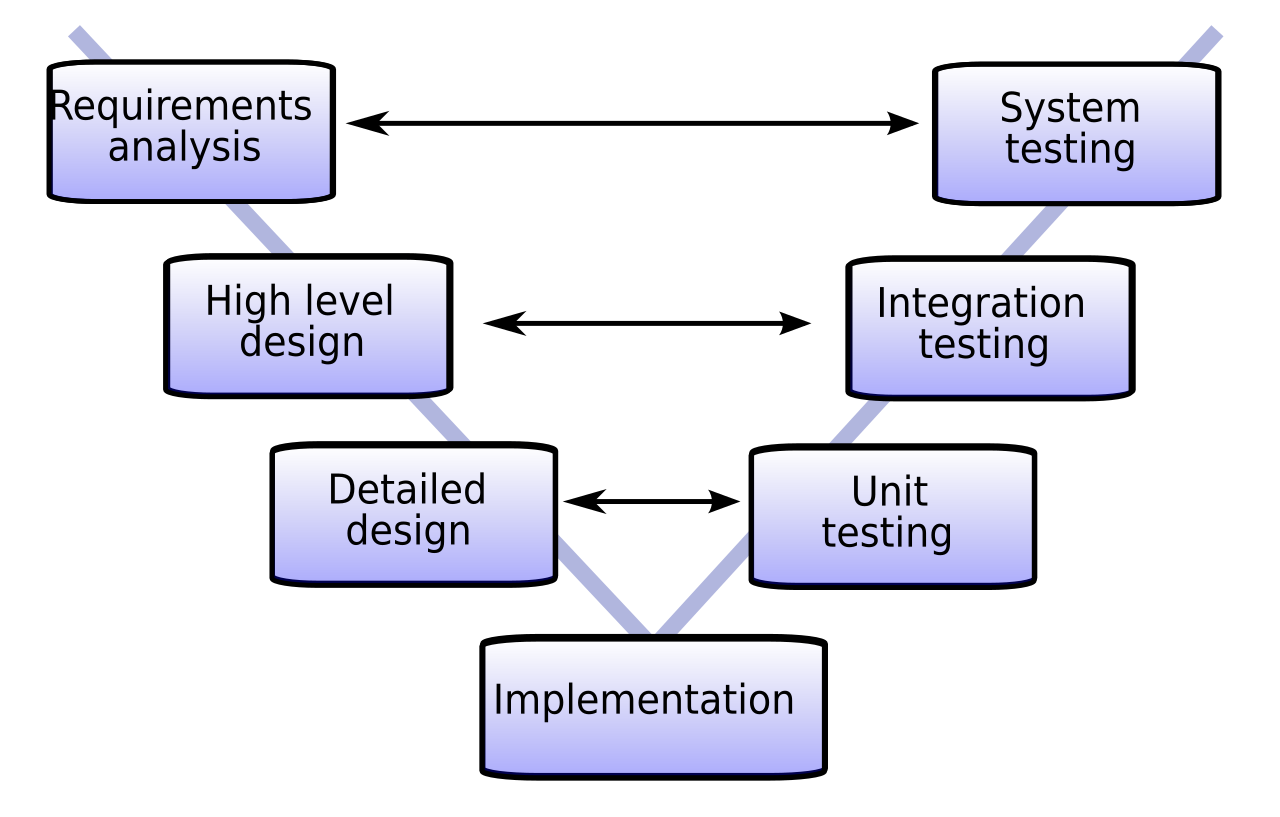
In the V-model figure, which phase is verified by unit testing?
Requirements analysis
High level design
Detailed design
Implementation
Unit tests correspond to detailed design; integration tests to high-level design; system tests to requirements.
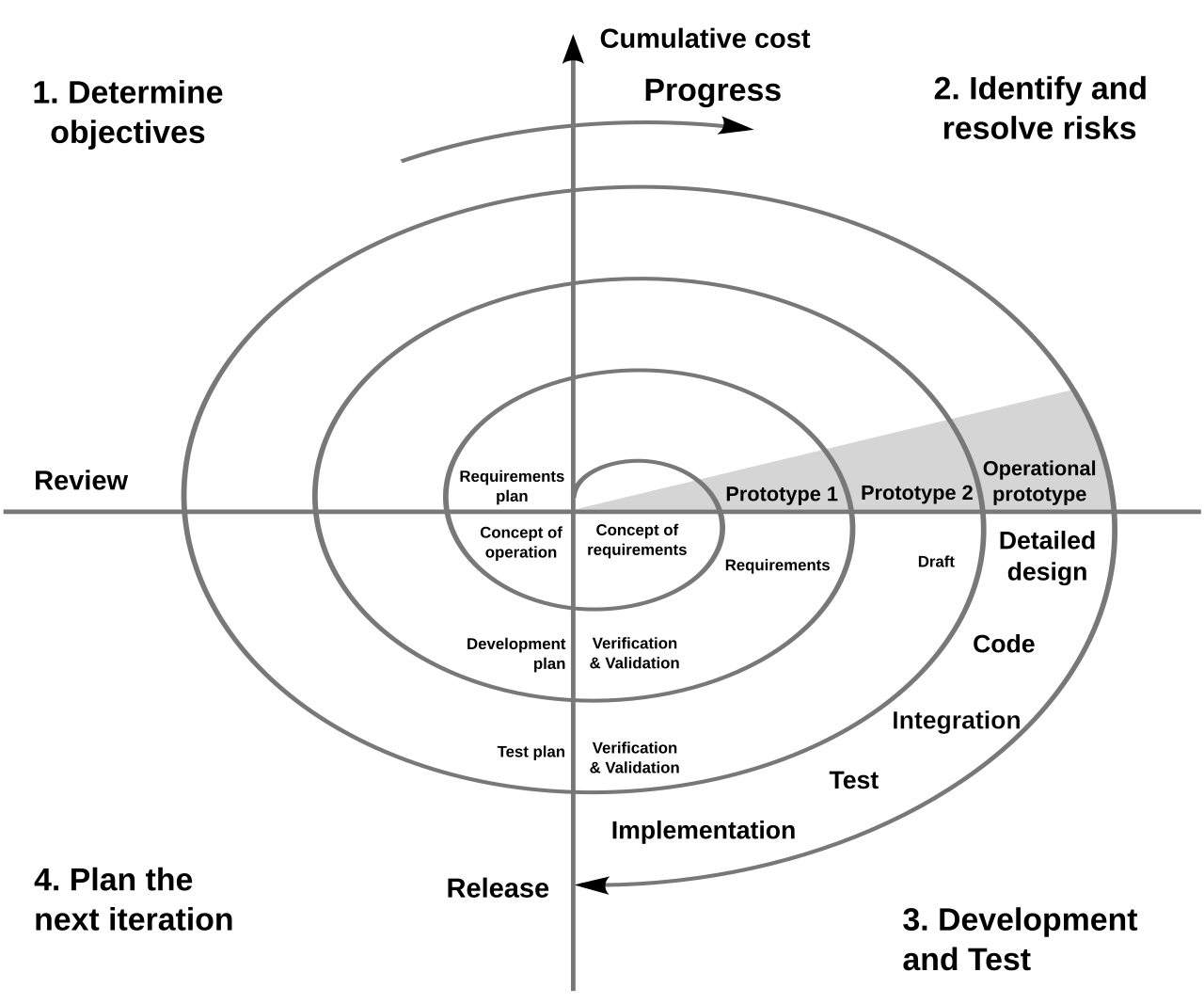
What is the distinguishing feature of the spiral model?
Fixed sprints
Risk analysis in every iteration
No documentation
Single phase
Each loop includes identifying and resolving risks, often with prototypes.
Who owns and prioritizes the product backlog in Scrum?
Scrum Master
Product Owner
Developers
Stakeholders
The Product Owner is accountable for the backlog and the value of the product.
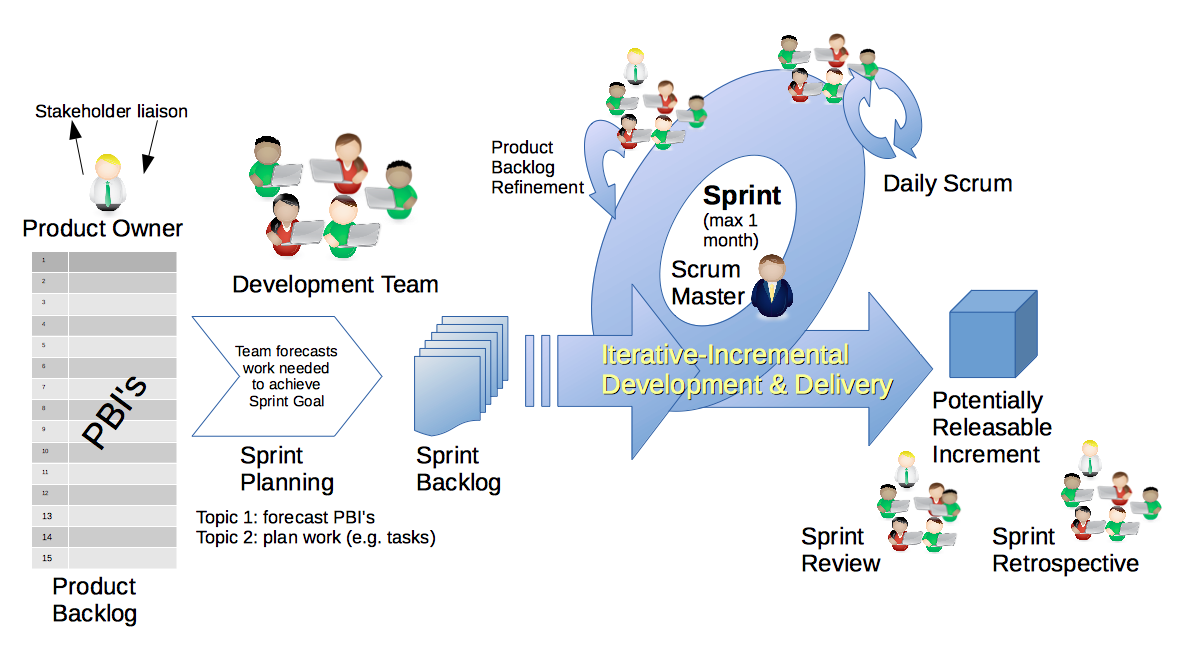
What is the maximum length of a Scrum sprint?
One week
Two weeks
One month
Three months
Sprints are one month or less; the diagram labels it 'max 1 month'.
Which Scrum event is used to inspect and improve the team's own process?
Sprint Planning
Daily Scrum
Sprint Review
Sprint Retrospective
The review looks at the product; the retrospective looks at the way of working.
Which statement about Kanban is correct?
It requires fixed two-week sprints
It limits work in progress on a visual board
It has a mandatory Product Owner role
It forbids changing priorities
WIP limits expose bottlenecks and promote flow.
Which is an example of a non-functional requirement?
Users can reset their password
The system supports CSV export
Pages load in under 2 seconds for 95% of requests
Admins can delete accounts
Performance, security and usability are quality attributes rather than features.
What does validation ask?
Are we building the product right?
Are we building the right product?
Is the code formatted?
Are all tests green?
Verification checks against the specification; validation checks against real needs.
According to Brooks's law, what happens when people are added to a late project?
It gets faster
It gets later
Nothing changes
Quality improves automatically
Onboarding and communication overhead outweigh the extra capacity in the short term.
How many communication paths exist in a team of 8?
8
16
28
56
8 x 7 / 2 = 28.
A PERT estimate has optimistic 3 days, most likely 6, pessimistic 15. What is the expected duration?
6 days
7 days
8 days
9 days
(3 + 4 x 6 + 15) / 6 = 42 / 6 = 7.
In the use case diagram, what does the stick figure represent?
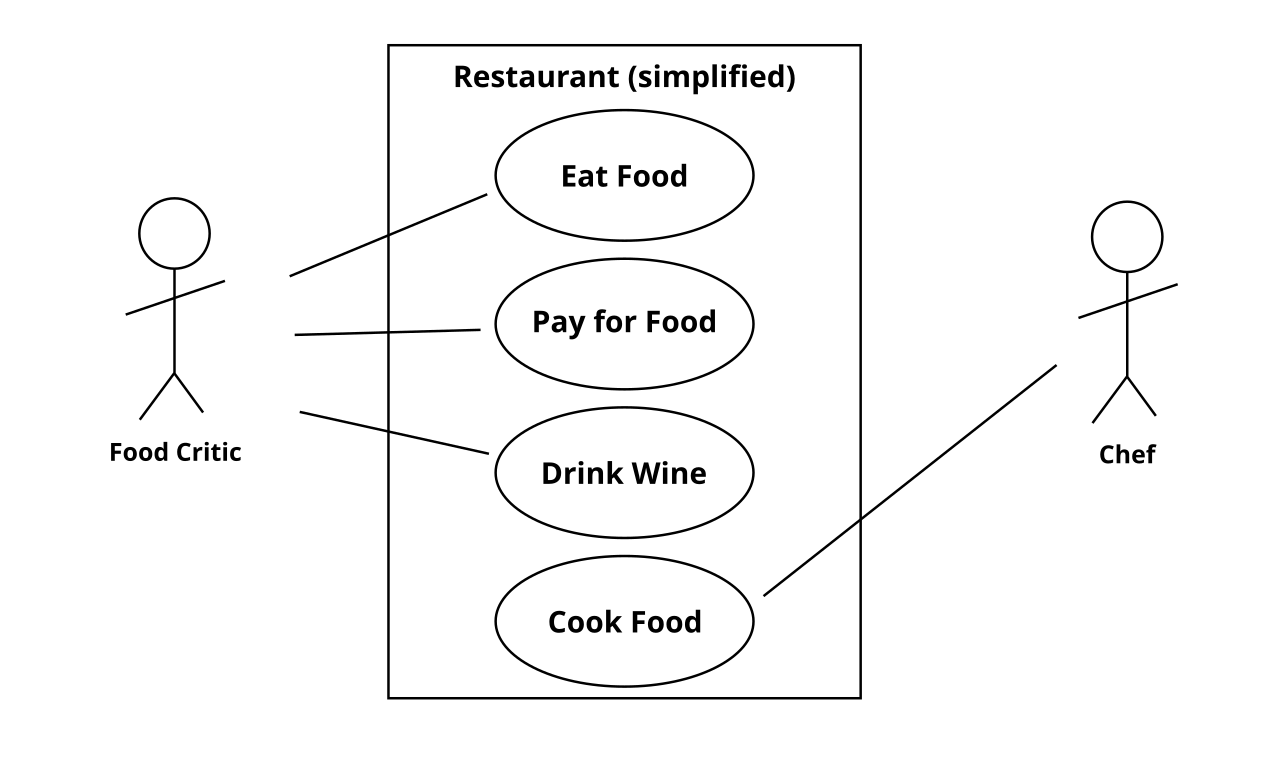
A class
A use case
An actor
A database
Actors are people or external systems that interact with the system.
What does the filled diamond in a UML class diagram mean?
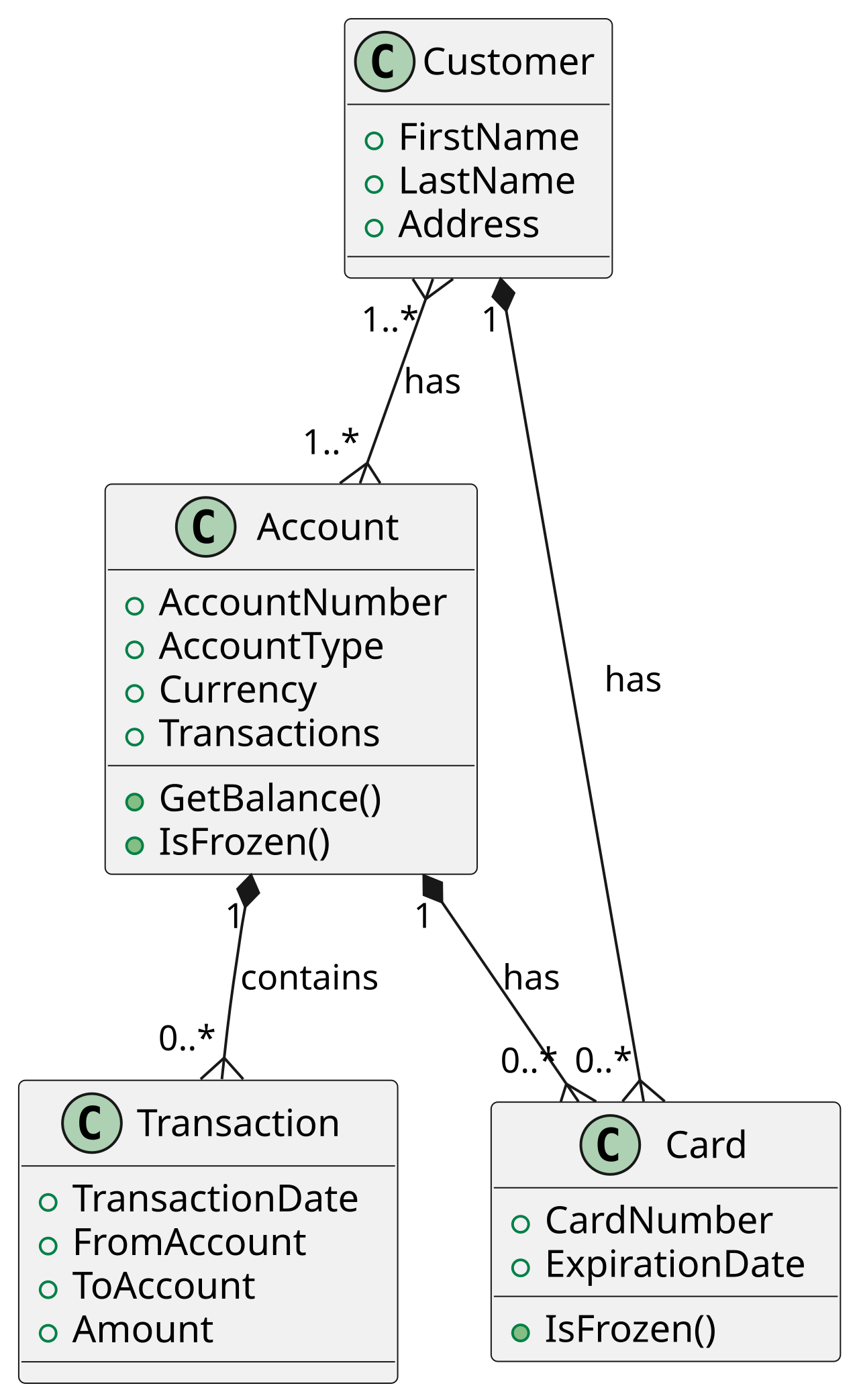
Inheritance
Composition
Dependency
Interface realization
Composition: the parts cannot exist without the whole.
Which type of maintenance changes software to work in a new operating system?
Corrective
Adaptive
Perfective
Preventive
Adaptive maintenance adjusts the software to environment changes.
What is technical debt?
Money owed to vendors
Future cost of shortcuts taken in design or code
A legal obligation
Unused server capacity
Shortcuts speed delivery now but make later changes harder.
MoSCoW prioritization: what does the 'W' stand for?
Wanted
Would like
Won't have this time
Work in progress
Must, Should, Could, Won't (this time).
Which Agile Manifesto statement is correct?
Processes and tools over individuals
Comprehensive documentation over working software
Responding to change over following a plan
Contract negotiation over customer collaboration
The manifesto values the left-hand items less than the right-hand ones: it favours responding to change.
Which statement best describes an MVP?
A full-featured finished product
The simplest product that lets you learn from real users
A prototype that is always thrown away
A marketing plan
MVPs maximize learning per unit of effort.
