Quiz · Easy
Twenty-two questions on beginner vocabulary: photos, readings, family terms, weather and time words. Suits JLPT N5 and A1-A2 learners.
Which word means "sleepy"?
忙しい
怖い
眠い
寂しい
眠い (ねむい) is sleepy. 忙しい is busy, 怖い is scary or afraid and 寂しい is lonely.
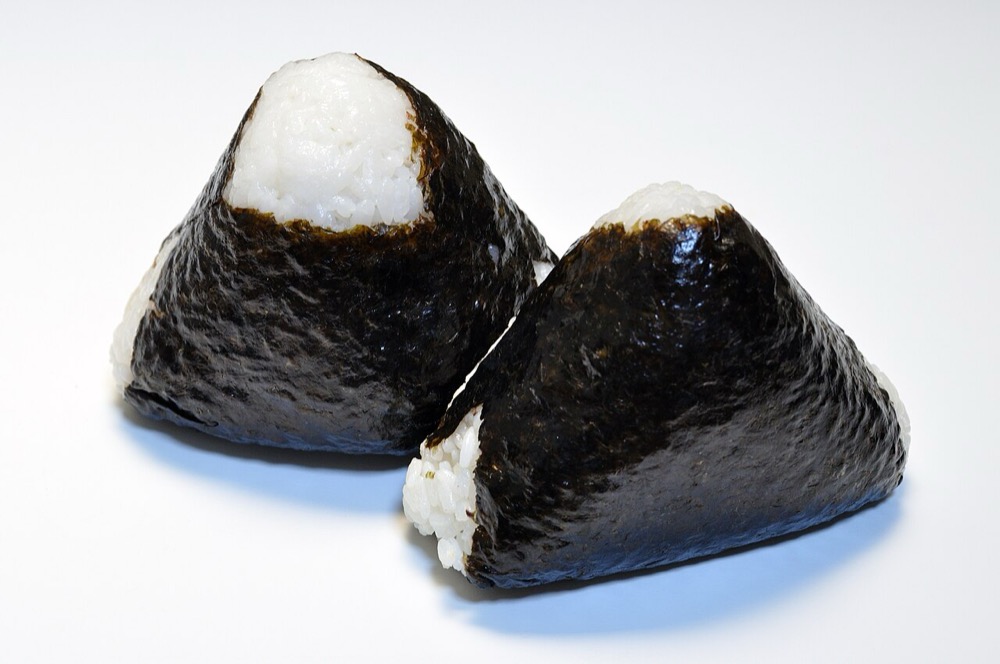
What is this food called?
おかゆ
おもち
おにぎり
おすし
おにぎり is a rice ball, usually wrapped in nori seaweed. おかゆ is rice porridge, おもち is pounded rice cake and おすし is sushi.
Which photo shows 天ぷら (tempura)?
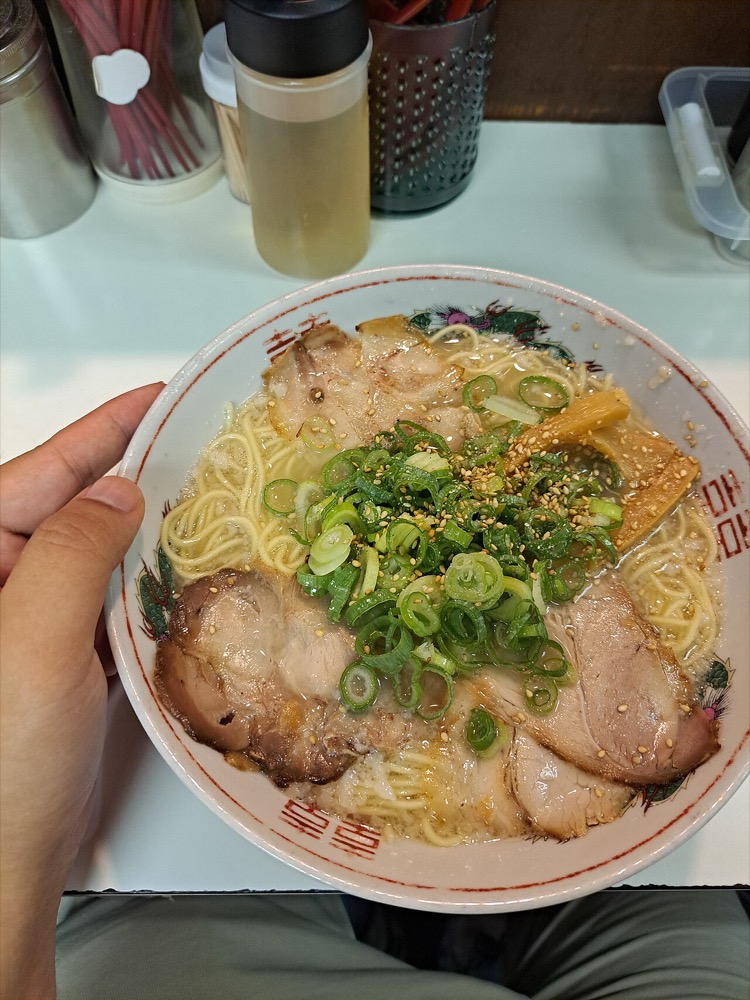
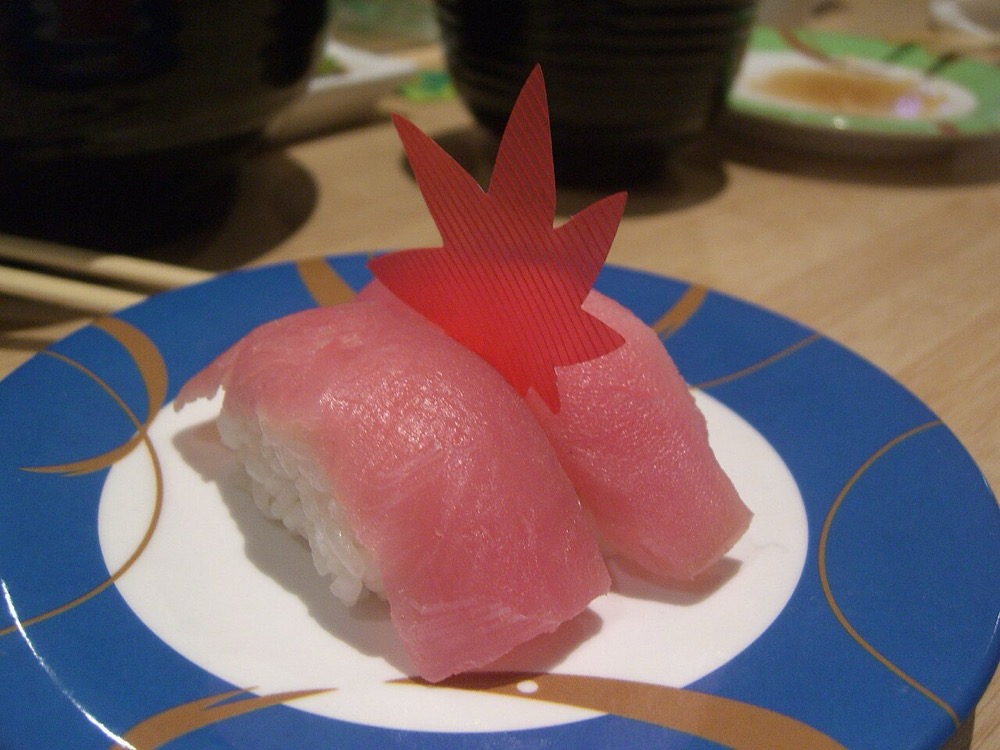
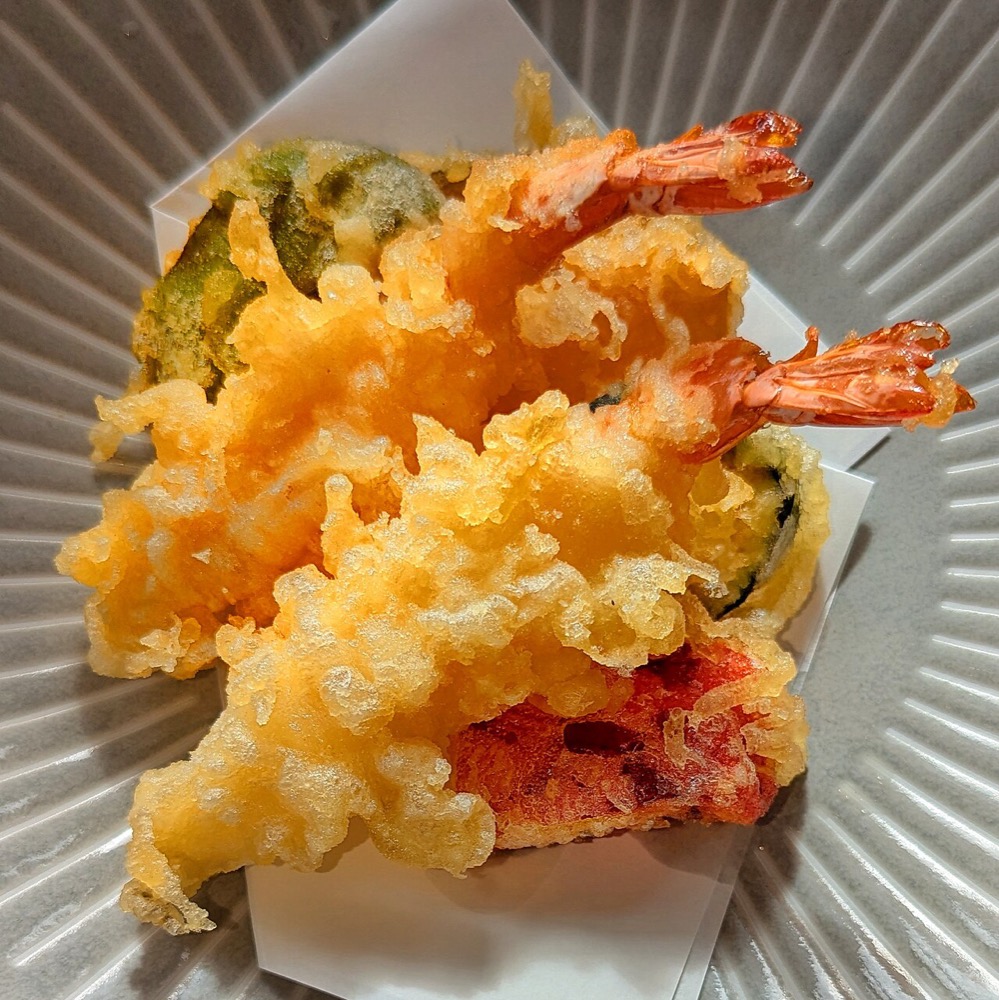
天ぷら is battered and deep-fried seafood and vegetables, as in the third photo. The others are ramen, sushi and onigiri. Images: Daderot (CC0), GiveMeMollusks (CC0), Ocdp (CC0), and Alpha (CC BY-SA 2.0), via Wikimedia Commons.
What is the large gate at the entrance of a Shinto shrine called?
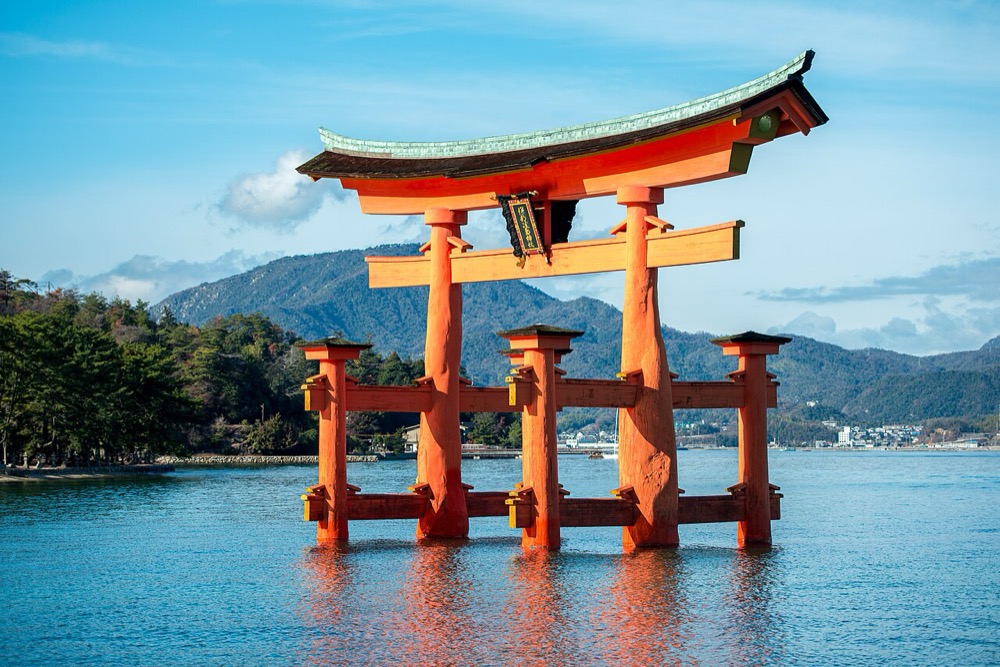
神社
鳥居
お寺
橋
鳥居 (とりい) is the torii gate. 神社 is the shrine itself, お寺 is a Buddhist temple and 橋 is a bridge. Image: JordyMeow, CC BY-SA 3.0, via Wikimedia Commons.
What does 橋 (はし) mean?
bridge
chopsticks
station
road
橋 (はし) is a bridge. The chopsticks are 箸 (はし): same sound, different kanji and a different pitch accent.
You are talking about your own mother to a coworker. Which word fits best?
お母さん
母
姉
祖母
Use the humble 母 for your own family when speaking to outsiders. お母さん is for someone else's mother (or for addressing your own). 祖母 is a grandmother.
Which word means "someone else's older sister"?
姉
妹
お姉さん
お姉
お姉さん is the respectful word for another person's older sister. 姉 is used for your own, and 妹 is a younger sister. お姉 alone is not the standard form.
Which word means "pleasantly cool" (weather)?
寒い
暖かい
暑い
涼しい
涼しい is pleasantly cool, typical of early autumn evenings. 寒い is cold, 暖かい is warm and 暑い is hot.
Which word means "tomorrow"?
きのう
あした
けさ
きょう
あした (明日) is tomorrow. きのう is yesterday, けさ is this morning and きょう is today.
What is the name of this mountain?
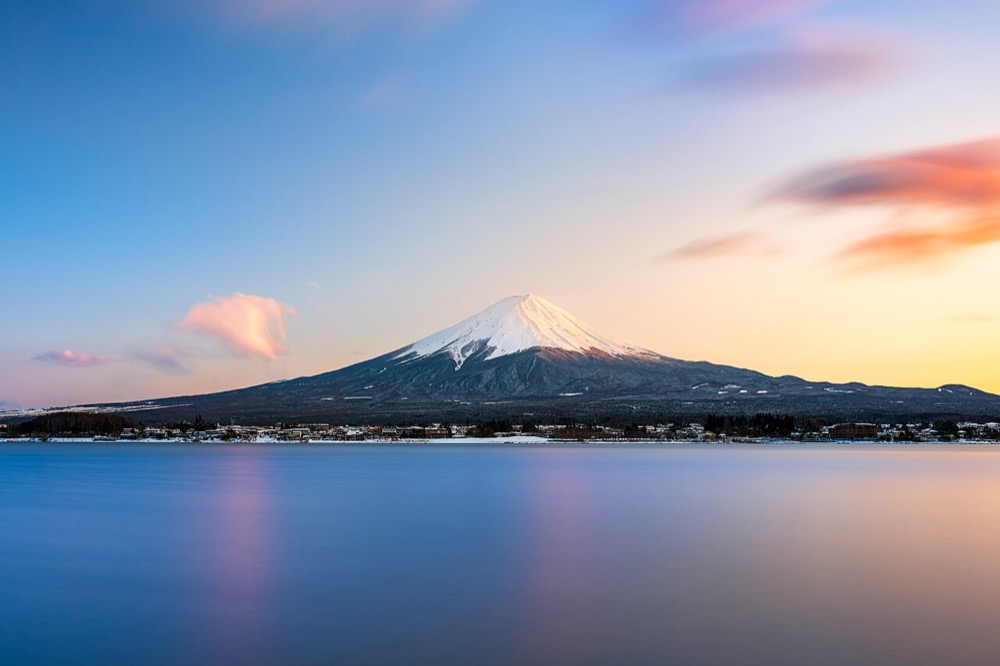
阿蘇山
御嶽山
富士山
立山
富士山 (ふじさん) is Mount Fuji, Japan's tallest mountain at 3,776 m. 阿蘇山, 御嶽山 and 立山 are other mountains.
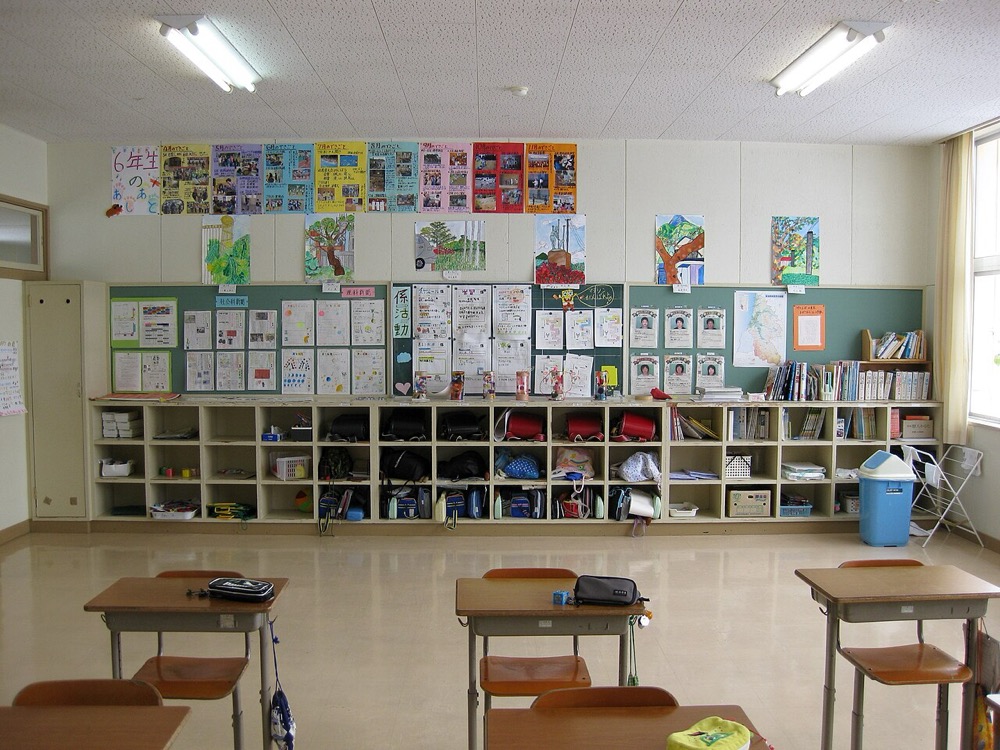
What room is shown in this photo?
図書館
会議室
体育館
教室
教室 (きょうしつ) is a classroom. 図書館 is a library, 会議室 is a meeting room and 体育館 is a gymnasium. Image: Douglas P Perkins, CC BY 3.0, via Wikimedia Commons.
Which word means "exit"?
入口
出口
交差点
信号
出口 (でぐち) is an exit. The pair is 入口 (いりぐち, entrance) and 出口. 交差点 is an intersection and 信号 is a traffic light.
What does お腹がすきました mean?
I have a stomachache.
I'm full.
I'm thirsty.
I'm hungry.
お腹がすきました literally means that your stomach has emptied. A stomachache is お腹が痛い, and thirsty is のどがかわきました.
Which word means "bookstore"?
図書館
本屋
薬局
郵便局
本屋 (ほんや) is a shop that sells books. 図書館 is where you borrow them, 薬局 is a pharmacy and 郵便局 is a post office.
How do you read 切符 (ticket)?
きって
きふ
せっぷ
きっぷ
切符 is きっぷ with a small っ. 切手 (きって) is a postage stamp, which is the tempting wrong answer.
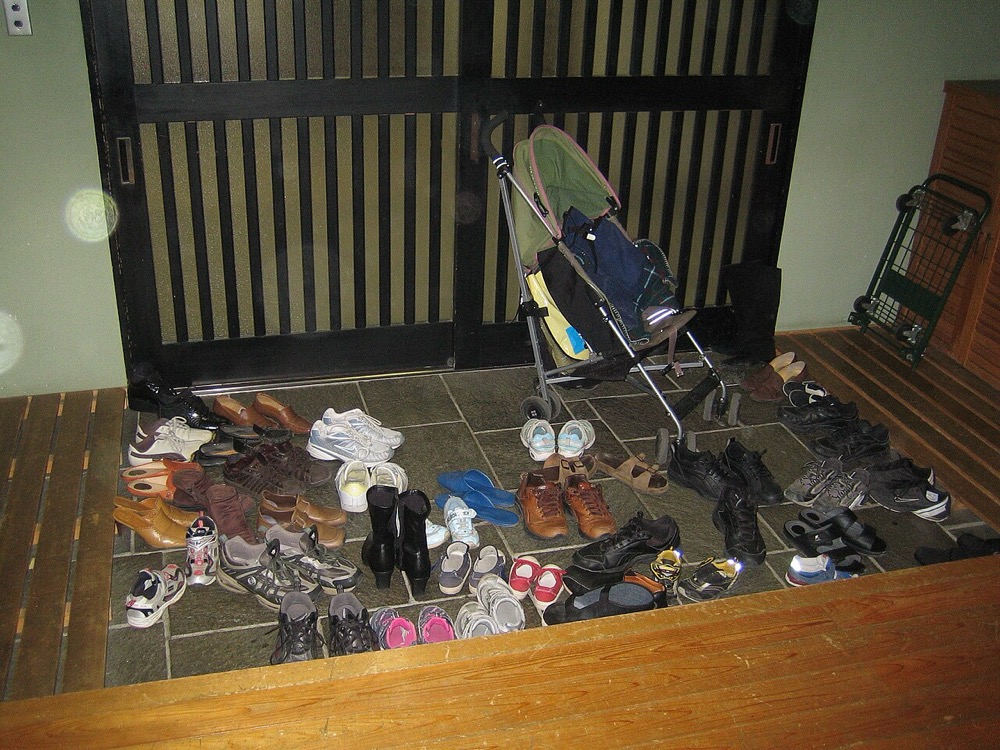
True or False: 玄関 (げんかん) is the entrance area of a Japanese home where you take off your shoes.
True
False
True. You step out of your shoes in the 玄関 and step up into the house in slippers or socks. Image: Bernat Agullo, CC BY-SA 2.0, via Wikimedia Commons.
Which word means "last week"?
来週
今週
先週
毎週
先週 (せんしゅう) is last week. 来週 is next week, 今週 is this week and 毎週 is every week.
If someone says このカレーは辛いです, how does the curry taste?
Sweet
Spicy
Delicious
Bad
辛い (からい) means spicy or hot. Sweet is 甘い, delicious is おいしい and bad-tasting is まずい.
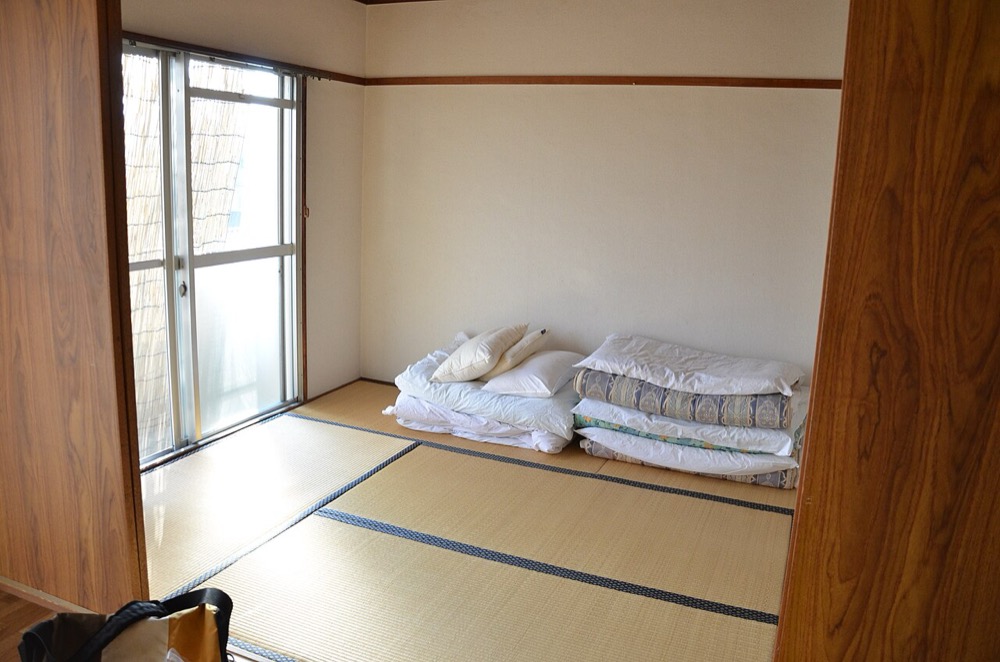
What bedding is stacked on the tatami in this photo?
ベッド
こたつ
畳
布団
布団 (ふとん) is futon bedding. ベッド is a bed frame, こたつ is a heated table and 畳 is the floor mat it lies on. Image: Atsushi Tadokoro, CC BY 2.0, via Wikimedia Commons.
Which is the polite way to refer to someone else's father?
父
お父さん
お父
父さん
お父さん is used for another person's father. 父 is for your own father when talking to others. Plain お父 is not used, and 父さん is a casual way to address your own father.
True or False: 朝ご飯 (あさごはん) means breakfast.
True
False
True. 朝 is morning and ご飯 is rice or a meal, so 朝ご飯 is breakfast. Lunch is 昼ご飯 and dinner is 晩ご飯.
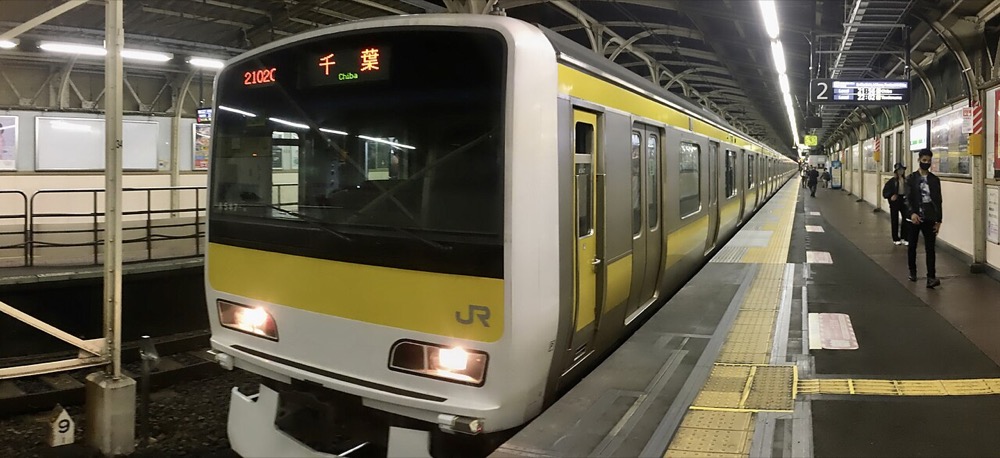
What is the vehicle pulling into the station platform?
新幹線
タクシー
電車
飛行機
電車 (でんしゃ) is an electric train. This is a JR commuter train, not a 新幹線 (bullet train). Image: Nesnad, CC BY 4.0, via Wikimedia Commons.
