Quiz · Medium
Questions on the adoption curve, hype cycle, disruption, design thinking, IP and case studies, with diagram and photo questions.
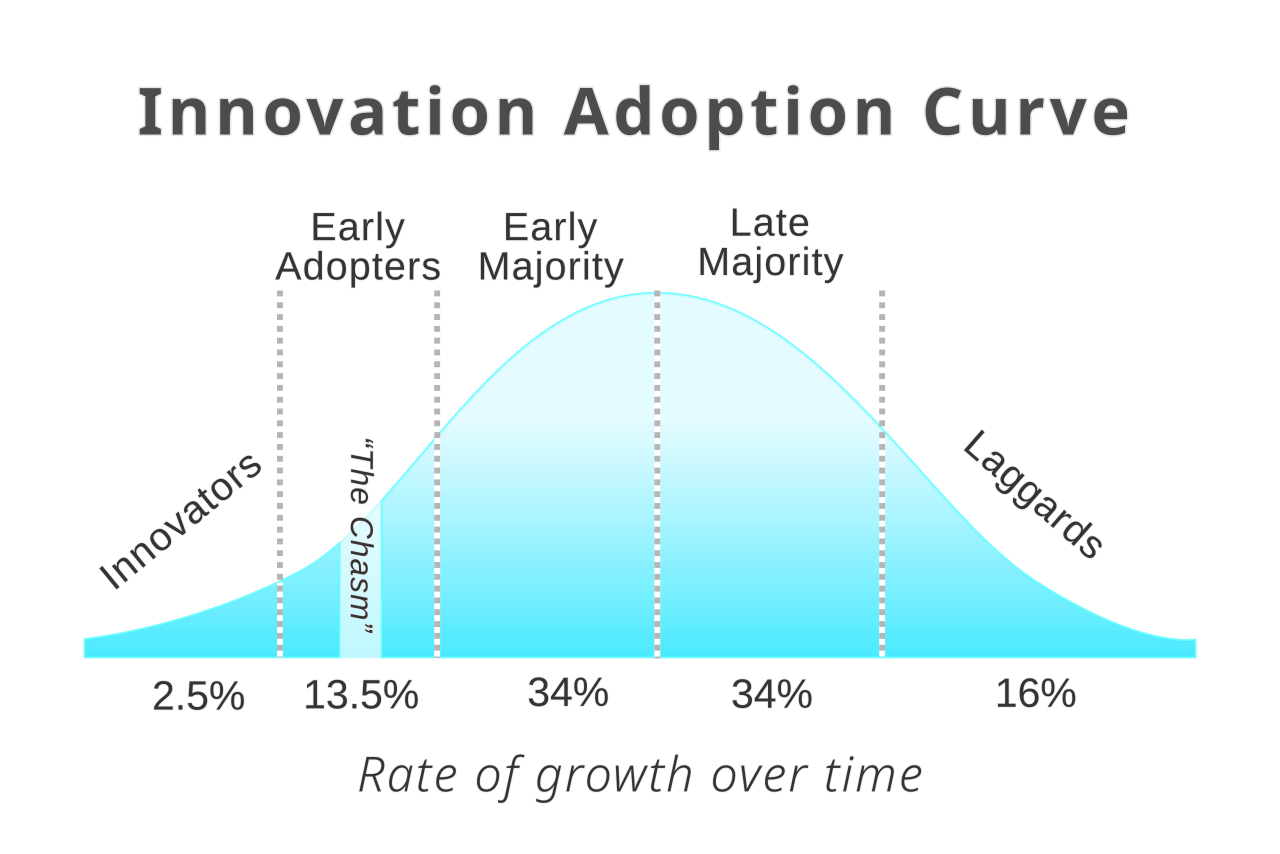
In the adoption curve, the largest groups are the early majority and the late majority. What share of adopters is each?
13.5%
16%
34%
50%
Each majority group is 34%, together 68% of all adopters. 13.5% is early adopters, 16% is laggards. Image: Jim McKeeth, CC BY-SA 4.0, via Wikimedia Commons.
Moore's chasm, shown as a narrow gap on the adoption curve, lies between which two groups?
Early adopters and early majority
Innovators and early adopters
Early majority and late majority
Late majority and laggards
Visionary early adopters accept unfinished products, while the pragmatic early majority want proven, complete ones; many products stall there. Image: Jim McKeeth, CC BY-SA 4.0, via Wikimedia Commons.
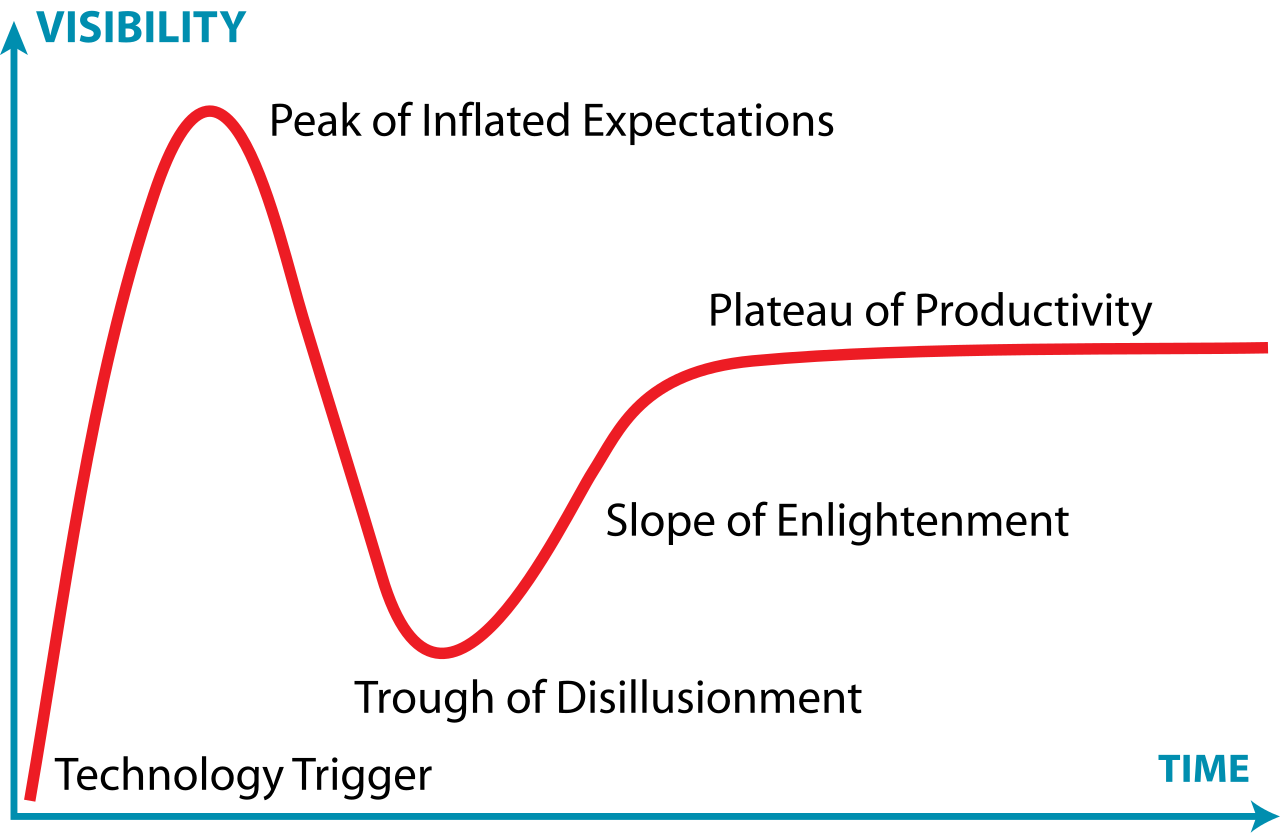
A new technology gets lots of press, early experiments disappoint and interest falls sharply, then slowly recovers. On the Gartner Hype Cycle, where is it right after the press excitement ends?
On the slope of enlightenment
On the plateau of productivity
At the technology trigger
In the trough of disillusionment
After the peak of inflated expectations comes the trough of disillusionment. The slope and the plateau come later. Image: Jeremy Kemp, CC BY-SA 3.0, via Wikimedia Commons.
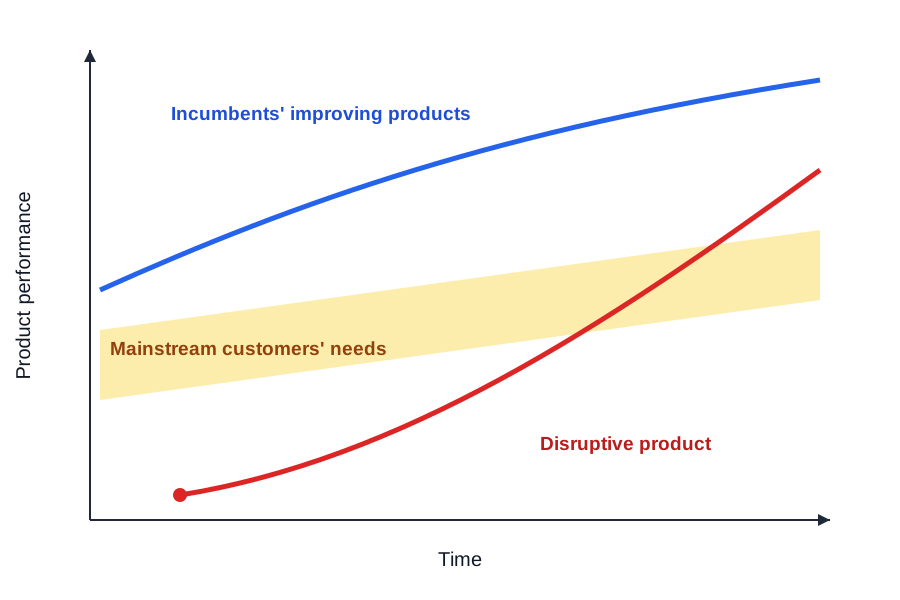
In the disruption diagram, why does the red curve eventually win even though it starts below the yellow band?
Customers do not care about performance
It improves faster than mainstream needs rise, so it becomes good enough and cheaper
The incumbent stops improving
Disruptive products are always better from the start
The disruptive product starts too weak for mainstream customers but improves quickly, and it is cheaper or simpler. The incumbent keeps improving but overshoots what customers need.
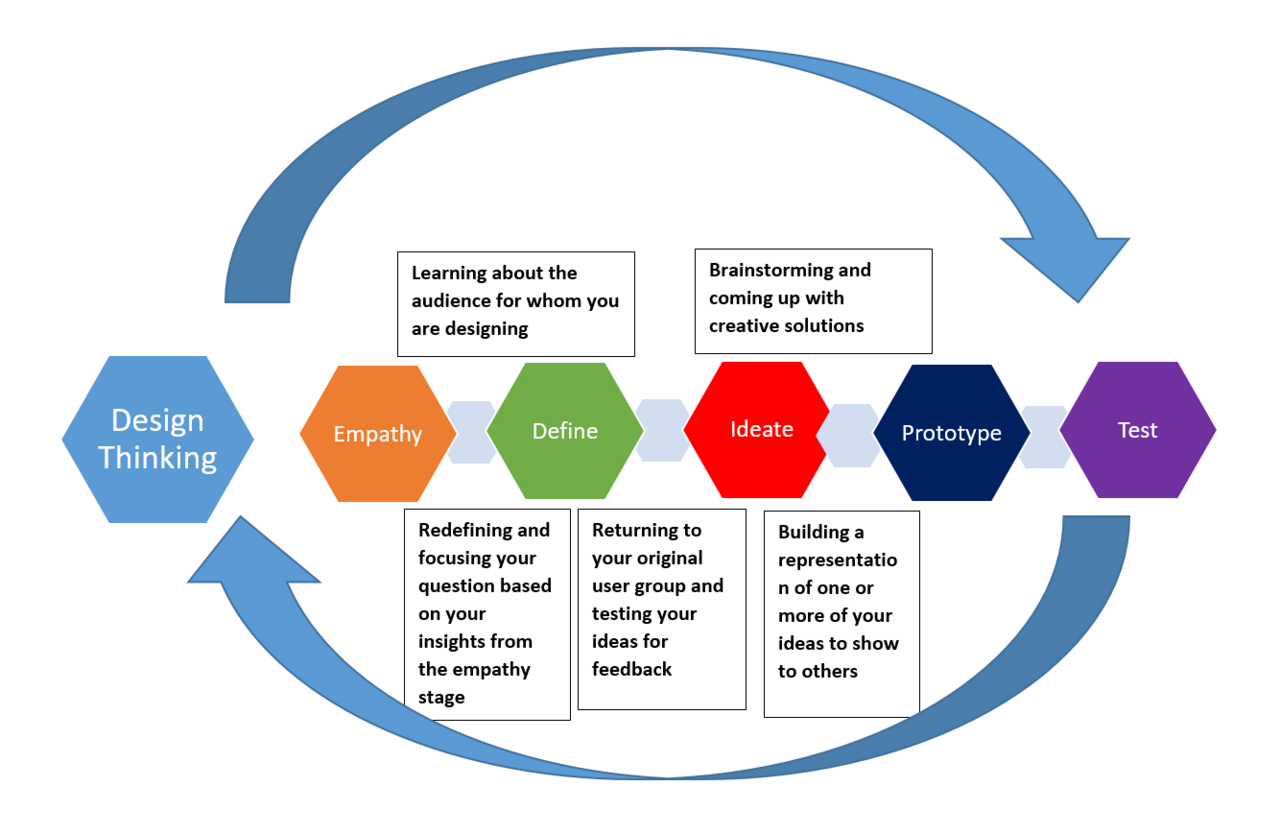
What are the stages of design thinking in order?
Define, empathize, prototype, ideate, test
Ideate, empathize, define, test, prototype
Empathize, define, ideate, prototype, test
Empathize, ideate, define, test, prototype
Stanford's d.school model: empathize, define, ideate, prototype, test. It is iterative, so teams loop back. Image: MrJanzen1984, CC BY-SA 4.0, via Wikimedia Commons.
In the Double Diamond, what happens during the first diamond?
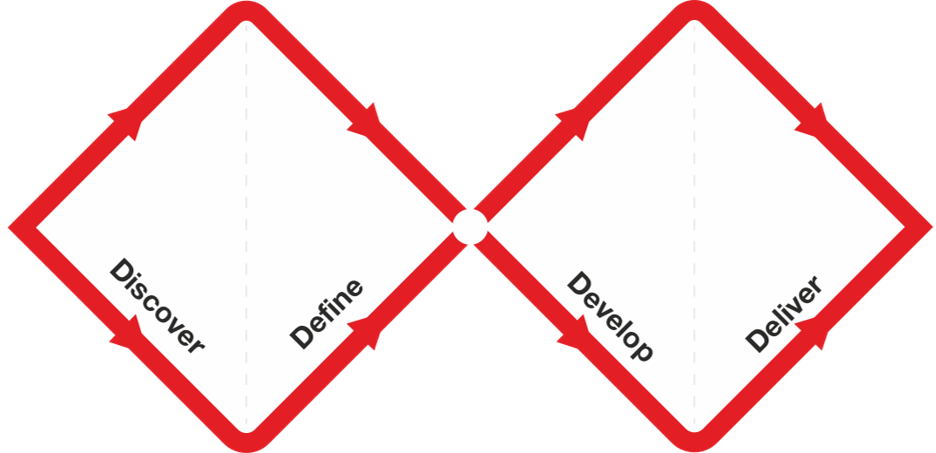
Exploring and then defining the right problem
Building and delivering the final product
Marketing the solution
Choosing between prototypes
Discover (diverge) and Define (converge) are about finding the right problem. Develop and Deliver (second diamond) find the right solution. Image: Design Council, CC BY 4.0, via Wikimedia Commons.
This photo shows a car factory in 1923. The moving assembly line is an example of which kind of innovation?
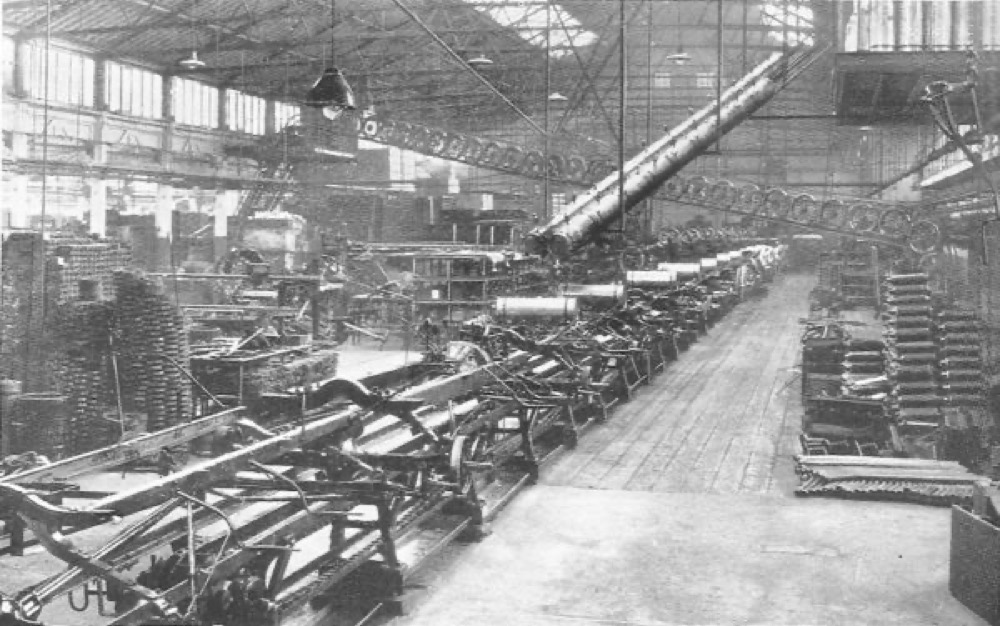
Marketing innovation
Product innovation only
Disruptive innovation of a new market
Process innovation
The assembly line changed how cars were made, lowering cost per car. It also enabled a mass-market product, but the innovation itself is a production process. Image: public domain, via Wikimedia Commons.
The envelope shown was part of which innovative business model?
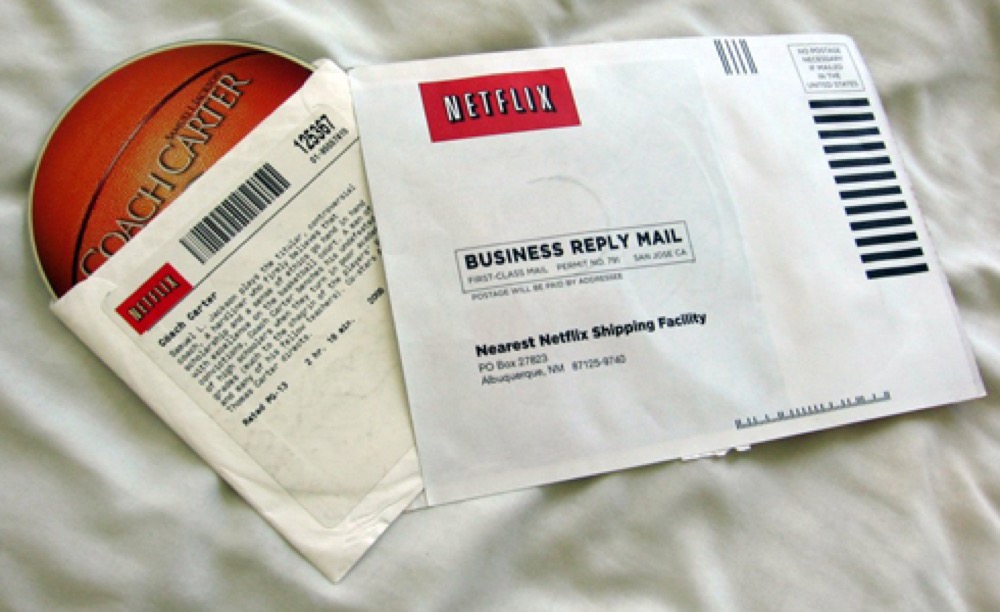
A video-on-demand cable service
A DVD-by-mail subscription that removed late fees
A pay-per-view store kiosk
A streaming platform
Netflix began with DVD rental by mail and moved to a subscription in 1999. Streaming started in 2007. Image: BlueMint, CC BY 2.5, via Wikimedia Commons.
The store in this photo belonged to a chain that filed for bankruptcy in 2010. Which factor is most often cited in its decline?
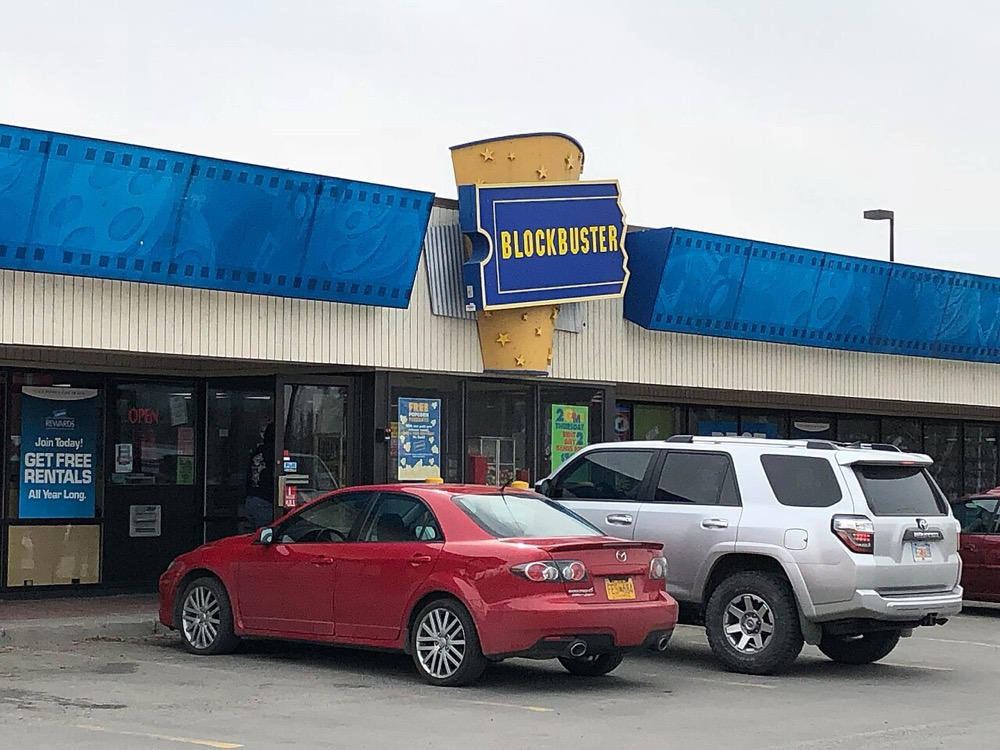
It ran out of films to rent
It had no brand recognition
It relied on late fees and stores while customers moved to mail and streaming
Government banned video rental
Blockbuster protected its existing store and late-fee profits and was slow to move; Netflix offered convenience without late fees and then streaming. Image: Jon Konrath, CC BY 2.0, via Wikimedia Commons.
Which statement best separates invention from innovation?
Innovation is a new idea put into use that creates value; invention is the idea or device itself
Invention is always incremental and innovation is always radical
Innovation only happens in large companies
Invention requires a patent, innovation does not
An invention may remain on a shelf. An innovation requires adoption. Patents are neither required for innovation nor proof of it.
Which of the following is the best example of a sustaining innovation?
A new platform that makes a new market
A low-cost simple product aimed at non-consumers
A cheap online service that attracts the incumbent's least profitable customers
A smartphone maker releases a faster model with a better camera for existing premium customers
Sustaining innovations improve existing products along dimensions mainstream customers value. The other three are low-end or new-market disruptions.
Under US law, roughly how long does a utility patent last from its filing date?
10 years
20 years
Life of the inventor plus 70 years
50 years
Utility patents last 20 years from filing, subject to maintenance fees. Life plus 70 years is the copyright term for individual authors in the US.
Which of these is protected by trade secret law rather than a patent or copyright?
The text of a user manual
A company logo
A confidential manufacturing process kept under security and non-disclosure agreements
A new machine design registered with the patent office
Trade secrets last as long as secrecy is kept; no registration. A logo is a trademark, a manual is protected by copyright and a registered machine design by a patent.
Which is NOT one of the four rules of classic brainstorming?
Evaluate and eliminate poor ideas immediately
Defer judgment
Go for quantity
Build on others' ideas
Brainstorming separates idea generation from evaluation; early criticism kills ideas. The fourth rule is to welcome wild ideas.
In SCAMPER, the prompt "Could we use this product for a different purpose?" matches which letter?
S (substitute)
A (adapt)
E (eliminate)
P (put to another use)
P is Put to another use. A is adapt (borrow from another context); S is substitute materials or parts; E is eliminate features.
What does the "valley of death" describe?
The period when customers stop using a product
The funding gap between research results and a product that investors will fund
The drop in adoption after the chasm
A failed pitch to an investor
Early research gets grants and government money; commercial products attract venture capital. In between, projects struggle for funding. The chasm and the trough of disillusionment are different ideas.
A firm's R&D spending is $45 million and its revenue is $1.5 billion. What is its R&D intensity?
30%
0.3%
3%
4.5%
45 / 1,500 = 0.03 = 3%. 30% would come from ignoring that revenue is in billions, and 0.3% from a decimal slip.
Out of 50,000 potential adopters, how many are in the early majority under Rogers' percentages?
17,000
25,000
6,750
8,000
34% of 50,000 = 17,000. 6,750 is the early adopters (13.5%); 8,000 is the laggards (16%).
A project has a 25% chance of success and would pay $12 million if successful. It costs $2 million to try. What is the expected value?
$-2 million
$10 million
$3 million
$1 million
EV = 0.25 x 12 - 2 = 3 - 2 = $1 million. The $3 million figure ignores the cost; $10 million subtracts the cost from the unweighted payoff.
Which company turned its own internal computing infrastructure into a rentable service, creating the cloud market in 2006?
Microsoft
Amazon (AWS)
IBM
Amazon launched S3 and EC2 in 2006 after building the infrastructure for its own retail platform. Microsoft Azure launched later (2010), and Google Cloud's first product, App Engine, came in 2008.
A technology on the Gartner Hype Cycle always passes through all five phases in order.
True
False
The hype cycle is a descriptive model. Some technologies fade away in the trough and never reach the plateau, and not all follow the shape. Image: Jeremy Kemp, CC BY-SA 3.0, via Wikimedia Commons.
Disruptive innovations typically begin by outperforming incumbents' products on the features mainstream customers value.
True
False
They typically start worse on mainstream measures but are cheaper, simpler or more convenient, and appeal to low-end or new customers first.
