Quiz · Hard
Image-based questions on historical maps, political cartoons, and photographs from colonial America through the Gilded Age and imperialism.
What was the main message of this 1754 cartoon by Benjamin Franklin?
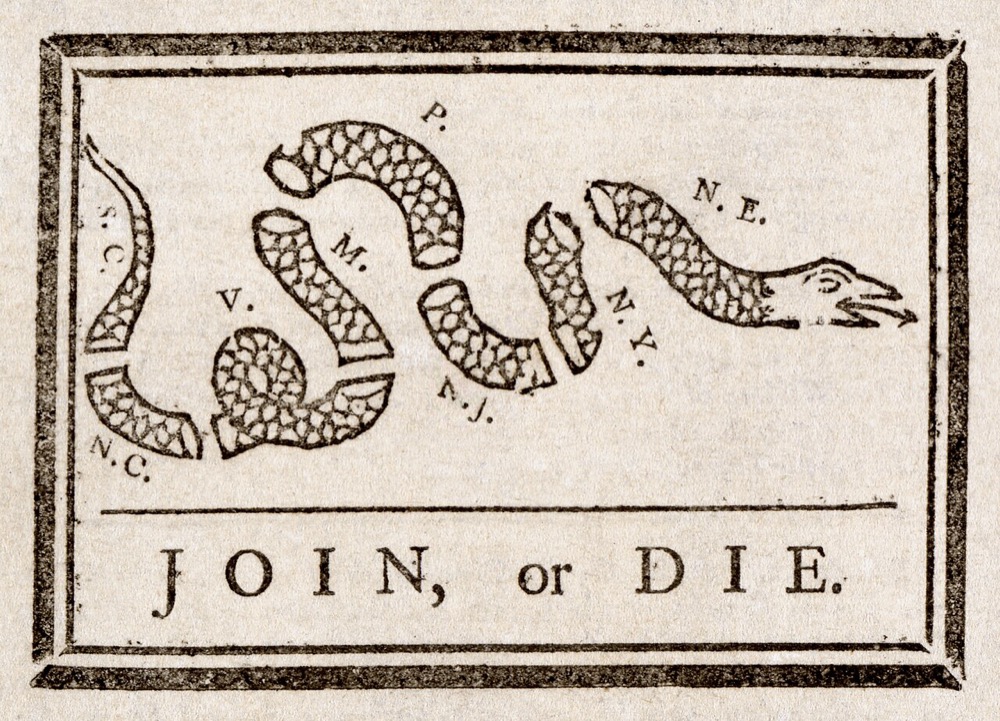
Britain must repeal the Stamp Act
The colonies must unite against the French and Indians
Slavery should be abolished
The Articles of Confederation should be revised
"Join, or Die" appeared in 1754 during the French and Indian War and urged colonial unity. It was reused in the 1760s-70s against British policies. Image: Benjamin Franklin, public domain, via Wikimedia Commons.
The territory outlined in red on this map was acquired in 1803 from
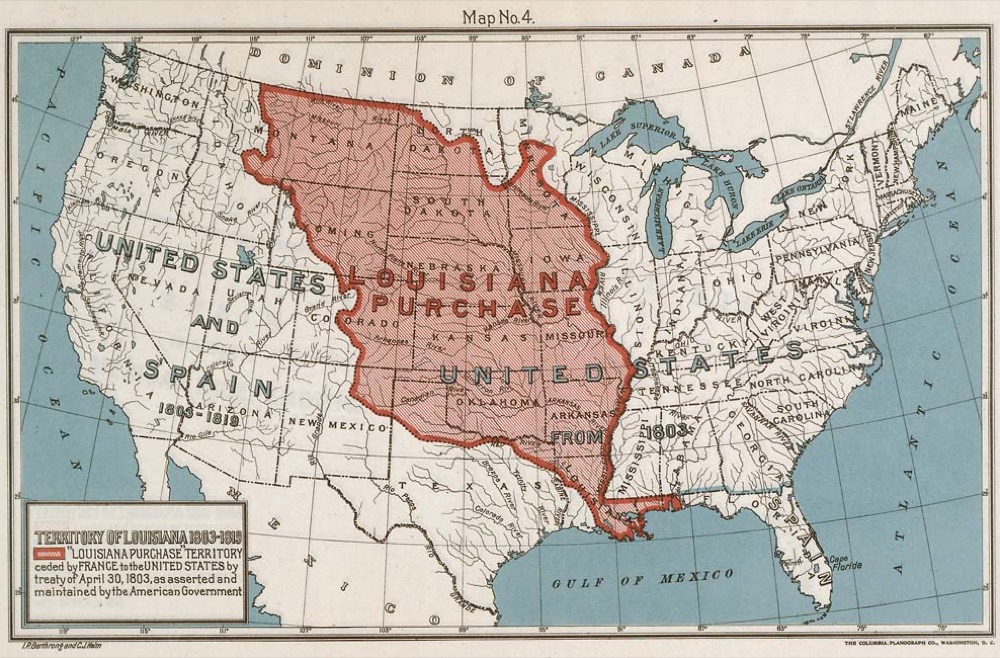
Mexico
Spain
Britain
France
Napoleon sold the Louisiana Territory to the US for $15 million. Image: BioKnowlogy, public domain, via Wikimedia Commons.
Which compromise is shown on this 1820 map?
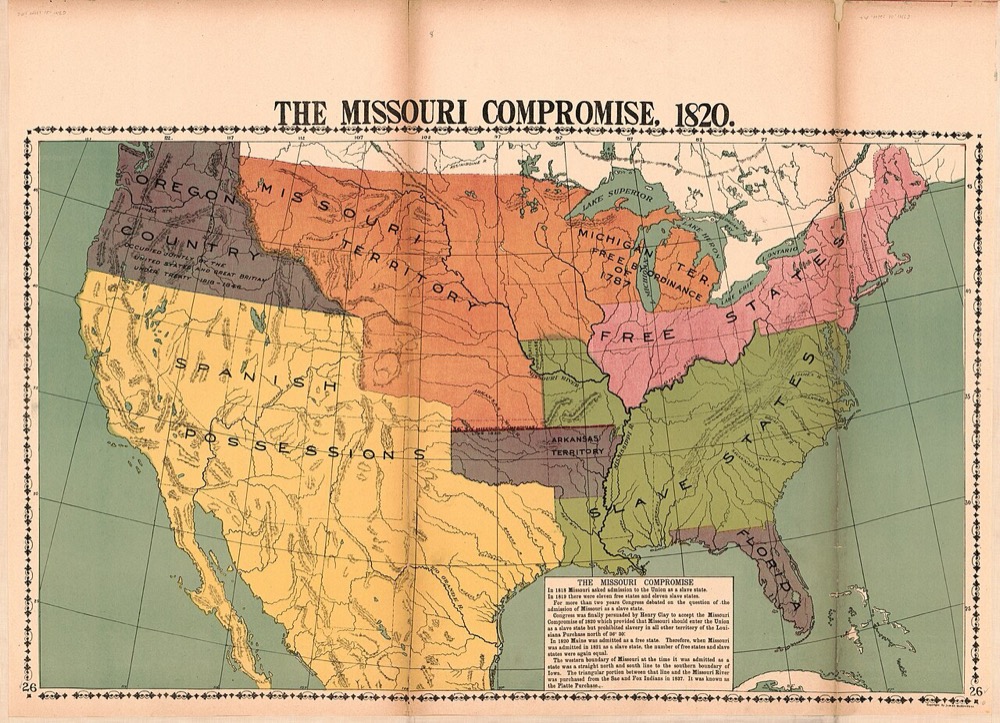
Missouri Compromise
Compromise of 1850
Compromise of 1877
Great Compromise
It shows free and slave states and the Missouri Territory. The Great Compromise was at the Constitutional Convention (1787). Image: McConnell Map Co., public domain, via Wikimedia Commons.
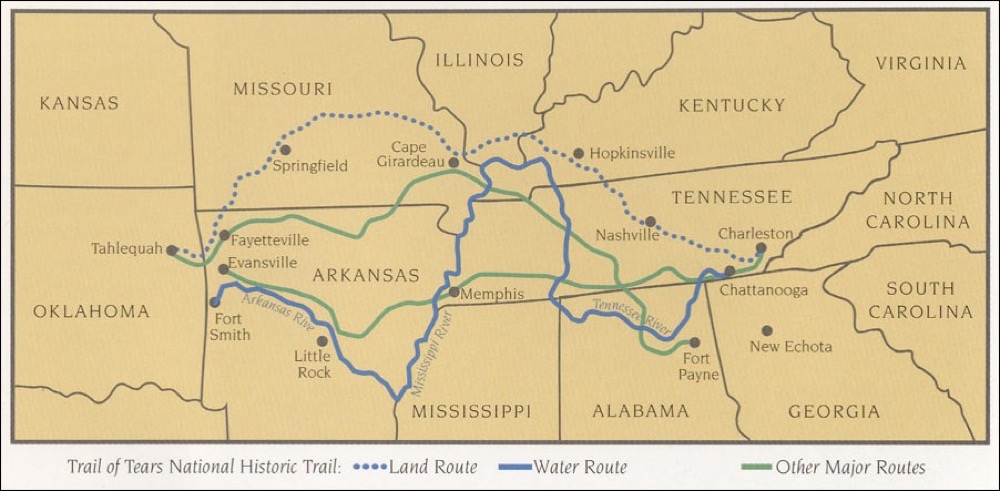
This map shows routes of which event?
The Underground Railroad
The Oregon Trail
The Trail of Tears
Sherman's March
The routes trace the forced removal of the Cherokee from the Southeast to Indian Territory (1838-39). Image: National Park Service, public domain, via Wikimedia Commons.
On this map of the 1860 election, which statement is accurate?
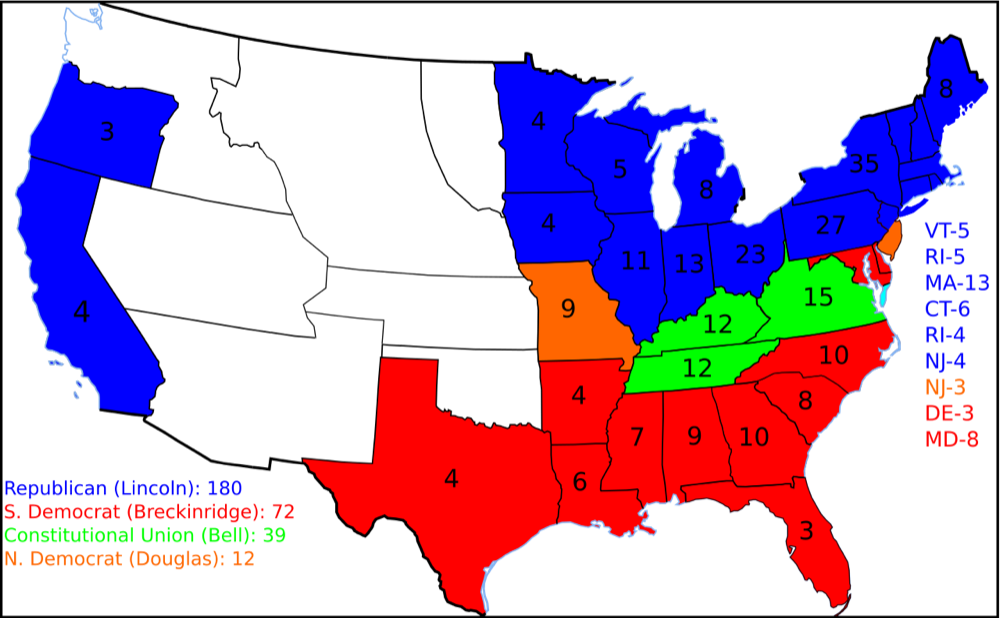
Breckinridge won the North
Douglas won the most electoral votes
Bell won the Deep South
Lincoln won without carrying any Southern state
Lincoln won the North and West. Breckinridge won the Deep South, Bell won Virginia, Kentucky, and Tennessee, and Douglas carried only Missouri and part of New Jersey. Image: PSMax8956, CC BY-SA 3.0, via Wikimedia Commons.
This 1869 photograph celebrates
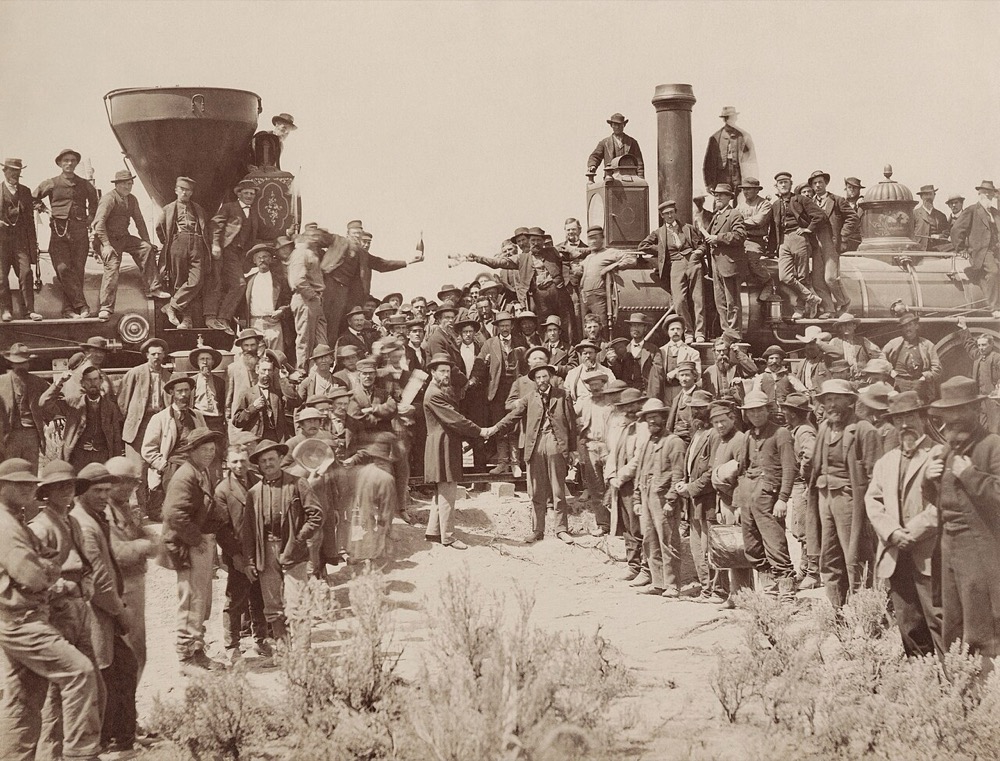
The completion of the transcontinental railroad
The opening of the Erie Canal
The Gold Rush
The Homestead Act
The Union Pacific and Central Pacific met at Promontory Summit, Utah. The Erie Canal opened in 1825. Image: Andrew J. Russell, public domain, via Wikimedia Commons.
The 1889 Puck cartoon "The Bosses of the Senate" argues that
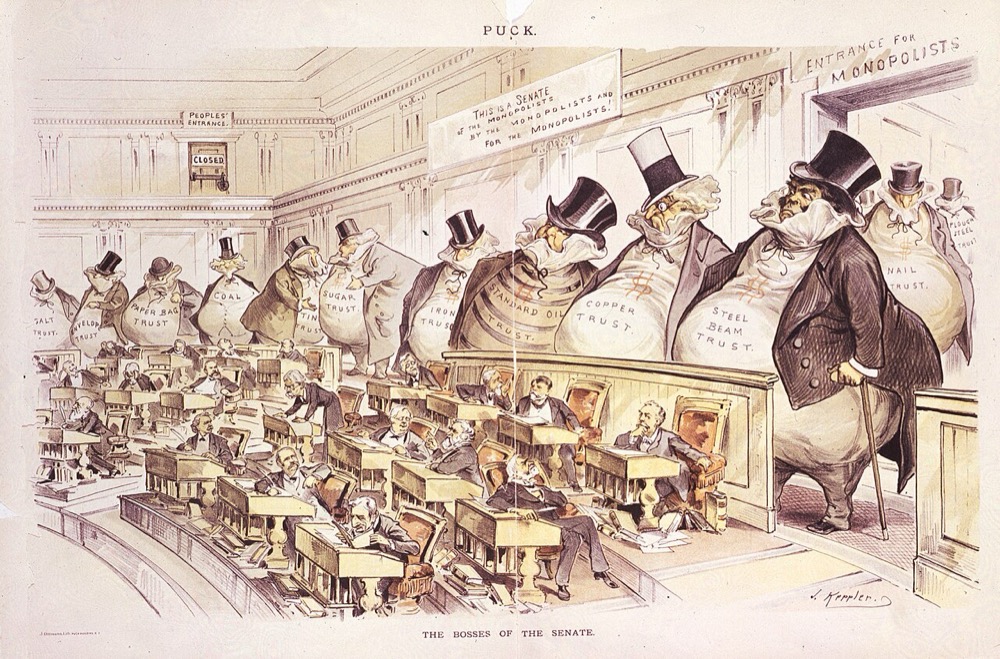
Labor unions ran Congress
The Senate was too radical
Big business trusts controlled the Senate
Senators were elected too often
The giant money-bag figures represent trusts looking down on senators. Image: Joseph Keppler, public domain, via Wikimedia Commons.
This cartoon's octopus is labeled Standard Oil. Its message is most closely related to
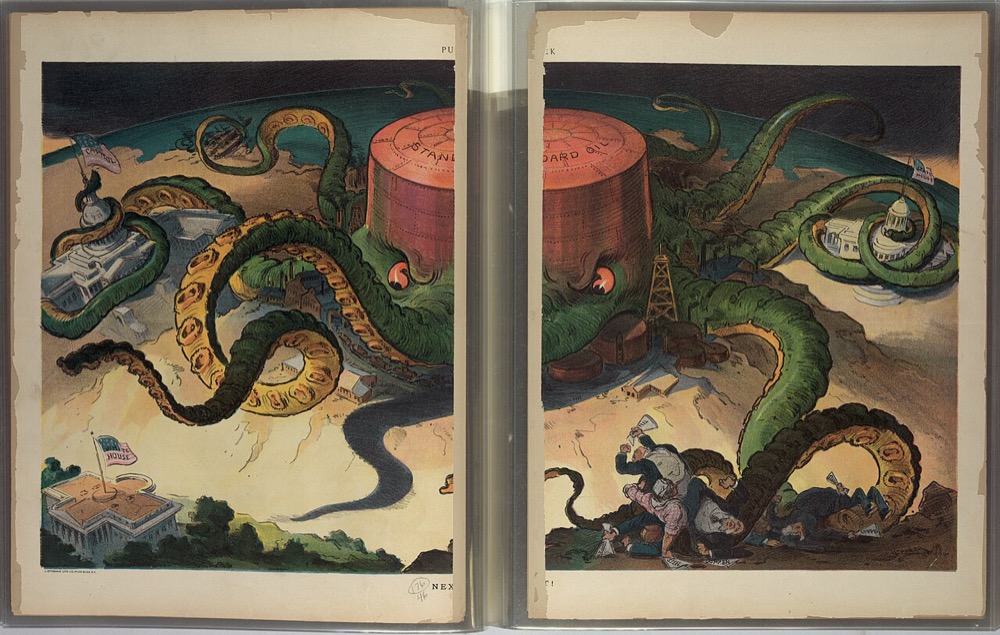
Prohibition
Antitrust and muckraking
Isolationism
The Cold War
It condemns Rockefeller's monopoly; the muckraker Ida Tarbell exposed it, and the government broke it up in 1911. Image: Udo J. Keppler (Puck), public domain, via Wikimedia Commons.
The cartoon of two newspaper publishers pushing blocks spelling "WAR" criticizes
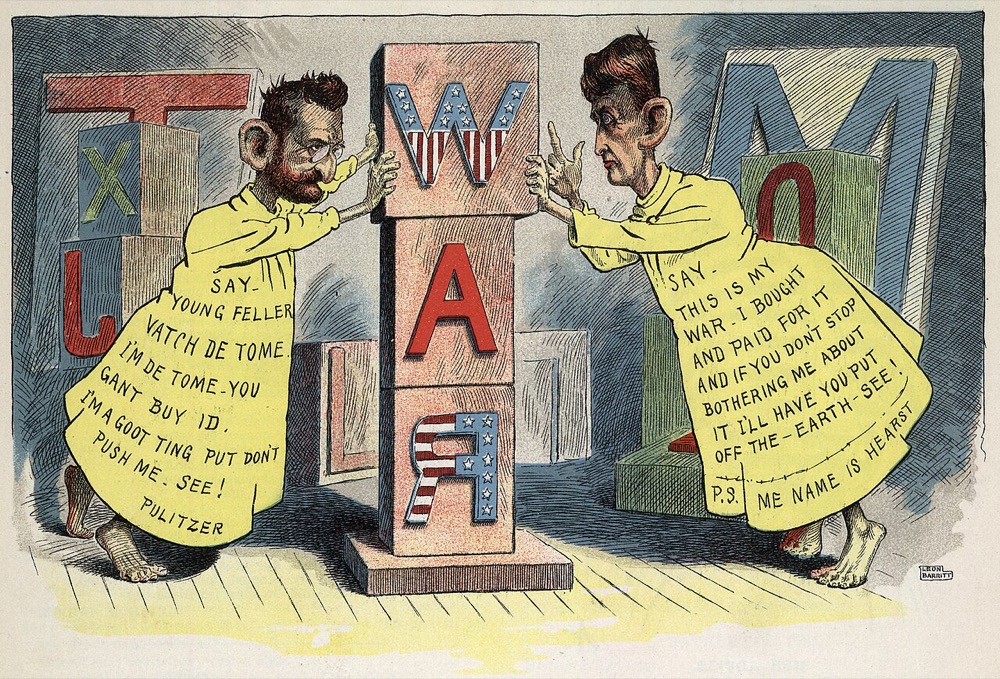
The Teller Amendment
Yellow journalism
Muckraking
The Open Door
It shows Pulitzer and Hearst competing to sensationalize the Cuban crisis. Image: Leon Barritt, public domain, via Wikimedia Commons.
This cartoon of Theodore Roosevelt in the Caribbean illustrates
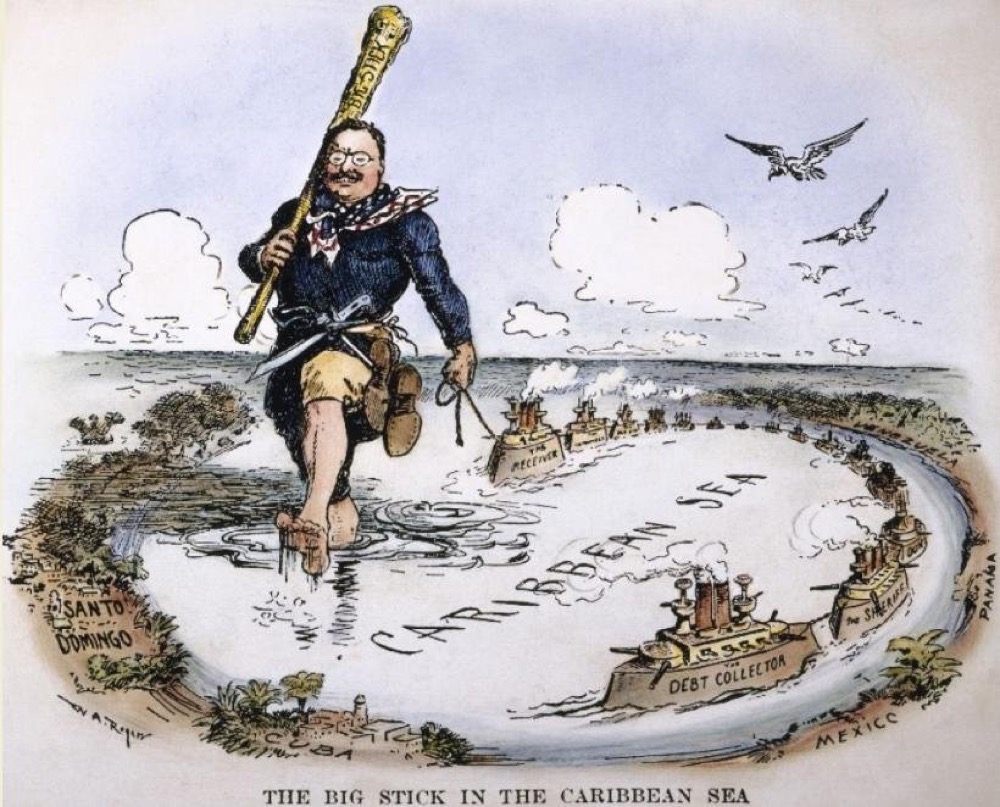
Dollar Diplomacy
The Open Door Policy
The Monroe Doctrine's original meaning
The Roosevelt Corollary and Big Stick diplomacy
It shows Roosevelt policing the Caribbean. Taft's Dollar Diplomacy later used investment instead. Image: William Allen Rogers, public domain, via Wikimedia Commons.
The term "gerrymandering" originated from this 1812 cartoon about
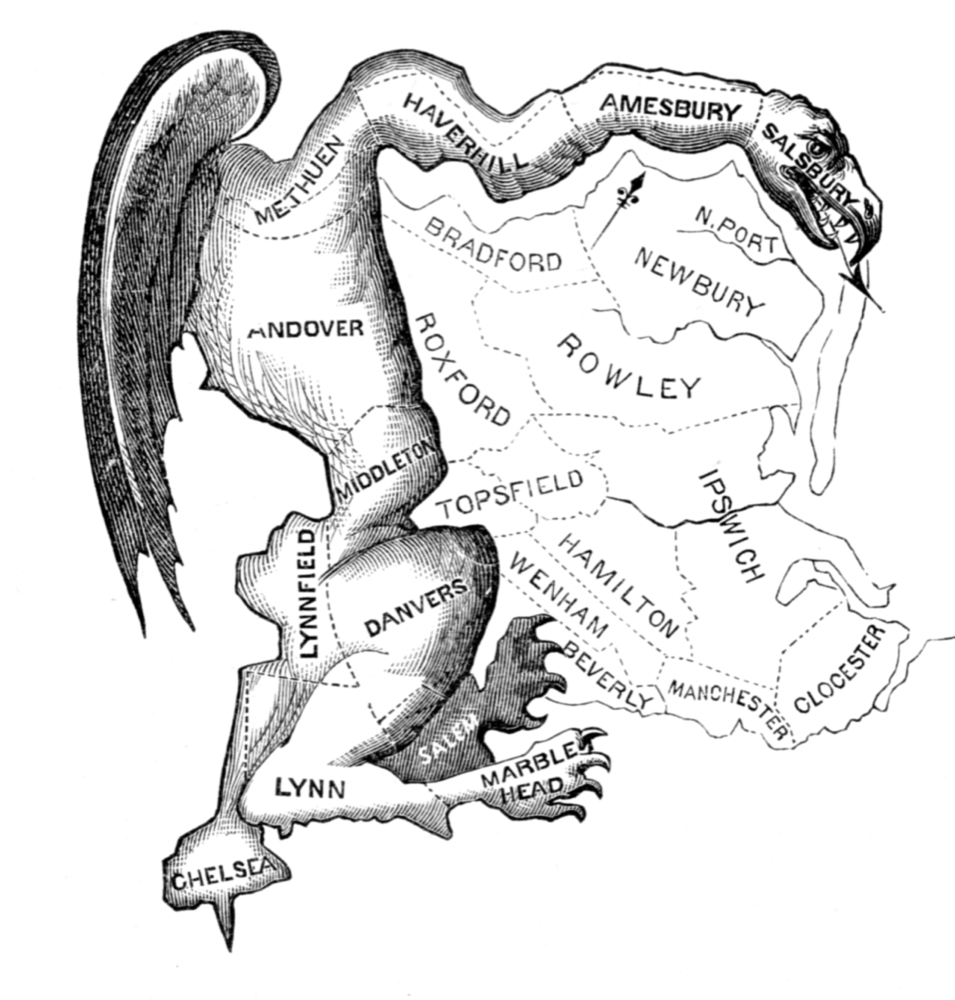
Elbridge Gerry's Massachusetts districts
The Hartford Convention
The Alien and Sedition Acts
The Missouri Compromise
A district resembling a salamander was drawn to favor Gerry's party; the cartoon combined "Gerry" and "salamander." Image: Elkanah Tisdale, public domain, via Wikimedia Commons.
Which statement about the Louisiana Purchase is most accurate?
It added Florida
It was authorized explicitly in the Constitution
It doubled the size of the US and raised constitutional questions for Jefferson
It was paid for with gold from California
Jefferson doubted that the Constitution allowed buying land but went ahead; Florida came from Spain in 1819.
The Missouri Compromise's 36°30' line banned slavery
In Missouri
South of the line
In all western territory
North of the line in the Louisiana Purchase (except Missouri)
Slavery was allowed in Missouri but banned in the rest of the Louisiana Purchase north of 36°30'.
Which primary source would best illustrate the Populists' complaints about railroads and gold?
The Omaha Platform (1892)
The Gettysburg Address
The Fourteen Points
The Atlantic Charter
The Omaha Platform demanded free silver, a graduated income tax, and government control of railroads.
A historian studying the Trail of Tears map would most likely connect it to which law?
Homestead Act (1862)
Dawes Act (1887)
Indian Removal Act (1830)
Treaty of Paris (1783)
The Indian Removal Act authorized removal. The Dawes Act dealt with land allotments later in the century.
Which election-map conclusion is supported by the 1860 map?
The country was united behind Bell
The country was divided along sectional lines
The West chose Breckinridge
Douglas dominated the South
Lincoln dominated the free states while Breckinridge and Bell split the South, showing deep sectional division.
