Quiz · Medium
Twenty questions on the structure of the Fed, FOMC voting, open market operations, IORB, QE, the money multiplier and bank runs, with maps and charts.
How many voting members does the FOMC have?
12
7
10
19
Seven governors, the New York Fed president and four of the other eleven Reserve Bank presidents (rotating) vote: twelve in total. Seven is the number of governors; 19 counts everyone who attends.
Which Reserve Bank's president always has a vote on the FOMC?
New York
San Francisco
Chicago
Dallas
The New York Fed carries out open market operations and is a permanent voting member. Other Reserve Bank presidents rotate.
The Fed buys $1 billion of Treasury securities from banks. All else equal, the likely effect is:
Bank reserves fall and the federal funds rate rises
Bank reserves rise and the federal funds rate rises
Bank reserves rise and the federal funds rate falls
No effect on reserves; the discount rate falls
Paying for bonds with newly created reserves expands reserves, increasing the supply of loanable reserves and lowering the fed funds rate.
A bank has $50 million in deposits, a 10% reserve ratio, and holds exactly the required reserves. How much can it lend out?
$5 million
$45 million
$50 million
$55 million
Required reserves are $5 million, so the remaining $45 million can be lent. Lending all $50 million would leave no reserves.
The reserve ratio is 20%. If $1,000 of new reserves are injected into banks, the maximum increase in the money supply is:
$5,000
$200
$800
$1,200
Multiplier = 1 ÷ 0.20 = 5, so the money supply can rise by 5 × $1,000 = $5,000. $200 would be 20% of $1,000, the amount held back at the first step.
Which of these is NOT a monetary policy tool of the Fed?
Open market operations
Changing the federal income tax rate
Interest on reserve balances
The discount rate
Tax rates are set by Congress as fiscal policy. Open market operations, IORB and the discount rate are central bank tools.
The economy is in a deep recession with unemployment far above the natural rate. The appropriate monetary policy is to:
Raise the target for the federal funds rate
Raise taxes
Lower the target for the federal funds rate
Sell government bonds to the public
Cutting rates and buying bonds are expansionary and push AD right. Raising rates or selling bonds would deepen the recession.
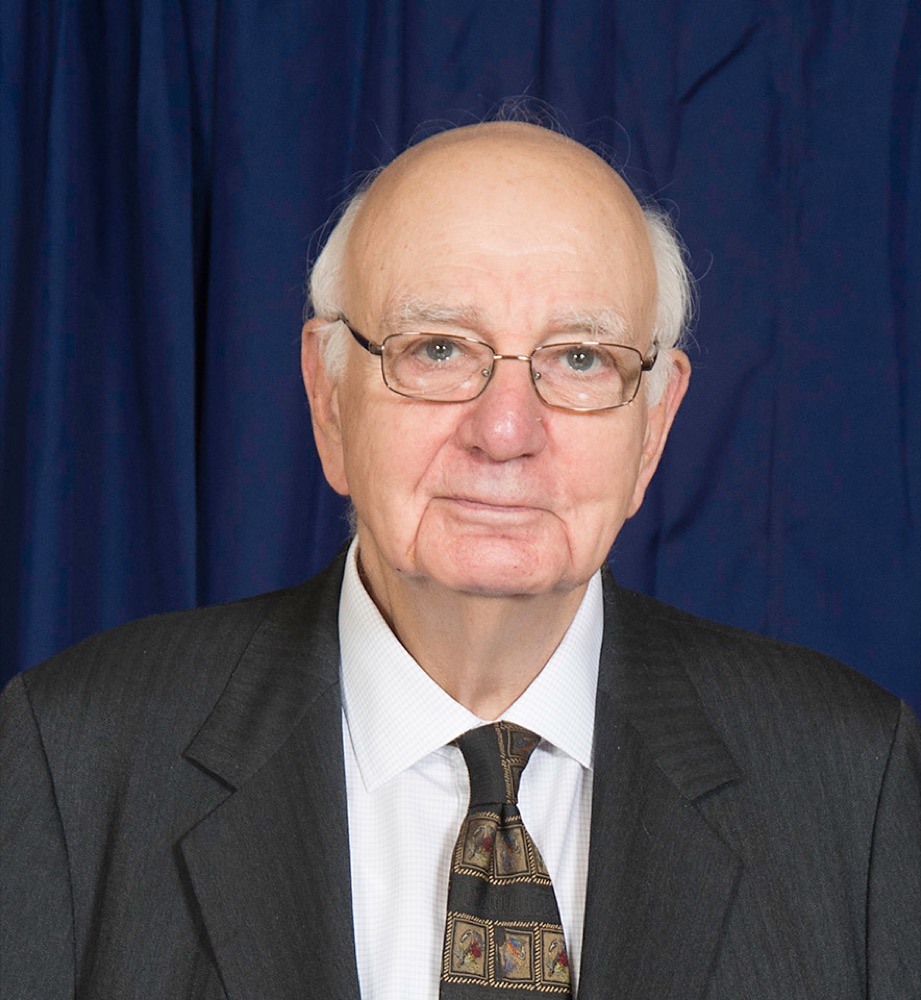
Which Fed chair presided during the early 1980s disinflation, with the federal funds rate near 20%?
Alan Greenspan
Ben Bernanke
Janet Yellen
Paul Volcker
Volcker chaired the Fed from 1979 to 1987. Image: Federal Reserve, public domain, via Wikimedia Commons.
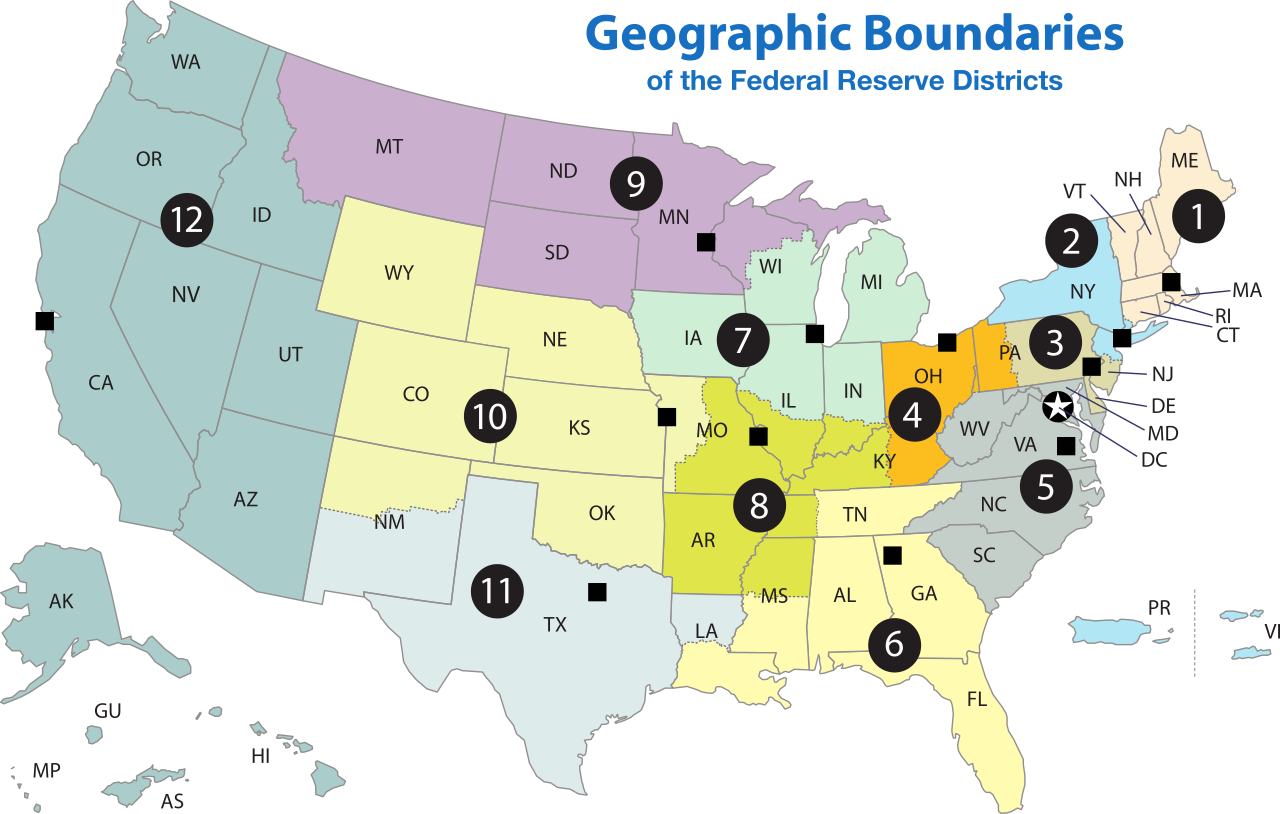
In which district is the Federal Reserve Bank of Dallas, per the map?
District 6
District 11
District 10
District 12
Dallas serves district 11 (Texas, northern Louisiana and southern New Mexico). District 12 is San Francisco and 10 is Kansas City. Image: CC BY-SA 2.5, via Wikimedia Commons.
According to the chart, the effective federal funds rate was near zero during which period?
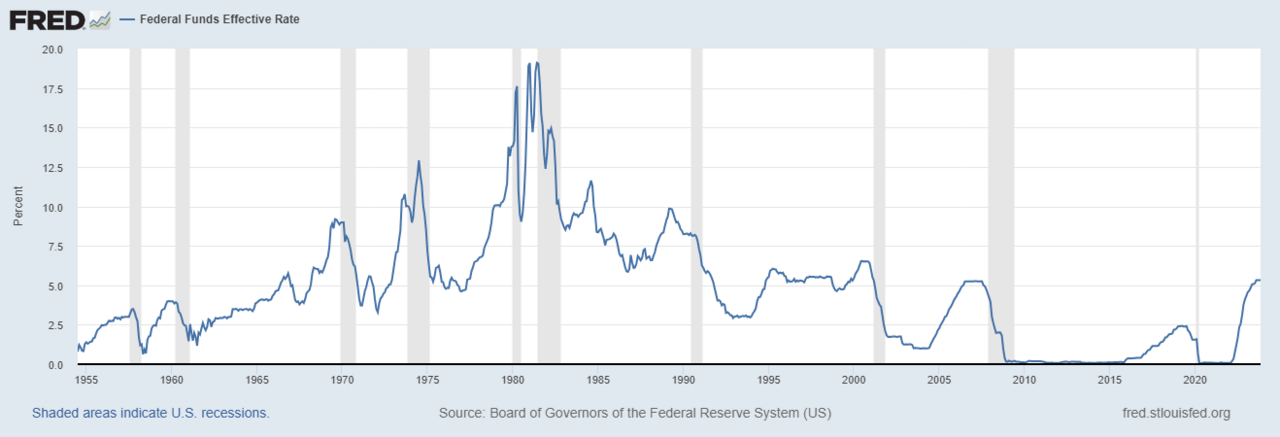
2009-2015
1975-1980
1990-1993
2002-2004
After the financial crisis the Fed held rates close to zero from December 2008 to December 2015. In 1975-80 and 1990-93 rates were several percent; in 2002-04 they were about 1%. Image: FRED, public domain.
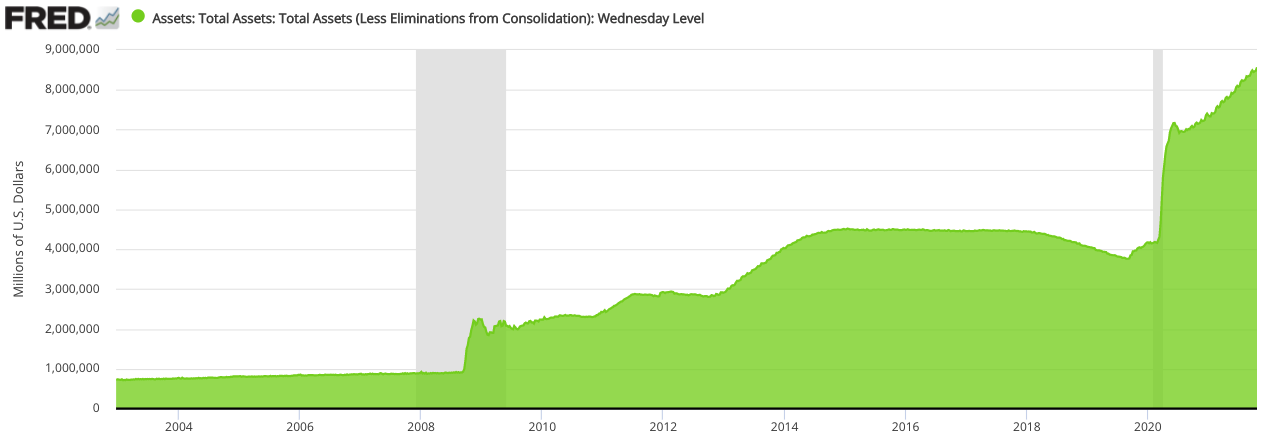
What does the chart show about the Fed's balance sheet?
Total assets were stable throughout
Total assets jumped during the 2008 crisis and again in 2020
Total assets fell sharply after 2008
Total assets peaked in 2004
QE programs after 2008 and the 2020 asset purchases sharply raised the Fed's assets, from under $1 trillion to over $8 trillion. Image: FRED, public domain.
True or False: Congress sets the federal funds rate target.
True
False
False. The FOMC sets the target range independently, although Congress sets the Fed's mandate and oversees it.
Which statement about the discount rate is correct?
It is the rate banks charge each other overnight
It is the rate on 10-year Treasuries
It is the interest rate paid on savings accounts
It is the interest rate the Fed charges banks that borrow directly from it
The discount rate is the Fed's own lending rate to banks (the primary credit rate). The overnight rate between banks is the federal funds rate.
When the Fed announces it will keep interest rates low for a long time, it is using:
Forward guidance
Reserve requirements
Open market sales
The discount window
Forward guidance communicates the future policy path to influence long-term rates and expectations.
Quantitative easing mainly involves:
Raising reserve requirements
Buying long-term securities to lower long-term interest rates
Selling Treasury bills to drain reserves
Setting wage and price controls
QE expands the central bank's balance sheet by purchasing long-term assets, used when the short-term policy rate is already near zero.
A bank run is most likely to be prevented by:
Higher inflation
Higher reserve requirements alone
FDIC deposit insurance and the Fed's discount window
A trade surplus
Insured deposits remove depositors' incentive to rush to withdraw, and the discount window gives solvent banks liquidity.
The Fed's mandate from Congress is often called the dual mandate. It consists of:
Low inflation and a balanced budget
Stable exchange rates and low taxes
Full employment and trade balance
Maximum employment and stable prices
The Federal Reserve Act directs the Fed to promote maximum employment, stable prices and moderate long-term interest rates.
What is the maximum a $10 million open market purchase can raise the money supply when the reserve ratio is 5%?
$200 million
$20 million
$50 million
$100 million
Multiplier = 1 ÷ 0.05 = 20, so up to 20 × $10 million = $200 million. In practice excess reserves and cash holdings reduce this.
Which of these best explains why reserve requirements matter less in the modern Fed system?
They were raised to 100%
The Fed set them to zero in March 2020 and relies on IORB and balance sheet policy
They are now set by Congress
They apply only to foreign banks
With abundant reserves, the Fed steers rates with administered rates, not by rationing reserves.
