Quiz · Medium
Questions on clefs, note values, meter, dynamics, key signatures, scales, modes and intervals, many with notation images.
Which clef is shown on the upper staff of the grand staff, and on which line does its curl end?
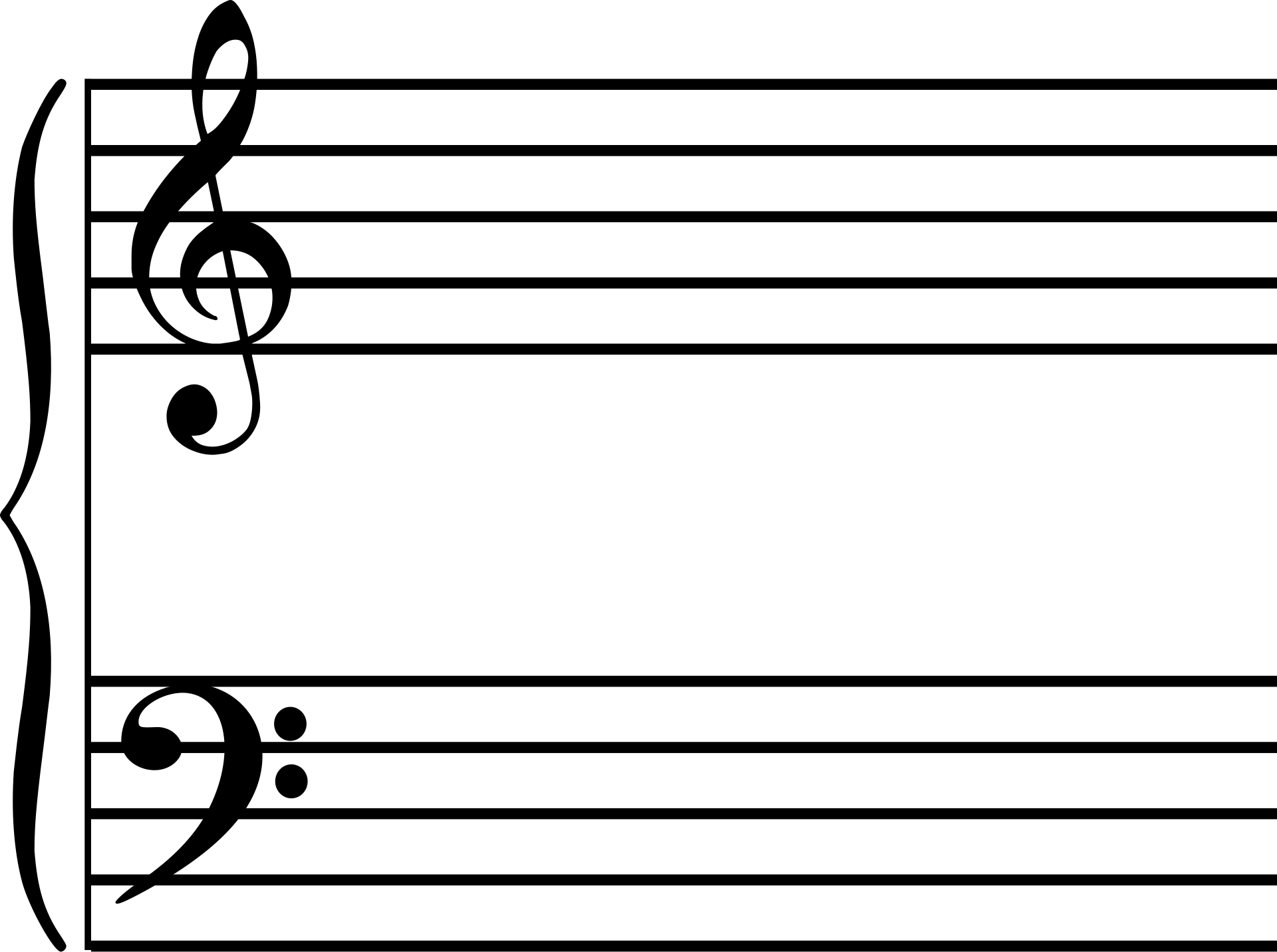
Bass clef, on the fourth line
Treble clef, on the second line
Alto clef, on the third line
Treble clef, on the fourth line
The treble (G) clef curls around the second line, G4.
Image: Tarret, Ummagumma and others, CC BY-SA 3.0, via Wikimedia Commons.
In the excerpt, the blue numbers are the time signature. How many beats are in each measure?
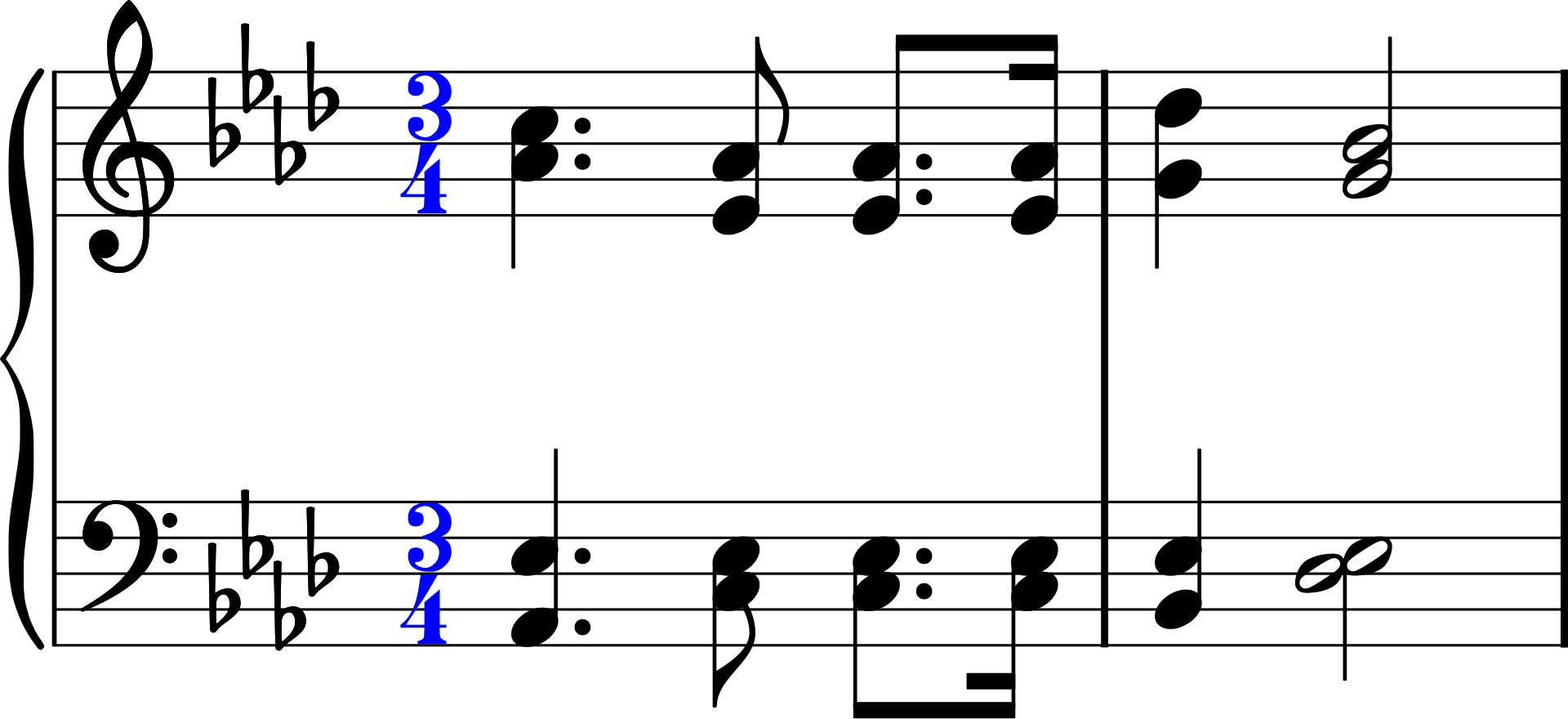
Three
Four
Six
Two
3/4 means three quarter-note beats per bar.
Image: Wereon, public domain, via Wikimedia Commons.
In the rest chart, which rest is worth one quarter of a semibreve?

Quaver
Minim
Semiquaver
Crotchet
Semibreve 1, minim 1/2, crotchet 1/4, quaver 1/8.
Image: Marmelad, public domain, via Wikimedia Commons.
A dotted half note lasts how many quarter-note beats?
2
3
4
2.5
A dot adds half the value: 2 + 1 = 3 beats.
This excerpt of dotted half notes shows that a double-dotted half note equals a half note tied to which values?
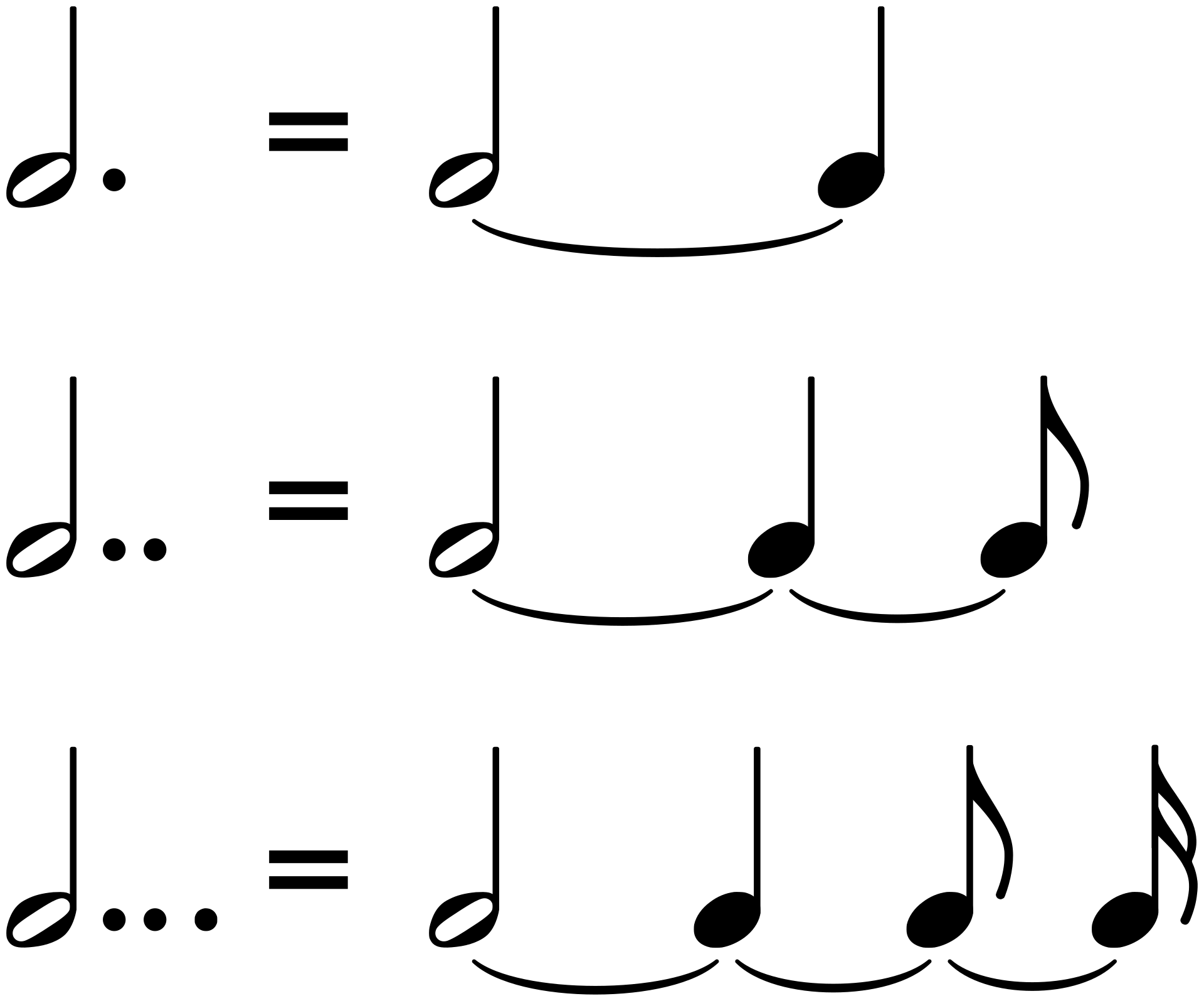
Quarter note and eighth note
Two quarter notes
Quarter note only
Eighth note and sixteenth note
First dot adds a quarter, second dot adds an eighth: 2 + 1 + 1/2 = 3.5 beats.
Image: Marmelad, public domain, via Wikimedia Commons.
Which time signature is an example of compound meter?
3/4
2/2
6/8
4/4
In 6/8 each main beat is a dotted quarter divided into three eighths.
What does the marking 'mf' tell the performer to play?
Moderately loud
Very loud
Moderately soft
Gradually louder
Mezzo forte is moderately loud; mezzo piano is moderately soft.
The excerpt's marking under the first note is the softest of those shown. Which is it?
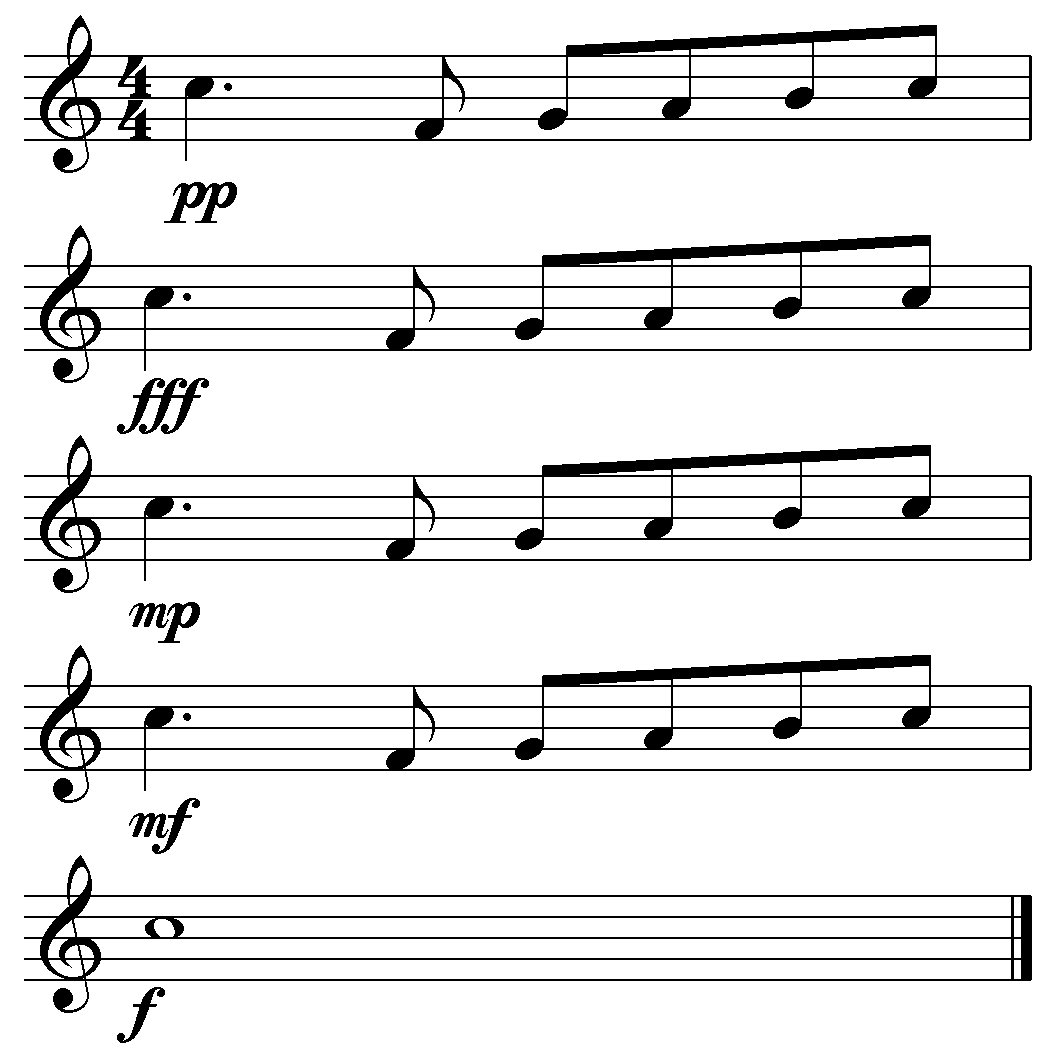
mp
f
pp
mf
pp, pianissimo, means very soft.
Image: Hyacinth, public domain, via Wikimedia Commons.
Which tempo marking is the slowest?
Allegro
Andante
Presto
Largo
Largo is very slow and broad; Presto is very fast.
What does a fermata over a note mean?
Play the note staccato
Repeat the bar
Hold the note longer than its written value
Get gradually louder
The length of the hold is left to the performer or conductor.
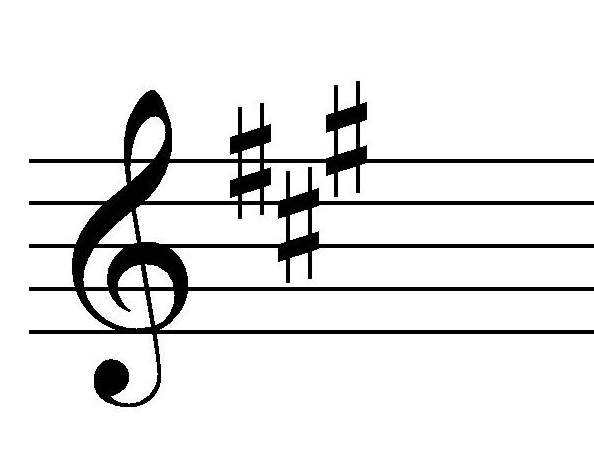
The key signature of three sharps (F#, C#, G#) belongs to which major key?
E major
D major
B major
A major
The last sharp is G#; go up a half step to A.
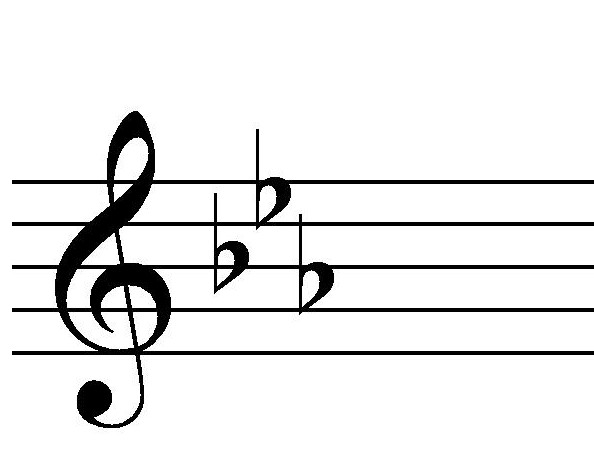
This key signature has B-flat, E-flat and A-flat. Which major key is it?
F major
A-flat major
B-flat major
E-flat major
The second-to-last flat names the major key.
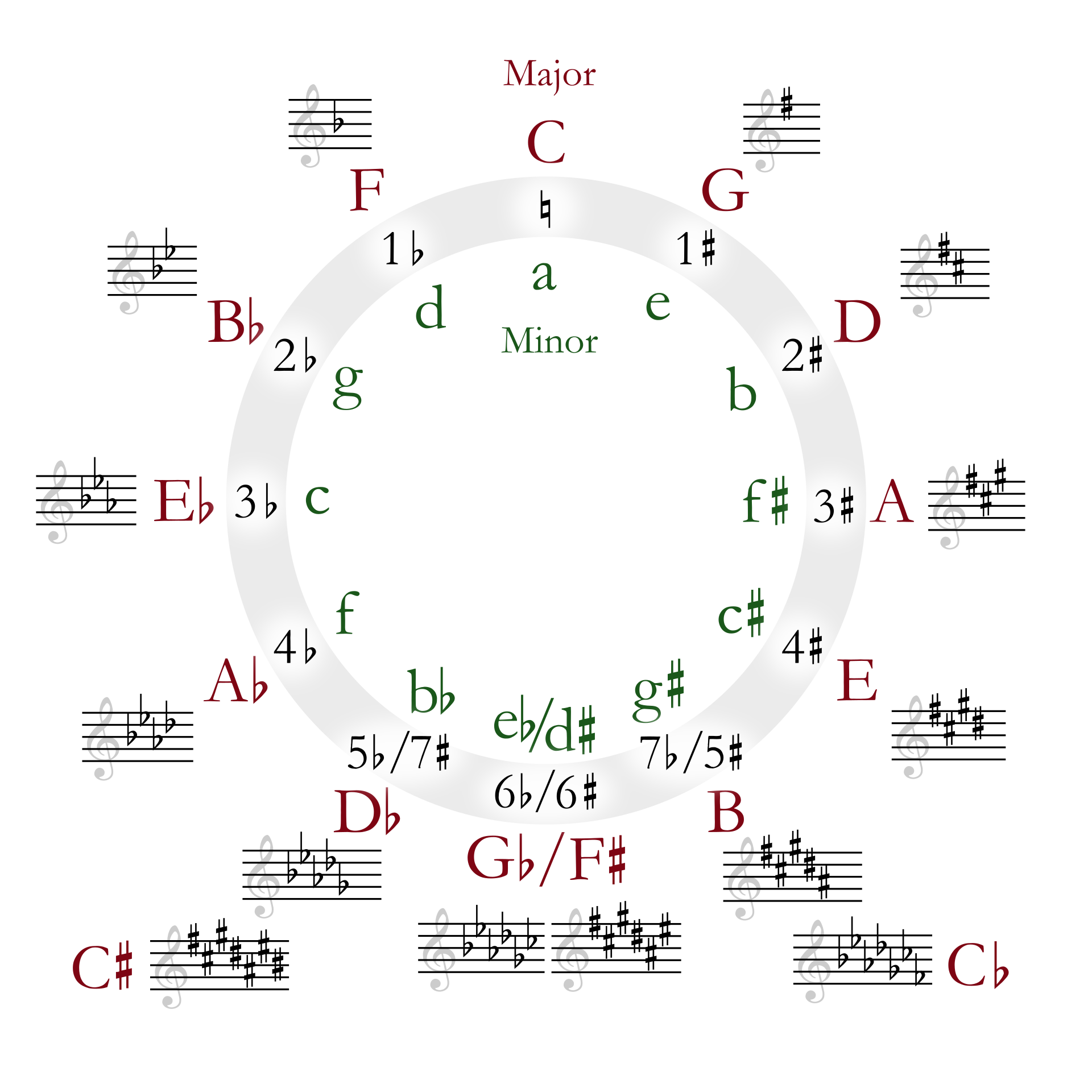
On the circle of fifths, which key lies one step clockwise from C major?
F major
D major
A minor
G major
Clockwise moves up a perfect fifth and adds a sharp: G has one sharp.
Image: Just plain Bill, CC BY-SA 3.0, via Wikimedia Commons.
Which step pattern defines the major scale?
W H W W H W W
W W H W W W H
H W W H W W W
W W W H W W H
Whole, whole, half, whole, whole, whole, half.
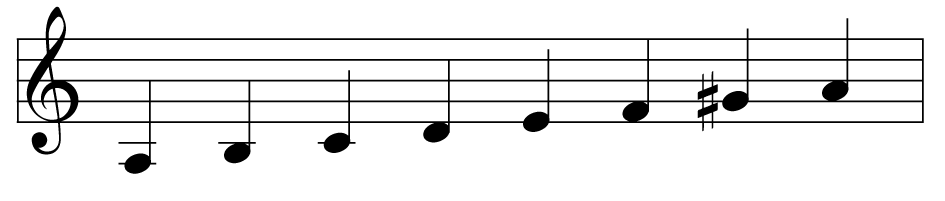
In the A harmonic minor scale shown, which note is raised compared with natural minor?
F to F-sharp
E to E-flat
G to G-sharp
C to C-sharp
The 7th degree is raised to give a leading tone.
Image: Unknown author, public domain, via Wikimedia Commons.
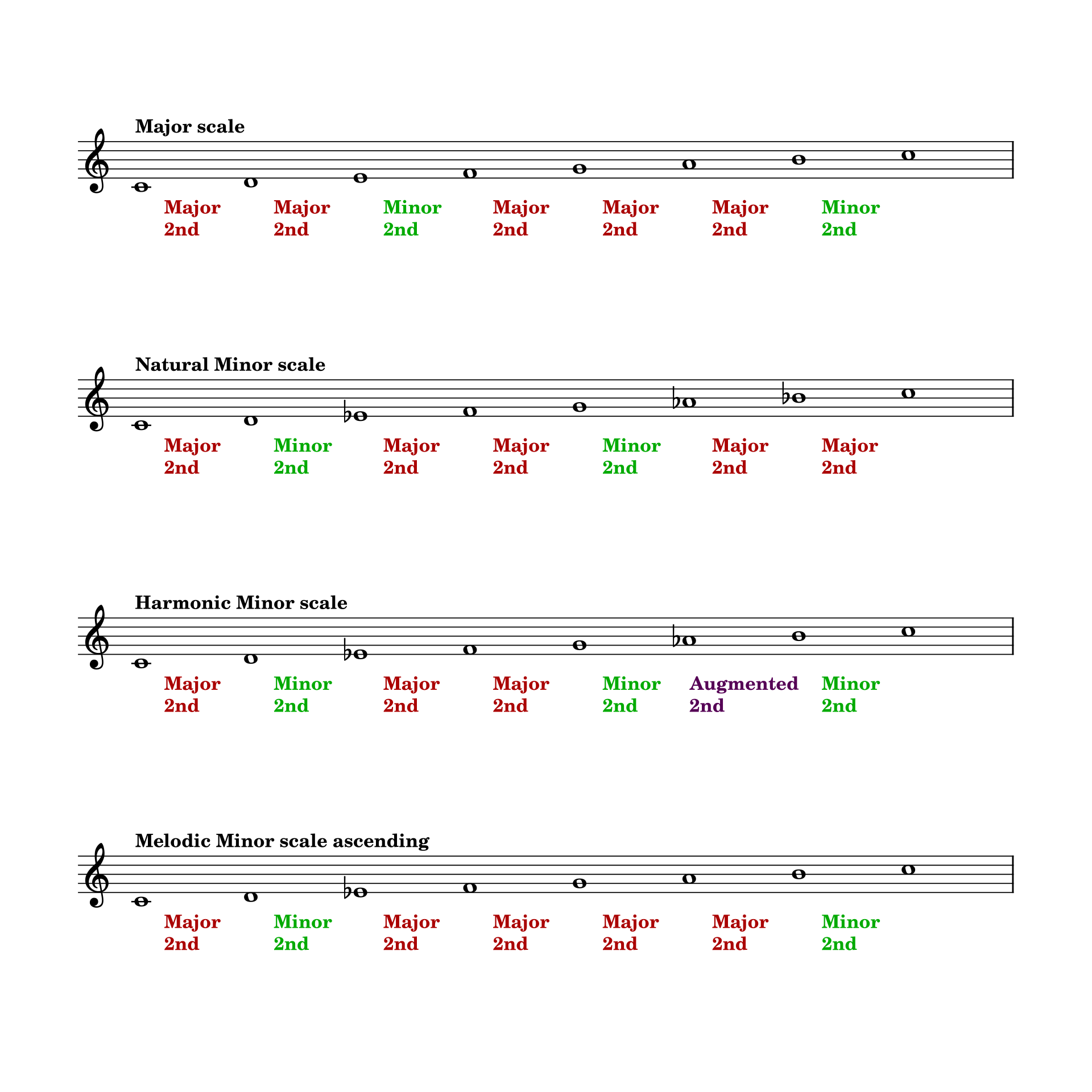
In the chart's harmonic minor scale, which interval lies between degrees 6 and 7?
Major second
Minor second
Augmented second
Perfect fourth
The chart labels the 6-7 step an augmented second (three semitones).
Image: Georgezh9617, CC BY 4.0, via Wikimedia Commons.
Which mode is a major scale with a lowered seventh degree?
Lydian
Dorian
Mixolydian
Phrygian
Mixolydian: 1 2 3 4 5 6 b7 (white keys G to G).
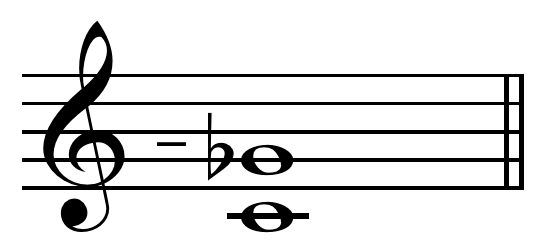
What is the interval C to G-flat, shown here, called, and how many semitones is it?
Perfect fifth, 7
Major sixth, 9
Perfect fourth, 5
Diminished fifth (tritone), 6
The tritone spans six semitones, exactly half an octave.
Image: Hyacinth, public domain, via Wikimedia Commons.
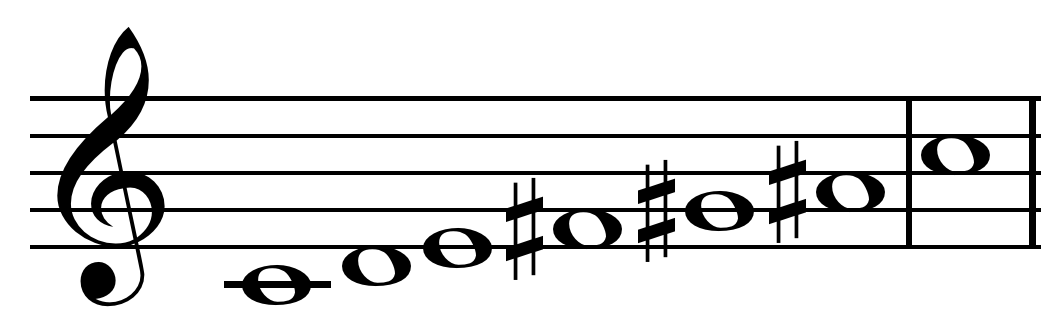
Which scale has six notes, all a whole tone apart?
Pentatonic scale
Blues scale
Whole-tone scale
Chromatic scale
C D E F# G# A#; it lacks half steps and a leading tone.
Image: Unknown author, public domain, via Wikimedia Commons.
Inverting a minor third gives which interval?
Major sixth
Minor sixth
Major third
Perfect fifth
Inversion subtracts from 9 and swaps major/minor: minor 3rd becomes major 6th.
