Quiz · Medium
Image and concept questions on prehistoric, Egyptian, Mesopotamian, Greek, Etruscan and Roman art. Good for a unit test or AP Art History review.
Egyptian artists used a convention called 'composite view'. What does it mean?
Head and legs in profile, eye and shoulders in front view
A single vanishing point with foreshortened limbs
Figures drawn from slightly above with shadows
Bodies split into overlapping geometric planes
Composite view shows each part of the body from its clearest angle. Foreshortening and a single vanishing point developed much later in Greece and Renaissance Italy.
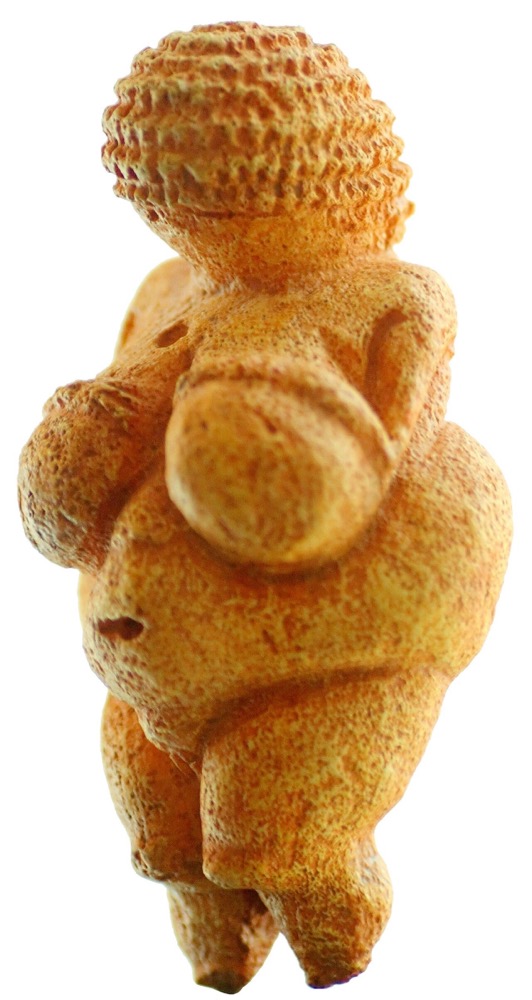
The Venus of Willendorf is best described as:
A Neolithic temple relief of a goddess
A bronze Minoan fertility idol
A Greek marble votive offering
A small Paleolithic limestone female figurine
It is a roughly 11 cm limestone figure from over 25,000 years ago found in Austria. It is far older than Minoan or Greek art.
Image: User:MatthiasKabel, CC BY 2.5, via Wikimedia Commons.
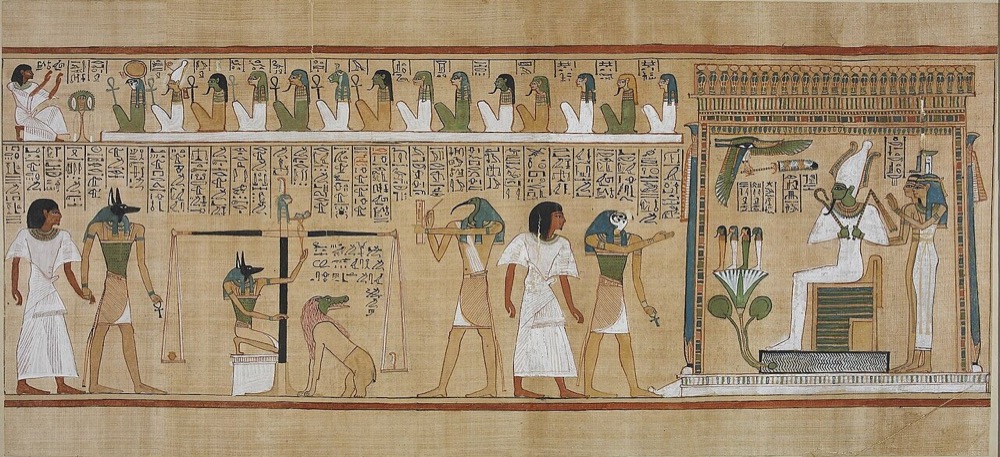
What is shown on this papyrus from the Egyptian Book of the Dead?
The sun god Ra sailing through the underworld
A funeral procession carrying the mummy to the tomb
The weighing of the dead person's heart against the feather of Ma'at
A pharaoh smiting his enemies before the gods
Anubis operates the scales, Thoth records the result and Osiris judges. The Narmer Palette, not a papyrus, shows the smiting pose.
Which pharaoh is associated with the Amarna style and the worship of the Aten?
Ramesses II
Akhenaten
Djoser
Khufu
Akhenaten (c. 1353-1336 BCE) moved the capital to Amarna and promoted the sun disk Aten; art became more naturalistic and elongated. Ramesses II is known for monumental temples like Abu Simbel.
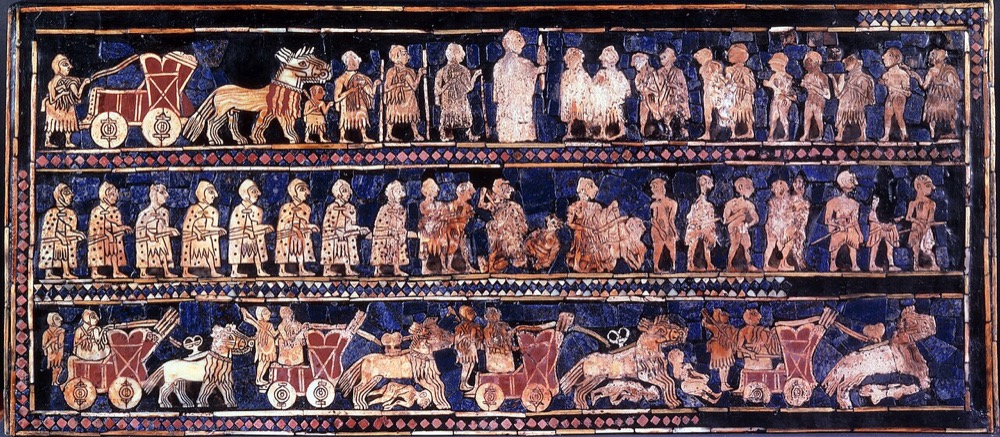
Which statement about the Standard of Ur is correct?
It is a painted Greek vase showing a funeral
It is an Egyptian gold cult statue of the sun god
It is an Assyrian stone relief of a lion hunt
It has War and Peace panels inlaid with shell, red limestone and lapis lazuli
It is a Sumerian object from the Royal Cemetery at Ur (c. 2600-2400 BCE), not Egyptian, Greek or Assyrian.
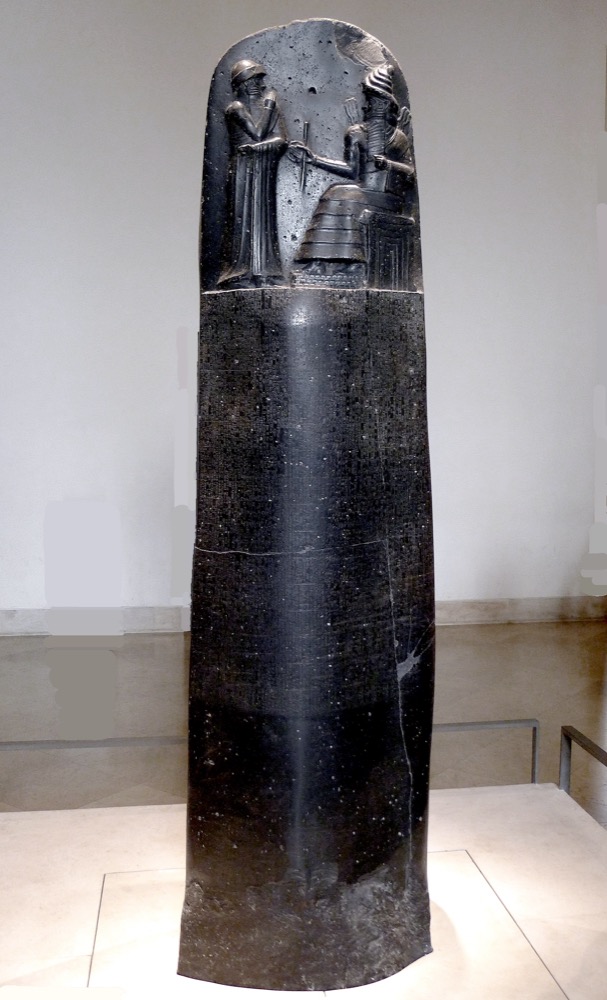
The monument shown here records which of the following?
The unification of Egypt
A law code of the Babylonian king Hammurabi
Darius I's conquests at Persepolis
The treaty ending the Trojan War
The basalt stele (c. 1754 BCE) shows Hammurabi receiving authority from the sun god Shamash above an Akkadian cuneiform law text.
Image: Mbzt, CC BY 3.0, via Wikimedia Commons.
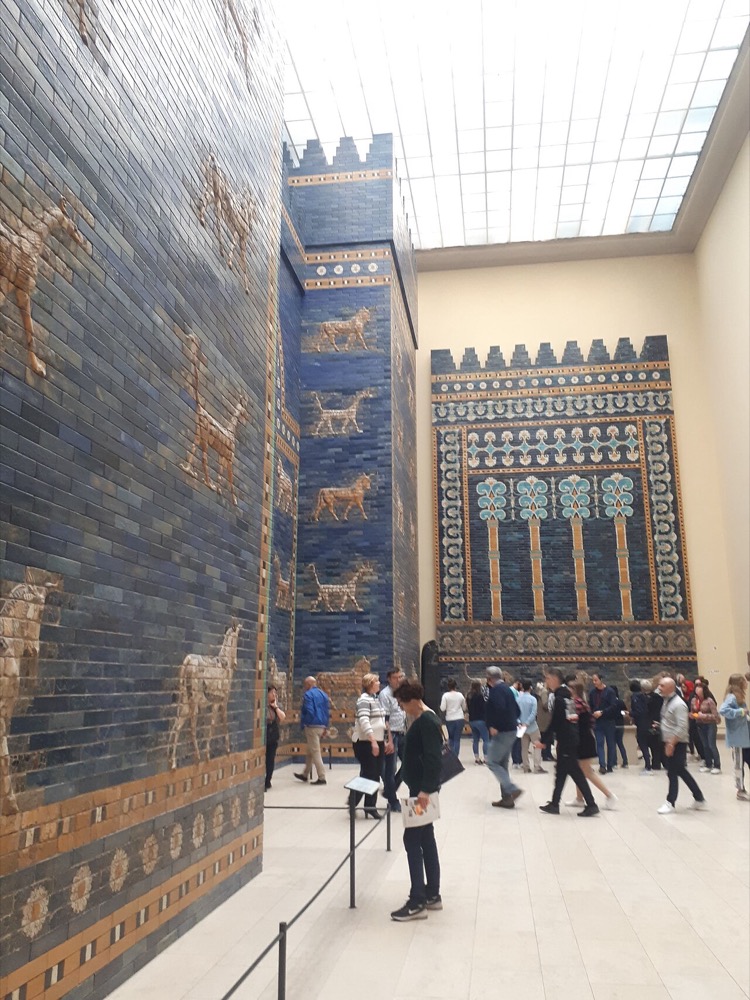
The glazed blue-brick gate decorated with lions, dragons and bulls belongs to which city?
Mycenae
Babylon
Persepolis
Knossos
The Ishtar Gate was built under Nebuchadnezzar II c. 575 BCE. Persepolis is a Persian site with stone reliefs, and Knossos and Mycenae are Aegean sites.
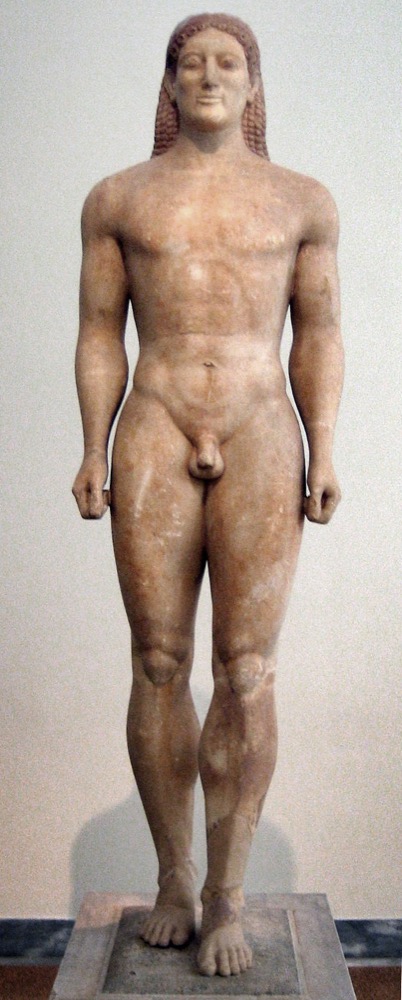
Which Greek sculpture type is rigidly frontal, with the left foot forward and an 'archaic smile'?
Caryatid
Kouros
Discobolus
Doryphoros
The kouros is an Archaic nude male statue. The Doryphoros and Discobolus belong to the Classical period and show a more natural balance, with a shifted weight.
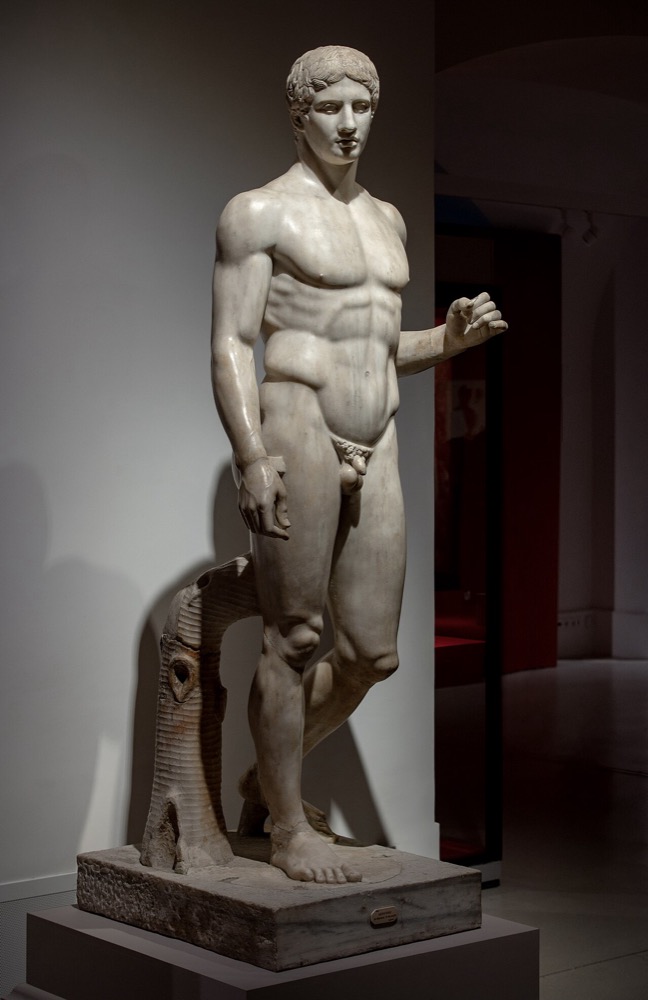
The Doryphoros by Polykleitos is famous for demonstrating:
Egyptian-style rigid frontality
The first nude female statue
Extreme emotional pathos
A canon of ideal proportions and contrapposto
The sculpture embodied Polykleitos's treatise, the Canon. The nude woman is Praxiteles's Aphrodite of Knidos and the pathos belongs to Hellenistic sculpture.
Image: Sergey Sosnovskiy from Saint-Petersburg, Russia, CC BY-SA 2.0, via Wikimedia Commons.
Who supervised the sculptural program of the Parthenon?
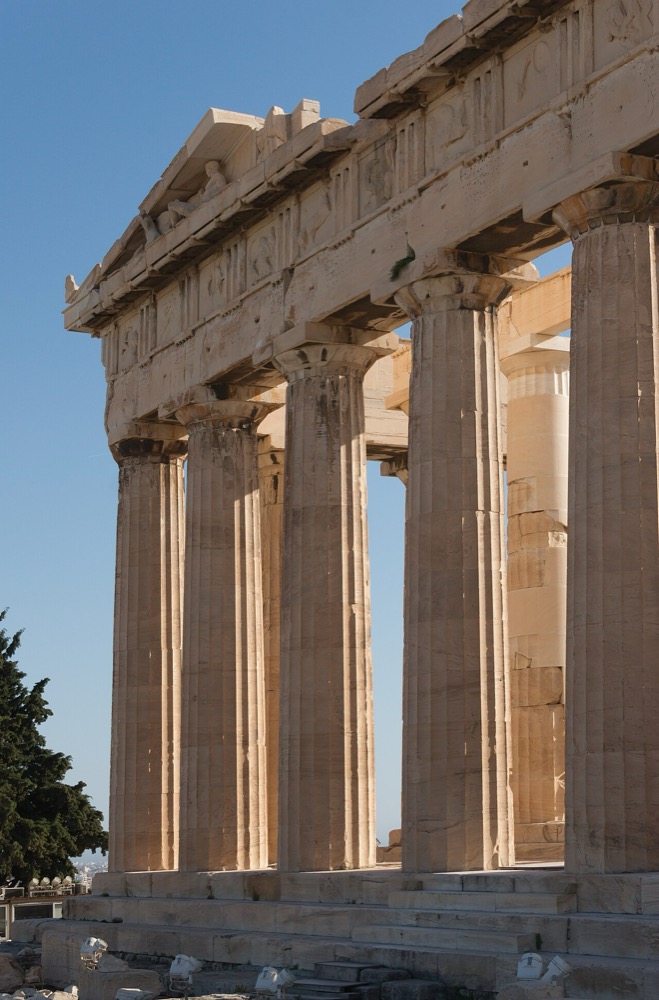
Phidias
Praxiteles
Myron
Lysippos
Phidias worked under Pericles, with Ictinus and Callicrates as architects. Praxiteles and Lysippos belong to the 4th century BCE, and Myron made the Discobolus.
Which Greek column order has a capital with scrolls (volutes)?
Tuscan
Doric
Corinthian
Ionic
Ionic capitals have volutes. Doric is plain, Corinthian has acanthus leaves, and Tuscan is a Roman simplified Doric.
The Winged Victory of Samothrace belongs to which period?
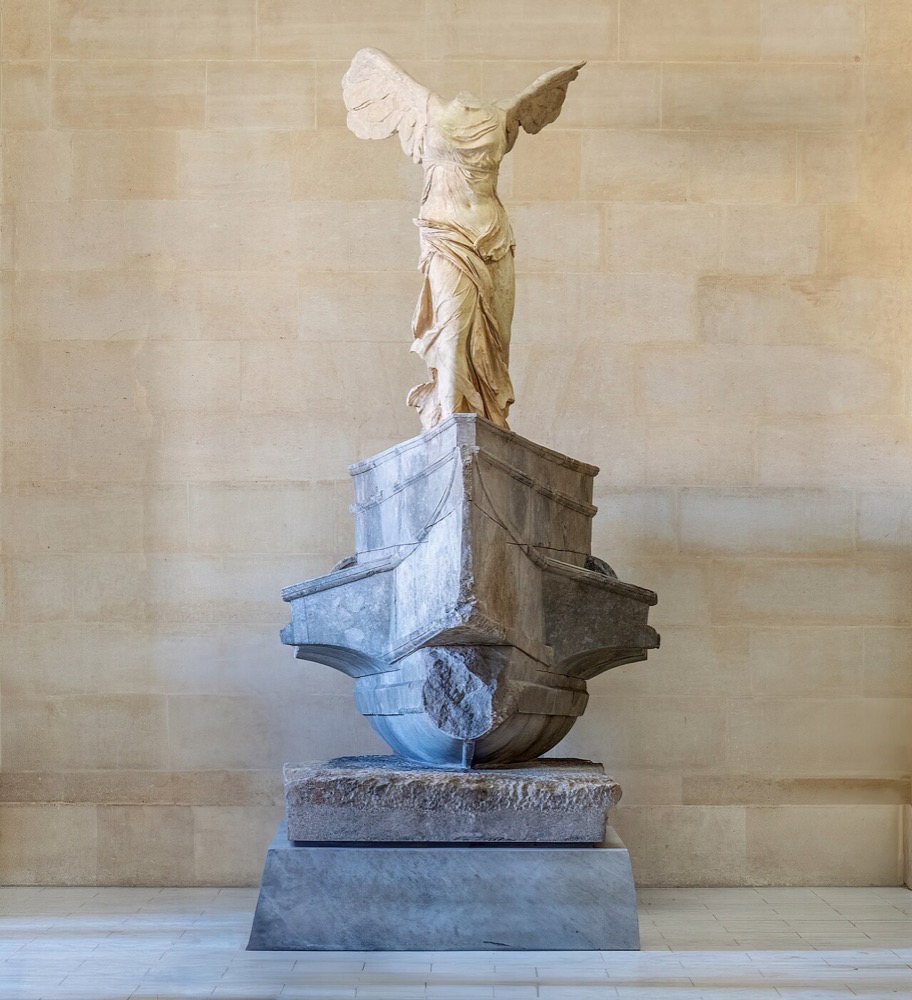
Early Classical
Archaic
High Classical
Hellenistic
Its dramatic movement and windblown drapery, and the date c. 190 BCE, place it in the Hellenistic period.
In red-figure vase painting:
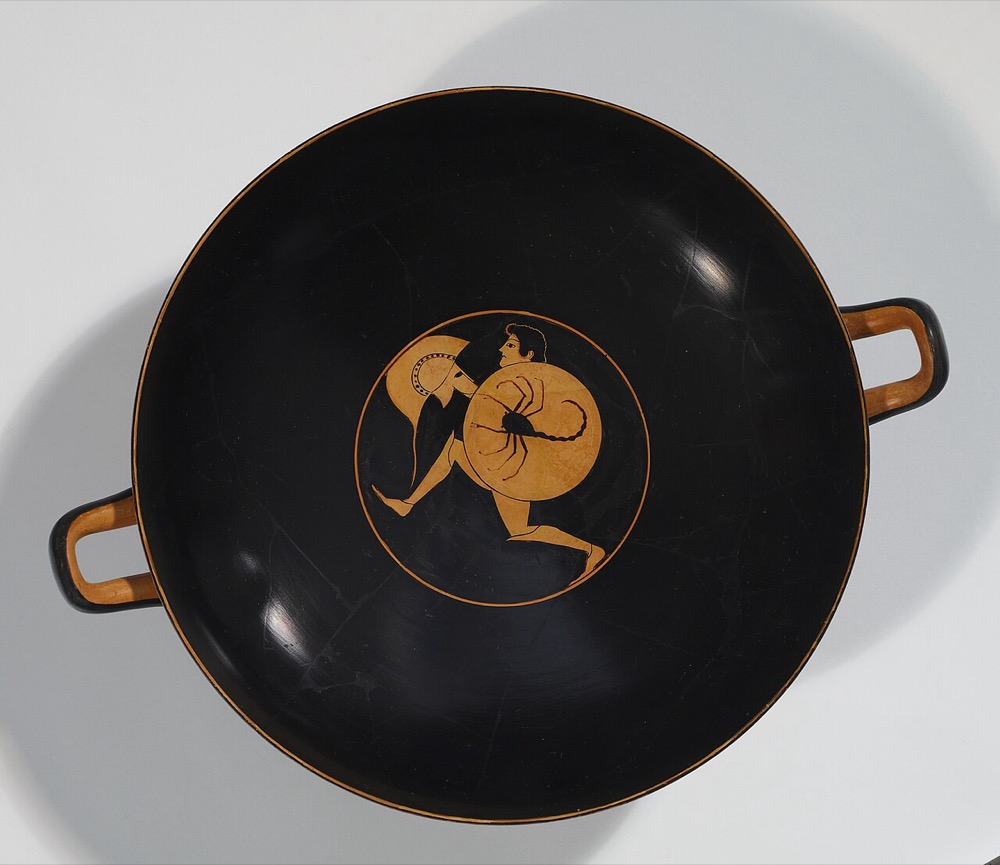
Figures are carved in relief on the pot
Figures are painted black and details are incised
Only geometric patterns are used
Figures stay the color of the clay and the background is painted black
Red-figure (from c. 530 BCE) reversed the older black-figure technique, in which figures are black silhouettes with incised details.
Why is the Laocoön group considered a key Hellenistic work?
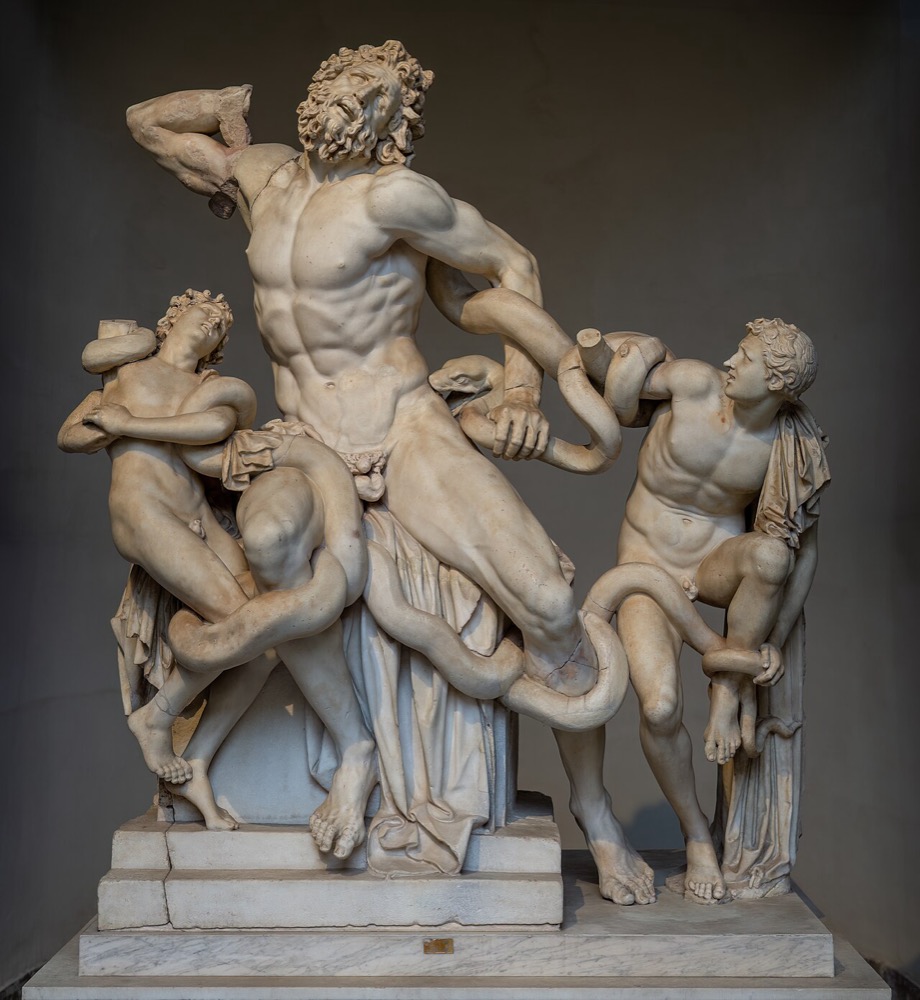
It shows intense emotion and diagonal, twisting movement
It is the earliest Greek nude statue
It uses a rigid Egyptian-style pose
It is a copy of a Roman emperor's portrait
Hellenistic sculptors favored pathos and drama. The group was unearthed in Rome in 1506 and influenced Michelangelo.
The Etruscan Sarcophagus of the Spouses is made of:
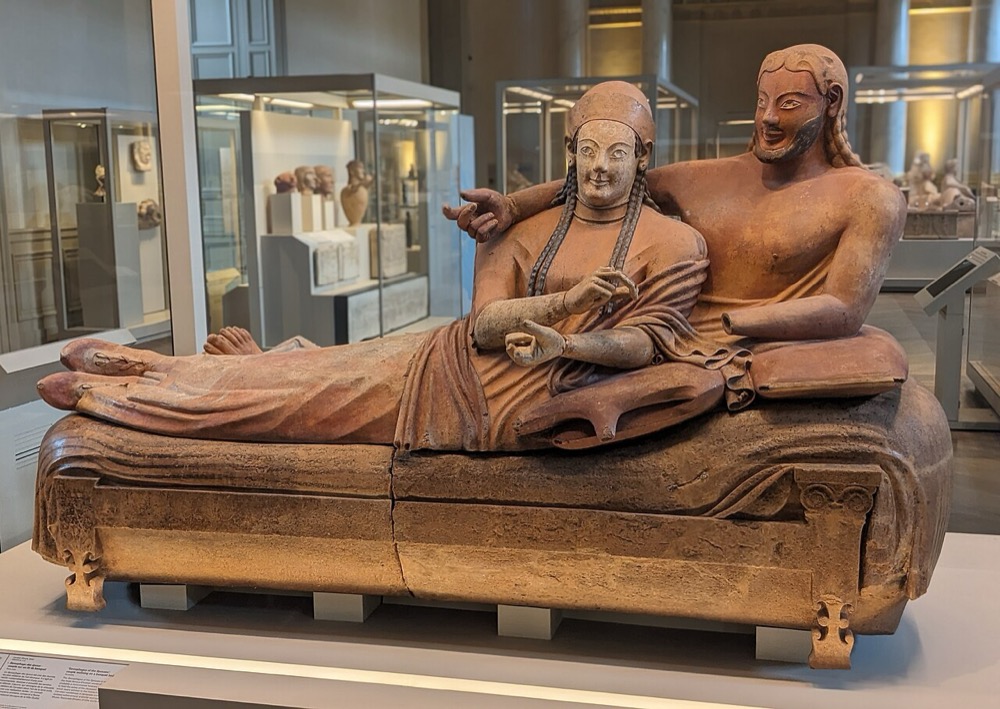
Carrara marble
Bronze
Gold and ivory
Painted terracotta
Etruscan artists excelled at terracotta. Gold and ivory is the chryselephantine method of Phidias.
What does the breastplate of the Augustus of Prima Porta commemorate?
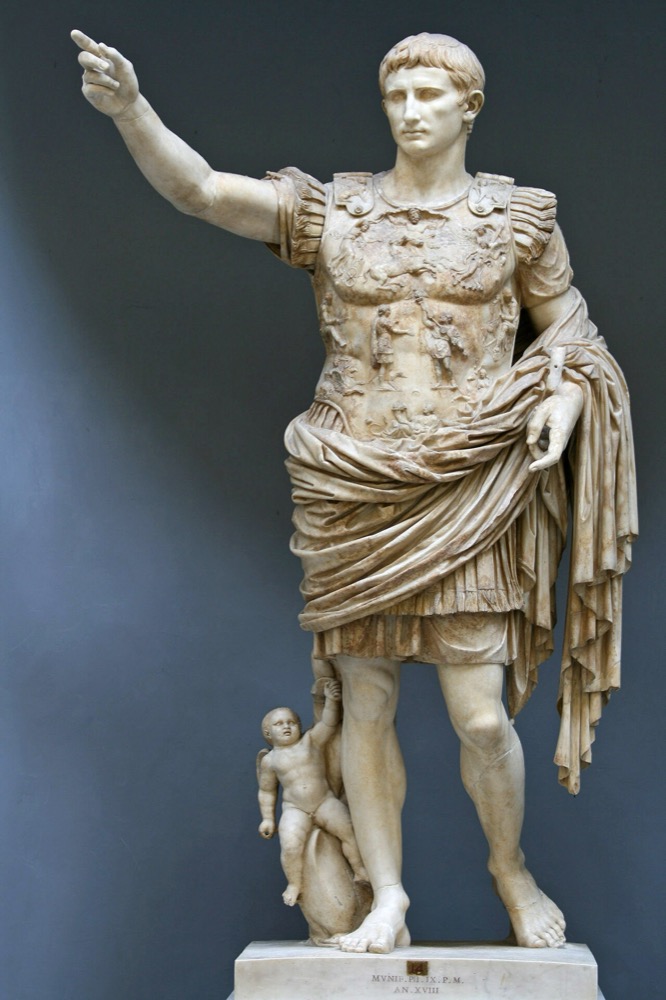
The defeat of Carthage
The conquest of Gaul by Julius Caesar
The return of Roman standards by the Parthians
The founding of the Colosseum
The scene shows a Parthian handing back standards lost at Carrhae (53 BCE), a diplomatic victory of 20 BCE presented as a triumph.
Which material allowed Romans to build huge domes and vaults such as the Pantheon's?
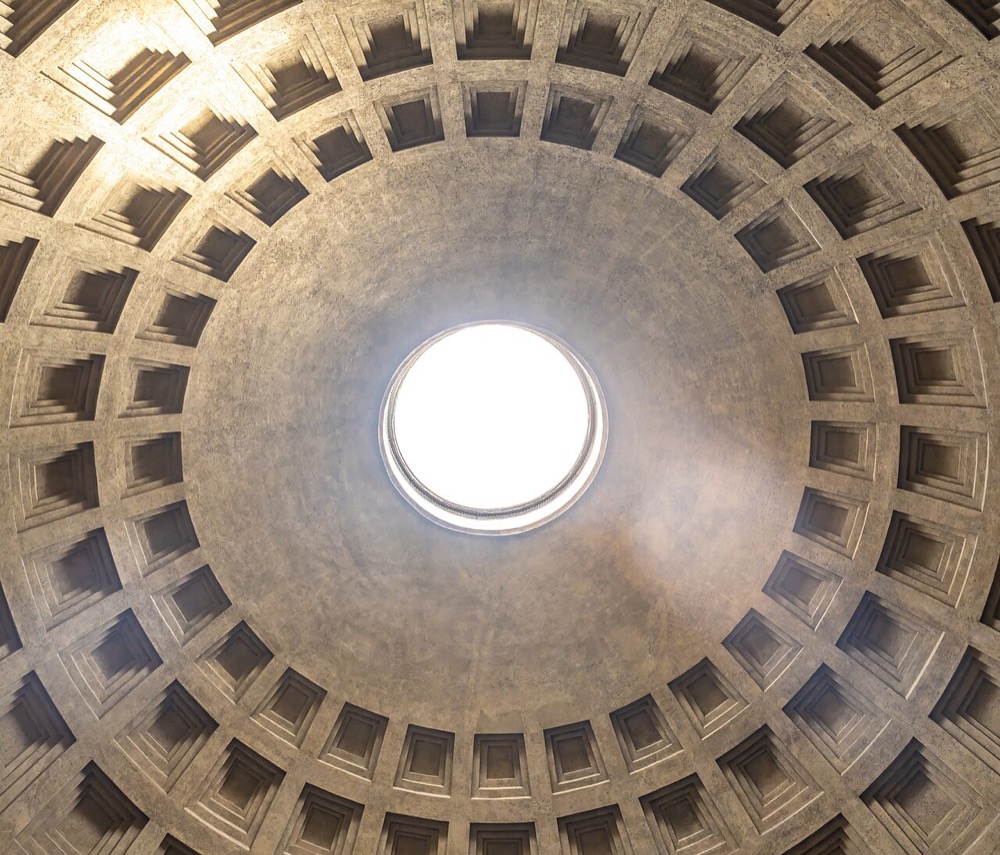
Concrete
Bronze
Timber
Mud brick
Roman concrete (lime, volcanic ash and rubble) could be cast into any shape, unlike Greek post-and-lintel stone construction.
The Colosseum's three tiers of arcades use which orders from bottom to top?
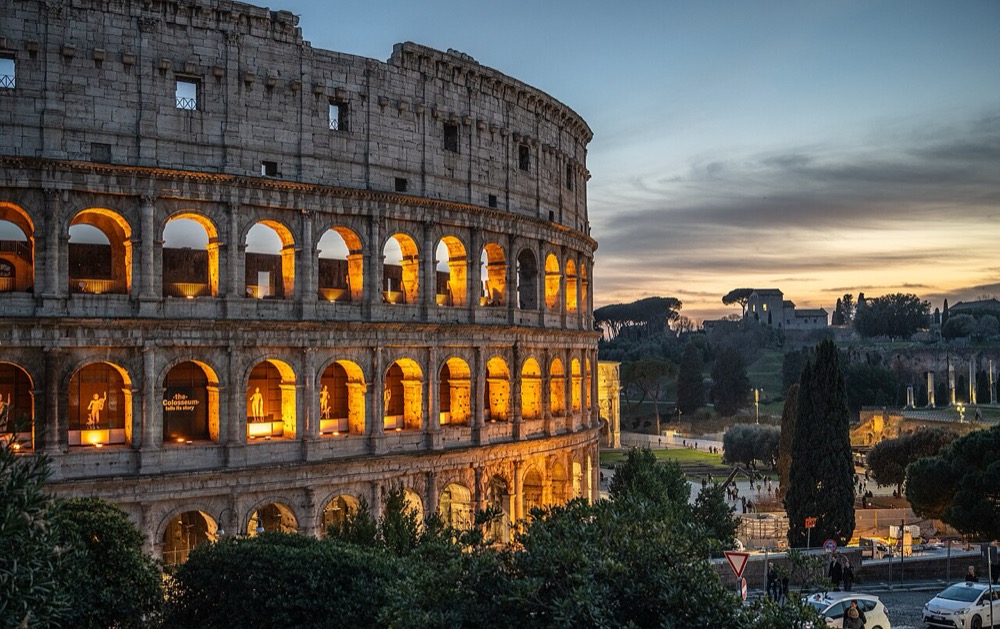
Doric, Ionic, Corinthian
Corinthian, Ionic, Doric
Tuscan, Doric, Ionic
Ionic, Doric, Corinthian
The Greek orders were stacked from the heaviest at the bottom to the most ornate at the top. A fourth level has Corinthian pilasters.
Pompeii's Villa of the Mysteries fresco shows initiation into the cult of:
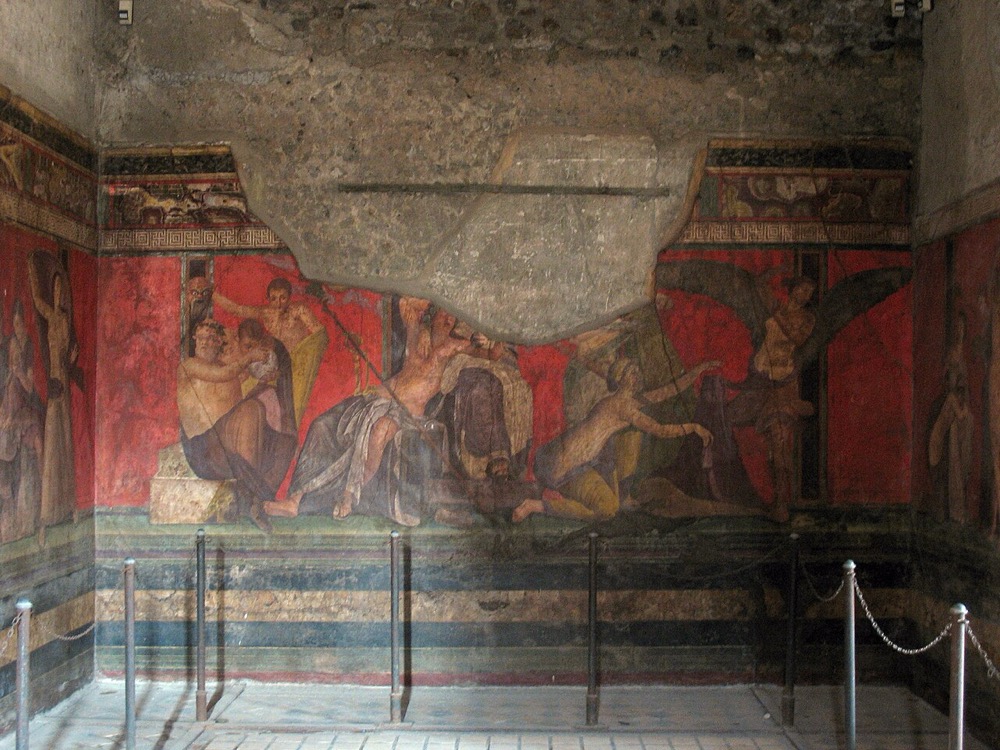
Mithras
Dionysus (Bacchus)
Isis
Apollo
The paintings are usually read as Dionysiac mysteries. Isis and Mithras were important cults, but they are not shown in this room.
True or false: the Parthenon is built entirely in the Ionic order.
False
True
Its exterior is Doric, with some Ionic elements such as the continuous cella frieze.
Which Chinese ruler is linked to the Terracotta Army?
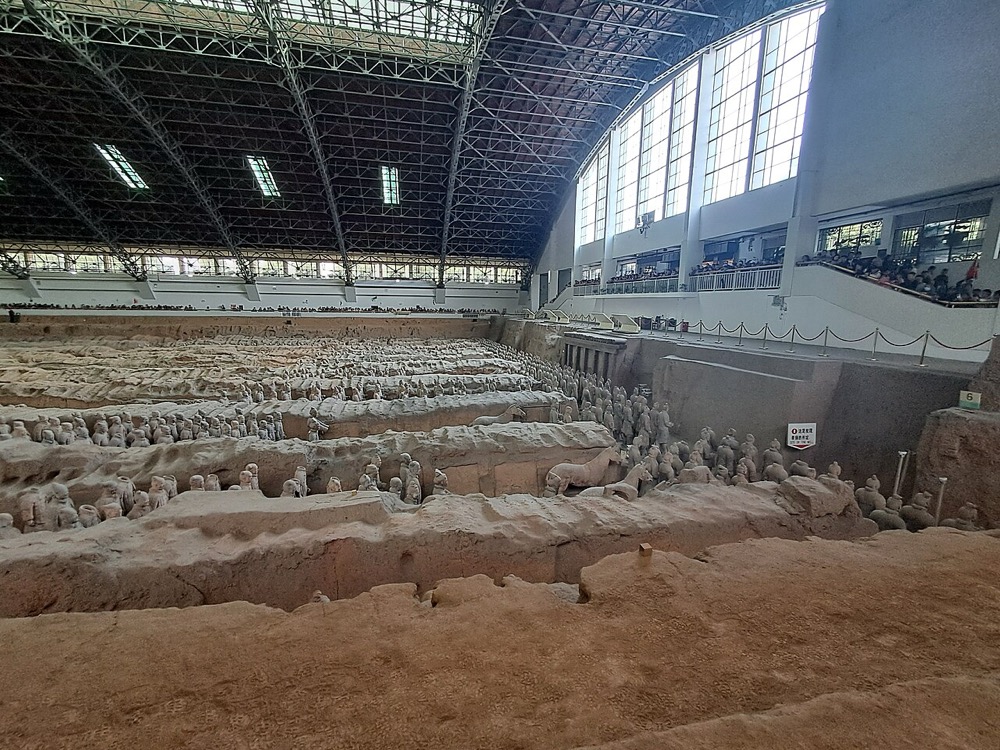
Qin Shi Huang
Tang Taizong
Han Wudi
Kublai Khan
Qin Shi Huang unified China in 221 BCE and was buried near Xi'an c. 210 BCE with thousands of clay soldiers, found in 1974.
Image: Ideophagous, CC BY-SA 4.0, via Wikimedia Commons.
What makes the Fayum mummy portraits historically important?
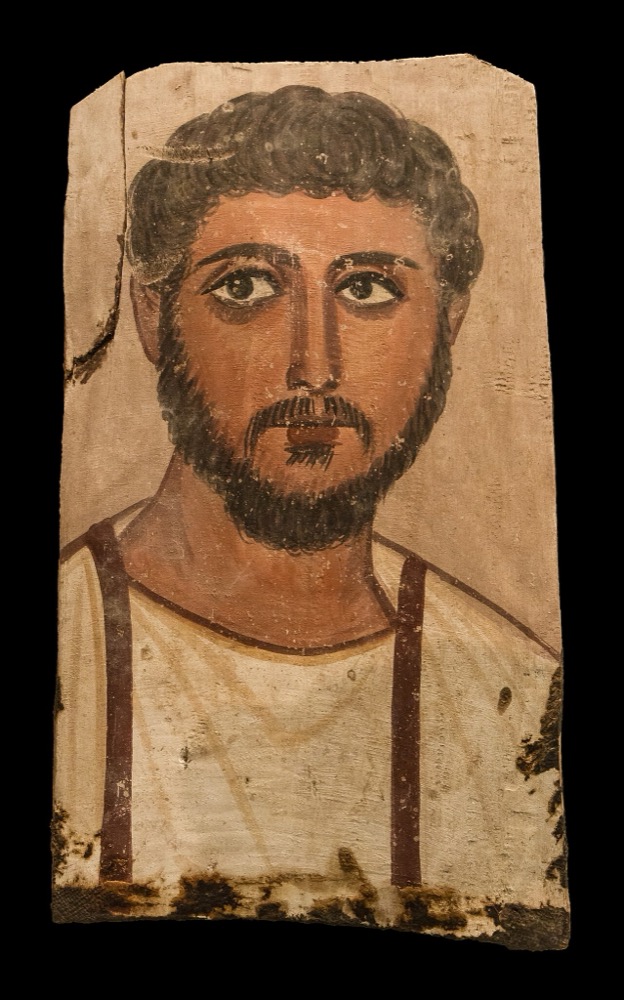
They are naturalistic painted portraits from Roman Egypt
They are Minoan frescoes from Crete
They are the oldest known cave paintings
They were carved by Assyrian sculptors
They link Egyptian burial customs with Greco-Roman portrait painting (1st-3rd centuries CE).
