Quiz · Medium
Stanza forms, meter, rhyme, sound devices and who wrote what, from Chaucer to Hughes.
Which stanza length is a quatrain?
Four lines
Three lines
Six lines
Two lines
Quatrain comes from the Latin for four. A couplet is two lines, a tercet three, and a sestet six.
A Shakespearean sonnet has which rhyme scheme?
ABAB CDCD EFEF GG
ABAB BCBC CDCD EE
AABBA
ABBAABBA CDECDE
The English sonnet is three quatrains and a couplet. ABBAABBA CDECDE is Petrarchan; ABAB BCBC CDCD EE is Spenserian; AABBA is a limerick.
In a Petrarchan sonnet, where does the volta usually fall?
After line 4
After line 8, between the octave and the sestet
At the very first line
After line 12
The octave raises a problem or question; the sestet turns and answers it. The late turn at line 12 or 13 belongs to the Shakespearean couplet.
Unrhymed iambic pentameter is called:
Free verse
Blank verse
Heroic couplet
Terza rima
Blank verse has meter but no rhyme. Free verse has neither fixed meter nor rhyme. Heroic couplets are rhymed iambic pentameter pairs.
Which form has 19 lines and two repeating refrains?
Villanelle
Ode
Ballad
Sestina
A villanelle has five tercets and a quatrain. A sestina has 39 lines with rotating end-words.
A sestina contains how many lines?
39
19
14
24
Six stanzas of six lines plus a three-line envoi: 36 + 3 = 39.
Which foot is da-DUM (unstressed, stressed)?
Dactyl
Trochee
Iamb
Anapest
An iamb is unstressed-stressed. A trochee is the reverse. A dactyl is DUM-da-da and an anapest is da-da-DUM.
Which of these describes a trochee?
One unstressed syllable followed by a stressed one
Two unstressed syllables followed by a stressed one
A stressed syllable followed by an unstressed syllable
Two stressed syllables
Trochee = DUM-da, as in "TY-ger". Two unstressed then a stressed is an anapest, and da-DUM is an iamb. Two stressed is a spondee.
How many feet are there in a line of pentameter?
Five
Ten
Six
Four
Penta means five. Ten is the usual number of syllables in iambic pentameter, not the number of feet.
A line of verse that runs on into the next line without punctuation or pause is an example of:
End-stopping
Caesura
Enjambment
Refrain
Enjambment carries the sense over the line break. A caesura is a pause inside a line. End-stopped lines finish a thought at the line end.
Emily Dickinson's frequent use of rhymes such as "room" and "storm" is called:
Perfect rhyme
Internal rhyme
Eye rhyme
Slant rhyme
Slant (near) rhymes match only partly. Perfect rhymes match fully. Internal rhyme is rhyme inside a line, and eye rhyme looks alike but sounds different.
Poe's line "Once upon a midnight dreary, while I pondered, weak and weary" shows which sound device?
Enjambment
Internal rhyme
End rhyme only
Slant rhyme
Dreary and weary rhyme within the same line, so the rhyme is internal.
Which poet wrote Leaves of Grass?
Emily Dickinson
Edgar Allan Poe
Walt Whitman
Robert Frost
Whitman self-published the first edition in 1855 and kept revising it for the rest of his life.
Who is the poet in this portrait?
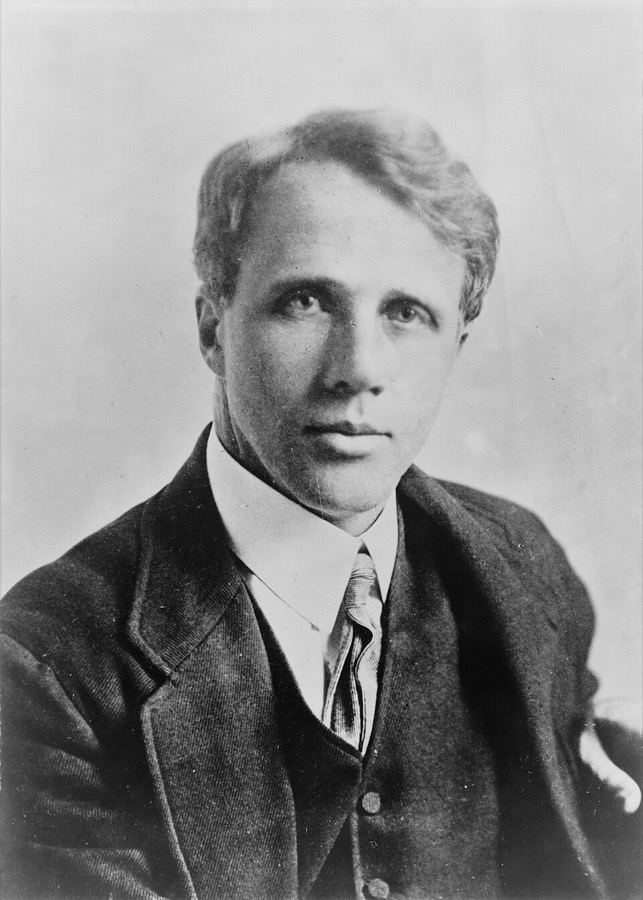
Lord Byron
Robert Frost
T. S. Eliot
Langston Hughes
Robert Frost (1874-1963) wrote of rural New England life in plain, conversational language and traditional forms. Image: public domain via Wikimedia Commons.
"Two roads diverged in a yellow wood" opens a poem by:
Alfred Tennyson
Langston Hughes
William Wordsworth
Robert Frost
This is "The Road Not Taken" (1916). The speaker admits both roads were "really about the same".
"What happens to a dream deferred?" is asked in a poem by:
Langston Hughes
T. S. Eliot
Maya Angelou
Robert Frost
Hughes's "Harlem". The title of Lorraine Hansberry's play A Raisin in the Sun comes from its second line.
Who wrote "Ozymandias"?
John Keats
William Blake
Lord Byron
Percy Bysshe Shelley
Shelley's sonnet (1818) shows a ruined statue in the desert: the proud inscription outlasts the empire it boasted of.
Which two poets published Lyrical Ballads (1798), often seen as the start of English Romanticism?
Byron and Blake
Keats and Shelley
Tennyson and Browning
Wordsworth and Coleridge
Wordsworth and Coleridge published it in 1798, with a Preface by Wordsworth added in 1800. Keats and Shelley belong to the later, second generation.
"Beauty is truth, truth beauty" ends which poem?
"Ode to the West Wind" by Shelley
"Ode on a Grecian Urn" by John Keats
"The Tyger" by Blake
"To Autumn" by Keats
The urn's last words to humankind close Keats's ode. Shelley's ode ends with a question about spring, and Blake's "The Tyger" ends with a repeated question about its creator.
The Canterbury Tales was written in which language?
Old English
Middle English
Early Modern English
Latin
Chaucer wrote in Middle English (c. 1387-1400). Beowulf is in Old English.
In Dante's Divine Comedy, which rhyme scheme did Dante invent?
Ottava rima
Terza rima
Heroic couplet
Ballad stanza
Terza rima interlocks tercets: ABA BCB CDC. It mirrors the poem's three-part structure.
A poem spoken by a character who reveals himself unintentionally, such as Browning's "My Last Duchess", is a:
Dramatic monologue
Ballad
Elegy
Ode
The Duke's own words reveal his possessive cruelty. An ode praises, an elegy mourns, and a ballad tells a story in simple stanzas.
Wilfred Owen calls the line "Dulce et decorum est pro patria mori" "the old Lie" because:
He thinks Latin is a dead language
He believes the soldier's duty should be to the king
He shows from his experience of war that dying for one's country is not sweet or fitting
It was misquoted by the army
The poem's gas attack shows horrific suffering. Owen is attacking the patriotic myth, not Latin or the quote's accuracy.
Which movement stressed precise images and economical language, as in Pound's "In a Station of the Metro"?
The Beat movement
Metaphysical poetry
Imagism
Romanticism
Imagists (Pound, H.D., Amy Lowell) aimed for direct treatment of the thing and no unnecessary words.
Metaphysical conceits are associated with:
Walt Whitman
Alexander Pope
John Donne
William Wordsworth
Donne compares lovers to the two legs of a compass in "A Valediction: Forbidding Mourning". Pope is known for heroic couplets, Wordsworth for nature poetry, Whitman for free verse.
Emily Dickinson published most of her roughly 1,800 poems during her lifetime.
True
False
Only a handful appeared in print during her life, usually anonymously; her sister found the rest after her death in 1886.
Which portrait shows Emily Dickinson?
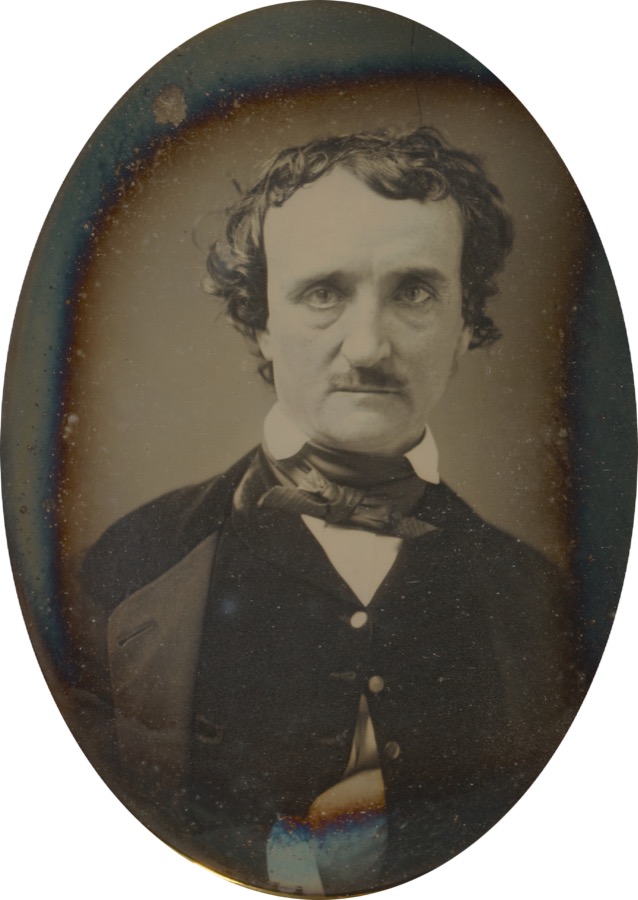
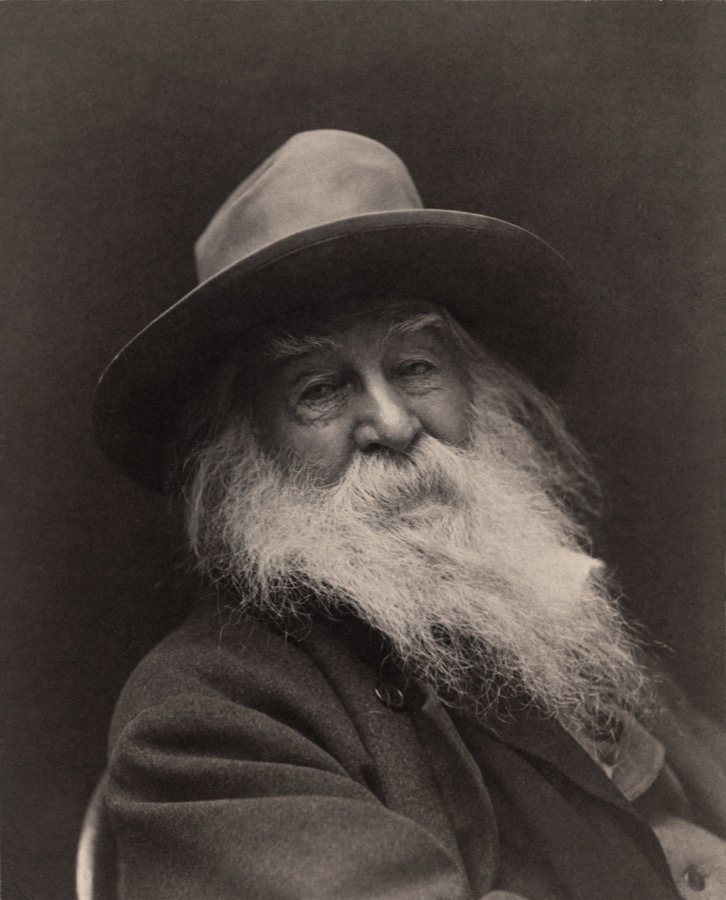
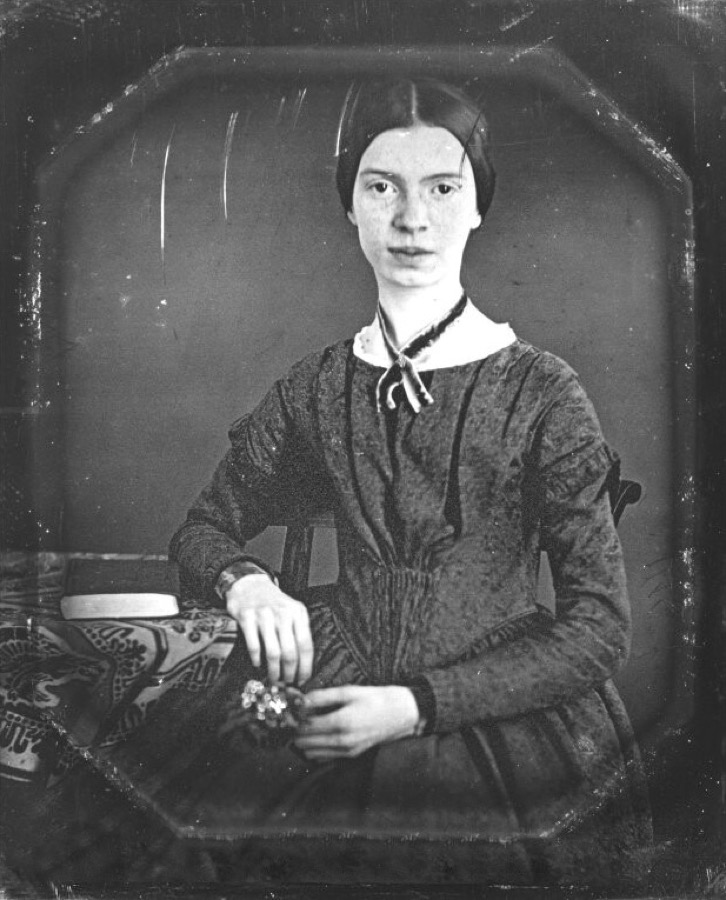
Only the daguerreotype of the young woman is Dickinson. Image: public domain via Wikimedia Commons. The others are Whitman, Frost and Poe.
