Quiz · Hard
Harder, essay-style questions comparing Hobbes, Locke and Rousseau, and evaluating the achievements and limits of Frederick, Catherine and Joseph.
Which statement best contrasts Hobbes and Locke?
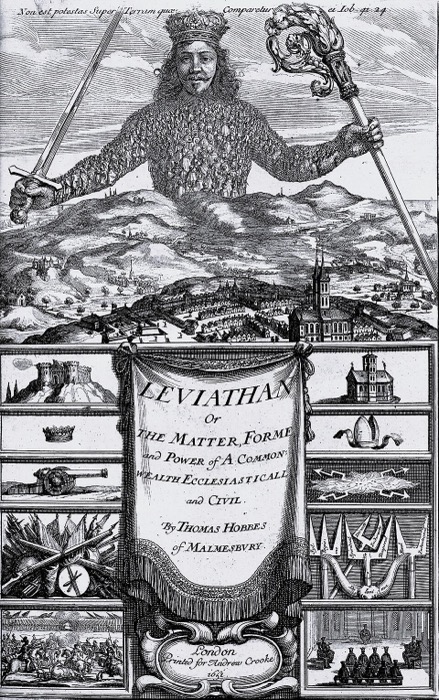
Hobbes believed in the right of revolution; Locke did not.
Locke defended divine right; Hobbes denied it.
Hobbes accepted absolute sovereignty to avoid chaos, while Locke thought government should be limited by natural rights and consent.
Both opposed the idea of a social contract.
Hobbes's Leviathan (1651) was written during the English Civil War; Locke's Two Treatises (1689) defended the Glorious Revolution. Both used social contract ideas but reached different conclusions.
How did Rousseau's views differ from many other philosophes?
He believed that absolute monarchs were best.
He championed the free market.
He distrusted the effect of civilization and stressed feeling and popular sovereignty over enlightened monarchy.
He supported a state church.
Rousseau's Discourses argued that progress corrupts. This made him both a hero of revolutionaries and a critic of the mainstream Enlightenment.
Which pair of thinkers is correctly matched with a work?
Diderot: The Spirit of the Laws; Montesquieu: The Social Contract
Beccaria: On Crimes and Punishments; Smith: The Wealth of Nations
Voltaire: Leviathan; Hobbes: Candide
Kant: Émile; Rousseau: Critique of Pure Reason
The mismatched answers swap authors. Spirit of the Laws is Montesquieu's, the Social Contract is Rousseau's, Leviathan is Hobbes's, Candide is Voltaire's, Émile is Rousseau's, and the Critique of Pure Reason is Kant's.
Which description of David Hume is accurate?
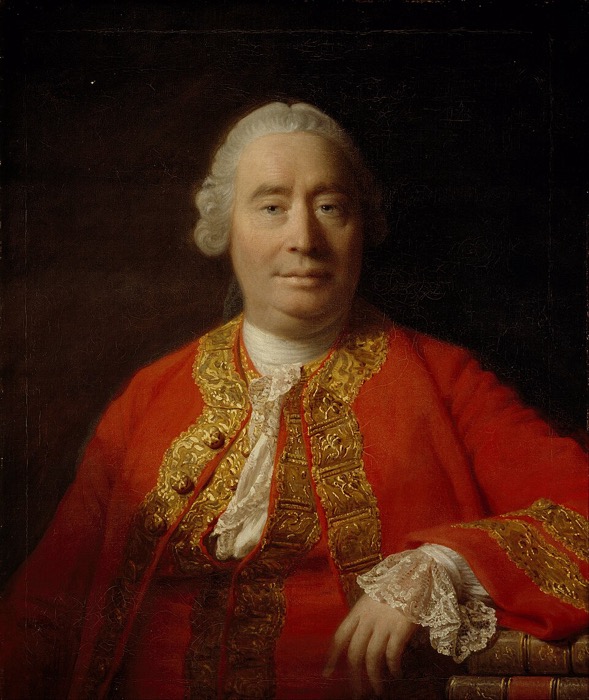
A Scottish empiricist and skeptic who questioned causation and the evidence for miracles
A French rationalist who wrote the Encyclopédie
A German idealist who wrote the Critique of Pure Reason
An English absolutist who wrote Leviathan
Hume's skepticism challenged Enlightenment confidence and prompted Kant's response.
Why did Enlightenment thinkers admire England in the early 18th century?
It had an absolute monarch who patronized philosophers.
It had abolished the Church of England.
It had abolished slavery.
It had a limited monarchy after 1688, religious toleration for Protestants, a free press and Newton's science.
Voltaire's Letters on the English (1734) praised these features. England still had restrictions on Catholics, and slavery was legal and profitable.
Which condition best explains why public discussion of Enlightenment ideas grew in the 18th century?
Governments abolished all censorship
Universities became the main places for debate
Growth of print, literacy, periodicals, coffeehouses and salons created a public sphere
The Church sponsored the philosophes
Censorship remained, but books were published abroad or anonymously. Universities were often conservative, and the Church often opposed philosophes.
What was a main purpose of the Encyclopédie's plates and trade articles?
To show the value of practical skills and to spread useful knowledge, challenging the dominance of theology
To teach the Catholic catechism
To promote royal absolutism
To record the history of France
Diderot wanted to 'change the common way of thinking'. The project was repeatedly suspended by authorities.
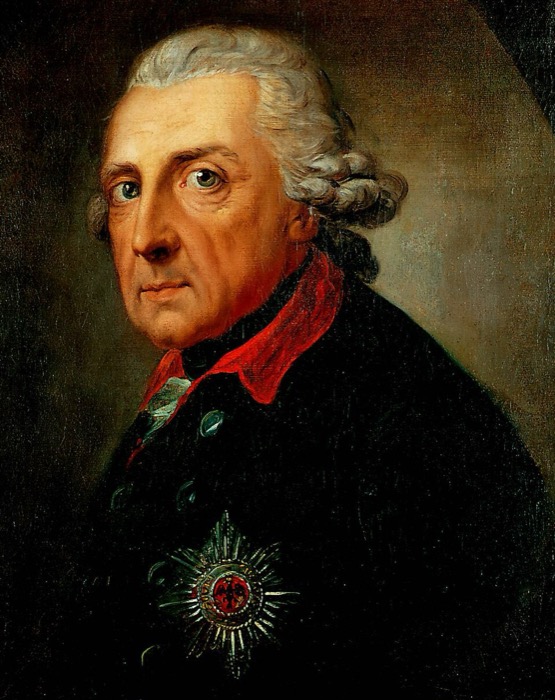
Which statement about Frederick the Great is accurate?
He abolished serfdom in Prussia.
He was a pacifist who avoided war.
He rejected all Enlightenment ideas.
He promoted toleration and legal reform but kept serfdom and expanded Prussia by force.
He invaded Silesia in 1740 and fought the Seven Years' War. He called himself 'the first servant of the state'.
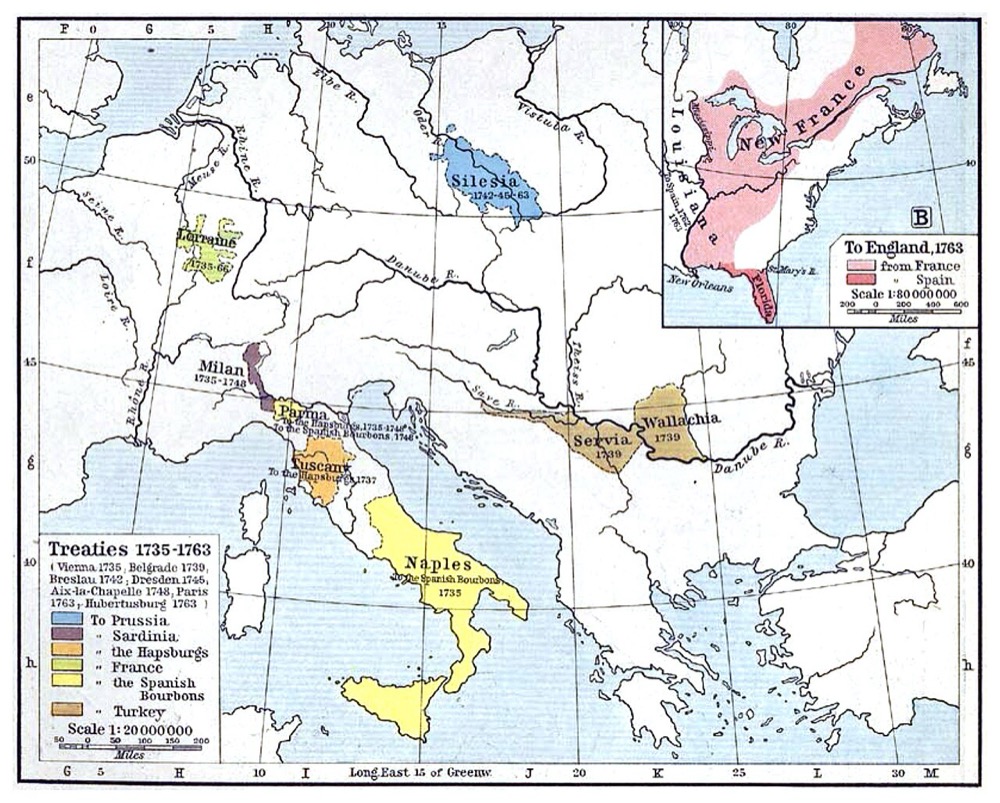
Which treaty confirmed Prussia's hold on the territory that the blue area on this map shows?
Westphalia (1648)
Hubertusburg (1763)
Utrecht (1713)
Vienna (1815)
The blue region is Silesia, taken from Austria in 1740-42. The Treaty of Hubertusburg ended the Seven Years' War there; Westphalia and Utrecht were earlier, and Vienna was later.
Which statement best describes the reforms of Joseph II after his death in 1790?
They were extended by his brother Leopold II without changes
Many were reversed or abandoned because of noble, church and regional opposition
They became the basis of a constitutional monarchy
They were adopted by Russia
Joseph's rapid reforms triggered revolts in Hungary and the Austrian Netherlands. Leopold II kept some changes (toleration) but undid others.
Which of the following was a result of the Pugachev Rebellion?
Russian serfs were freed
Catherine called a parliament
Russia adopted a constitution
Catherine II reinforced noble power and administration
The Charter to the Nobility (1785) and provincial reform followed. The Nakaz (1767) came before the rebellion.
What was the main significance of the Partitions of Poland (1772-95) for the Enlightenment era?
They showed that great powers, including enlightened monarchs, put power politics above principles of law and rights.
They created a new republic based on Rousseau's ideas.
They ended the Seven Years' War.
They made Poland a constitutional monarchy under Russia.
Frederick, Catherine and Maria Theresa/Joseph II all took part, even though some, like Maria Theresa, had qualms. Poland disappeared until 1918.
Which statement about the Enlightenment's influence on the French Revolution is most accurate?
Enlightenment ideas alone caused the Revolution.
The Enlightenment was irrelevant to the Revolution.
Its ideas gave revolutionaries vocabulary and principles, but social and financial crises were also essential.
All philosophes supported the Revolution.
The 1789 Declaration drew on Locke, Montesquieu and Rousseau. Many philosophes had died before 1789, and some who lived disagreed with its later radicalism.
Which Enlightenment text is shown here, and what is its main theme?
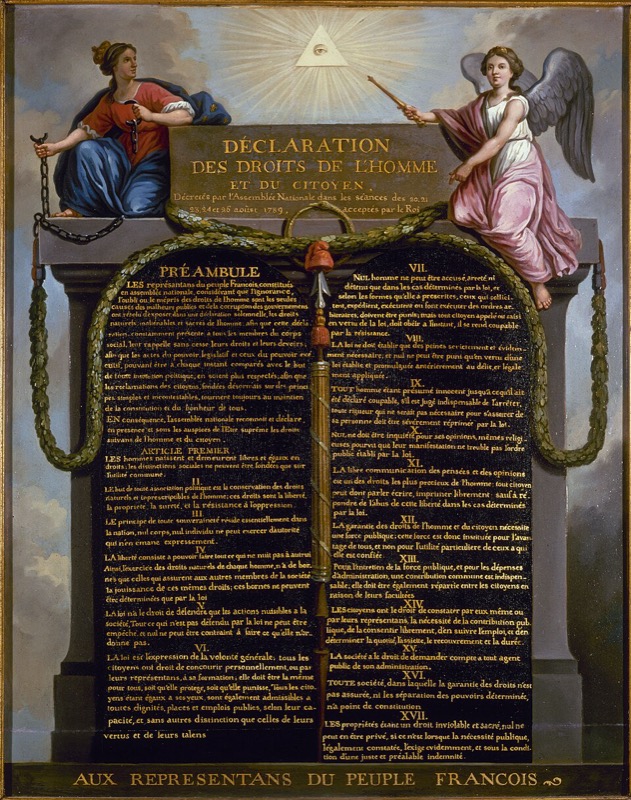
The Wealth of Nations; free markets
Leviathan; absolute sovereignty
Declaration of the Rights of Man and of the Citizen; natural rights and equality before the law
The Nakaz; legal reform in Russia
The 1789 Declaration claimed that men are born free and equal in rights and that sovereignty rests in the nation. It left out women and enslaved people at first.
Which portrait shows Jean-Jacques Rousseau?
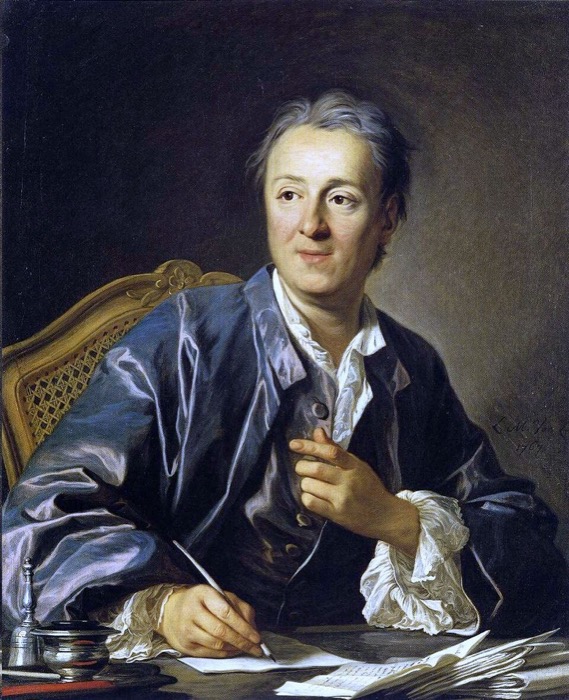
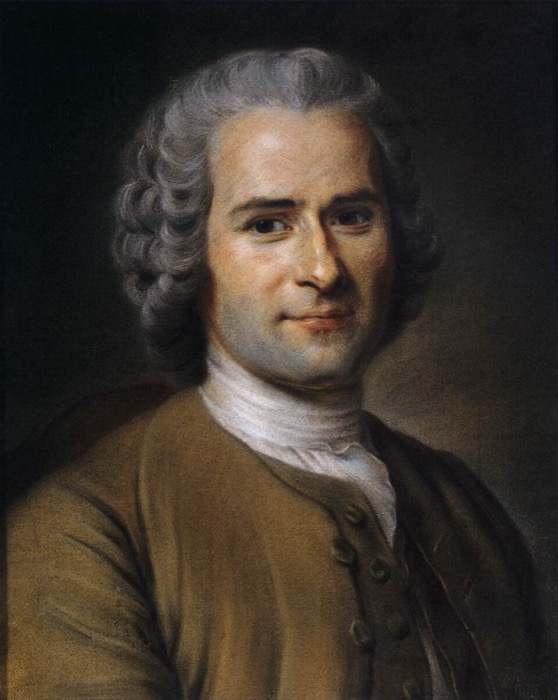
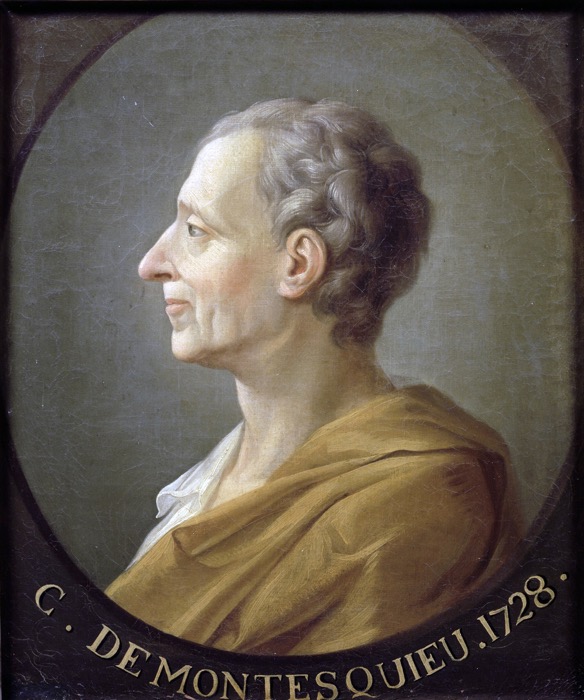
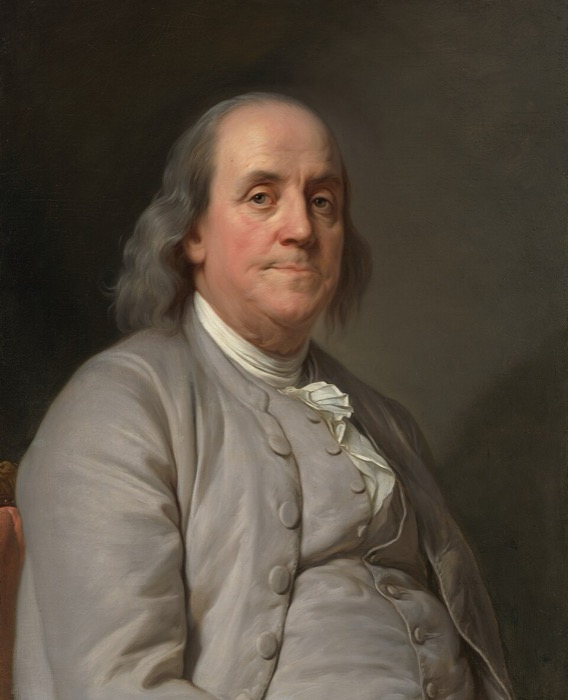
The pastel by Maurice Quentin de La Tour shows Rousseau. The others show Diderot, Montesquieu and Franklin. Image: public domain, via Wikimedia Commons.
True or false: Enlightened rulers like Catherine the Great abolished serfdom in Russia.
True
False
Serfdom expanded under Catherine, whose Charter to the Nobility (1785) confirmed noble control. Joseph II ended personal serfdom in the Habsburg lands (1781), but Russia's serfs were freed only in 1861.
