Quiz · Medium
Chant, Renaissance polyphony, the Baroque and the Classical masters, with portraits and manuscripts.
Who composed L'Orfeo (1607), an early operatic masterpiece?
Handel
Monteverdi
Vivaldi
Purcell
Monteverdi's opera premiered in Mantua.
Which era of Western art music is shown as the second box, covering roughly 1400-1600, in this timeline?
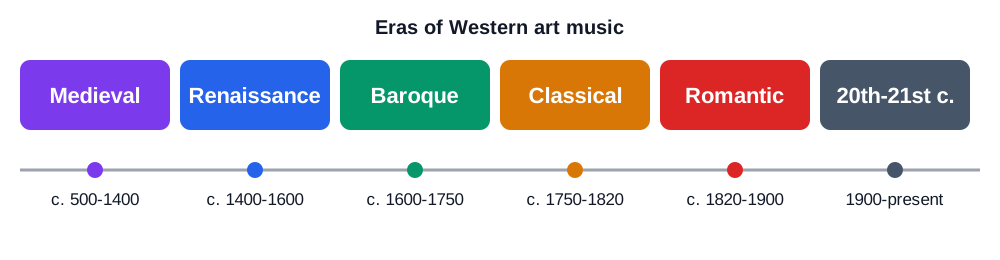
Baroque
Renaissance
Medieval
Classical
Renaissance: smooth imitative vocal polyphony.
What is the term for unaccompanied single-line sacred song of the medieval Church?
Organum
Madrigal
Gregorian chant
Motet
Gregorian chant is monophonic and in Latin.
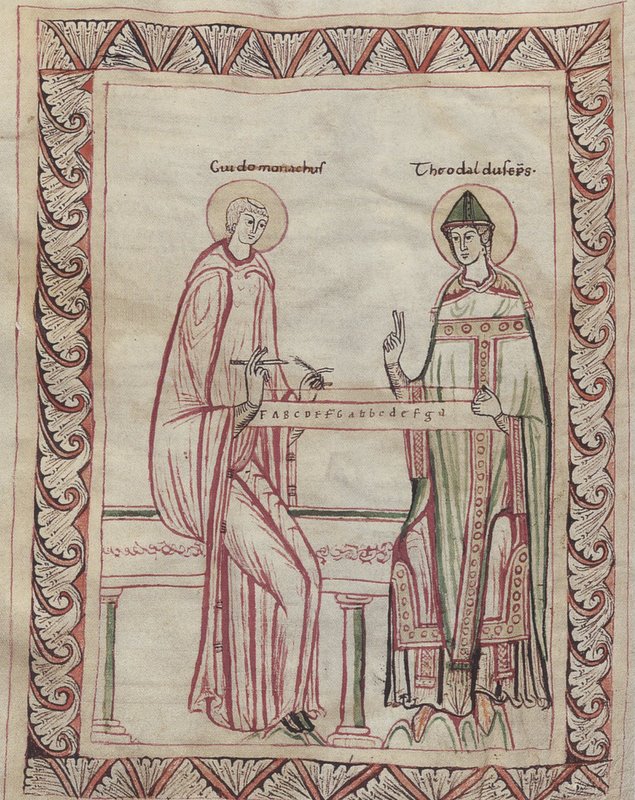
Guido of Arezzo, shown teaching with Bishop Theodald, is credited with developing what?
The piano
Opera
Equal temperament
Staff notation and the ut-re-mi syllables
His system helped singers learn chants quickly.
Image: Unknown scribe and illuminator, public domain, via Wikimedia Commons.
Which abbess, shown in this miniature, composed the morality play Ordo Virtutum?
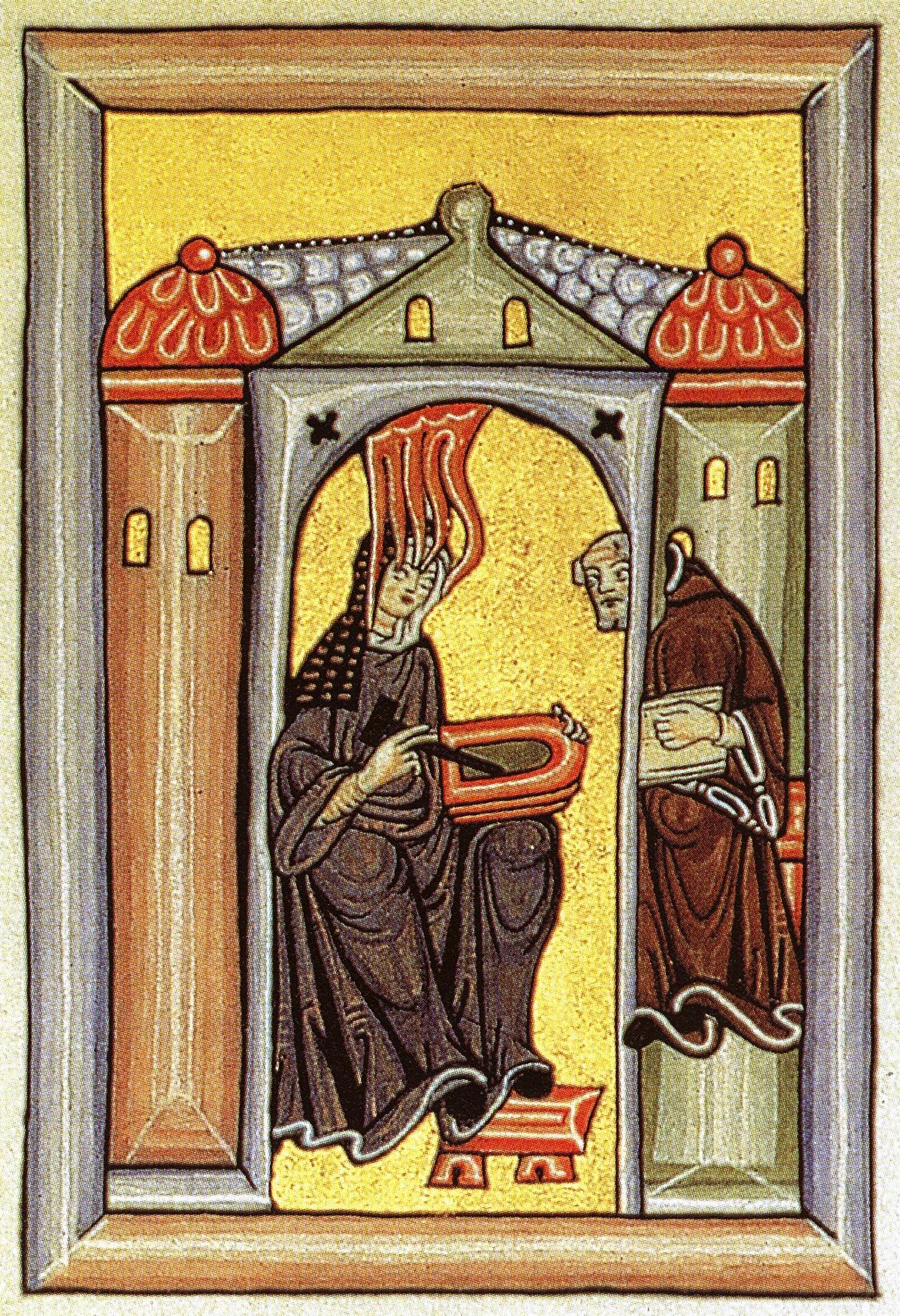
Hildegard von Bingen
Clara Schumann
Francesca Caccini
Joan of Arc
Hildegard (1098-1179) is among the earliest composers known by name.
Image: Unknown artist, public domain, via Wikimedia Commons.
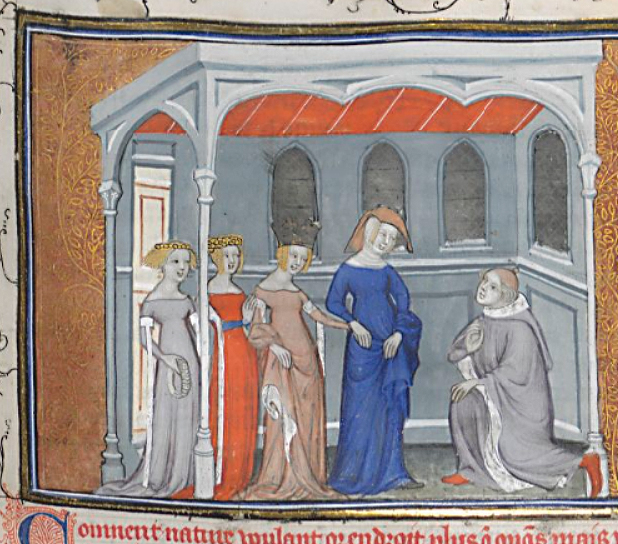
Machaut's Messe de Nostre Dame is notable as what?
The first opera
A complete Mass Ordinary by one composer in polyphony
The first symphony
A set of Lieder
It is regarded as the first complete polyphonic Mass Ordinary attributed to one composer.
Image: Unknown illuminator, public domain, via Wikimedia Commons.
The 1501 Harmonice Musices Odhecaton by Petrucci is significant because it was what?
The first opera score
The first printed collection of polyphony from movable type
Bach's first cantata
A manual of figured bass
Printing spread polyphonic music widely.
Which composer is shown in this woodcut, often called the 'prince of music' in his day?
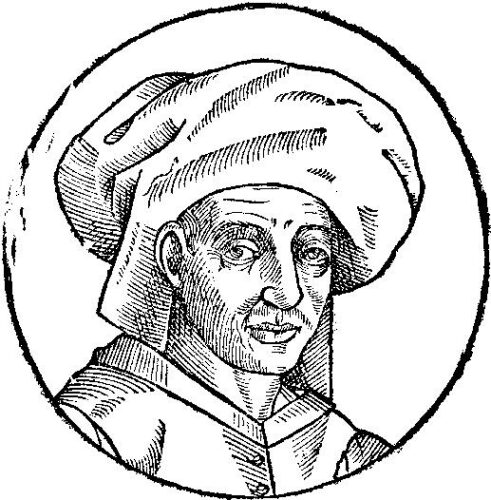
Palestrina
Josquin des Prez
Monteverdi
Lassus
Josquin (c. 1450/55-1521) mastered imitative polyphony.
Image: Unknown artist, public domain, via Wikimedia Commons.
Which feature defines Baroque basso continuo?
A bass line with chords filled in on harpsichord or organ
An a cappella vocal style
A single unaccompanied melody
Pure atonality
A bass instrument plus a chord instrument realizing figured bass.
This portrait shows the composer of the Brandenburg Concertos. Who is he?
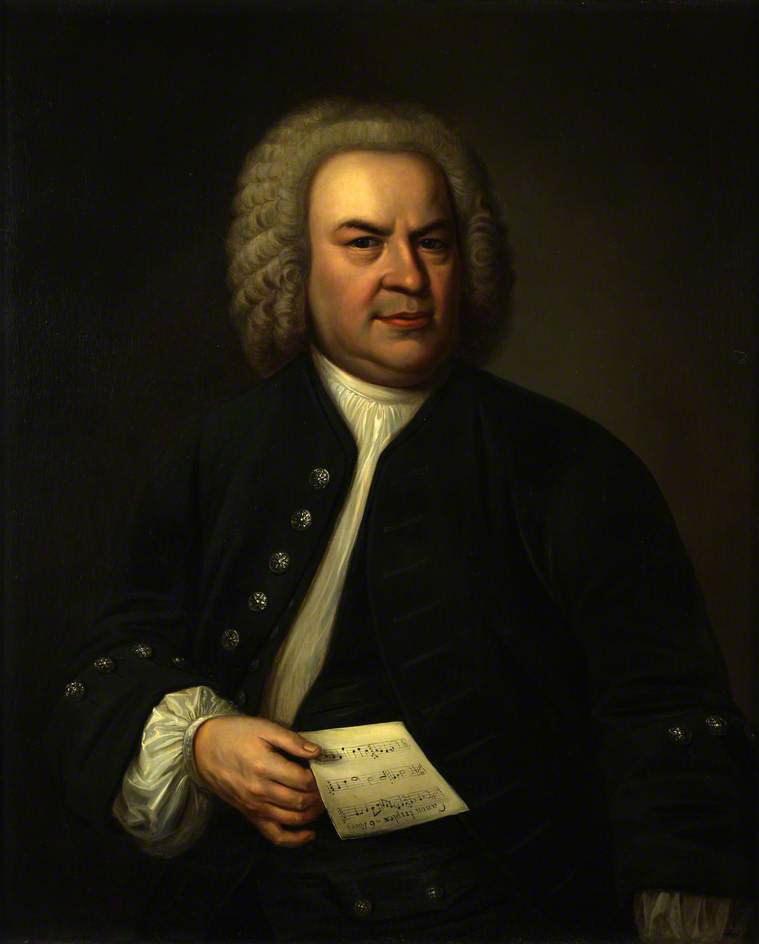
Handel
Haydn
Vivaldi
Johann Sebastian Bach
Bach composed them in 1721 for the Margrave of Brandenburg.
Image: Elias Gottlob Haussmann, public domain, via Wikimedia Commons.
This is Bach's autograph from 1720. For which instrument did he write this sonata (BWV 1001)?
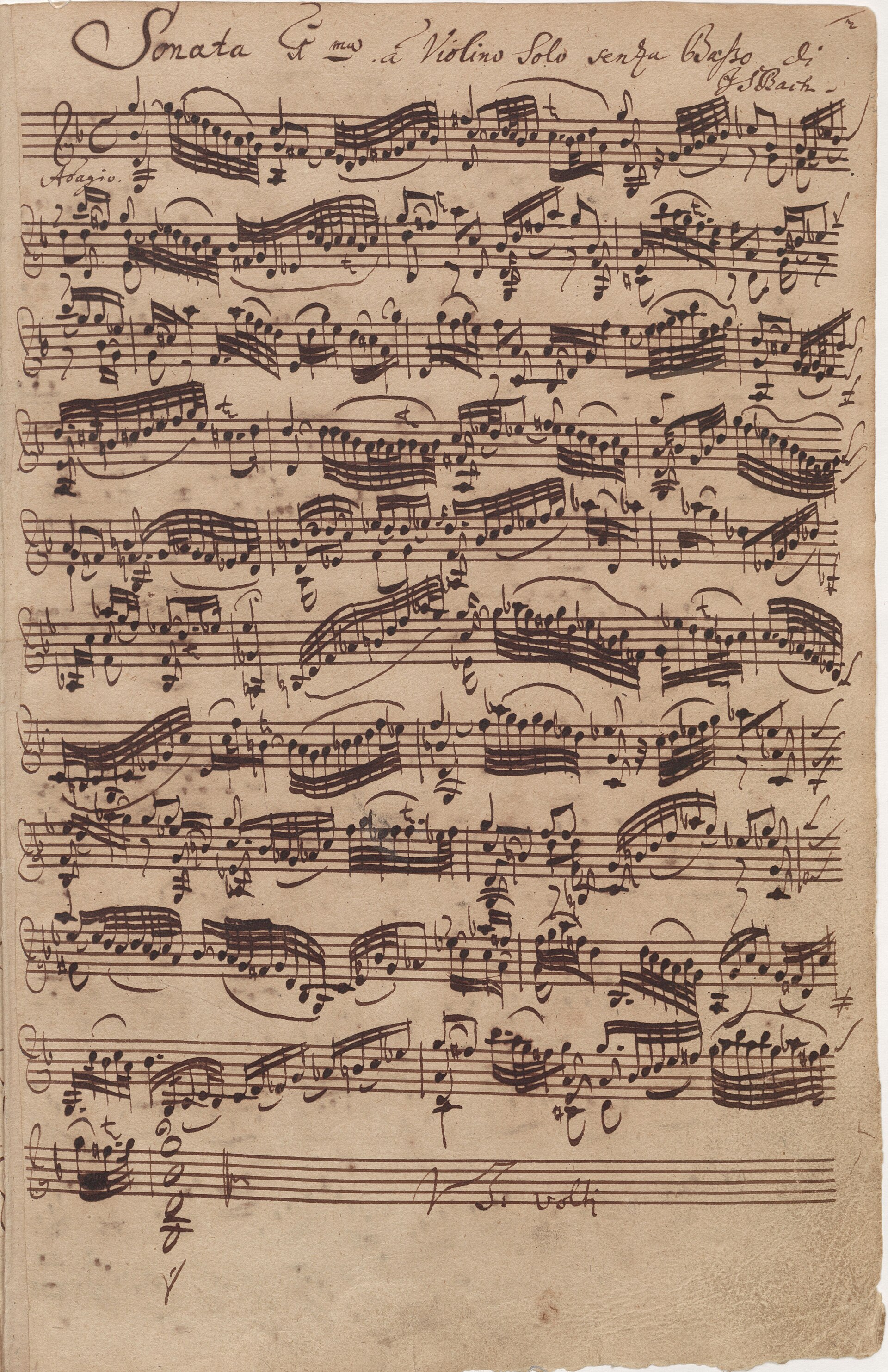
Solo violin
Solo cello
Organ
Harpsichord and flute
BWV 1001 is Sonata No. 1 in G minor for solo violin.
Image: J. S. Bach (autograph), public domain, via Wikimedia Commons.
Handel's Messiah is which type of work?
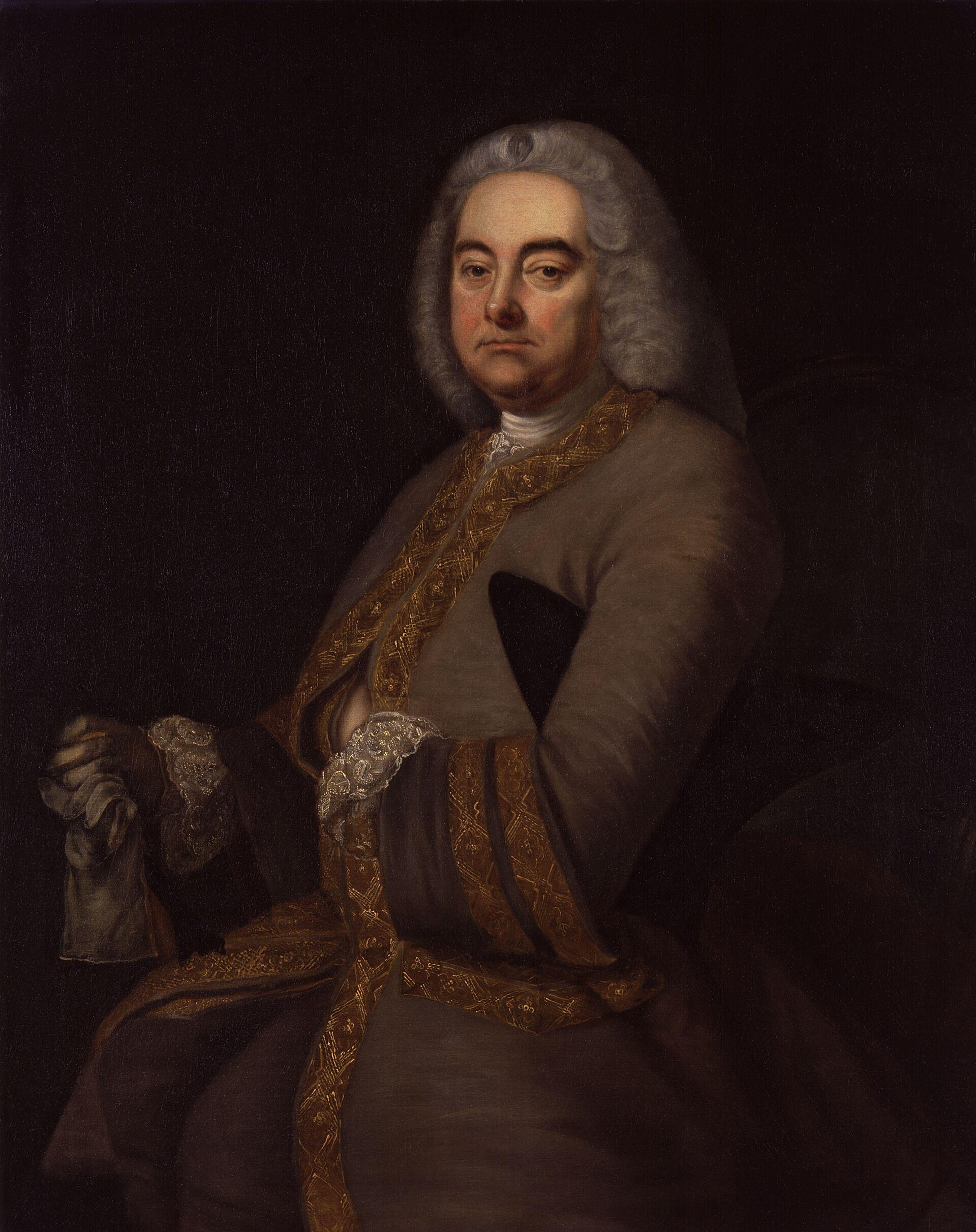
Oratorio
Opera seria
Concerto grosso
Mass
Messiah (1741) is a sacred oratorio in English.
Image: Thomas Hudson, public domain, via Wikimedia Commons.
Vivaldi's The Four Seasons is a set of what?
Four violin concertos
Four string quartets
Four organ fugues
Four ballets
Published in 1725 with accompanying sonnets.
What are terraced dynamics?
Slow crescendos over a phrase
Sudden changes between loud and soft
Constant mezzo forte
Use of the damper pedal
Typical of harpsichord and organ writing.
Which three sections make up sonata form?
Verse, chorus, bridge
Theme, variations, coda
Exposition, development, recapitulation
Introduction, fugue, finale
Classical composers built first movements on this plan.
Which composer, shown here, is called the 'father of the symphony'?
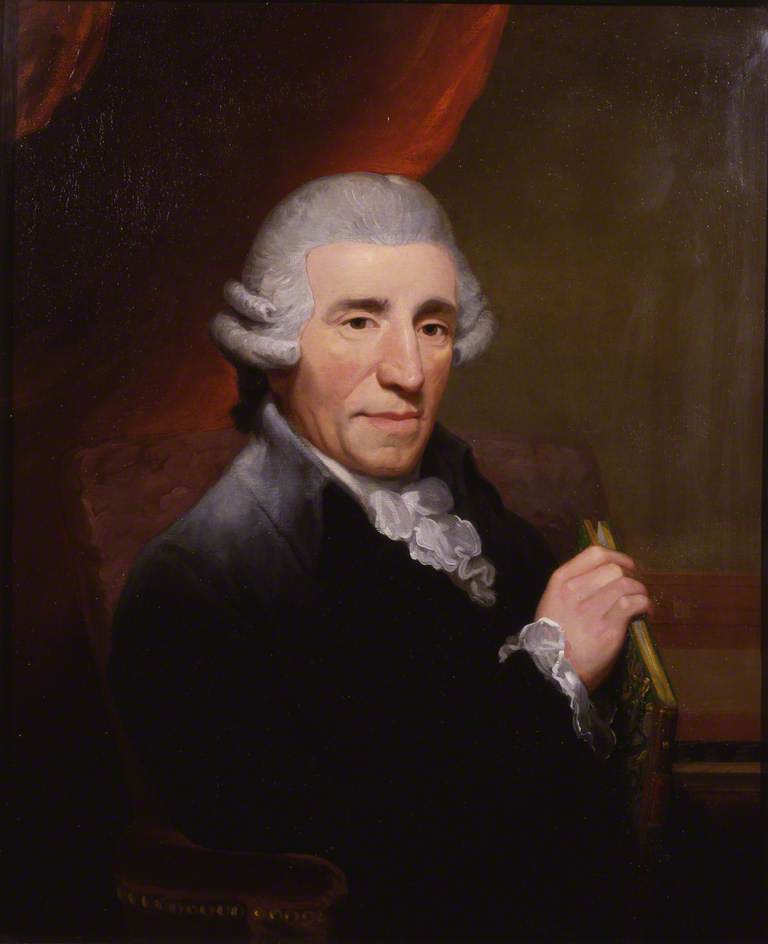
Mozart
Haydn
Schubert
Brahms
Haydn wrote 104 numbered symphonies.
Image: Thomas Hardy, public domain, via Wikimedia Commons.
This autograph is of which Mozart symphony, nicknamed after a city?
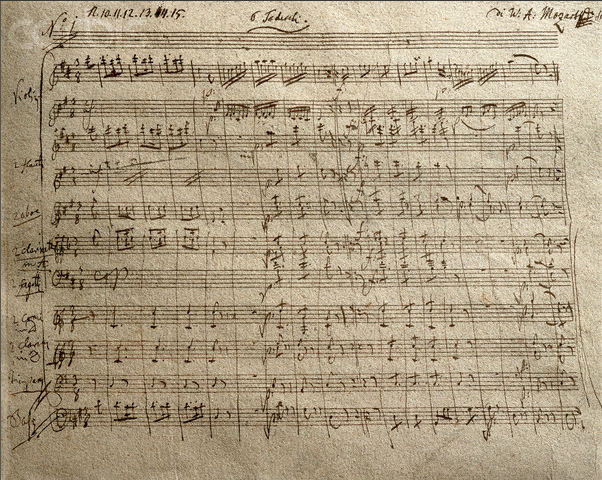
Linz
Jupiter
Haffner
Prague
Symphony No. 38, K. 504, 1786.
Image: W. A. Mozart (autograph), public domain, via Wikimedia Commons.
Which Beethoven symphony ends with a chorus singing Schiller's 'Ode to Joy'?
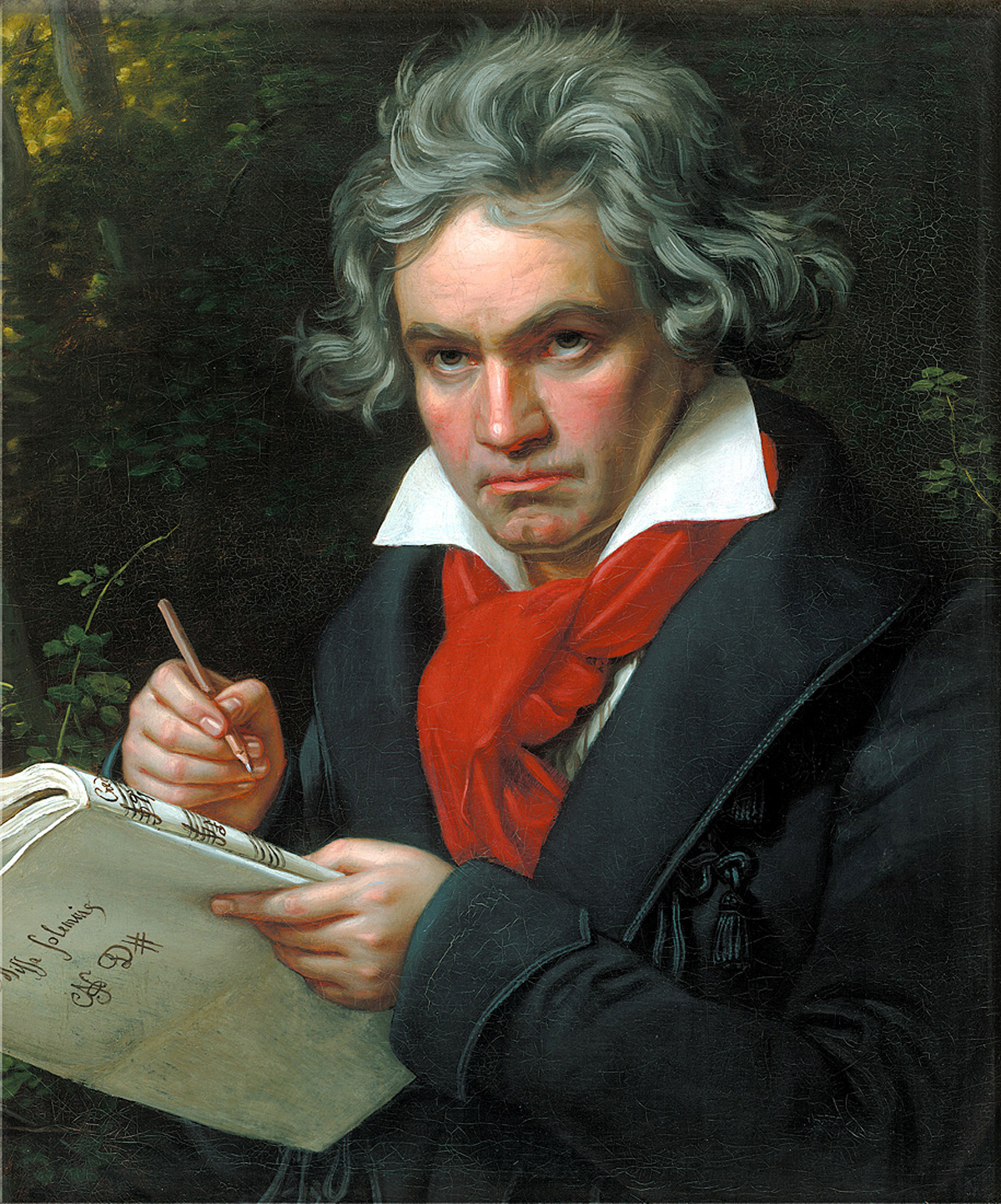
Fifth
Third (Eroica)
Ninth
Sixth (Pastoral)
The Ninth (1824) is the first major symphony with voices.
Image: Joseph Karl Stieler, public domain, via Wikimedia Commons.
Which statement about the Council of Trent and church music is accurate?
It banned all organs
It demanded intelligible text and less secular influence
It required operatic arias in Mass
It ordered use of equal temperament
Palestrina's clear polyphony became a model.
