Quiz · Hard
Harder questions comparing artists, techniques, patrons and periods from Early Renaissance to Mannerism.
Both Michelangelo's David and Donatello's David show a heroic youth. Which statement best compares them?
Both are bronze and show David before the fight
Both show David holding Goliath's head
Donatello's is marble and Michelangelo's is bronze
Donatello's is bronze and shows David after the victory; Michelangelo's is marble and shows him before
Michelangelo's tense pose before the fight is an unusual choice. Donatello shows the head at David's feet.
The Doni Tondo is often linked to Mannerism because it has:
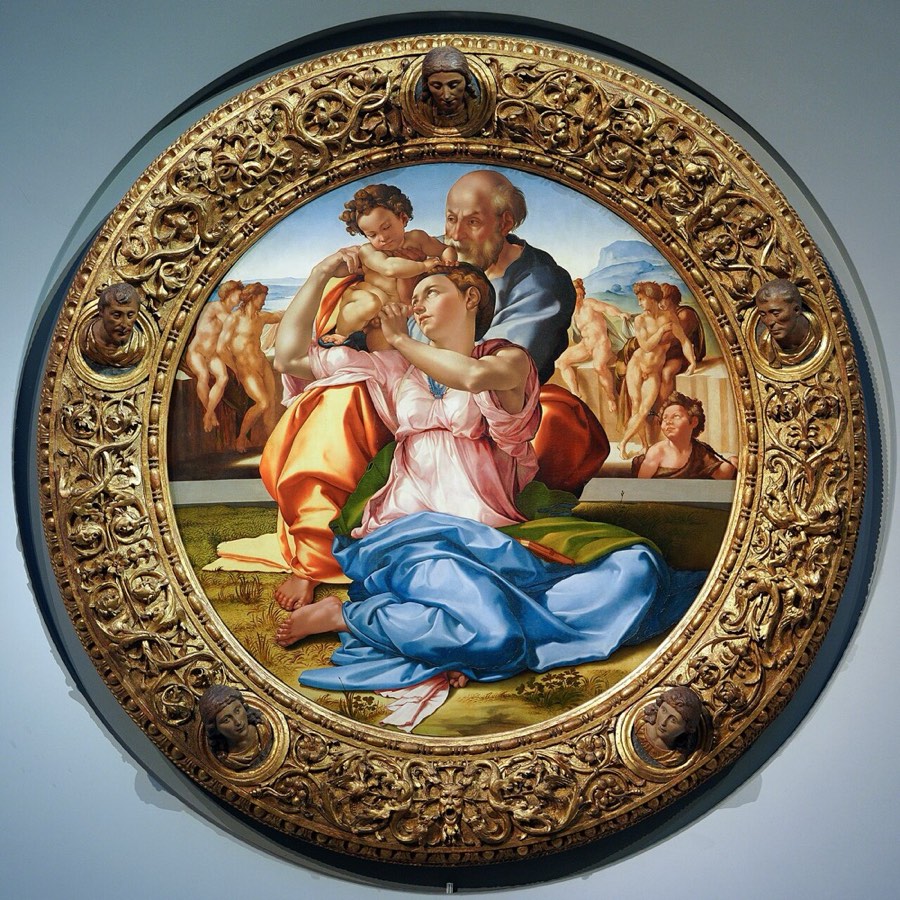
Egg tempera on a gold ground
Dark tenebrism
Twisting poses, sculptural forms and bright acid colors
A hidden anamorphic image
Michelangelo's coiled figures influenced Pontormo and Bronzino.
Why did Leonardo's Last Supper deteriorate so quickly?
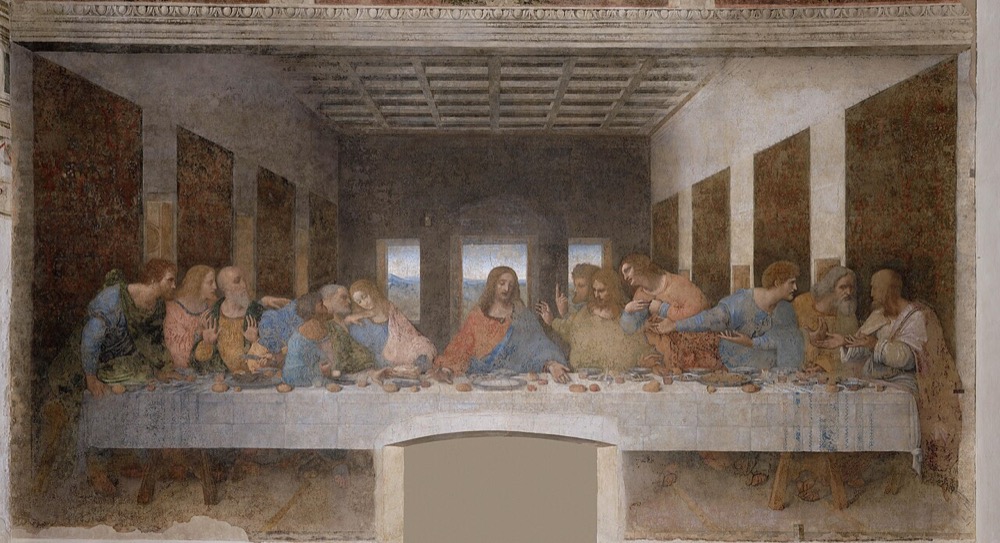
He used unprimed canvas
It was painted over a Gothic mural
The painting was exposed to sunlight in an open courtyard
He used tempera and oil on dry plaster instead of true fresco
The experimental technique did not bond with the wall. True fresco bonds with wet plaster.
Which feature of Masaccio's Tribute Money shows a new concern with unified light?
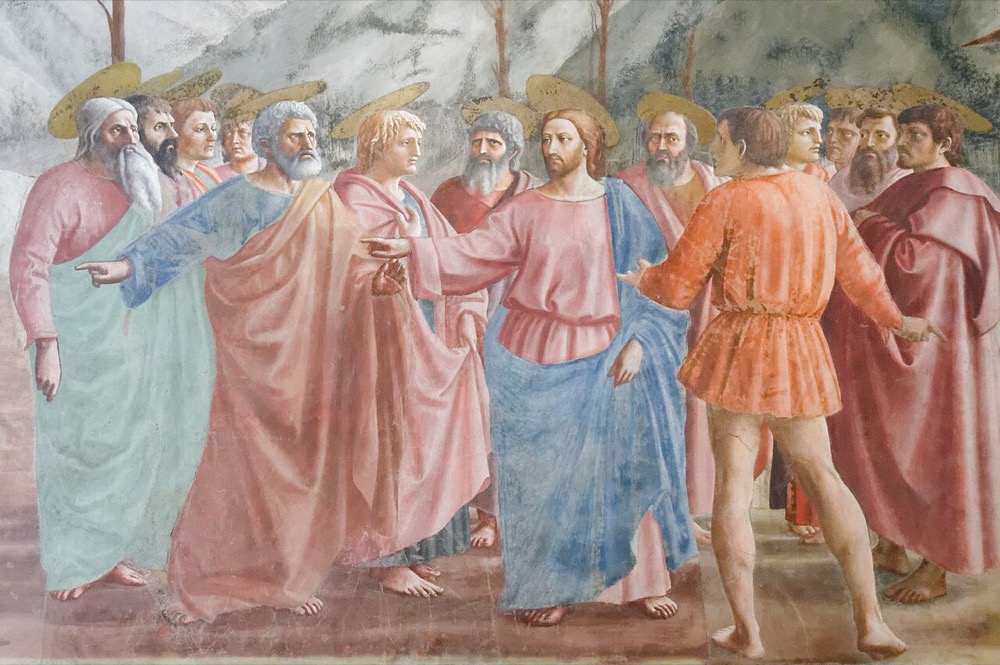
A gold background
A single consistent light source casting shadows
Multiple vanishing points
Every figure drawn in a Byzantine pose
The light from the right in the Brancacci Chapel matches the chapel's real window, so shadows fall consistently.
The Ghent Altarpiece is described as:
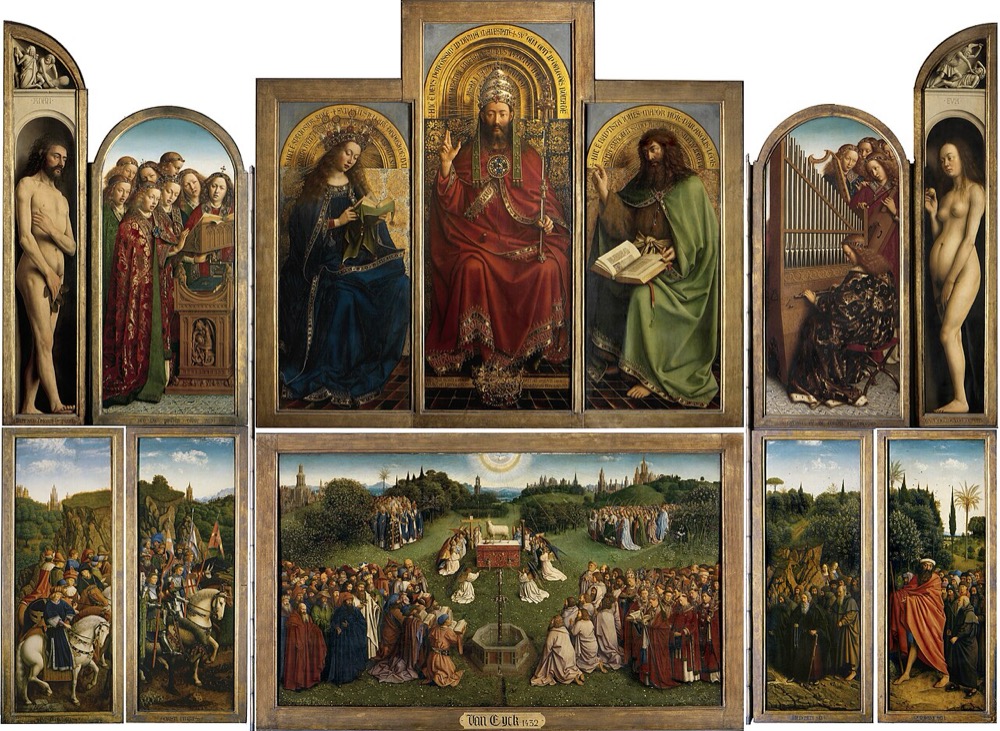
A tapestry designed by Raphael
A polyptych with wings that open and close, by Hubert and Jan van Eyck
A single panel by Dürer
A wall fresco by Mantegna
It is a hinged altarpiece in St Bavo's Cathedral.
Which statement about the Sistine Chapel is correct?
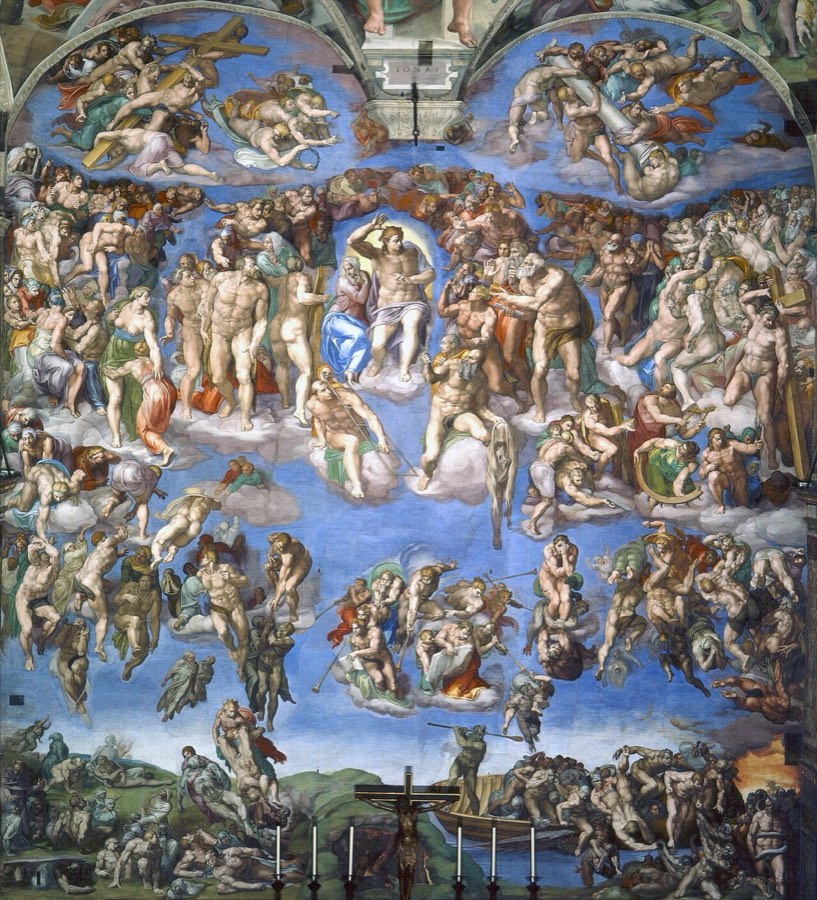
Both were painted for Lorenzo de' Medici
Michelangelo painted the ceiling for Julius II and the Last Judgment under Paul III
Leonardo painted the Last Judgment
Raphael painted the ceiling and Michelangelo the altar wall
The ceiling dates from 1508-12; the Last Judgment from 1536-41. Raphael's Vatican rooms are the Stanze.
Brunelleschi's dome was innovative because it:
Was a single-shell hemisphere
Was built without a full wooden centering
Was made of poured concrete like the Pantheon
Used steel ribs
It is a self-supporting double shell of brick laid in a herringbone pattern.
What is the main difference between Titian and Michelangelo in the 16th century debate?
Titian worked in fresco and Michelangelo in oil
Titian stressed color and brushwork; Michelangelo stressed drawing and sculptural form
Titian was Florentine and Michelangelo was Venetian
Titian painted only portraits
Venetian colore vs Florentine-Roman disegno.
Veronese's Last Supper was retitled Feast in the House of Levi because:
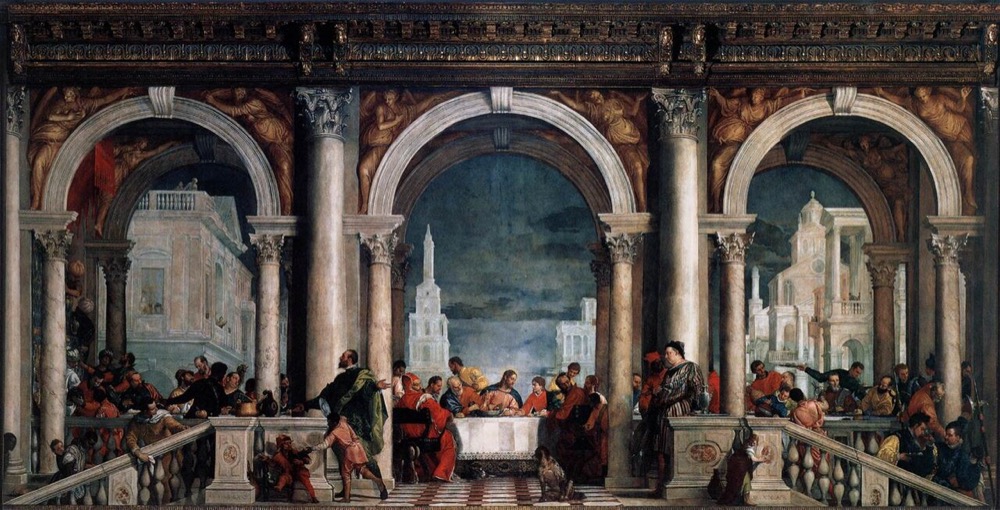
The patron went bankrupt
The Inquisition objected to its irreverent details
It was moved to a different church
Titian asked him to
He kept the painting but changed the title in 1573 to avoid censorship.
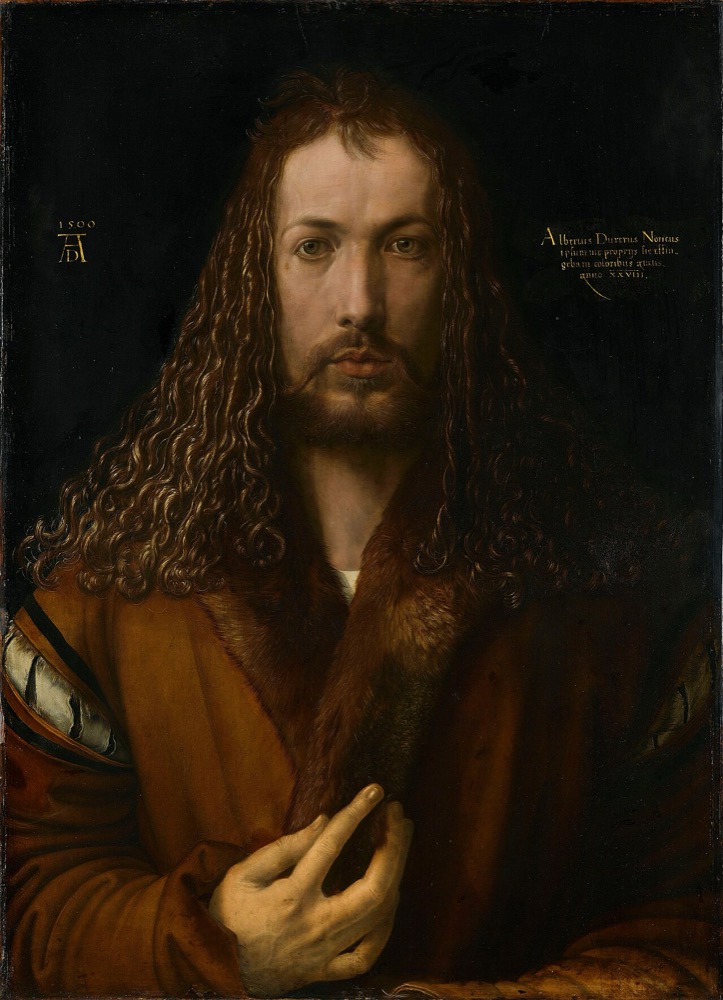
Which Northern artist is known for an enormous 1500 self-portrait in a frontal, Christ-like pose?
Jan van Eyck
Albrecht Dürer
Hans Holbein
Lucas Cranach
Dürer's self-assured portrait asserts the artist's divine-like creative role.
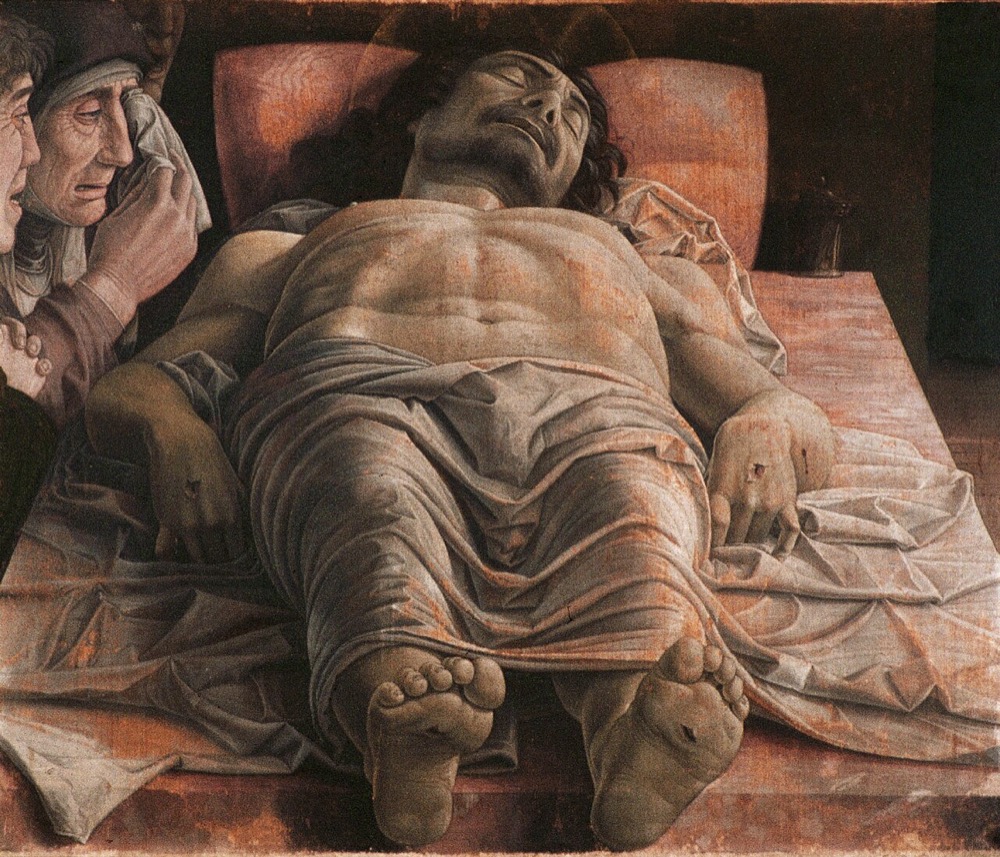
Which artwork best illustrates extreme foreshortening?
Botticelli's Primavera
Mantegna's Lamentation over the Dead Christ
Giorgione's The Tempest
Raphael's Sistine Madonna
Mantegna painted the body from the feet. Botticelli's style is linear and decorative.
Which statement about Bramante's Tempietto is true?
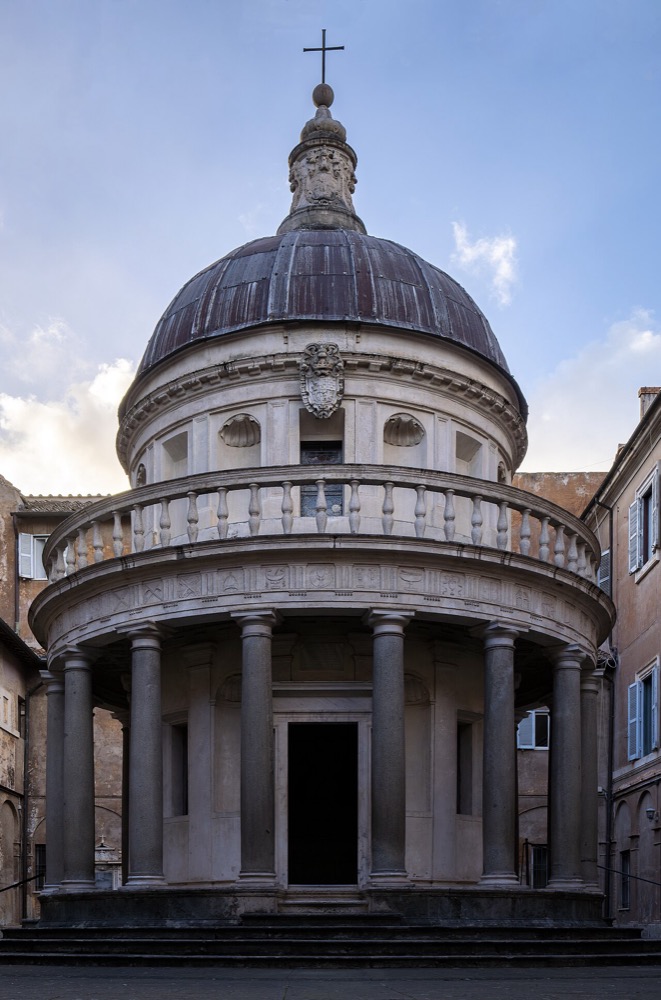
It is a villa with four porticoes
It is a Gothic chapel with flying buttresses
It is a circular Doric building that applies central-plan classical geometry
It was designed by Palladio
It marks the arrival of High Renaissance classicism in architecture.
Image: Labicanense, CC BY 4.0, via Wikimedia Commons.
Why is Bosch's Garden of Earthly Delights hard to interpret?
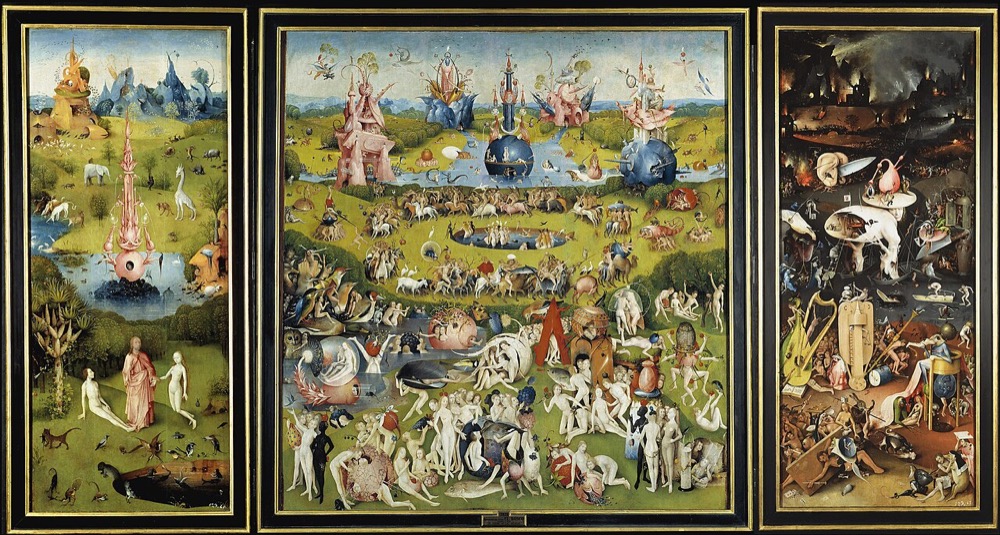
The central panel shows an ambiguous, fantastic scene with no clear moral message
It has no figures
It was destroyed in the 20th century
It has no known artist
Scholars still debate whether it warns against sin, shows a lost paradise or something else.
Which pair shows the shift from the Early to the High Renaissance?
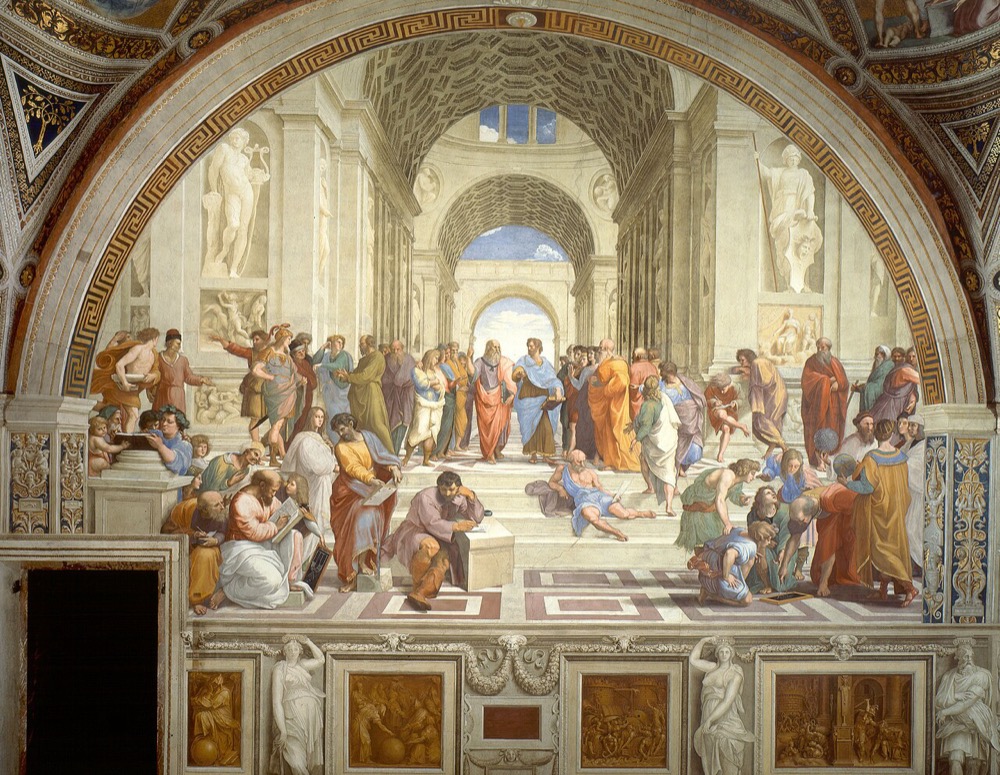
Giotto's Lamentation to Masaccio's Trinity
Masaccio's Trinity to Raphael's School of Athens
Bruegel's Hunters to Bosch's Garden
Dürer's Melencolia to Holbein's Ambassadors
Both use mathematical perspective, but Raphael's balanced, grand synthesis is High Renaissance.
True or false: the Sack of Rome in 1527 is often seen as the end of the High Renaissance.
False
True
The sack scattered artists from Rome and shook confidence in harmony and balance, helping Mannerism spread.
Which description best fits Piero della Francesca's Flagellation?
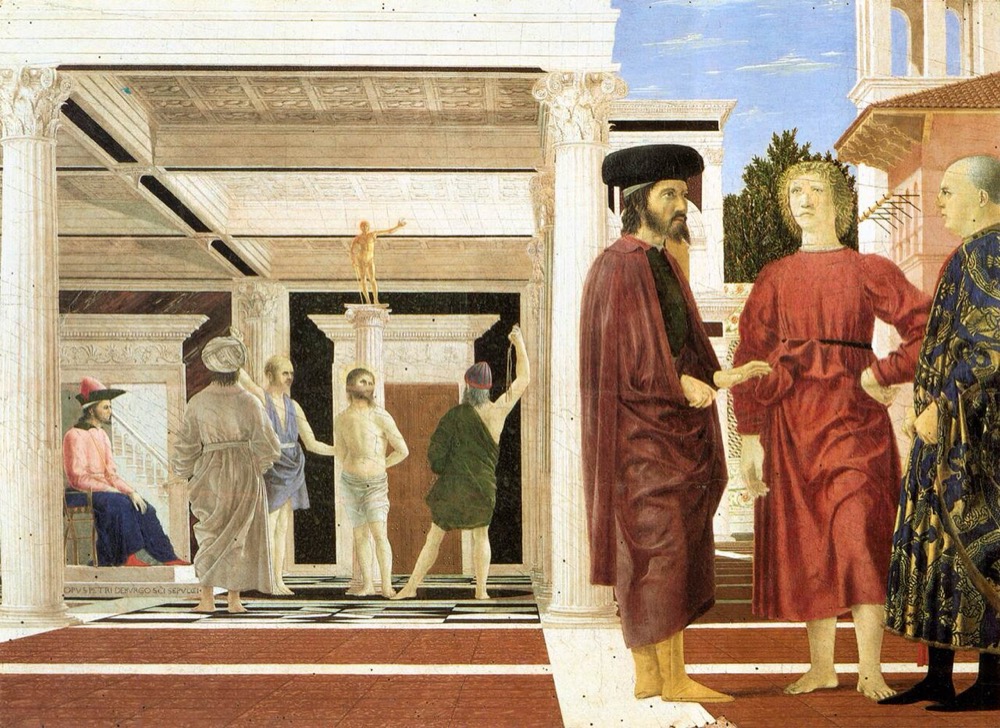
Dense symbolic detail in oil glazes
A tondo composition
Violent, swirling movement
Mathematical perspective and cool geometric calm
Piero was a mathematician and wrote a treatise on perspective.
