Quiz · Medium
Density, the demographic transition, population pyramids, fertility, policies and migration.
Arithmetic density is calculated as:
Farmers divided by arable land
Total population divided by arable land
Total population divided by total land area
Births divided by deaths
Physiological density uses arable land instead, which better shows pressure on food production.
In which stage of the demographic transition model does the death rate fall while the birth rate stays high?
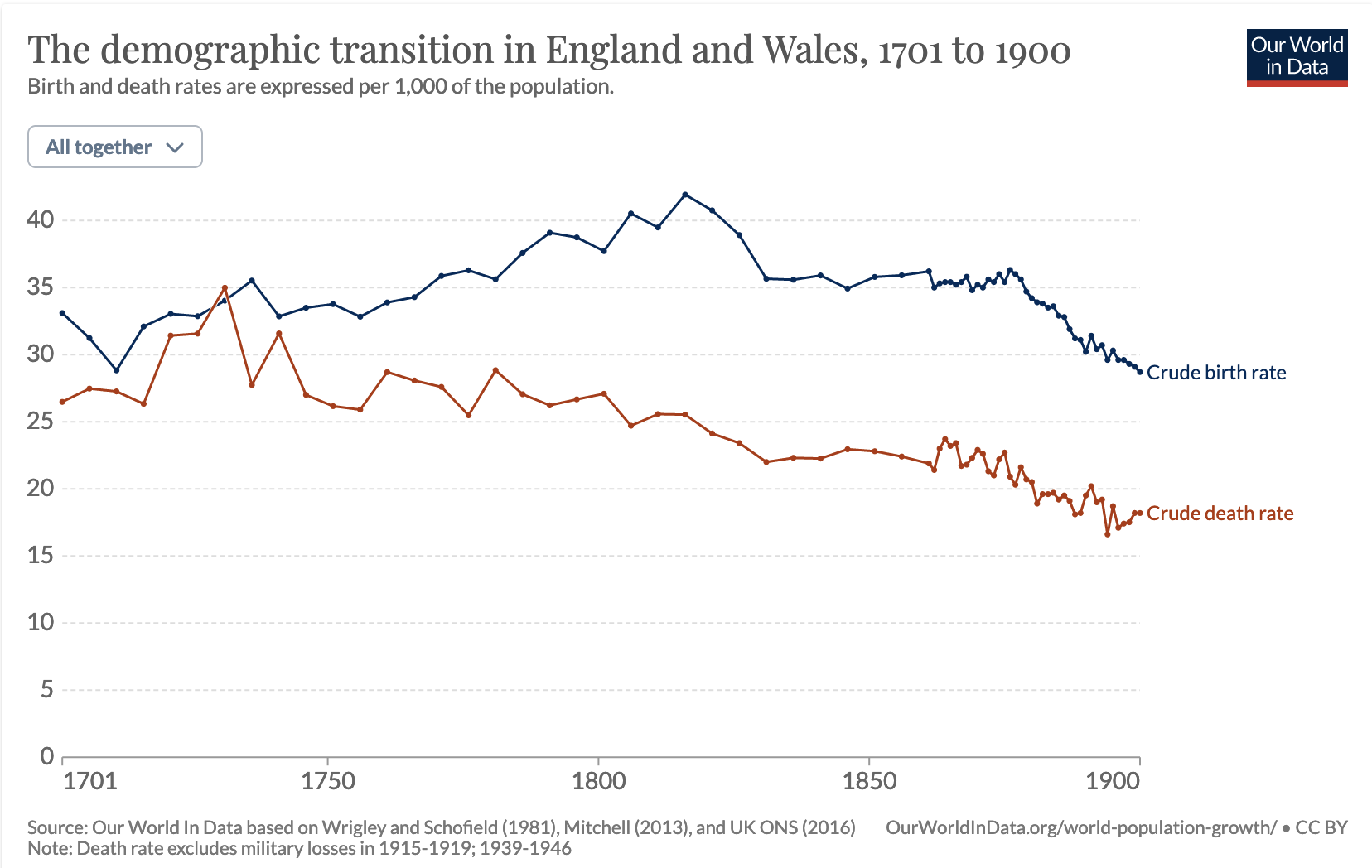
Stage 1
Stage 3
Stage 2
Stage 4
Population growth is fastest in Stage 2.
Image: Max Roser, Hannah Ritchie, Esteban Ortiz-Ospina and Lucas Rodés-Guirao, CC BY 4.0, via Wikimedia Commons.
Which population pyramid shape has a very wide base and narrows quickly?
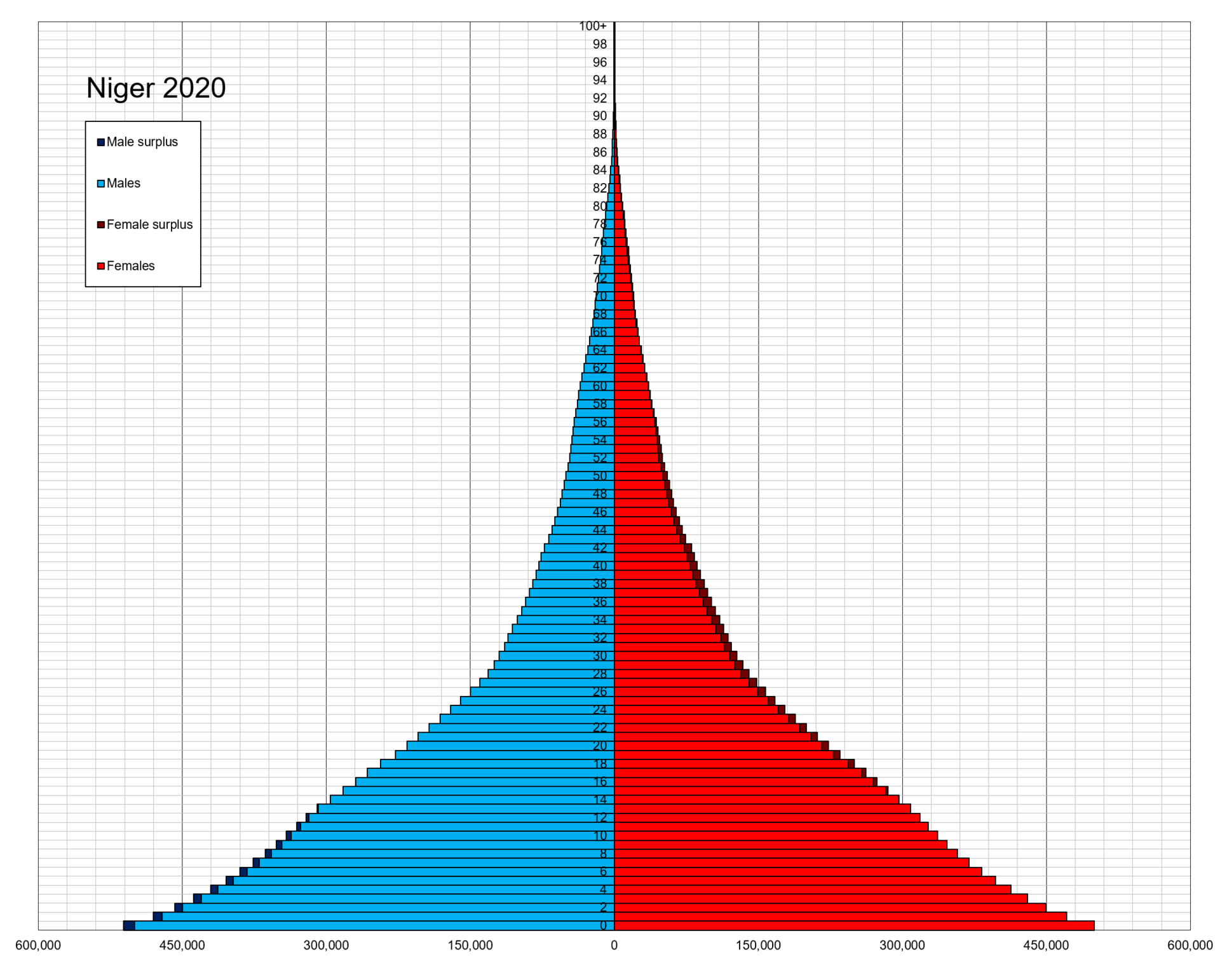
Constrictive
Stationary
Rectangular
Expansive
Niger is an example of high fertility and a young population.
Image: Sdgedfegw, CC BY-SA 4.0, via Wikimedia Commons.
Japan's population pyramid is best described as:
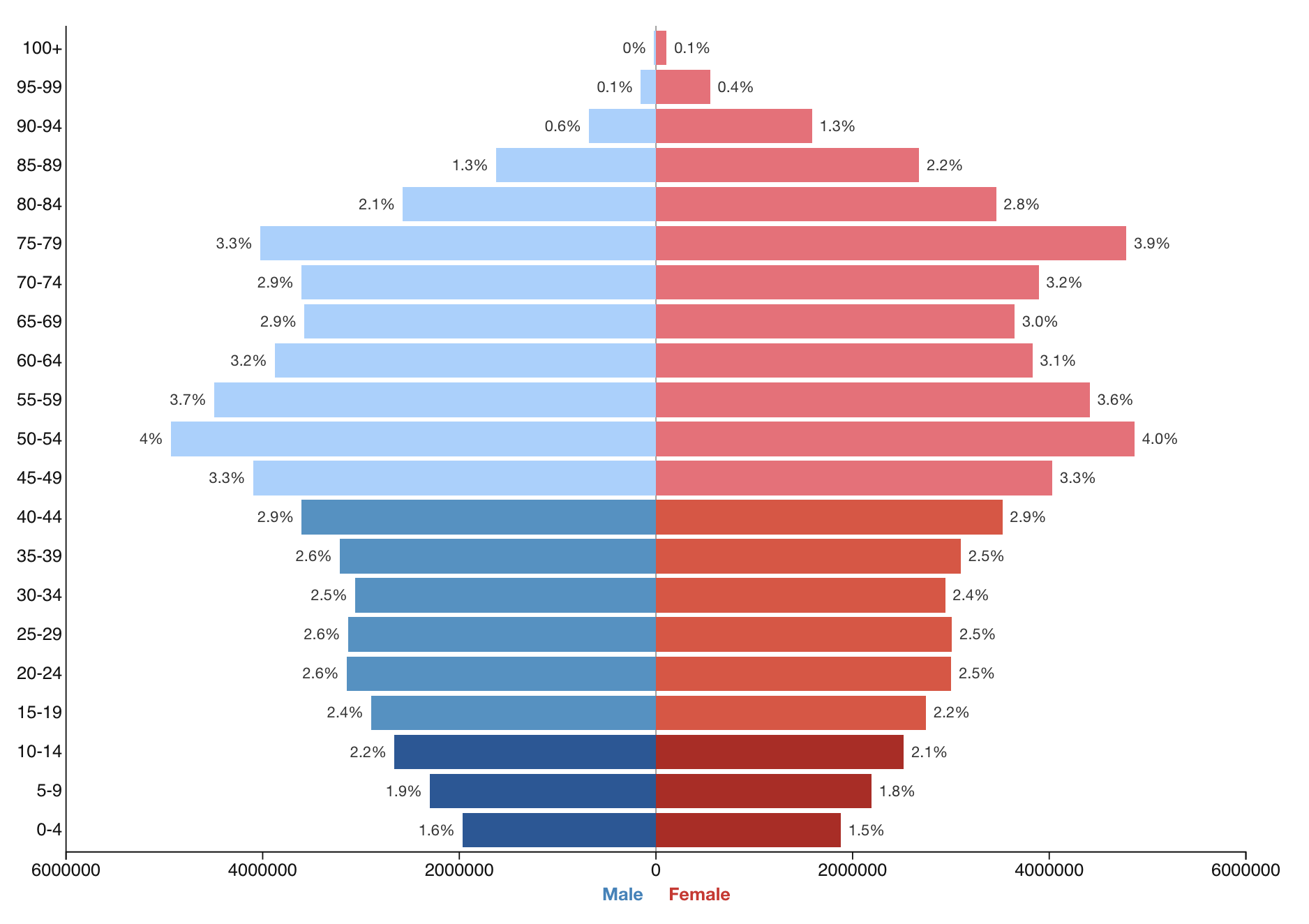
Expansive, with a very wide base
Constrictive, with a narrow base and a large older population
Stationary, with equal age groups
Triangular and growing fast
Low fertility and long life expectancy shrink the base.
Image: Mishomp, CC0, via Wikimedia Commons.
What is the replacement-level fertility rate?
About 1.0
About 2.1 children per woman
About 3.5
About 5.0
Slightly above 2 to allow for child mortality.
The 'rule of 70' says that a population growing at 2% a year doubles in about:
7 years
35 years
70 years
140 years
Doubling time is about 70 divided by the growth rate in percent.
Which region has the highest fertility rates?
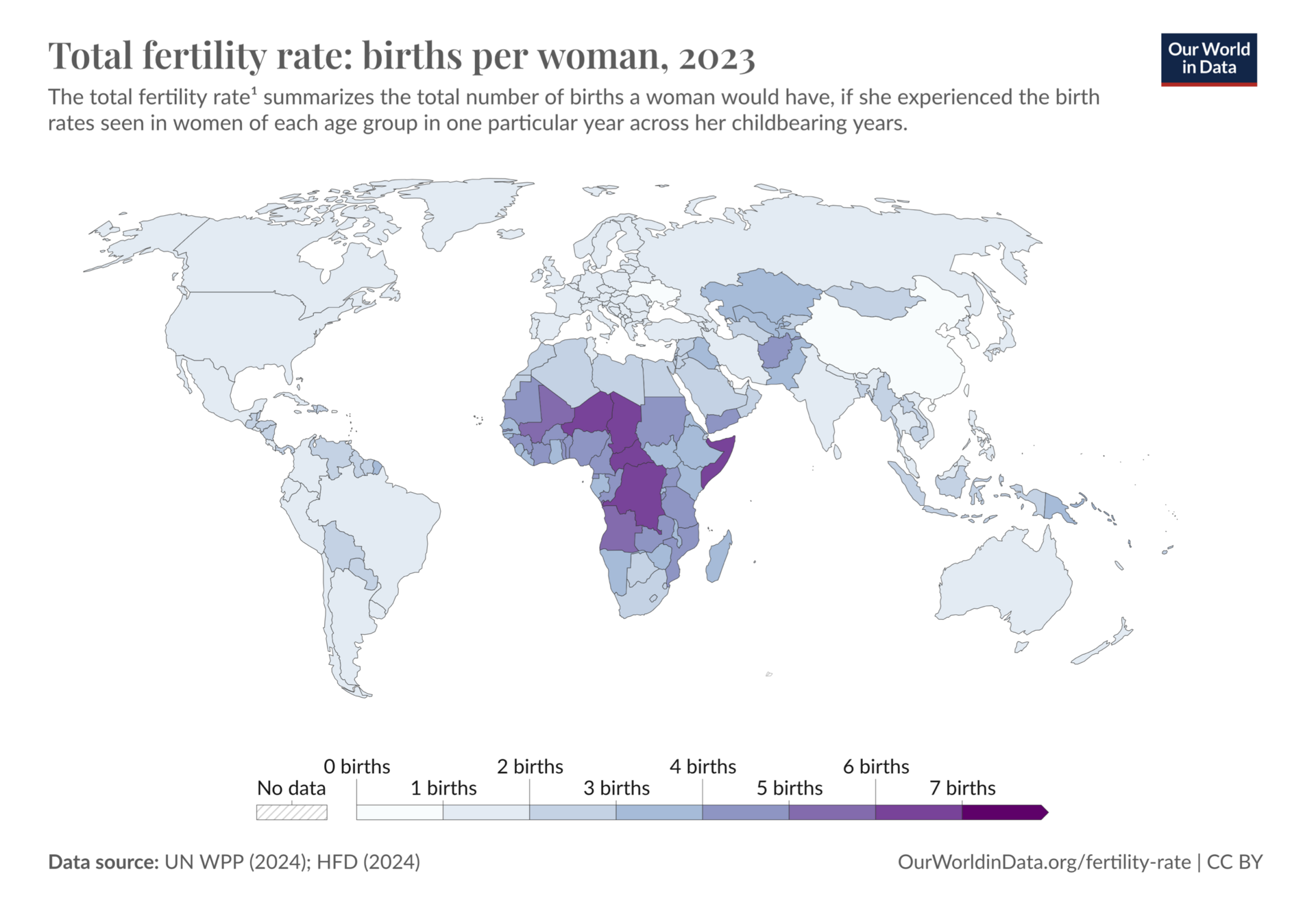
East Asia
Western Europe
North America
Sub-Saharan Africa
Many countries there average over four births per woman.
Image: Our World in Data, CC BY 4.0, via Wikimedia Commons.
China's one-child policy was relaxed to a two-child policy in:
1990
2005
2016
2021
It moved to a three-child policy in 2021.
Which of these is a pull factor?
Better job opportunities
Famine
Civil war
Natural disaster
The others are push factors that drive people out of a place.
According to Ravenstein, most migrants:
Move short distances
Move across oceans
Return home within a year
Move to the countryside
Long-distance migrants tend to head for large cities.
A person who has fled their home but remains within their own country is a(n):
Refugee
Asylum seeker
Economic migrant
Internally displaced person
A refugee has crossed an international border.
What is chain migration?
Migration in stages from village to city
Moving back and forth seasonally
Migrants following relatives and friends to the same place
Forced migration
Step migration is the one in stages.
Money sent home by migrants is called:
Reparations
Subsidies
Remittances
Tariffs
For some countries, remittances exceed foreign aid.
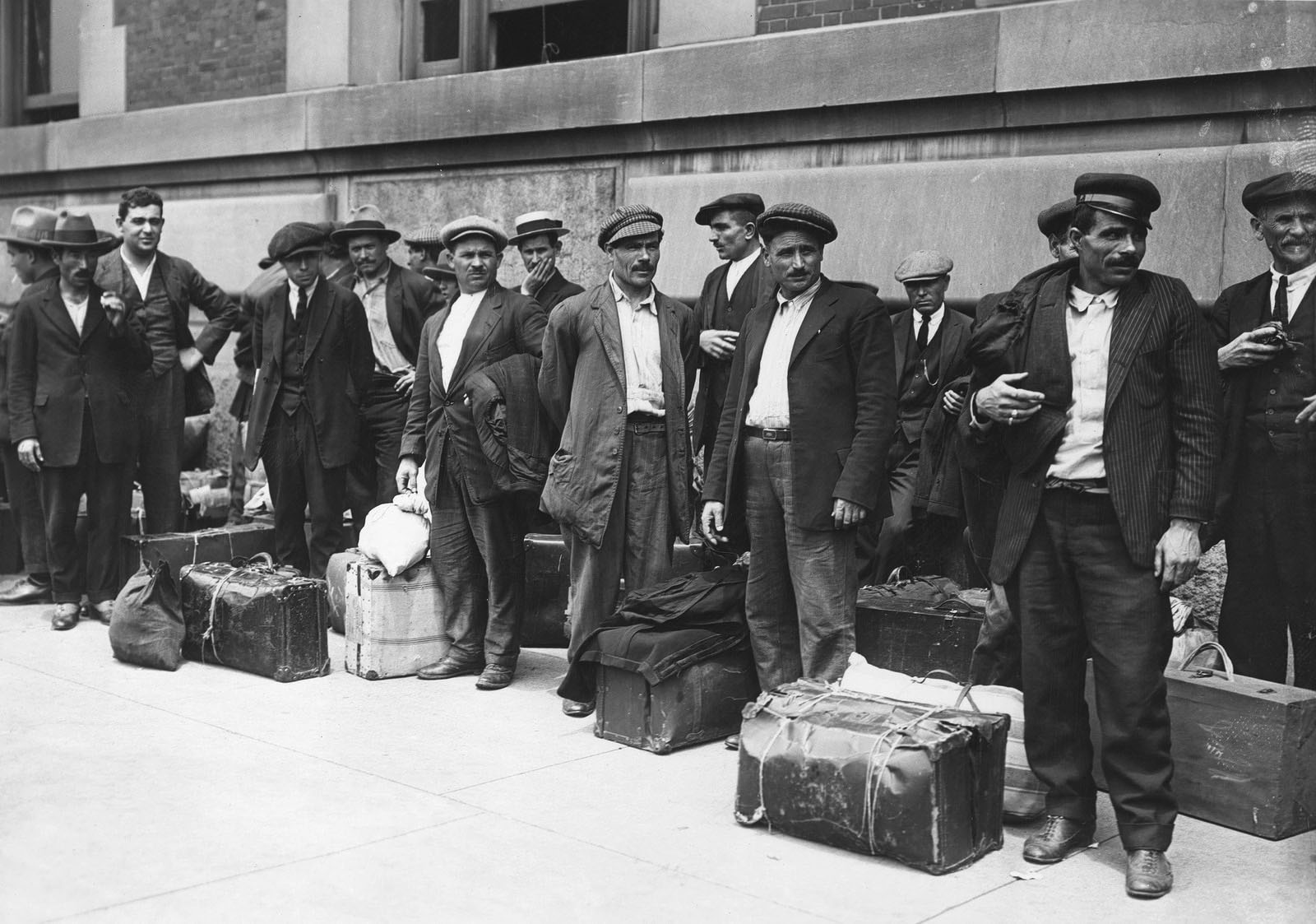
Roughly how many immigrants were processed at Ellis Island between 1892 and 1954?
About 1 million
About 12 million
About 120,000
About 100 million
Many Americans can trace an ancestor to Ellis Island.
Image: mákvirágok, Public domain, via Wikimedia Commons.
Which country overtook China as the most populous in 2023?
Indonesia
India
United States
Pakistan
Both have more than 1.4 billion people.
Which writer argued that population grows geometrically but food supply only arithmetically?
Ester Boserup
Karl Marx
Adam Smith
Thomas Malthus
His 1798 essay predicted famine and disease would check growth.
The 'dependency ratio' compares:
People under 15 and over 64 with those aged 15 to 64
Births with deaths
Urban with rural people
Immigrants with emigrants
A high ratio puts more pressure on the working-age population.
The gravity model of migration predicts more migration between places that are:
Small and far apart
Poor and rich only
Equal in size and distant
Large and close together
Distance decay reduces migration.
The ecumene refers to:
The deserts
All urban areas
The oceans
The permanently inhabited parts of Earth
About 10% of the land is densely populated.
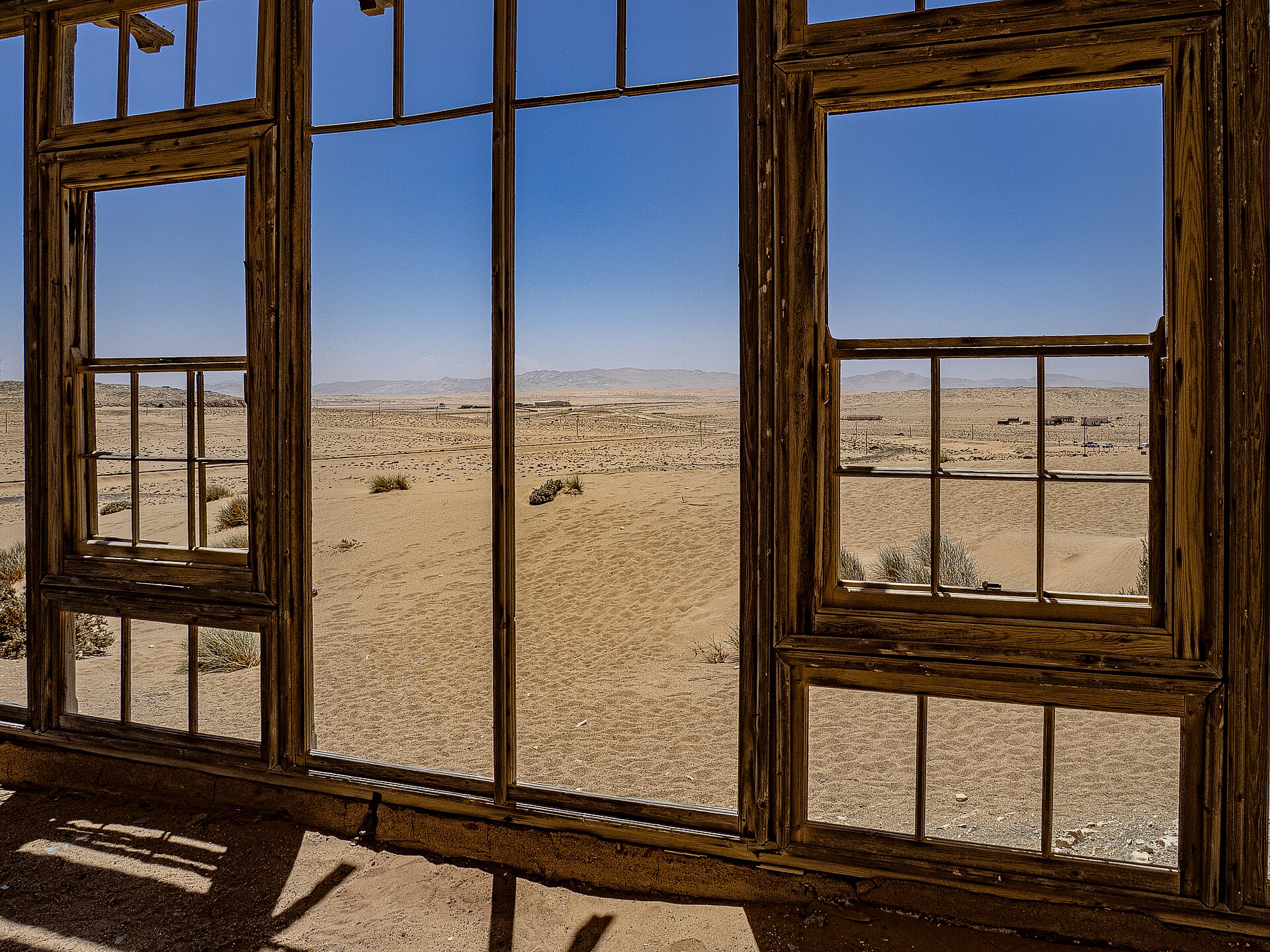
Why is the abandoned town of Kolmanskop in Namibia an example of a push factor?
A flood destroyed it
War forced people out
A government banned living there
The diamond boom ended and people left for better opportunities
When the diamonds dried up, the economic reason to live there disappeared.
Image: Ralf Hüsges, CC BY 4.0, via Wikimedia Commons.
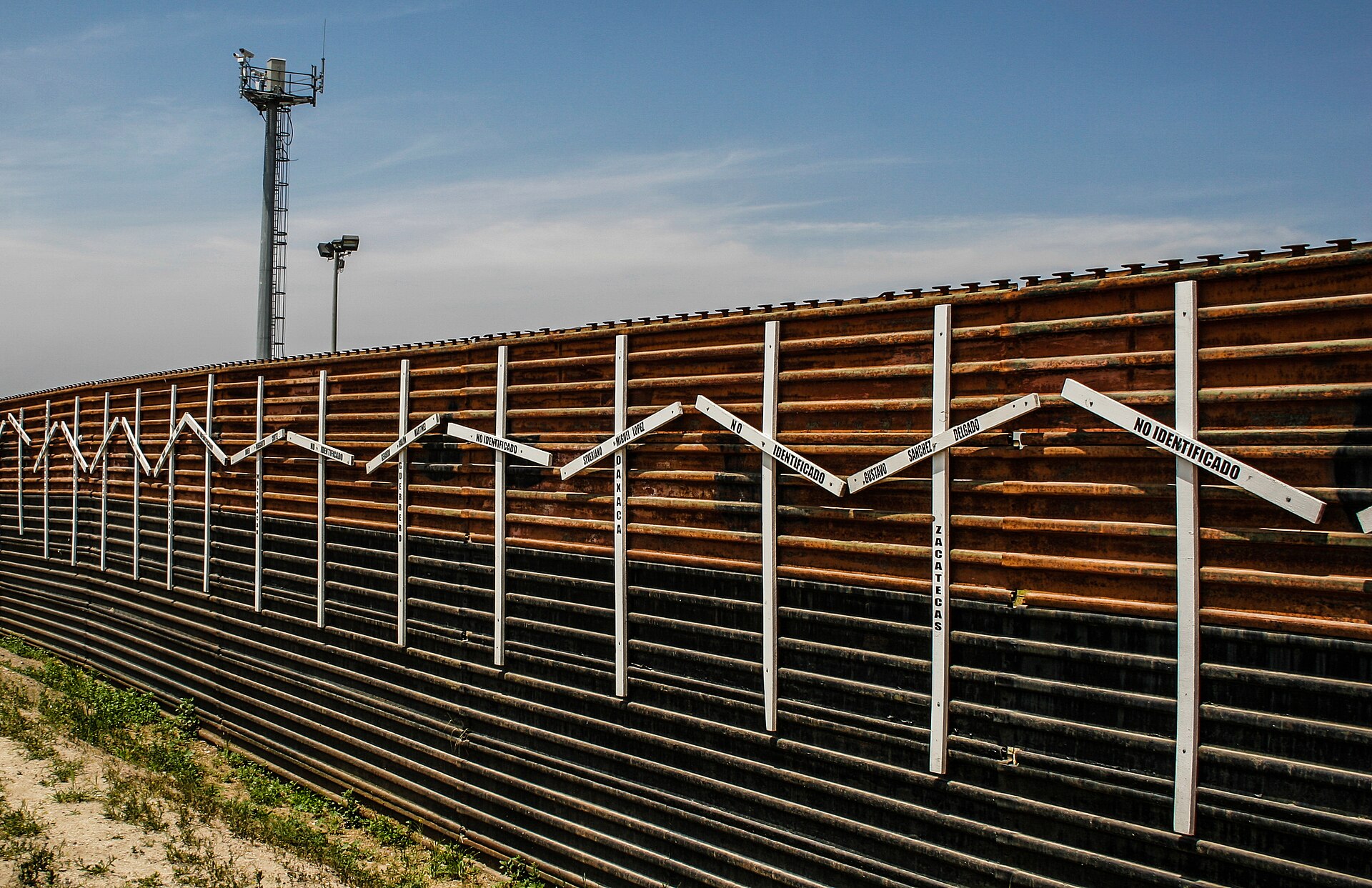
About how long is the US-Mexico border?
About 310 km
About 8,900 km
About 3,100 km
About 12,000 km
The US-Canada border is much longer, at about 8,900 km including Alaska.
Image: Tomascastelazo, CC BY-SA 4.0, via Wikimedia Commons.
