Quiz · Medium
Fifteen picture questions on the world wars, interwar Europe, the Cold War and 1989.
Which event does this 1914 magazine illustration show?
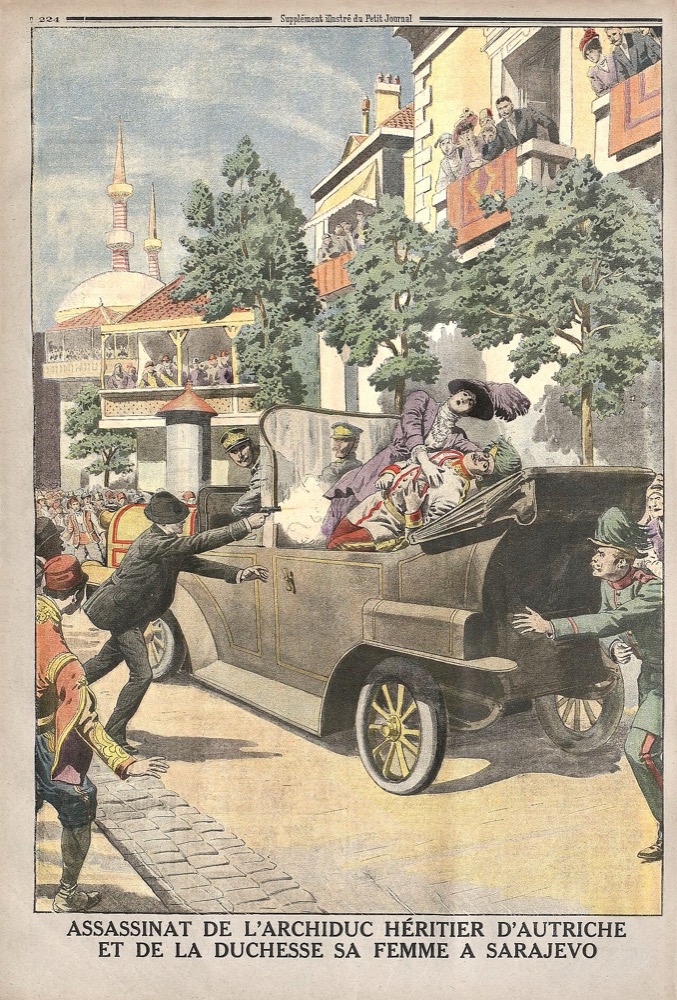
The declaration of war on Serbia
The Battle of the Marne
The assassination of Archduke Franz Ferdinand
The sinking of the Lusitania
Le Petit Journal's cover shows the shooting of Franz Ferdinand and his wife Sophie in Sarajevo on 28 June 1914.
What event did William Orpen paint here?
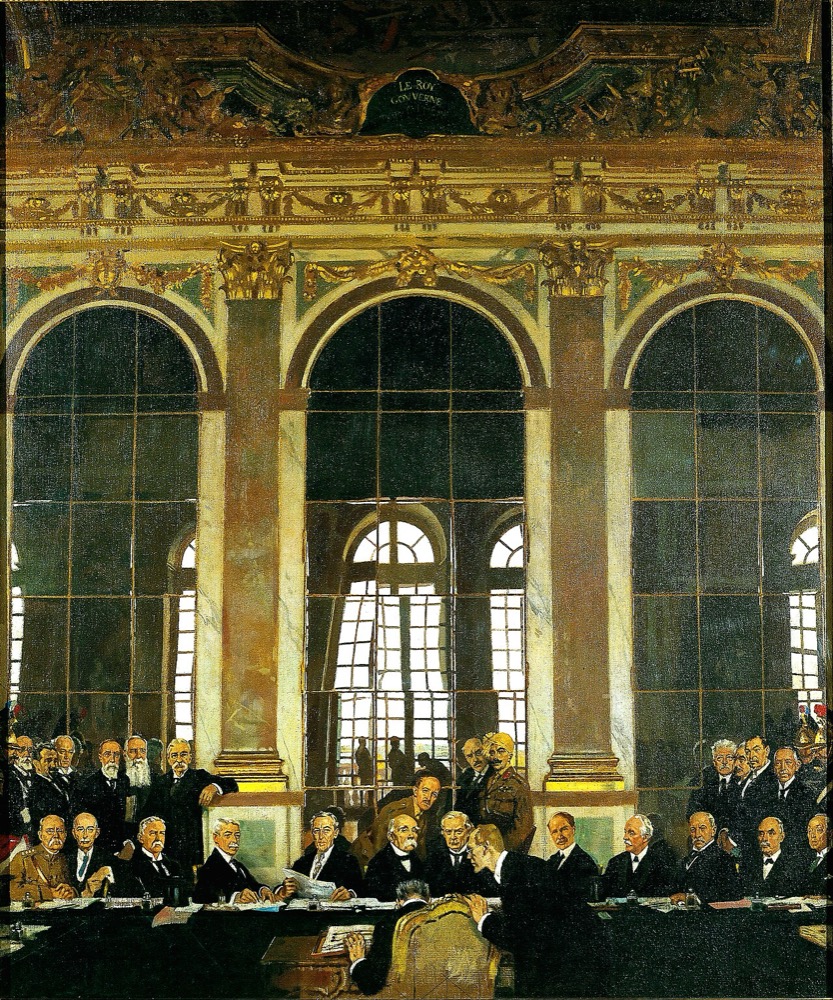
The signing of the Treaty of Versailles
The Armistice at Compiegne
The Yalta Conference
The opening of the League of Nations
The Hall of Mirrors at Versailles was the setting on 28 June 1919.
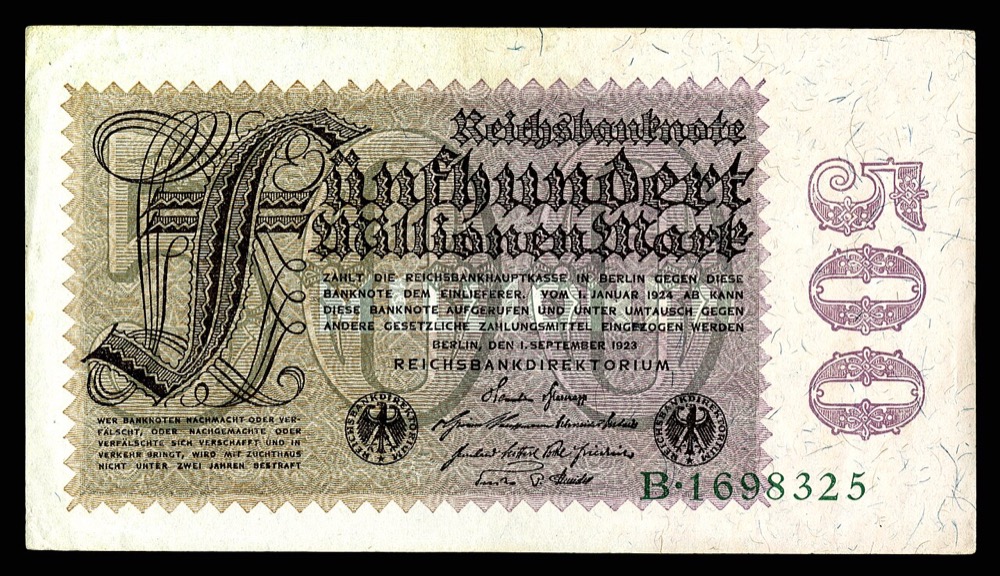
What does this 1923 banknote illustrate?
The Great Depression
The Dawes Plan
The Rentenmark
German hyperinflation
A 500 million mark note shows the collapse of the mark. The Rentenmark, introduced at the end of 1923, replaced such notes.
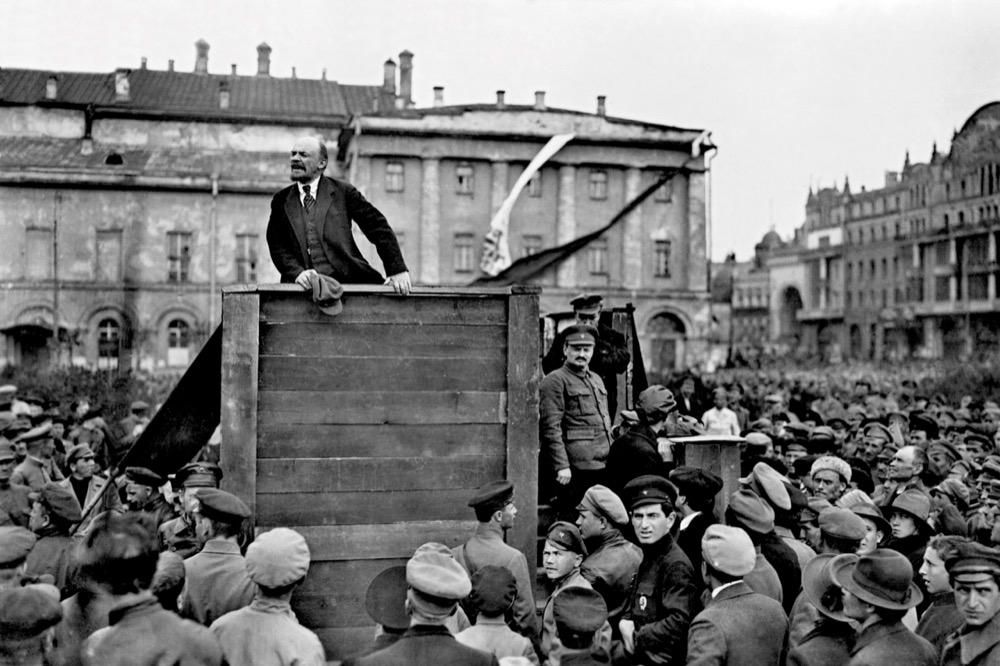
Who is speaking on the platform in this 1920 photograph?
Stalin
Lenin
Hitler
Mussolini
Lenin addressing a crowd in Moscow in May 1920.
Who are the leaders shown at Munich in 1938?
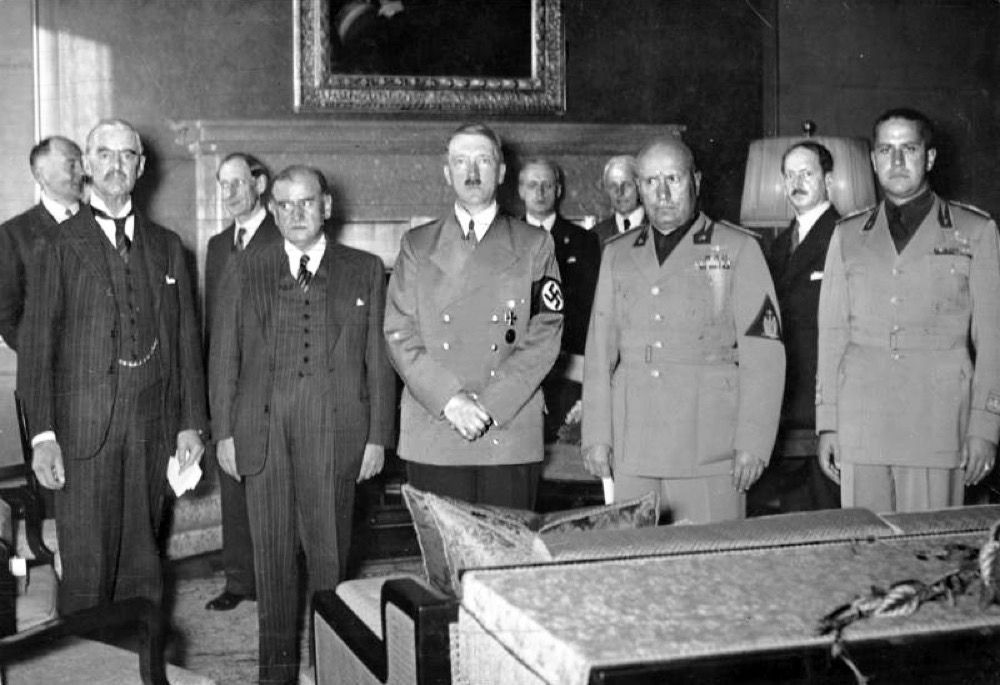
Churchill, Roosevelt, Stalin and Hitler
Chamberlain, Daladier, Hitler and Mussolini (with Ciano)
Baldwin, Blum, Franco and Mussolini
Attlee, Truman, Stalin and Hitler
The conference decided the fate of the Sudetenland without Czechoslovakia present. Churchill criticized the agreement and was not there.
What is shown in this photograph of troops on a beach?
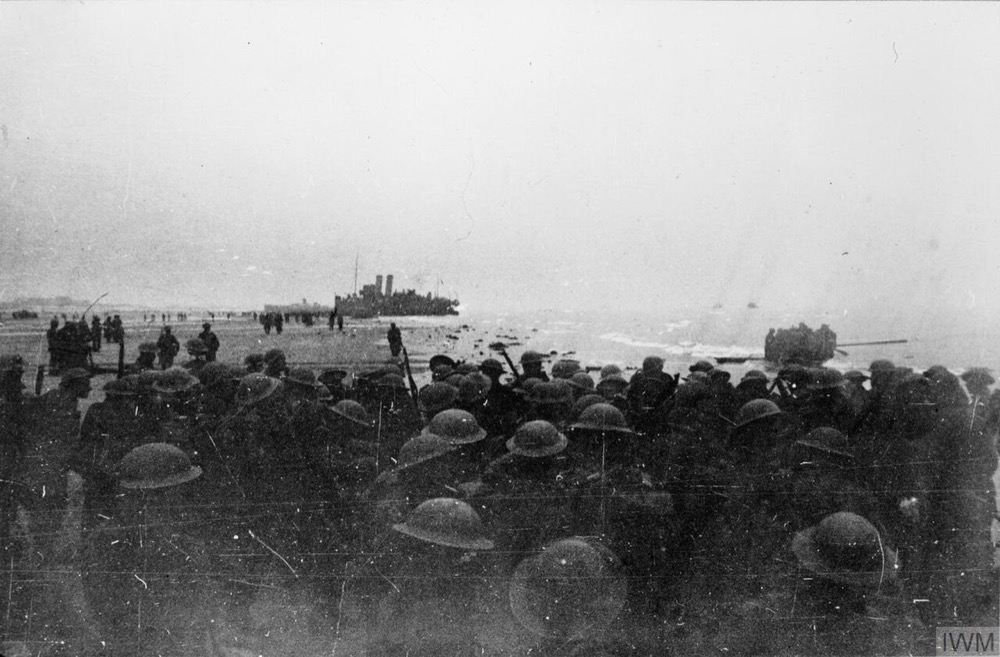
The Berlin Airlift
The D-Day landings
The Battle of Stalingrad
The Dunkirk evacuation, 1940
Dunkirk's beaches in May-June 1940, when over 300,000 Allied troops were evacuated.
Which conference of the 'Big Three' is shown here?
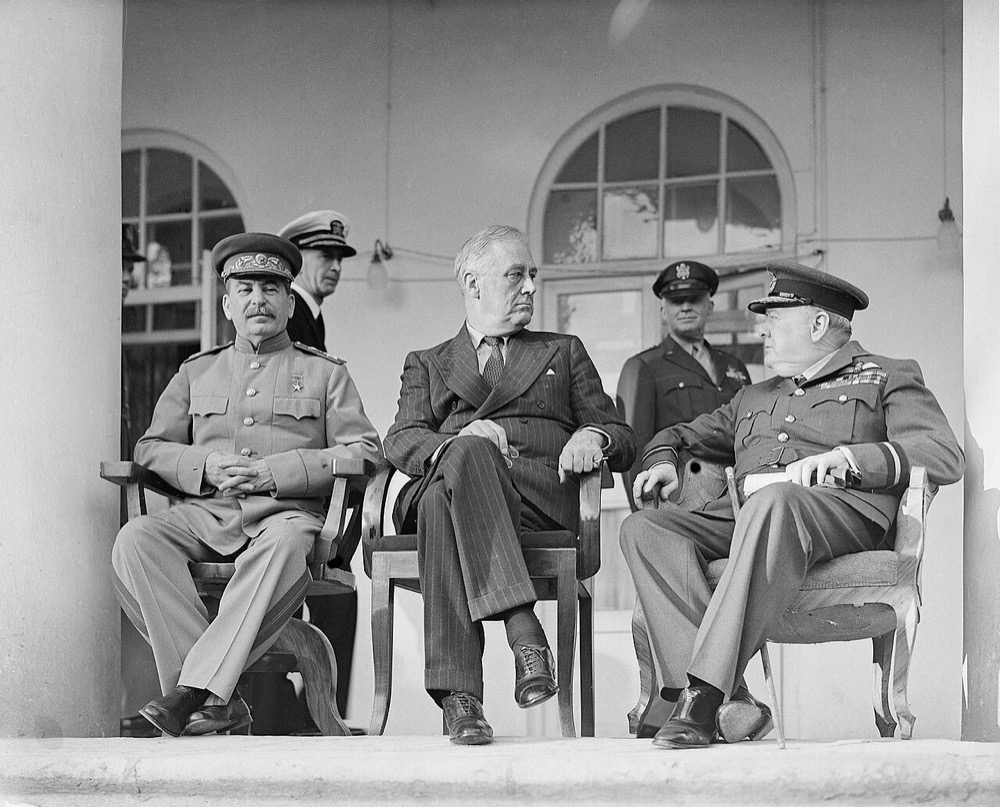
Tehran, 1943
Yalta, 1945
Potsdam, 1945
Versailles, 1919
The Tehran photograph shows Stalin, Roosevelt and Churchill on a porch; Yalta and Potsdam photographs have different settings.
Which postwar program does this poster promote?
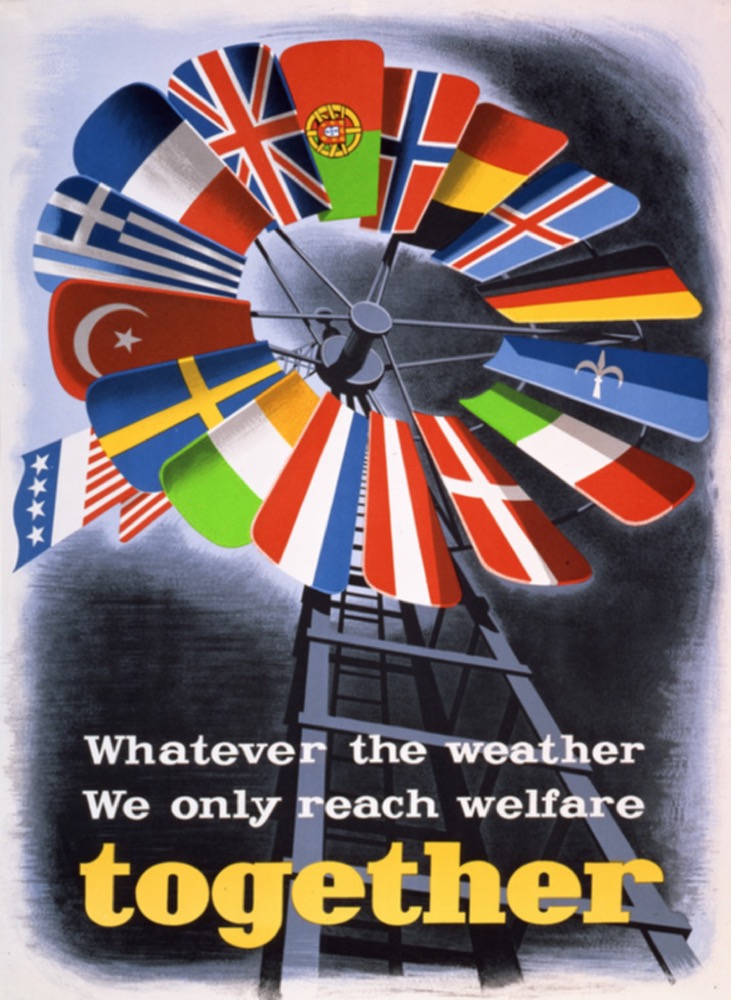
The Truman Doctrine
Lend-Lease
The Marshall Plan
Comecon
The windmill of flags and the slogan about reaching welfare together promoted the Marshall Plan.
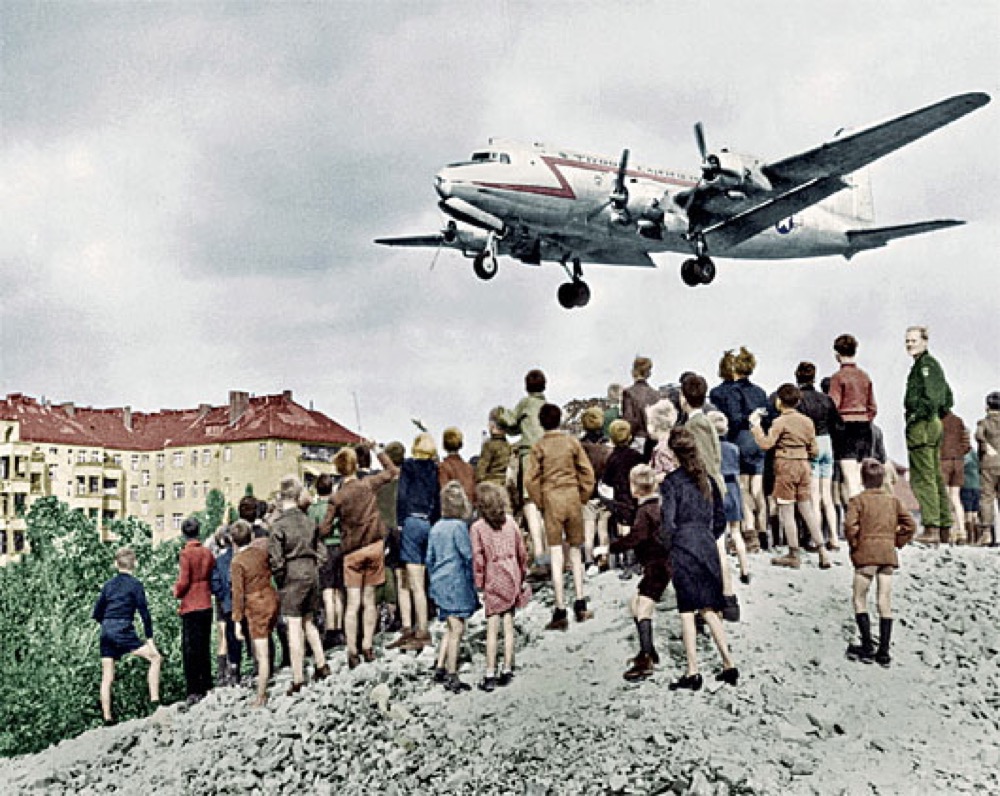
What event is behind this photograph of a plane landing as children watch?
D-Day
The Cuban Missile Crisis
The Hungarian uprising
The Berlin Airlift
The airlift (1948-49) supplied West Berlin by air during the Soviet blockade.
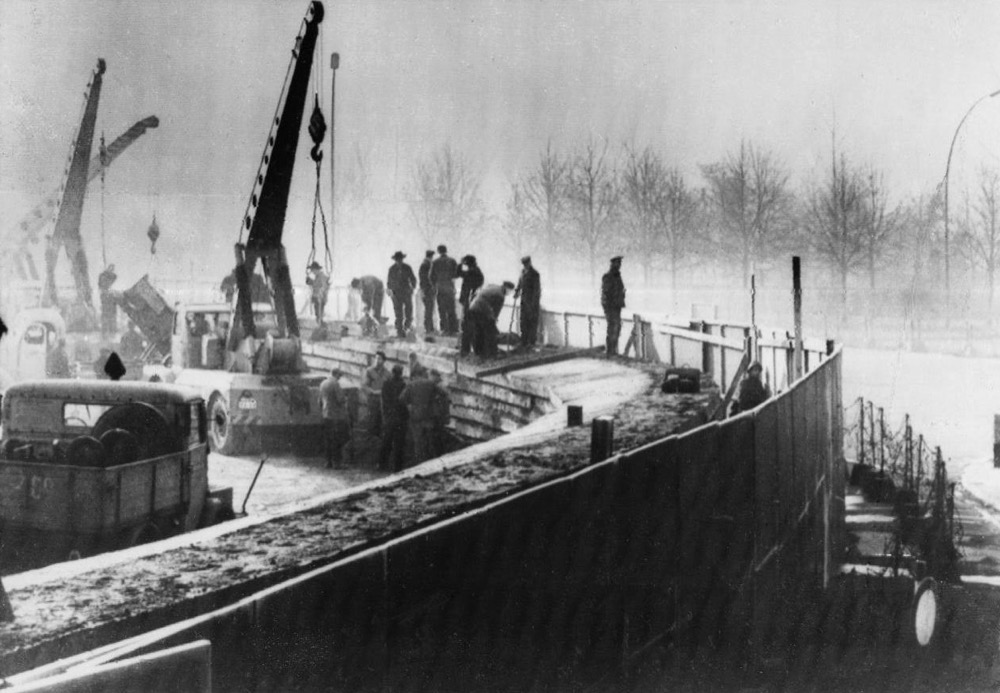
What is being built in this 1961 photograph?
The Maginot Line
The Berlin Wall
The Iron Curtain fence at Hungary's border
The Atlantic Wall
East Germany closed the border on 13 August 1961. The Maginot Line (1930s) and Atlantic Wall (1940s) belong to earlier decades.
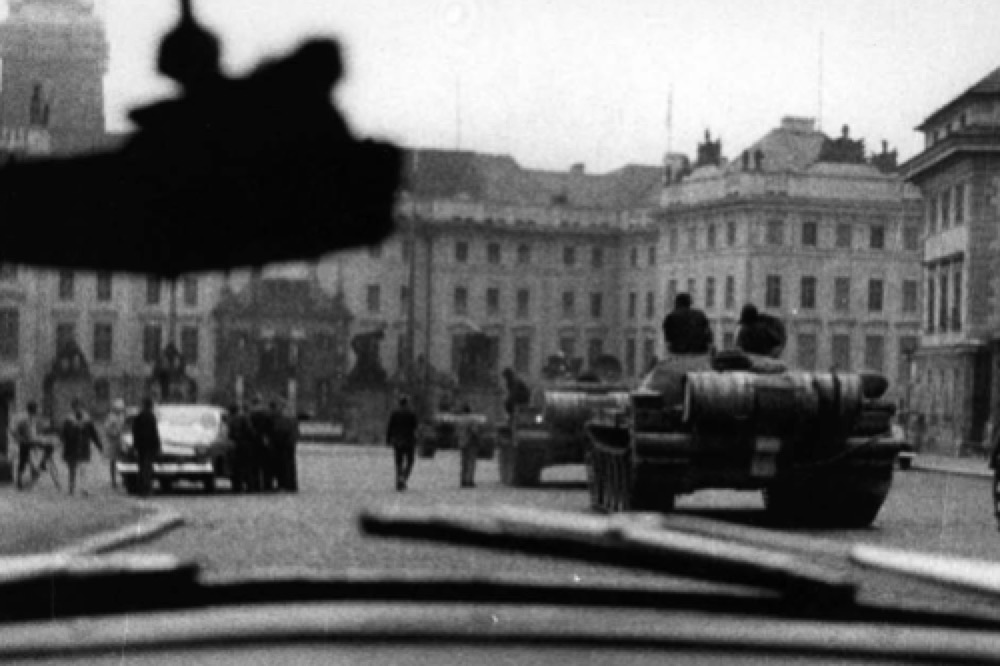
What event does this photograph record?
The Berlin Blockade
The 1956 Hungarian uprising
The 1968 Warsaw Pact invasion of Czechoslovakia
The 1989 Velvet Revolution
Soviet-led forces invaded in August 1968 to end the Prague Spring. The 1956 intervention took place in Budapest.
Which summit is shown in this photograph?
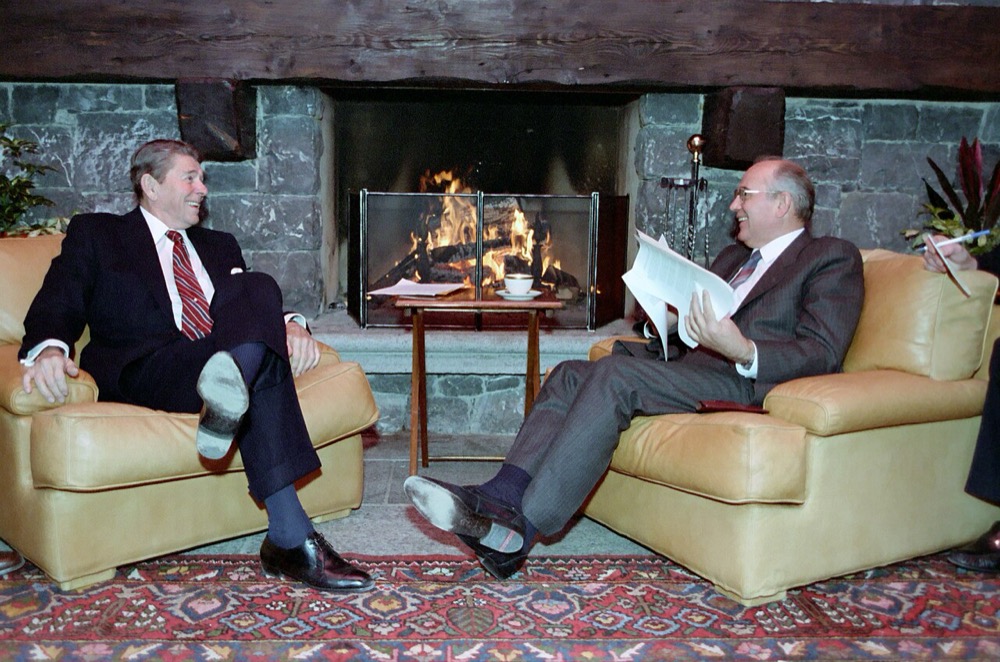
The Geneva Summit of 1985
The Yalta Conference
The Helsinki Conference of 1975
The Potsdam Conference
Reagan and Gorbachev met for the first time at Geneva in November 1985.
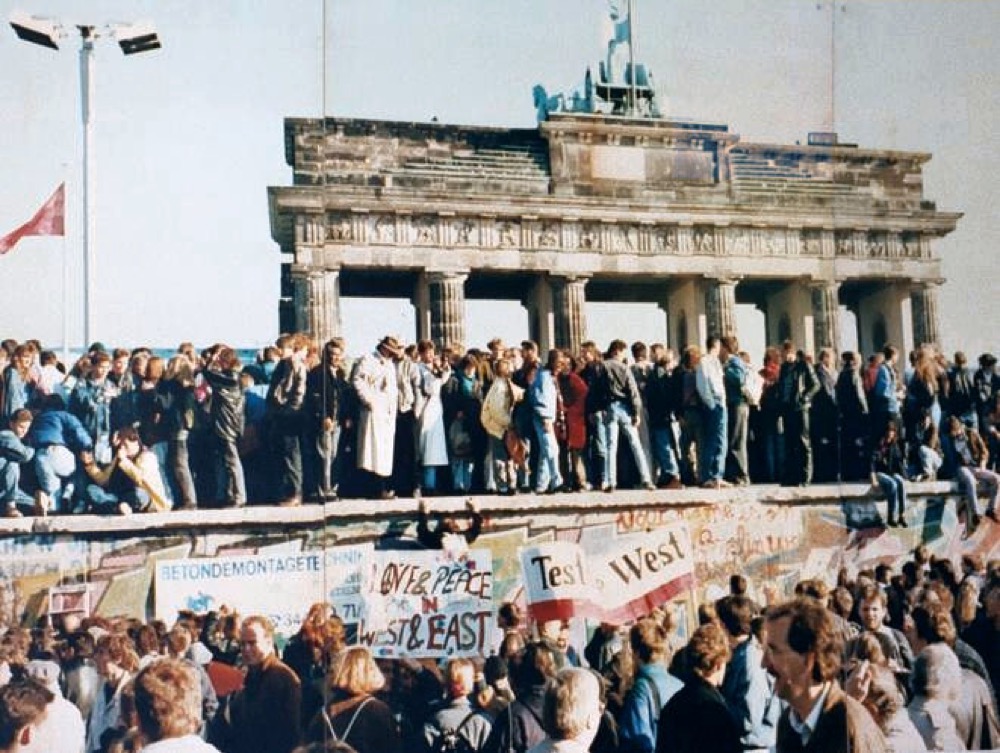
This 1989 photograph from Berlin shows:
The Berlin Airlift
The building of the Wall
People on the Berlin Wall at the Brandenburg Gate after its opening
The reunification ceremony of 3 October 1990
The border opened on 9 November 1989; reunification was formally completed on 3 October 1990.
What does this map show?
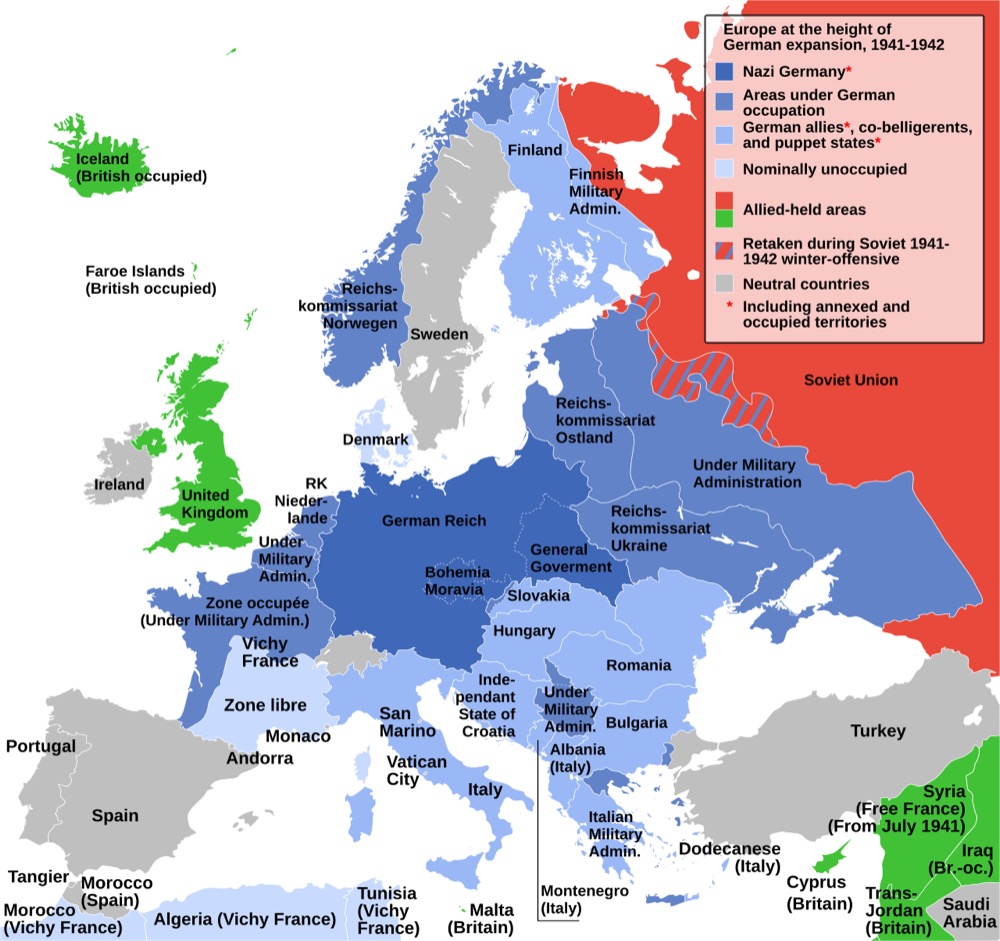
Europe under Axis control in 1942
The Cold War alliances
The 1914 alliance system
The Treaty of Versailles borders
It shows territories under German occupation and Axis allies at the height of German expansion.
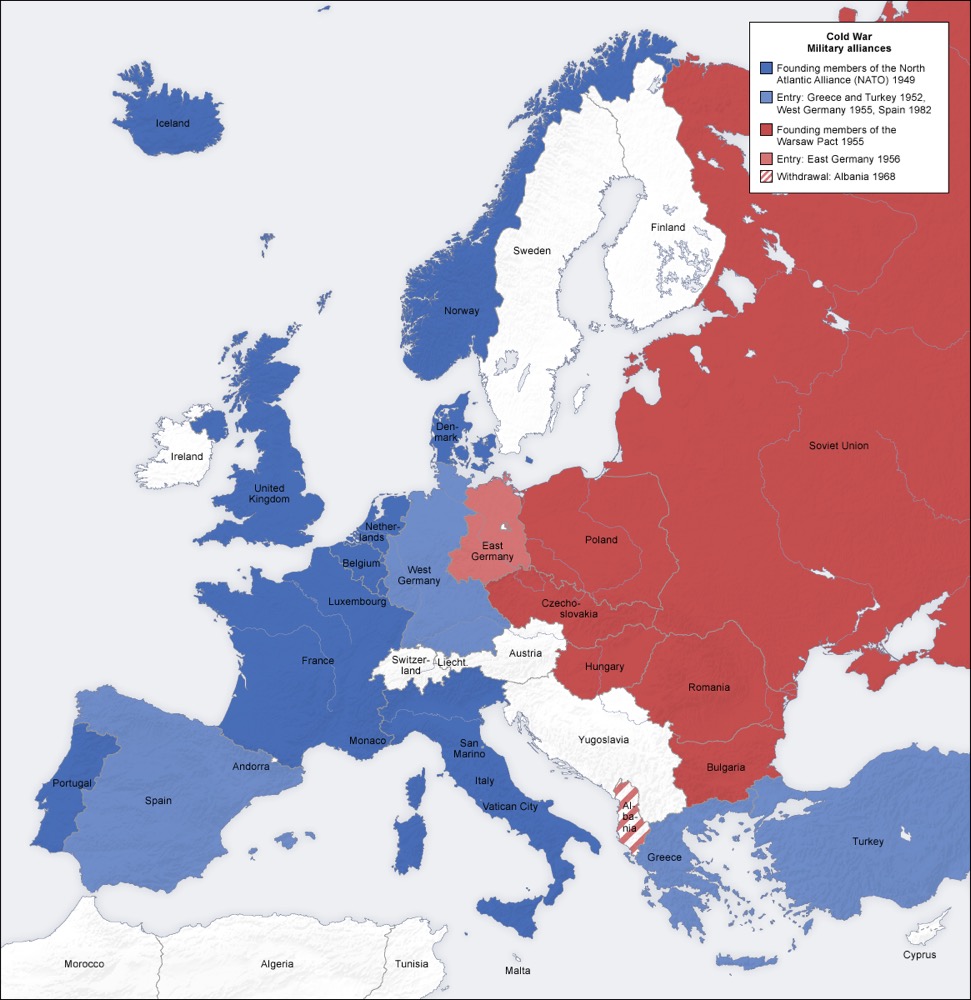
What does this map illustrate?
The Schengen area
Territorial changes after World War I
The Marshall Plan recipients
Cold War military alliances: NATO (blue) and the Warsaw Pact (red)
Blue marks NATO members and red the Warsaw Pact; white marks neutral or non-aligned countries such as Sweden, Austria and Yugoslavia.
