Quiz · Hard
Twenty bar-exam style questions on comparative fault, causation, strict liability, defamation, products and premises liability, with explanations of why the tempting answer is wrong.
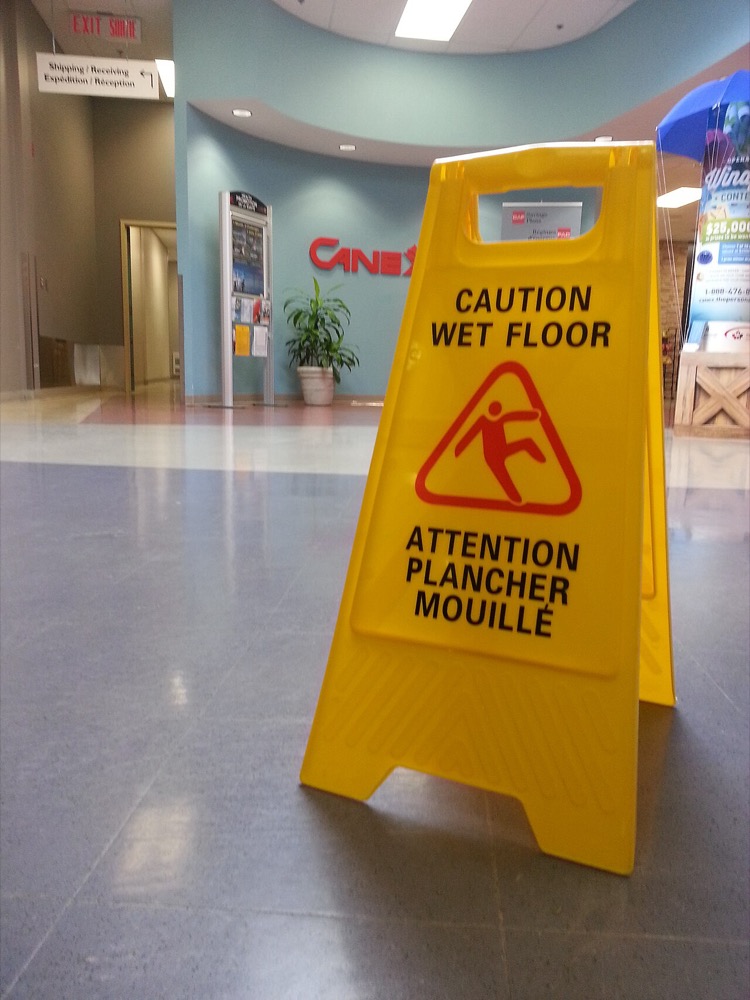
A grocery store's floor is mopped by an employee at 9:00 a.m. At 9:05 a.m. a customer slips on a puddle that the employee left. The store had no wet floor sign. The customer sues the store. Which theory is most direct?
Strict liability because mopping is abnormally dangerous
Respondeat superior, because the employee negligently created the hazard within the scope of employment
Res ipsa loquitur alone because the store had exclusive control
Negligence per se because the store broke a customary practice
The employee's negligent act created the hazard within the scope of employment, so the store is vicariously liable (and as possessor it also has a direct duty to invitees). Mopping is not abnormally dangerous. Res ipsa is a way to prove breach and is not needed when the cause is known. Custom is not a statute, so negligence per se does not apply.
D drives 15 miles per hour above the speed limit and hits P, who runs into the street against a red light from behind a parked truck. The jurisdiction follows pure comparative fault. A jury finds P 60 percent at fault and D 40 percent at fault, with damages of 100,000 dollars. What may P recover?
40,000 dollars
Nothing because P was more at fault than D
60,000 dollars
100,000 dollars
Under pure comparative fault the plaintiff's damages are reduced by her share of fault: 100,000 x 40 percent = 40,000. Only a modified comparative fault system with a 50 percent bar would result in zero recovery.
Same facts, but the jurisdiction follows modified comparative fault, barring recovery if the plaintiff's fault is equal to or greater than the defendant's. P is 50 percent at fault, D is 50 percent. What is P's recovery?
50,000 dollars
25,000 dollars
100,000 dollars
Nothing, because P's fault is not less than D's
Under the "49 percent" modified rule, the plaintiff recovers only if her fault is less than the defendant's. At 50-50 she is barred. Under the "50 percent" rule (not greater than the defendant), she would recover 50,000 dollars. The call of the jurisdiction matters.
A hotel guest's car is stolen by a valet. The valet had a record of auto theft, and the hotel did not check his references. The hotel is sued for negligent hiring. Which element is critical?
Respondeat superior because the theft was within the scope of employment
Strict liability for the acts of employees
The hotel knew or should have known of the employee's unfitness, and the harm was related to it
The valet must have been acting for the benefit of the hotel
Negligent hiring is the employer's own tort: the employer knew or should have known (through reasonable investigation) that the employee was unfit for the role and the harm resulted from that unfitness. It does not depend on scope of employment, so the employer is liable even for acts outside the scope.
A rancher blasts rock with dynamite to clear a field. Using the utmost care, he causes a rock to fly onto a neighbor's roof, damaging it. The neighbor sues. Which result is most likely?
The rancher is not liable because he used utmost care
The rancher is liable under strict liability for abnormally dangerous activities
The rancher is liable only if he intended the damage
The neighbor can recover only under negligence
Blasting is a classic abnormally dangerous activity: it creates a foreseeable risk of serious harm that cannot be eliminated by reasonable care, and it is not a matter of common usage. Strict liability applies regardless of the care used, as long as the harm results from the dangerous aspect of the activity.
A defendant negligently leaves a ladder in a hallway. A burglar, in the dark, trips over it and breaks an arm while fleeing. The burglar sues the building owner. Which analysis is best?
The owner owes no duty of reasonable care to an unknown trespasser engaged in criminal activity, so there is probably no liability
The owner is strictly liable because the ladder was an unreasonably dangerous condition
The owner is liable because the burglar's injury was foreseeable
The owner is liable under res ipsa loquitur
Under the traditional rule, a possessor owes an unknown adult trespasser only a duty to refrain from willful or wanton misconduct, and has no duty to make the land safe. Many modern courts allow a general reasonable-care duty, but even they are reluctant to impose it on a criminal intruder. Strict liability and res ipsa do not fit.
A negligent driver's car strikes a pedestrian, who is taken to a hospital. A doctor negligently treats the pedestrian, and the pedestrian's injuries are made worse. Who is liable for the aggravation?
Only the doctor because the doctor's negligence is a superseding cause
Only the driver because the doctor owed no duty
Neither because the causal chain was broken
The driver and the doctor, because medical negligence is a foreseeable intervening cause
Negligent medical treatment of an injury caused by the defendant is a foreseeable intervening cause and does not supersede. The driver is liable for the original injury and the aggravation, and the doctor is liable for the aggravation; both can be liable, with contribution among them.
A pharmacist fills a prescription with the wrong drug. The patient, a trained nurse, notices the error on the label but takes the medication anyway and is harmed. The jurisdiction follows pure comparative fault. What is the likely result?
The patient is barred because she assumed the risk
The patient recovers in full because the pharmacist's negligence was the only cause
The patient's recovery is reduced by her share of fault
The pharmacist is not liable because the patient had a duty to double-check
Under pure comparative fault the patient's own negligence (or implied assumption of risk, which is merged into comparative fault) reduces her recovery by her percentage of fault. It is not a complete bar and does not cancel the pharmacist's duty.
A newspaper publishes that a city council member (a public official) accepted a bribe. The statement is false, and the reporter failed to check a single source but believed the tip. In the council member's defamation claim, which is the most accurate statement?
The council member needs to show only negligence
The council member must show actual malice, and failure to investigate alone does not prove it
Truth is irrelevant because the council member is a public official
The reporter's good faith is irrelevant because liability is strict
A public official must prove falsity and actual malice (knowledge of falsity or reckless disregard) by clear and convincing evidence. A failure to investigate, by itself, is not reckless disregard; the plaintiff must show the reporter actually entertained serious doubts or had obvious reasons to doubt.
A manufacturer sells a lawn mower with a blade guard that complies with all government safety standards. A user is injured when he reaches under the mower with the engine running. The user claims design defect. Which fact is MOST helpful to the user?
A feasible, inexpensive alternative design would have prevented the injury and would not have impaired the mower's function
The user had used mowers for twenty years
The mower complied with federal standards
The user did not read the manual
A design defect claim under the risk-utility test depends on a reasonable alternative design that would have reduced the foreseeable risk. Compliance with standards is evidence of reasonable design but is not conclusive, and the user's experience or failure to read the manual would help the defense.
A drunk driver crashes into a utility pole, which causes a power outage. A factory loses a day of production, and the owner sues the driver for lost profits. Which is most likely?
Full recovery because lost profits were foreseeable
Recovery under strict liability for DUI
Recovery under res ipsa loquitur
No recovery; most courts deny recovery of pure economic loss in negligence without physical injury or property damage to the plaintiff
Under the economic loss rule, a negligent defendant is not liable for purely economic losses to a plaintiff who suffered no physical injury or property damage. Courts fear indeterminate liability. Foreseeability alone is not enough.
A landlord leases an apartment. A tenant's guest is injured when a handrail in the common stairway collapses because of rot that the landlord could have discovered by a reasonable inspection. The landlord is sued. Result?
The landlord is not liable because the tenant is in possession
The landlord is liable only if the landlord had actual knowledge
The landlord is liable, because the landlord retains control of common areas and owes a duty of reasonable care
The guest can recover only from the tenant
A landlord keeps possession and control of common areas and owes lawful entrants a duty of reasonable care, including inspection. The general rule that the tenant is responsible for leased premises does not extend to common areas. Constructive knowledge (should have discovered) is enough.
Anna promises Bill 10,000 dollars to burn down Bill's competitor's shop. Bill does it. A passerby is injured by the fire. Anna is sued by the passerby. What is Anna's likely liability?
Not liable because only Bill acted
Liable, as a person who procured the tortious act of another
Liable only if Anna was present
Liable only under respondeat superior
A person who orders, procures, or encourages a tort (concert of action, aiding and abetting) is jointly liable with the actor. Presence is not required. Respondeat superior would need an employer-employee relationship.
A defendant's negligence causes a fire. The fire destroys the plaintiff's house. A second, independent fire, started by lightning, burned at the same time and would also have destroyed the house. What is the result on causation?
Each fire is a substantial factor, and the negligent defendant is liable
The defendant is not liable because the lightning would have destroyed the house anyway
Only the first fire is a cause
The plaintiff cannot prove but-for causation so the defendant is not liable
Where two independent forces, each sufficient to cause the harm, combine, each is a substantial factor. The but-for test is replaced by the substantial factor test, so the negligent defendant is liable.
D negligently rear-ends P's car at low speed. P has a rare bone condition that no one could have known about, and suffers severe fractures that an ordinary person would not have suffered. What is the extent of D's liability?
D is liable only for the minor injury an ordinary person would have suffered
D is not liable because the extent of the harm was unforeseeable
D is liable only if P was not contributorily negligent
D is liable for all of P's injuries, including the unforeseeable extent, because a defendant takes the plaintiff as found
Under the eggshell plaintiff rule, a defendant whose negligence causes harm is liable for the full extent of the damages even if the plaintiff's pre-existing condition made them unforeseeably severe. Foreseeability limits the type of harm, not its extent.
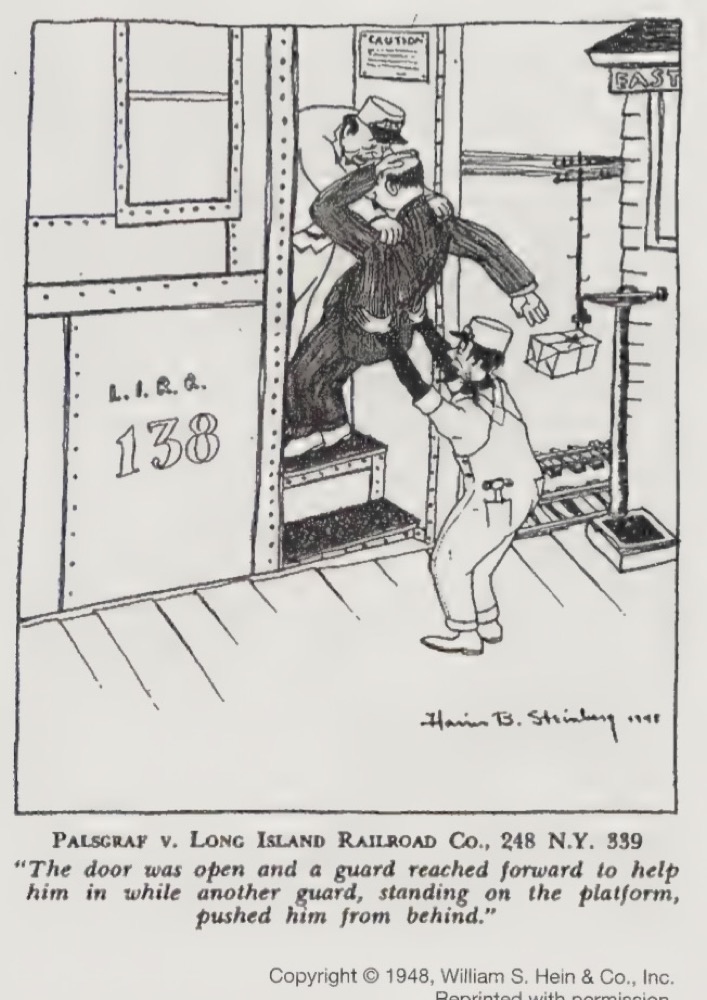
Which of the following best states the rule in Palsgraf?
A defendant is liable for all harms that directly follow its negligence
The defendant is liable to anyone but proximate cause limits recovery
Duty is owed only to those within the foreseeable zone of danger
Defendants are strictly liable for dangerous items
Cardozo's majority held that negligence is a relational concept: the duty runs only to foreseeable plaintiffs, those within the zone of danger. Andrews' dissent (liability to anyone, with proximate cause as the limit) is the minority view.
A radio station broadcasts, "Local doctor Pat Jones is a quack who has killed three patients." The statement is untrue. Pat sues for defamation. Which is true under common law?
Pat must prove special damages as the statement was broadcast orally
Pat need not prove special damages, because the statement concerns Pat's profession
Pat must prove actual malice because Pat is a doctor
The station has an absolute privilege
A statement injuring a person in their trade or profession is slander per se, and damages are presumed at common law. (Constitutional limits can still require fault and, for presumed damages on public concern matters, actual malice.) A private doctor is not a public figure by profession alone.
Ed lawfully builds a campfire at a campsite. A strong, unexpected wind carries sparks to the neighbor's dry forest, burning it. Ed was careful. Which is the most accurate statement?
Ed is liable only if he was negligent, so liability is unlikely
Ed is strictly liable for fire damage
Ed is liable for trespass to land because the sparks entered the land
Ed is liable under res ipsa loquitur
Trespass to land requires intent to enter the land or knowledge to a substantial certainty; negligence is not enough for intentional trespass, though a negligent invasion that causes harm is actionable in negligence. Building a campfire is not abnormally dangerous, so strict liability does not apply (although some statutes impose liability for fires). If Ed was careful, there is no negligence.
A manufacturer of a prescription drug warns the prescribing doctor of a rare side effect but not the patient. The patient suffers it. Under the learned intermediary doctrine, the manufacturer is:
Liable because the patient must always be warned
Strictly liable for any side effect
Liable only if the patient could read medical terms
Not liable for failure to warn if the warning to the doctor was adequate
The learned intermediary doctrine allows a prescription drug manufacturer to discharge its duty to warn by giving adequate warnings to the prescribing physician. Exceptions exist (for example, mass immunization programs).
