Quiz · Medium
Attention, Gestalt, depth cues, illusions, heuristics and problem-solving obstacles.
A person estimates the risk of shark attacks as high after watching a documentary. This is the:
Availability heuristic
Anchoring effect
Hindsight bias
Gambler's fallacy
Judgments are based on how easily examples come to mind.
Thinking that 'Linda is a bank teller and a feminist' is more likely than 'Linda is a bank teller' is an example of:
Conjunction fallacy via representativeness
Anchoring
Framing
Functional fixedness
A conjunction cannot be more probable than either of its parts.
Shoppers see a high 'original' price before a sale price and think the sale price is a great deal. This is mostly:
Anchoring
Framing
Belief bias
Mental set
The initial number biases subsequent judgments.
Duncker's candle problem is mainly used to demonstrate:
Functional fixedness
Confirmation bias
Chunking
Overregularization
People fail to see the box of tacks as a candle holder.
Which pair correctly matches the system with its features?
System 1: slow and deliberate
System 2: fast and automatic
System 1: fast and intuitive
System 2: unconscious and effortless
Kahneman describes System 1 as fast, automatic and intuitive; System 2 as slow, effortful and deliberate.
A manager keeps funding a failing project because 'we have already spent $2 million'. This is:
Sunk cost fallacy
Availability heuristic
Overconfidence
Representativeness
Past, unrecoverable costs should not affect future decisions.
In Wason's 2-4-6 task, most people only test triples that fit their hypothesis. This is:
Confirmation bias
Hindsight bias
Anchoring
Framing
Participants seek confirming rather than falsifying evidence.
Broadbent's filter model proposes that:
Attention filters unattended input early based on physical features
All input is processed for meaning before filtering
Attention is unlimited
Unattended messages are only attenuated
Treisman later modified this idea with the attenuation model.
In the gorilla study, roughly half the participants did not see the gorilla. This phenomenon is:
Change blindness
Inattentional blindness
Perceptual constancy
Word superiority
Unexpected stimuli outside the focus of attention often go unnoticed.
The Stroop effect demonstrates:
Interference from an automatic process
Short-term memory capacity
Figure-ground reversal
Depth perception
Word reading is automatic and interferes with naming an incongruent ink colour.
When searching for a single red circle among green circles, the target 'pops out'. According to feature integration theory:
Feature search is parallel and fast
Conjunction search is parallel
Pop-out requires focused attention
Search time rises steeply with distractors
Single features are detected pre-attentively; conjunctions need focused attention.
Which Gestalt law explains seeing a complete triangle in the Kanizsa figure?
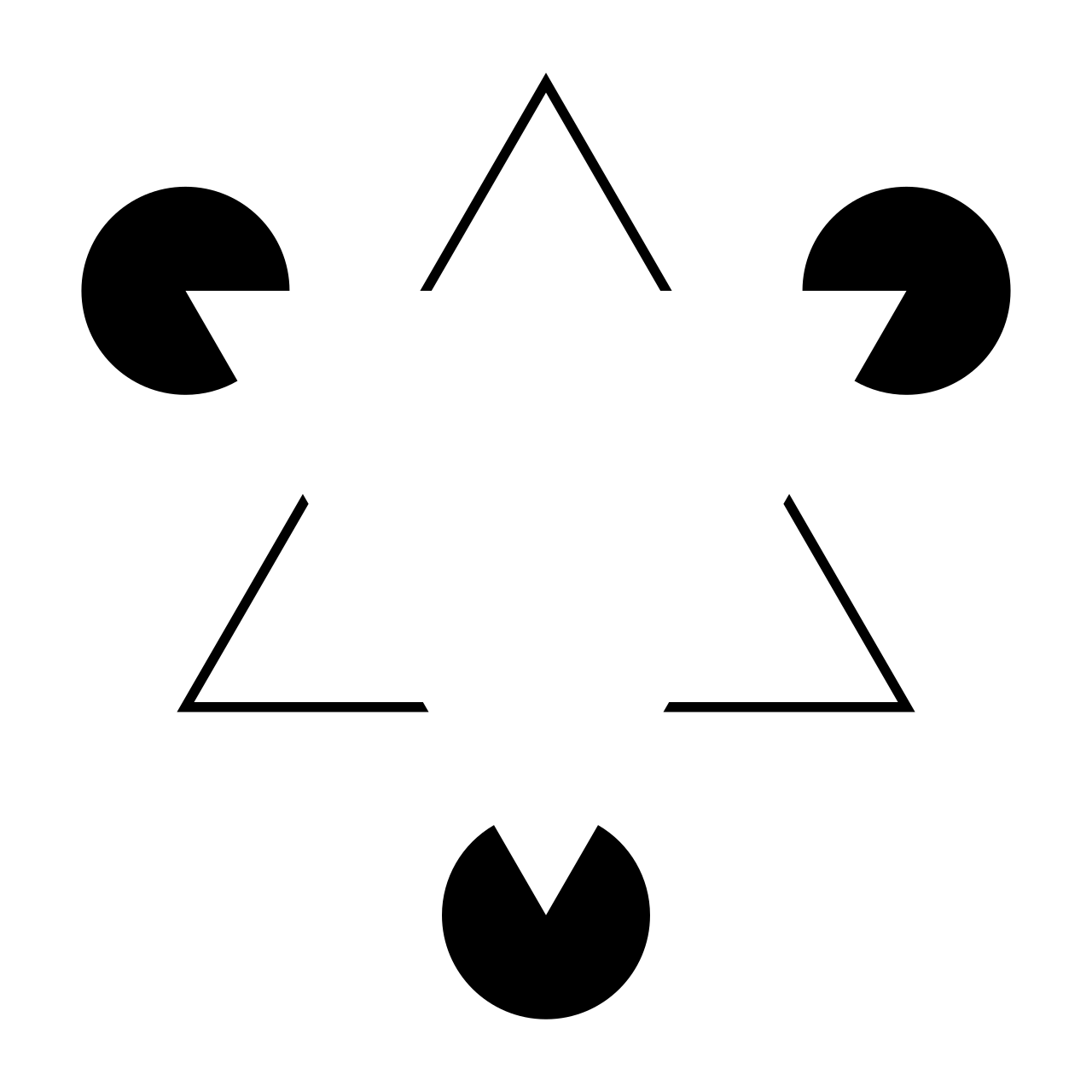
Illusory contours/closure
Common fate
Similarity
Linear perspective
The visual system completes the missing edges to form a whole shape.
Looking at the figure with converging lines and two equal bars, the upper bar looks larger. This shows:
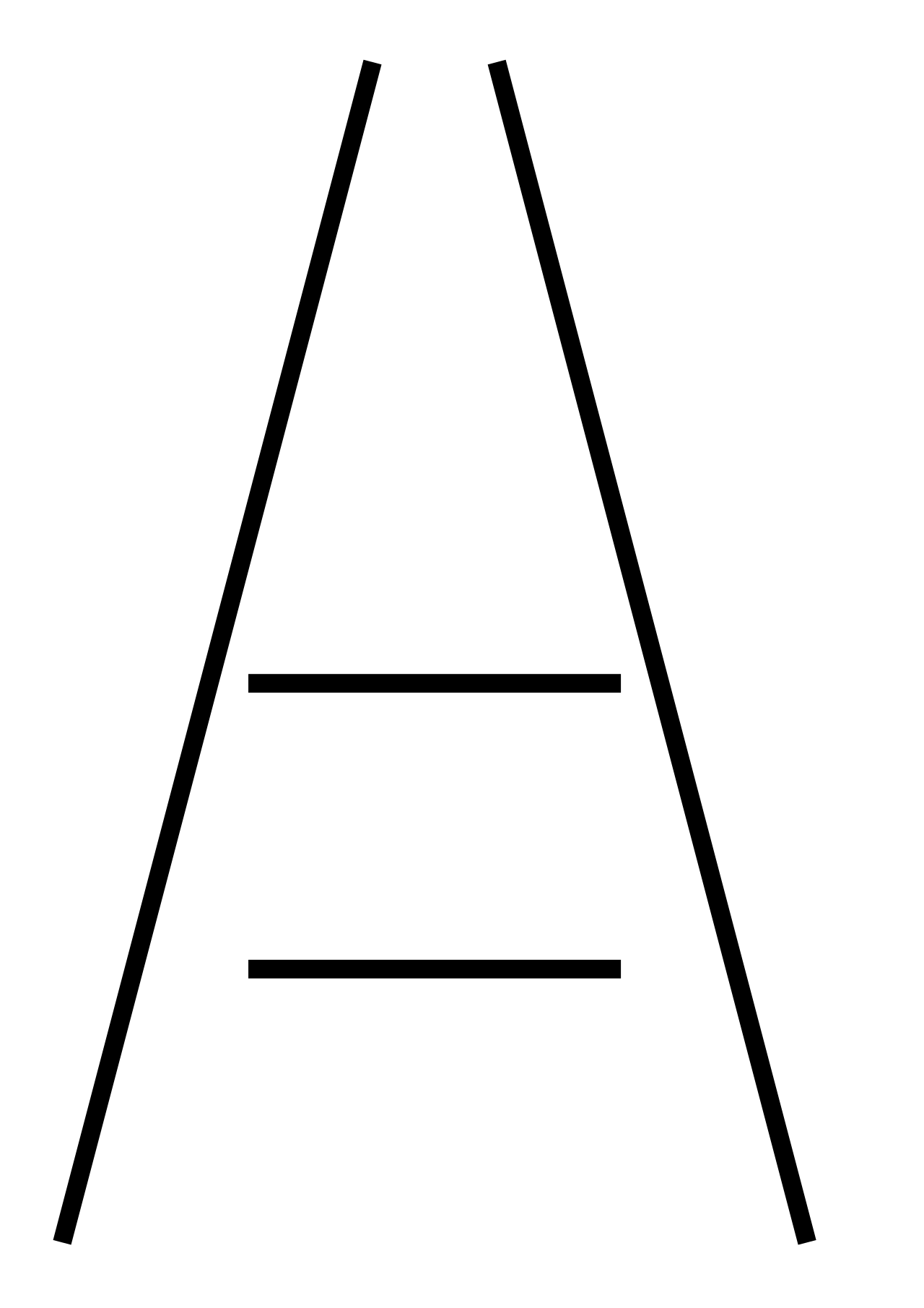
Misapplied size-distance scaling (Ponzo)
Colour constancy
Shape constancy
Motion parallax
Perspective cues suggest the upper bar is farther away, so it is perceived as larger.
Which depth cue requires both eyes?
Linear perspective
Retinal disparity
Interposition
Texture gradient
Retinal disparity compares the two retinal images.
Speaking fluently but making little sense, with poor comprehension, is typical of damage to:
Broca's area
Wernicke's area
The hippocampus
The cerebellum
Wernicke's aphasia is fluent and meaningless; Broca's aphasia is halting with intact comprehension.
Choosing the first option that is 'good enough' rather than searching for the best is called:
Maximizing
Satisficing
Algorithmic search
Insight
Simon's bounded rationality predicts satisficing.
