Quiz · Medium
Hypotheses, variables, experimental designs, bias controls, sampling methods and research ethics.
A hypothesis is falsifiable if:
it has been proven true
it makes predictions that could be shown to be wrong
it is based on a theory
it uses statistics
Popper's criterion of a scientific theory.
A researcher defines 'stress' as the participant's cortisol level in saliva. This is an example of:
an operational definition
a null hypothesis
a confounding variable
a directional hypothesis
Operationalization makes variables measurable.
In an experiment testing whether caffeine improves memory, the amount of caffeine is the:
dependent variable
control variable
confounding variable
independent variable
The IV is manipulated; memory is the DV.
What is the key feature that separates a true experiment from a quasi-experiment?
Use of a control group
Use of statistics
Random assignment to conditions
A laboratory setting
Quasi-experiments use pre-existing groups.
Participants in a repeated-measures experiment perform better in the second condition simply from practice. This is:
a demand characteristic
an order effect
an extraneous variable
a Type I error
Counterbalancing spreads such effects across conditions.
Neither the participants nor the researcher recording results knows who gets the drug. This is a:
double-blind design
single-blind design
matched-pairs design
natural experiment
It controls expectancy effects in both groups.
A researcher chooses every 10th name from a list of students. This sampling method is:
stratified
opportunity
volunteer
systematic
Systematic sampling uses a fixed interval.
A study of an advertised psychology experiment uses people who responded to the poster. Which sampling method is this?
Random sampling
Stratified sampling
Volunteer (self-selected) sampling
Cluster sampling
Volunteers may differ from the general population.
Why is the WEIRD problem important in psychology?
Most studies are too small
Most participants come from Western, educated, industrialized, rich, democratic societies, limiting generalization
Most researchers fake data
Statistical tests are invalid
Henrich, Heine and Norenzayan (2010).
Which research design is best for studying changes in the same people across decades?
Longitudinal
Cross-sectional
Case-control
Natural experiment
It avoids cohort effects but is costly and has attrition.
Which principle of the Belmont Report concerns fair distribution of the benefits and burdens of research?
Beneficence
Respect for persons
Fidelity
Justice
The other principles are respect for persons and beneficence.
What led to the creation of institutional review boards in the United States?
Milgram's obedience studies
The invention of fMRI
Ethical abuses such as the Tuskegee syphilis study
The replication crisis
The National Research Act (1974).
Why must participants be debriefed after a study involving deception?
To collect more data
To explain the true purpose and address any distress
To recruit new participants
To avoid peer review
Debriefing is an essential safeguard.
What is the main idea of the Nuremberg Code?
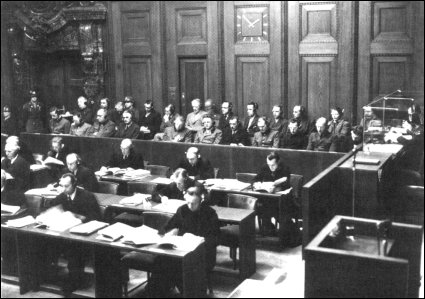
Voluntary informed consent is essential
Research must always be anonymous
Animals must not be used
Deception is always acceptable
It arose from the Doctors' Trial.
The 3Rs of animal research are replace, reduce and:
repeat
report
reward
refine
Russell and Burch (1959).
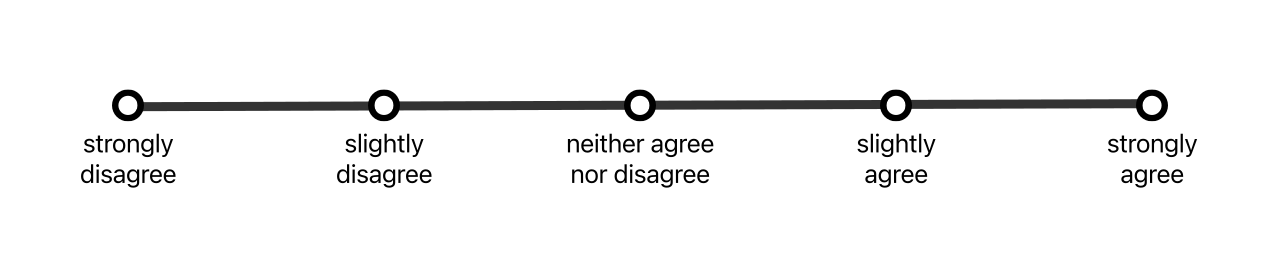
A questionnaire item with the options 'strongly disagree' to 'strongly agree' produces which kind of data?
Nominal
Ratio
Ordinal
Interval with a true zero
The gaps between points are not necessarily equal.
