Quiz · Medium
Lobes, language areas, split-brain research, brain imaging, sleep stages and twin studies.
Damage to Wernicke's area typically produces:
slow telegraphic speech
complete loss of vision
loss of balance
fluent but meaningless speech with poor comprehension
Wernicke's area, in the left temporal lobe, is needed for comprehension.
Phineas Gage's case is most often used to illustrate that:
the hippocampus forms new memories
the frontal lobes are involved in personality and self-control
the cerebellum controls balance
language is in the right hemisphere
An iron rod damaged his left frontal lobe; he was reported to be changed.
A patient speaks slowly and with effort but understands speech well. The damage is most likely in:
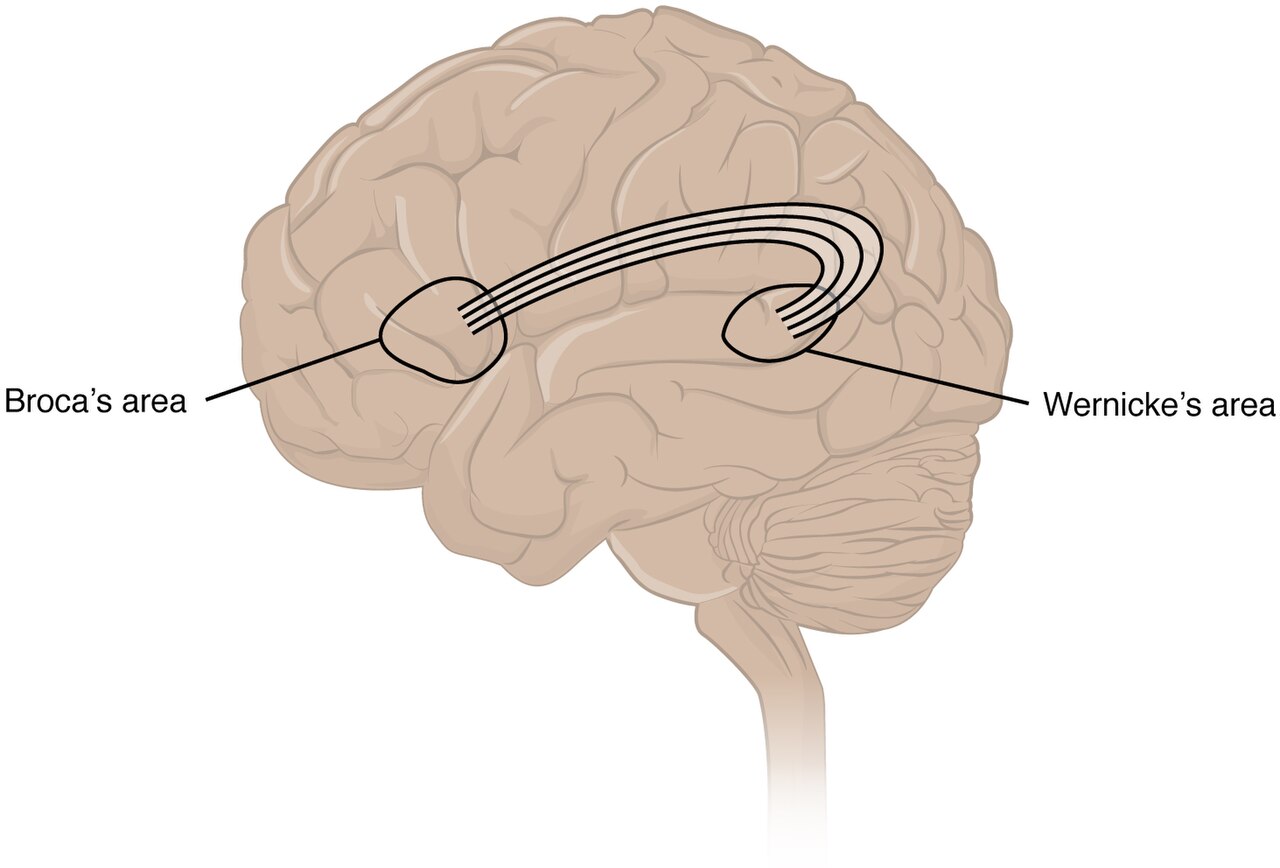
Broca's area
Wernicke's area
the occipital lobe
the corpus callosum
This is Broca's (expressive) aphasia.
H.M. could learn mirror drawing but not remember doing it. This shows that:
short-term memory needs the cerebellum
emotion needs the amygdala
procedural and declarative memory depend on different systems
the hippocampus stores skills
His medial temporal lobe removal spared procedural learning.
Which scanning technique has the best temporal resolution?
fMRI
EEG
PET
MRI
EEG records electrical activity in milliseconds but locates it poorly.
A researcher wants to show that a region is necessary for a task by temporarily disrupting it in healthy volunteers. Which method is best?
Transcranial magnetic stimulation
Structural MRI
EEG
CT
TMS creates a temporary 'virtual lesion'.
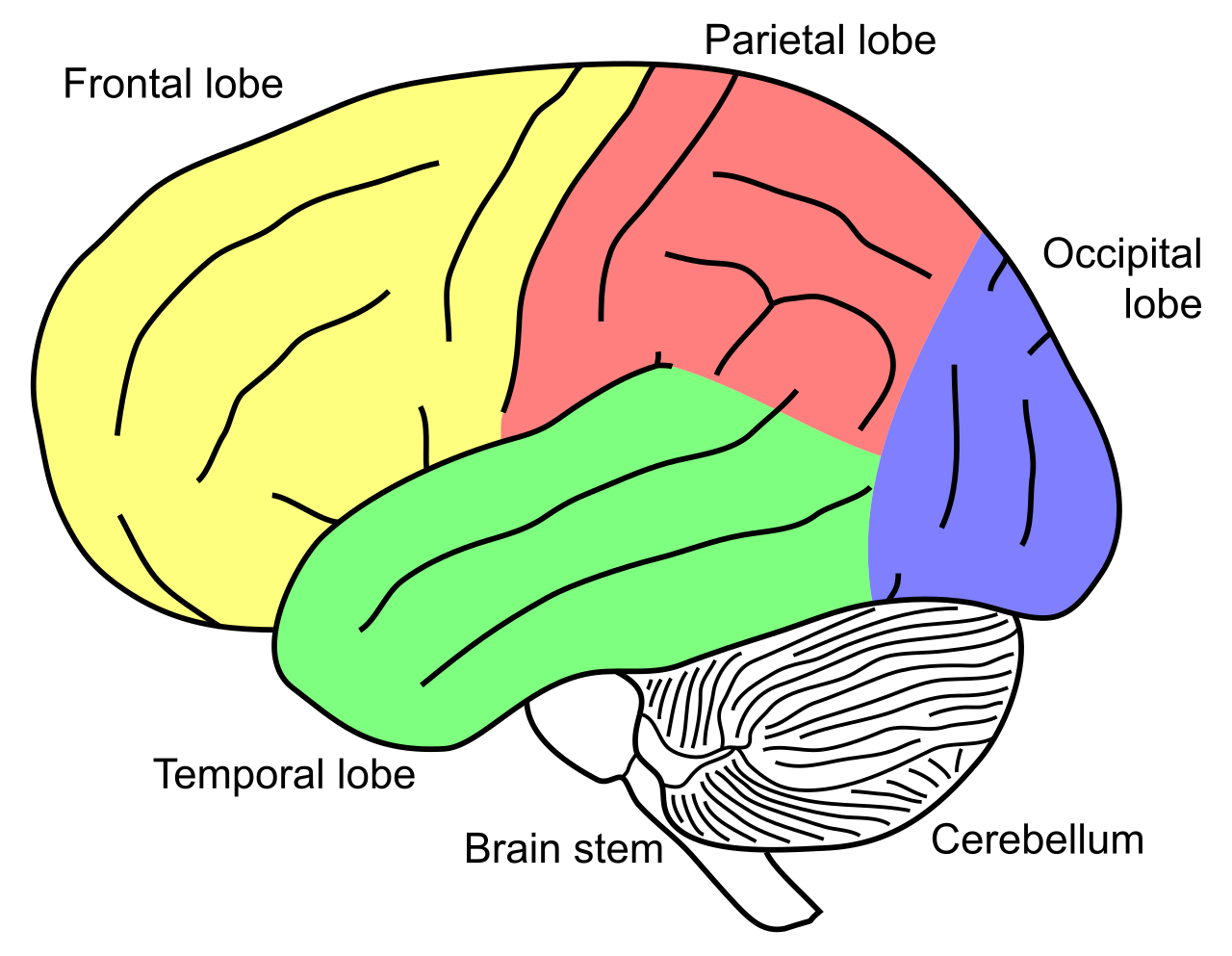
In the diagram, the lobe shaded blue at the back of the brain processes:
hearing
touch
planning
vision
This is the occipital lobe, which contains the primary visual cortex.
An image is flashed to the left visual field of a split-brain patient. The patient is most likely to:
name it immediately
say they saw nothing and be unable to pick it out
be unable to name it but pick it out with the left hand
be able to name it but not pick it out
The right hemisphere sees it but cannot speak; it controls the left hand.
Which brain structure acts as the sensory relay station?
Hypothalamus
Thalamus
Medulla
Amygdala
The thalamus routes sensory input (except smell) to the cortex.
Stage 3 sleep is distinguished by:
delta waves
sleep spindles
beta waves
rapid eye movements
It is also called slow-wave sleep.
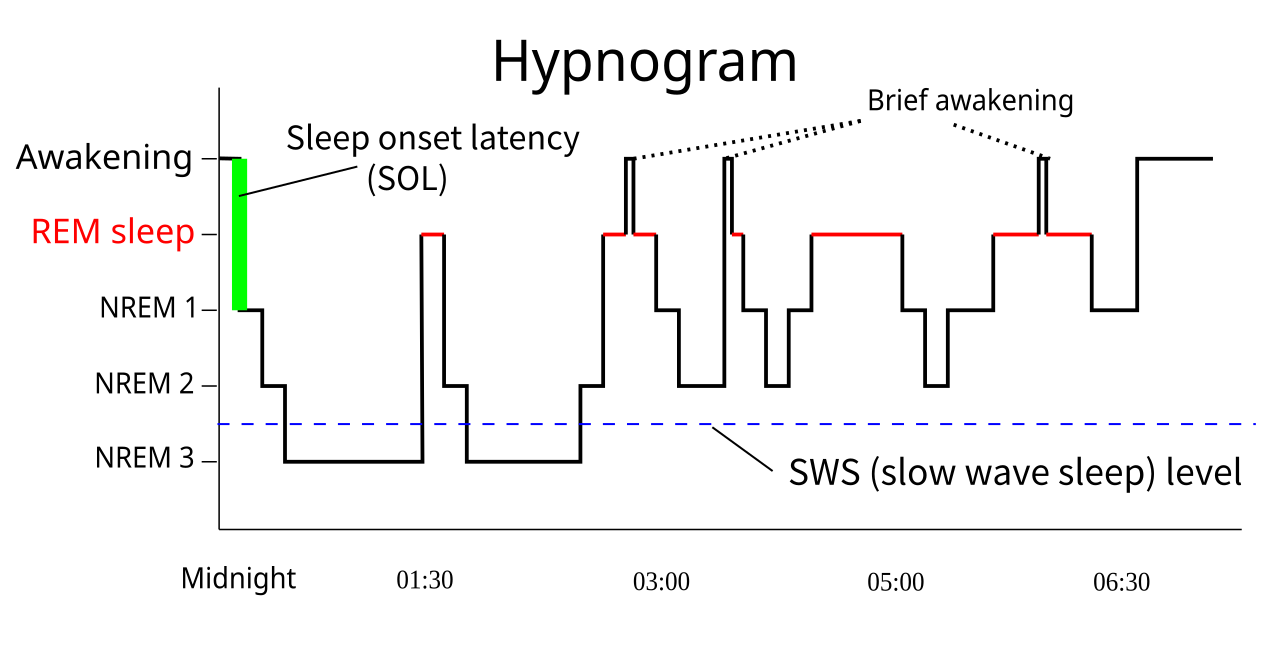
The red segments on this hypnogram mark a stage characterized by:
delta waves and sleepwalking
sleep spindles and K-complexes
theta waves and hypnic jerks
vivid dreams and muscle paralysis
REM sleep: an active brain with atonia; periods lengthen toward morning.
Which statement about the circadian rhythm is correct?
It is controlled by the cerebellum
It lasts exactly 12 hours
The suprachiasmatic nucleus is reset by light
It is unaffected by light
The SCN receives retinal input and signals the pineal gland.
Concordance for schizophrenia is about 48 percent in MZ twins and 17 percent in DZ twins. This suggests that:
schizophrenia is purely genetic
genes contribute but do not fully determine risk
environment has no role
DZ twins share more genes
MZ concordance far below 100 percent shows environmental influence.
The activation-synthesis hypothesis claims that dreams:
are the cortex's interpretation of random brainstem activity during REM
hide wishes in latent content
are always about the day's events
only occur in NREM sleep
Hobson and McCarley (1977).
Which method assumes that identical twins share their environments to the same degree as non-identical twins?
Case studies
Lesion studies
Adoption studies
Twin studies (equal environments assumption)
Critics argue MZ twins are treated more similarly.
Which hormone helps regulate the sleep-wake cycle and is released by the pineal gland?
Cortisol
Insulin
Melatonin
Thyroxine
Melatonin rises as light fades.
