Quiz · Medium
Twenty-two questions on feudalism, the Church, the Crusades, Byzantium, Islam, the Black Death and the medieval world beyond Europe.
In the feudal system, what did a vassal receive and what did he owe?
A castle in return for rent
Church lands in return for tithes
A fief in return for military service and loyalty
A salary in return for farm work
Feudal ties exchanged land for service. Serfs, not vassals, owed farm labor, and tithes went to the Church.
Which feature best describes a serf?
A free tenant who could leave at will
A person bound to the land who owed labor to the lord
A slave who could be sold separately from the land
A knight who served the king
Serfs could not leave the manor without permission but could not be sold apart from the land, which separated them from slaves.
What was the main result of Charlemagne's coronation in 800?
It made the pope subject to the Franks
It ended the Frankish kingdom
It created the Byzantine Empire
It linked the Frankish king with papal approval and a revived idea of empire in the West
Pope Leo III crowned him emperor. This annoyed Byzantium, which considered itself the Roman Empire.
Which person is shown here, painted by Dürer?
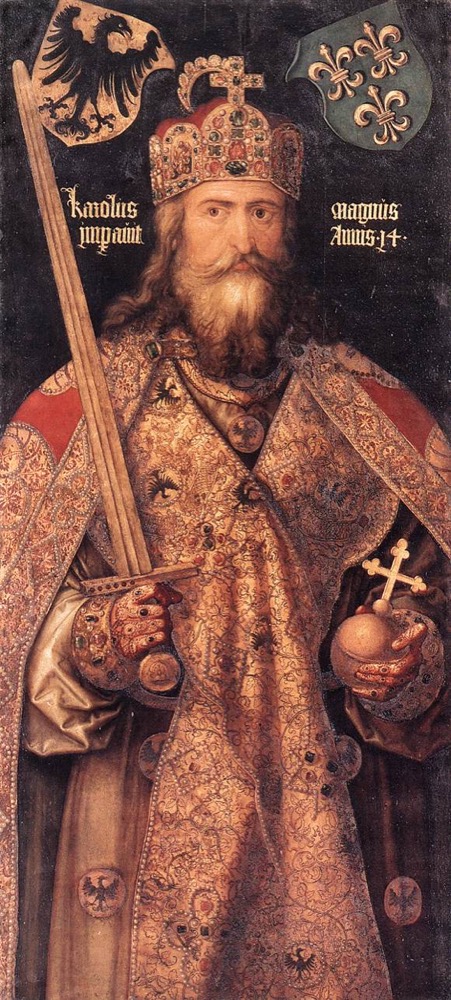
Henry V
Charlemagne
Justinian
William the Conqueror
Dürer's 1512 portrait shows Charlemagne, shown with imperial regalia from a later period.
Why did the Battle of Hastings (1066) matter?
King John signed a charter
The Vikings conquered London
Joan of Arc won her first battle
William of Normandy defeated Harold and began Norman rule of England
After Harold beat Harald Hardrada at Stamford Bridge, he lost at Hastings. The Normans then reshaped English government and language.
What was the cause of the Investiture Controversy?
Whether kings could tax serfs
Whether Latin could be used in services
Who owned the Holy Land
Whether popes or kings had the right to appoint bishops
Pope Gregory VII and Emperor Henry IV clashed over investiture. It was resolved by the Concordat of Worms (1122).
Which statement about the First Crusade is correct?
It began in 1204 and sacked Constantinople
Saladin led it
Pope Urban II called it in 1095, and crusaders captured Jerusalem in 1099
Richard I led it
Urban II spoke at Clermont. Saladin was a Muslim leader who retook Jerusalem in 1187, and the sack of Constantinople came in the Fourth Crusade.
What is shown on this map?
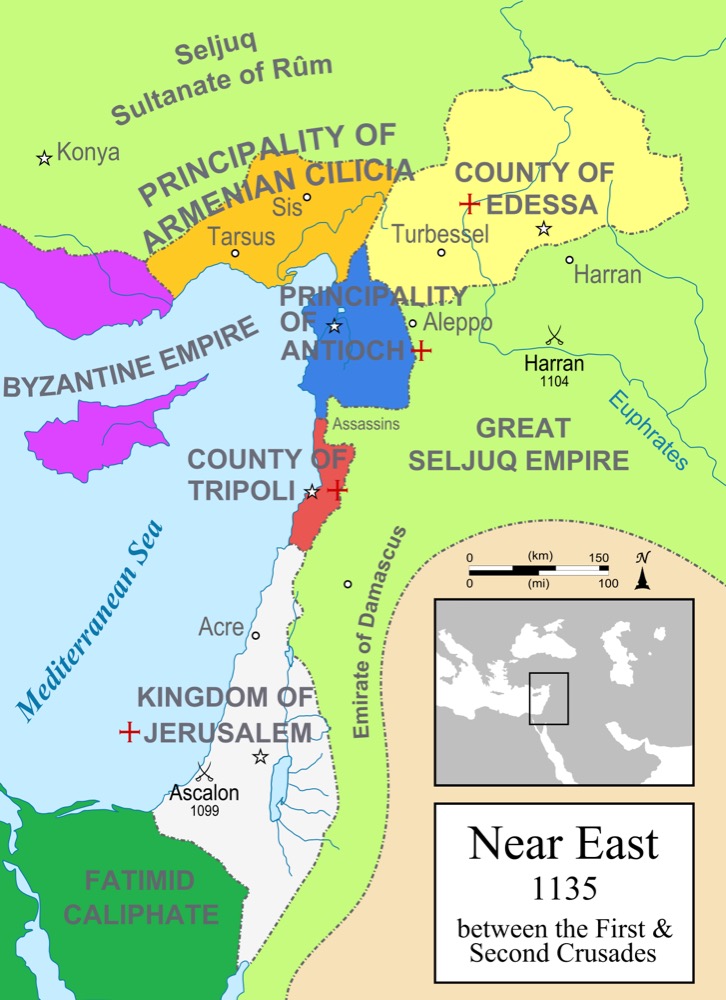
The Crusader states of Edessa, Antioch, Tripoli and Jerusalem
The Umayyad Caliphate
The spread of the Black Death
The Mongol Empire
The Crusader states are labeled with Edessa, Antioch, Tripoli and Jerusalem, together with the Byzantine and Seljuk neighbors. Image: MapMaster, CC BY-SA 3.0, via Wikimedia Commons.
What was Justinian's greatest legal achievement?
The Corpus Juris Civilis, a codification of Roman law
Magna Carta
The Twelve Tables
The Domesday Book
His commission organized Roman law in the 530s. Magna Carta and Domesday are English, and the Twelve Tables were much earlier.
Which is true of the Great Schism of 1054?
It split the Catholic West from the Orthodox East
It created rival popes at Avignon and Rome
It divided Sunni and Shia Muslims
It ended the Hundred Years' War
The Western Schism (1378–1417) is the rival-popes dispute. The Sunni–Shia split came after Muhammad's death.
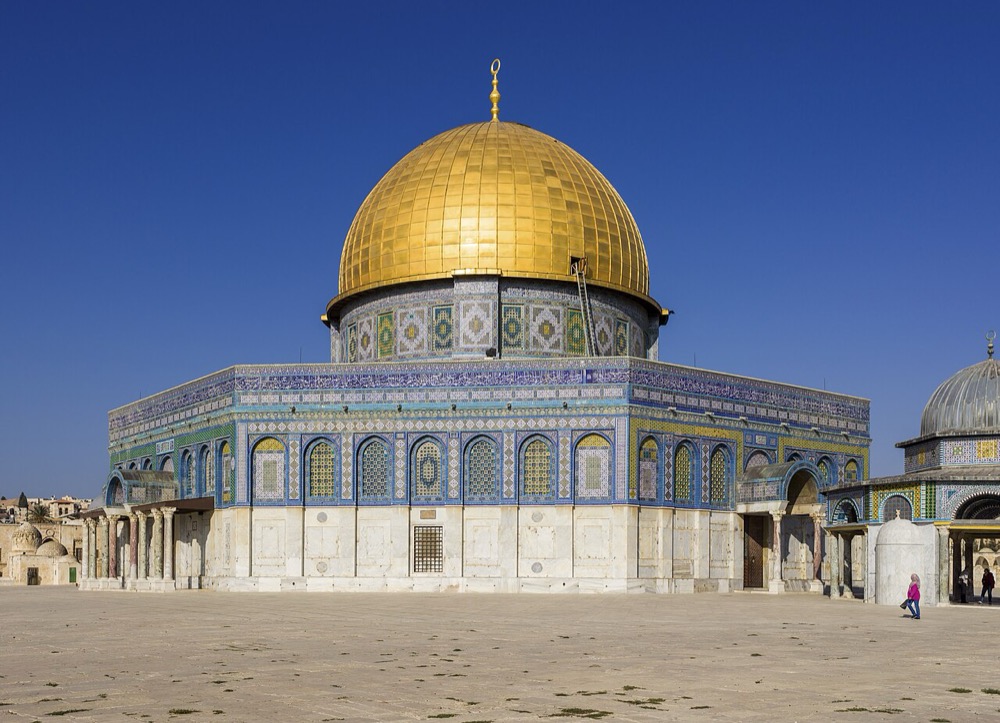
Which dynasty built the Dome of the Rock?
Abbasid
Ottoman
Fatimid
Umayyad
The Umayyad caliph Abd al-Malik completed it in 691–692, long before the Abbasids and Ottomans. Image: Godot13, CC BY-SA 4.0, via Wikimedia Commons.
Why was the Abbasid capital Baghdad a center of learning?
It was the Mongol capital
It banned translations
Scholars in the House of Wisdom translated and extended Greek, Persian and Indian works
It was the pope's home
Al-Khwarizmi, Ibn Sina and others worked in the Abbasid world. The Mongols destroyed Baghdad in 1258.
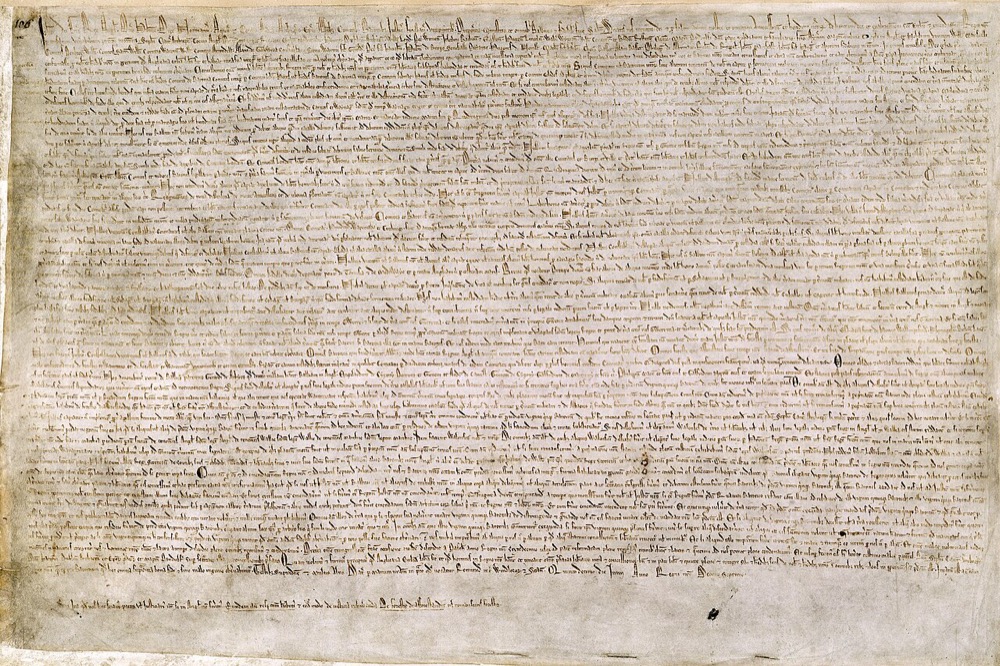
What was the Magna Carta's key principle?
The pope is above the king
The barons have no rights
The king is under the law and cannot imprison free men without lawful judgment
All peasants are free
Barons forced King John to accept limits on his power in 1215. It first protected mainly the nobility, but later became a symbol of rule of law.
Which innovation allowed Gothic cathedrals to have tall walls full of windows?
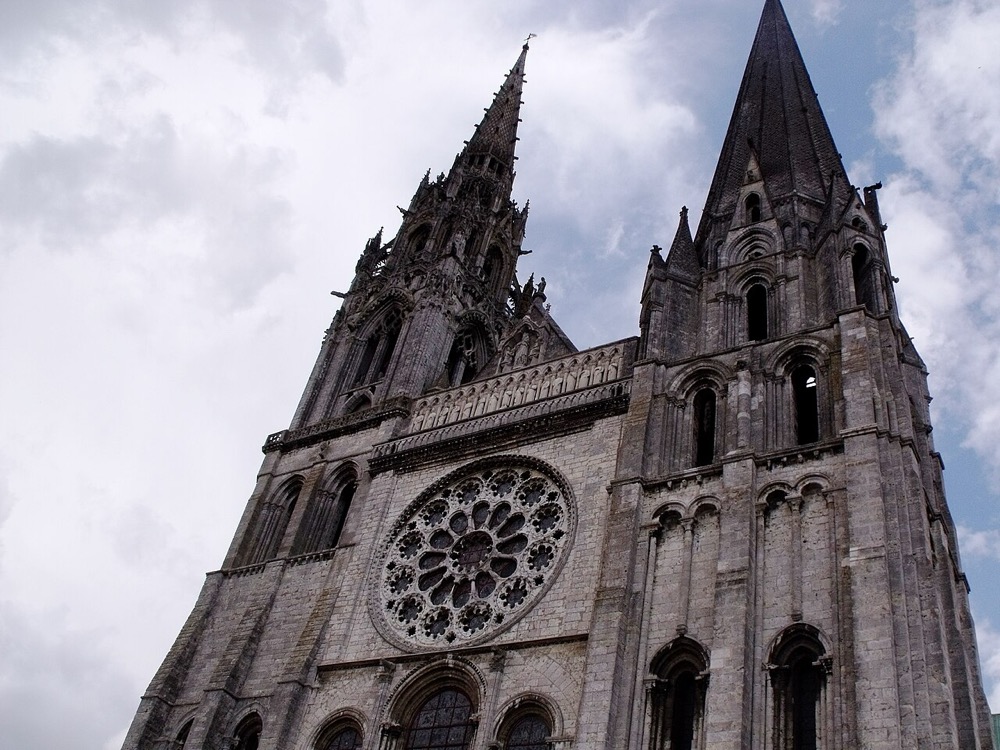
Thick walls with small windows
Wooden roofs only
Flying buttresses and ribbed vaults
Roman concrete domes
The thrust from the vault is carried outward by flying buttresses, so the walls do not have to be solid. Thick walls and small windows describe Romanesque. Image: Elliott Brown from Birmingham, United Kingdom, CC BY 2.0, via Wikimedia Commons.
How did the Black Death change Western Europe?
It led the Church to gain more land
It ended the Crusades
It strengthened the feudal system
Labor became scarce, so wages rose and serfdom weakened
With so many dead, surviving workers could demand more. Lords tried to stop this (Statute of Labourers, 1351), which fueled revolts like 1381.
Which route helped the Black Death spread into Europe in 1347?
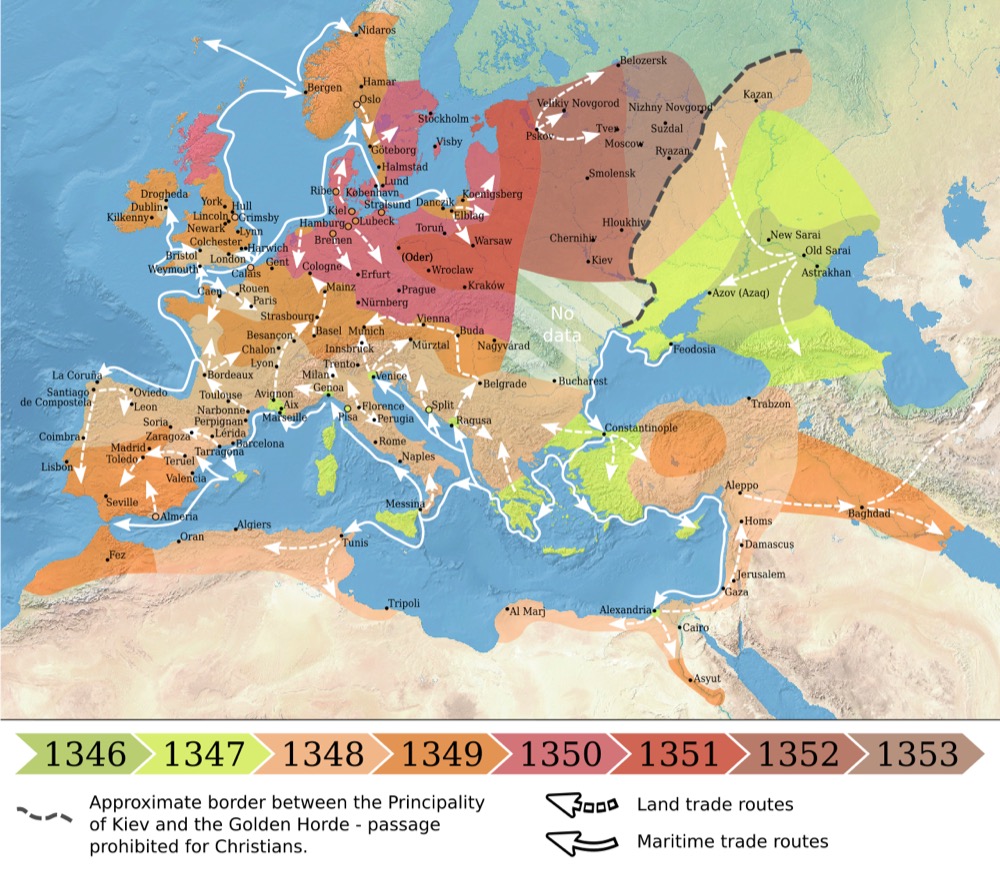
Trade ships from the Black Sea region to Mediterranean ports such as Messina
The Silk Road by Marco Polo
Viking raids on Ireland
The Pilgrim's road to Santiago
Genoese ships fleeing Caffa carried the plague to Sicily and mainland Italy. Trade routes everywhere were the main paths. Image: Flappiefh, CC BY-SA 4.0, via Wikimedia Commons.
Which statement about Mansa Musa is accurate?
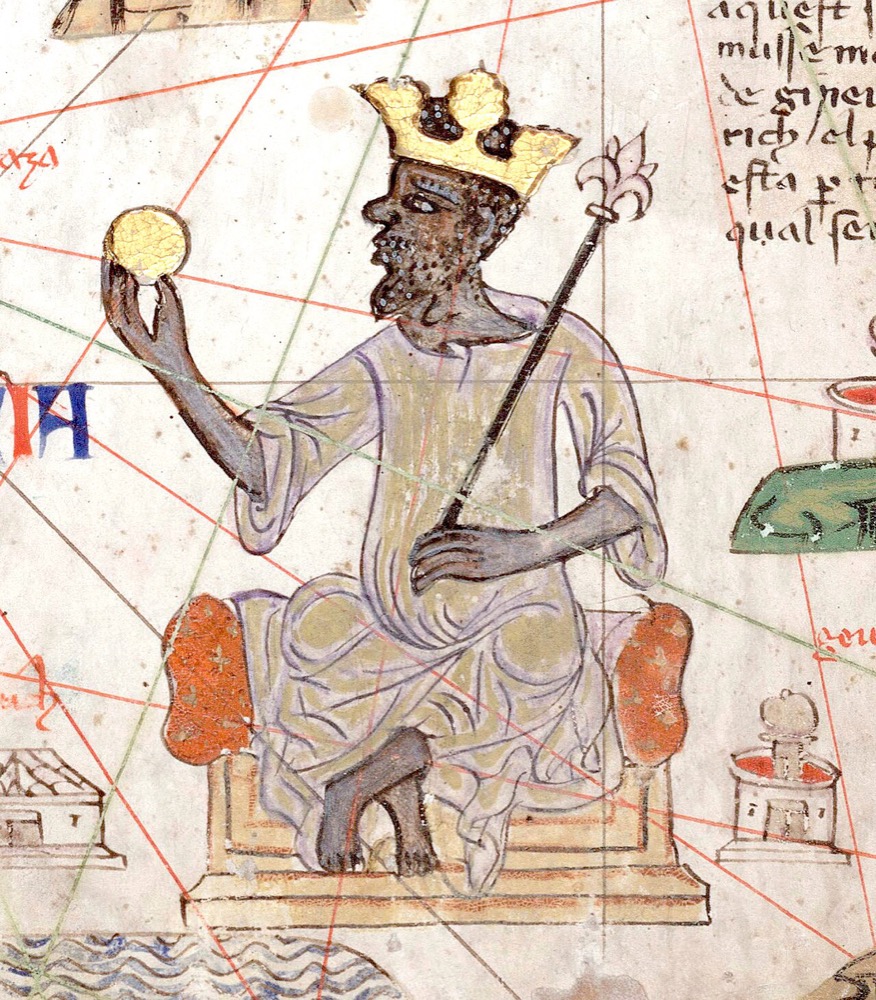
He ruled Ghana before Islam
He built Great Zimbabwe
He ruled Mali and made a famous pilgrimage to Mecca in 1324
He founded the Songhai Empire
He took huge amounts of gold with him. Sundiata founded Mali, Songhai rose later, and Great Zimbabwe was built by the Shona.
What was a result of the Mongol conquests under Genghis Khan and his successors?
The permanent end of the Silk Road
Mongol rule in Japan
Safer trade across Eurasia, but also the destruction of cities such as Baghdad
The conquest of western Europe
The Pax Mongolica helped trade. Mongol invasions of Japan in 1274 and 1281 failed, and they never held western Europe.
Which pairing is correct?
Yuan dynasty: founded by Zhu Yuanzhang
Ming dynasty: foot-binding invented
Song dynasty: movable-type printing and paper money
Tang dynasty: Mongol rule
Song China pioneered paper money and movable type. The Yuan was founded by Kublai Khan, and the Ming by Zhu Yuanzhang.
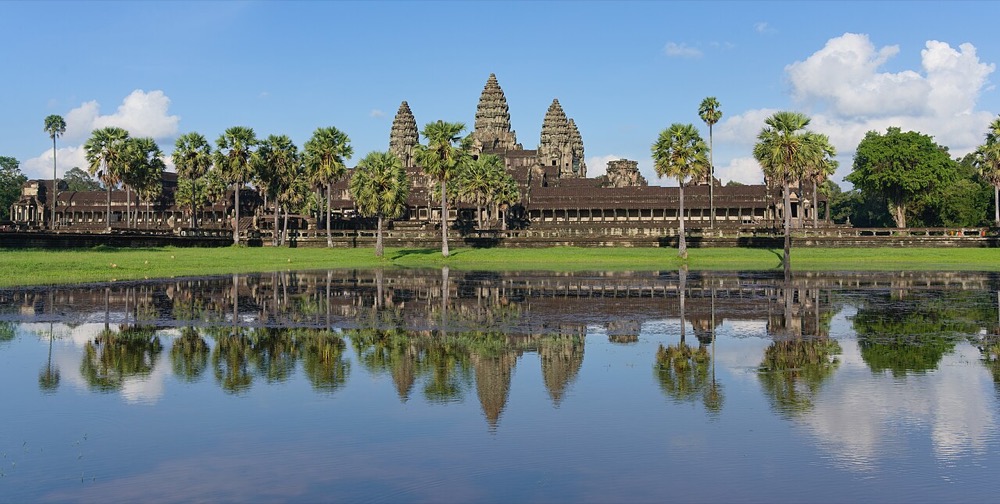
Which civilization built Angkor Wat?
The Inca
The Songhai
The Heian court
The Khmer Empire
Suryavarman II built the temple in the early 12th century in what is now Cambodia. Image: Satdeep Gill, CC BY-SA 4.0, via Wikimedia Commons.
True or False: Educated people in medieval Europe generally believed the Earth was flat.
True
False
False. Medieval scholars, following Greek science, knew the Earth was round. The flat Earth idea became popular in the 1800s through writers who exaggerated medieval ignorance.
Which statement about medieval learning is accurate?
Educated people thought the Earth was flat
Universities such as Bologna, Paris and Oxford grew out of the High Middle Ages
Printing with movable type was already used in Europe
Only monks could read
Universities emerged c. 1100–1300. Educated medievals knew the Earth was round, and the printing press came in the 1450s.
