Quiz · Medium
Twenty-two questions on humanism, patronage, printing, exploration, Spain and Portugal, and the early modern monarchs.
Which best defines Renaissance humanism?
Rejection of all religion
A new form of feudalism
Rule by common people
Study of classical texts and belief in human potential, usually within Christianity
Humanists revived Greek and Roman learning and stressed education and achievement, but most were devout Christians.
Why did the Renaissance begin in Italy?
The Ottomans had conquered Italy
Italy had no Church
Wealthy trading city-states had patrons, classical ruins and competition
Italy had a strong central monarchy
Venice, Florence and Genoa grew rich from trade and competed in art and learning. A central monarchy would have reduced that rivalry.
Which family dominated Florence as bankers and patrons?
Medici
Borgia
Habsburg
Sforza
The Medici (Cosimo, Lorenzo) sponsored artists and scholars. The Sforza ruled Milan, the Borgia were a papal family, and the Habsburgs were an imperial dynasty.
Who is shown in this portrait bust?
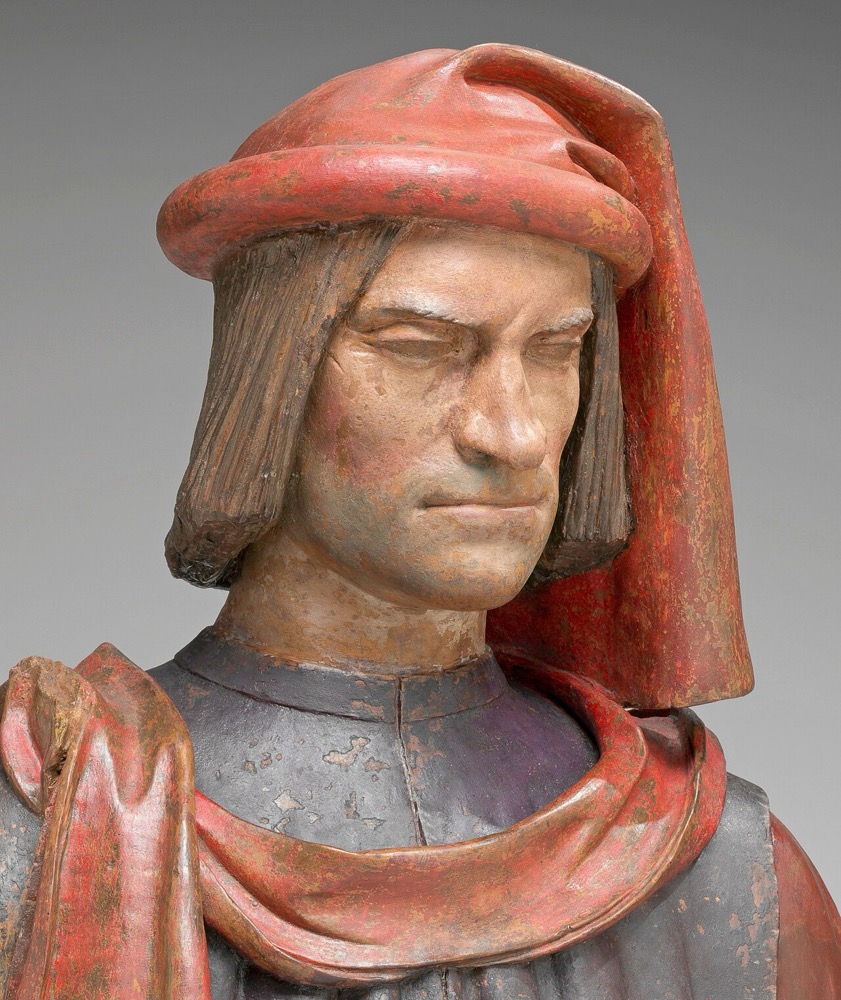
Lorenzo de' Medici
Cosimo I
Pope Julius II
Cesare Borgia
This is a bust of Lorenzo de' Medici, 'the Magnificent' (after Verrocchio).
What was Machiavelli's main advice in The Prince?
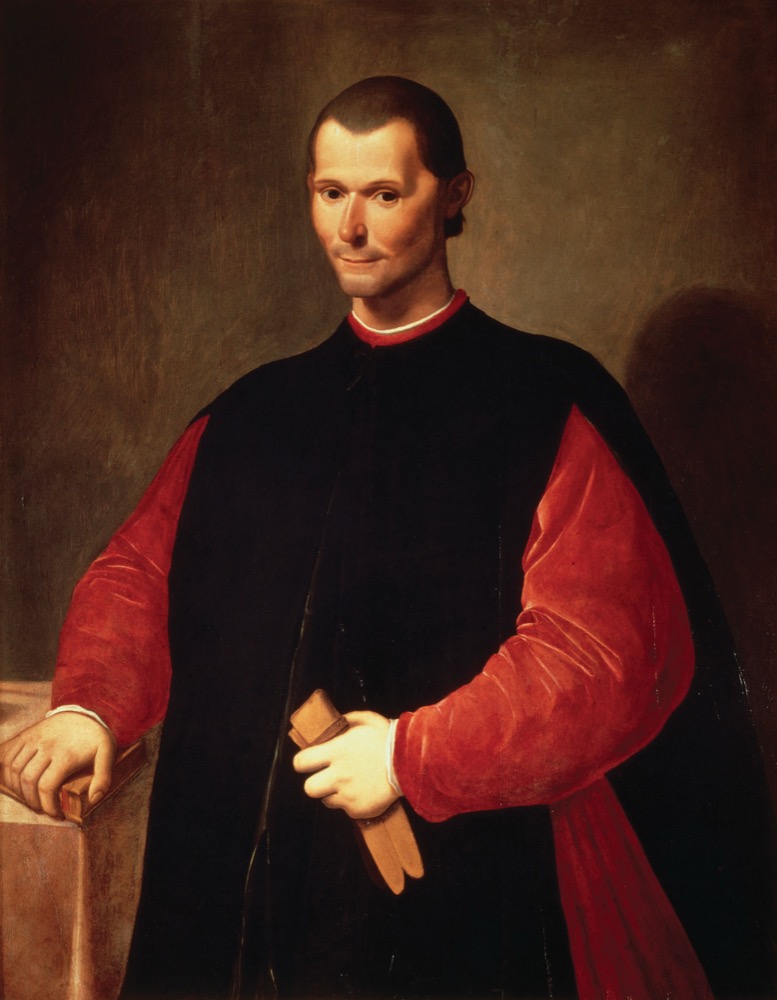
Rulers must follow the Church above all
Rulers should avoid war
Power should be shared with the people
A ruler must be effective in keeping power and the state's stability, even by amoral means
Machiavelli separated politics from conventional morality. The Prince was not a religious or democratic text.
What was the most important result of Gutenberg's printing press?
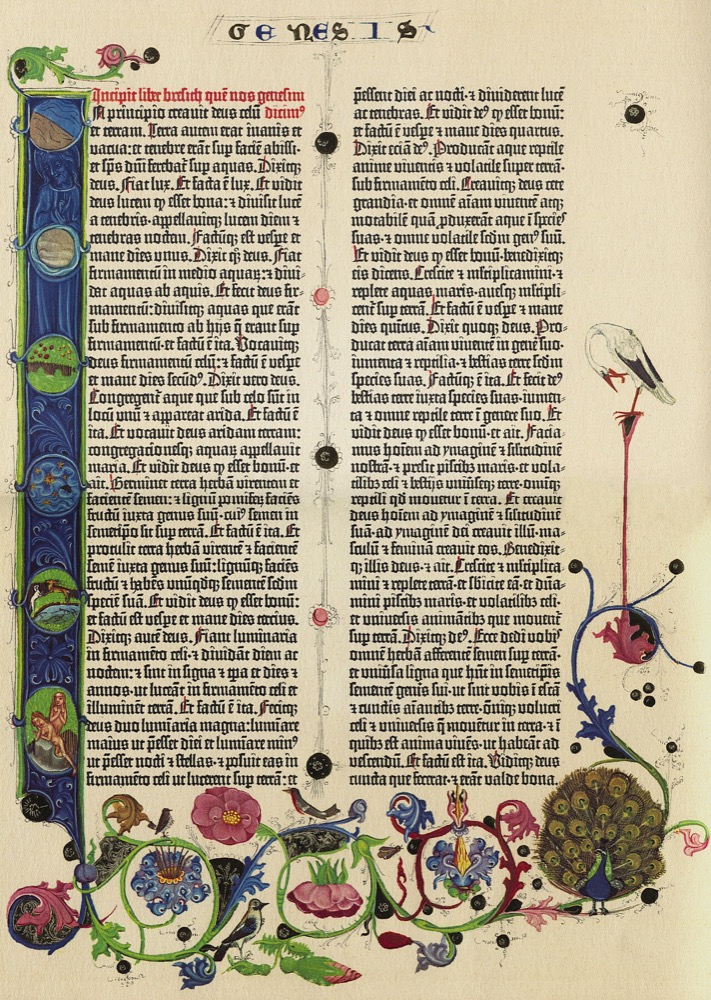
It gave rulers control of all printing
It ended the use of Latin
It made the Church more powerful
Books became cheaper, helping ideas spread quickly
Printing spread humanist and reform ideas faster than hand copying. The Church and rulers tried to control it but could not entirely.
How did Northern Renaissance humanists differ from Italian ones?
They put more emphasis on religious reform and Christian humanism
They rejected the classics
They focused on military strategy
They opposed printing
Erasmus and More combined classical learning with calls to reform the Church. Both used printing.
What was Erasmus known for?
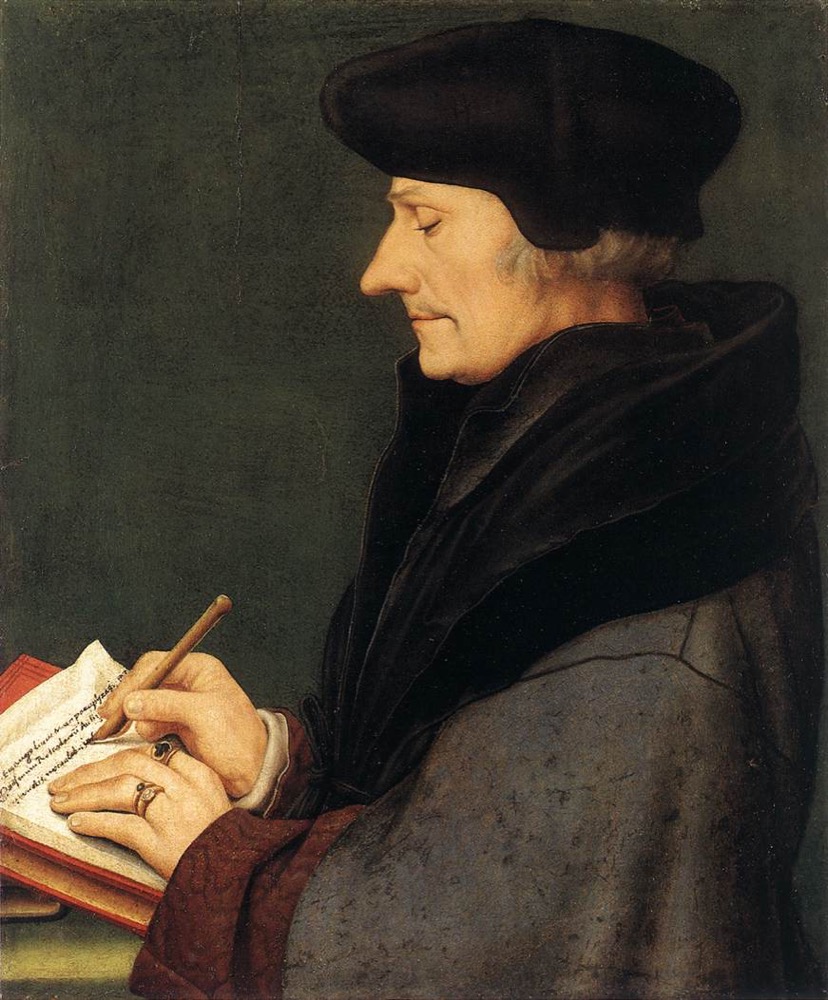
Conquering the Aztecs
Writing In Praise of Folly, which mocked Church corruption
Painting the Sistine Chapel
Leading the Protestant Reformation
Erasmus criticized the Church but did not break with it. Luther led the Reformation.
Which pair is correct?
Copernicus: heliocentric theory (1543)
Galileo: first printing press
Vesalius: sea route to India
Brunelleschi: The Prince
Copernicus proposed a Sun-centered system in 1543. Vesalius wrote on anatomy, Gutenberg printed, and Machiavelli wrote The Prince.
Which innovation helped Portuguese sailors travel against the wind?
The caravel with lateen sails
The steam engine
The longship
The galley with oars
The caravel was maneuverable and could sail close to the wind. Galleys and longships were not used for Atlantic exploration.
What did the Treaty of Tordesillas (1494) do?
Divided newly discovered lands between Spain and Portugal
Made peace with the Ottomans
Ended the Italian Wars
Created the Church of England
The pope helped mediate a line west of the Cape Verde Islands. It explains why Brazil speaks Portuguese.
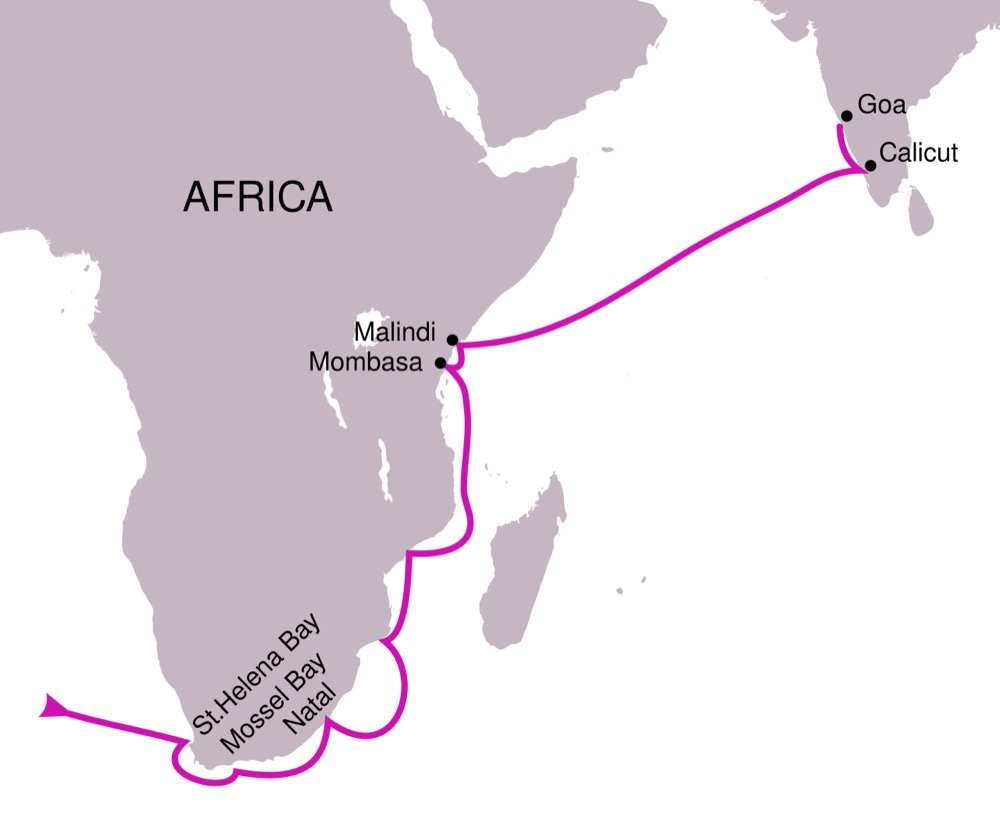
Who first reached India by sea from Europe in 1498?
Bartolomeu Dias
Christopher Columbus
Vasco da Gama
Ferdinand Magellan
Da Gama reached Calicut by way of the Cape of Good Hope. Dias reached the Cape in 1488, and Columbus sailed west for Spain. Image: PhiLiP, CC BY-SA 4.0, via Wikimedia Commons.
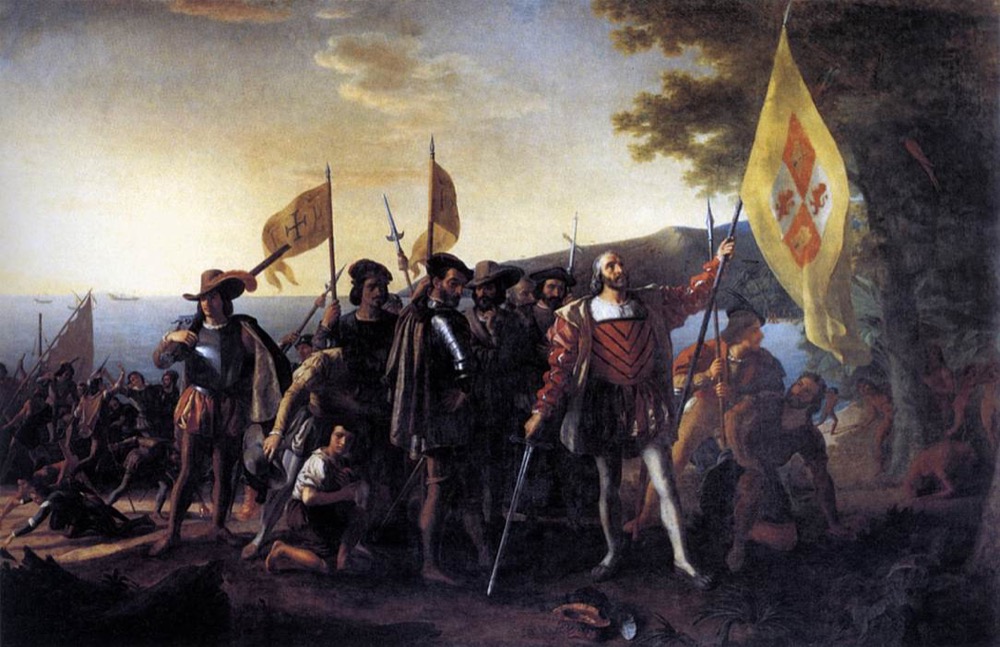
Which statement about Columbus is accurate?
He sailed for Portugal
He proved the Earth was round
He was the first person to reach the Americas
He believed he had reached Asia and underestimated the Earth's size
Educated Europeans already knew the Earth was round. Columbus sailed for Spain and was not the first to reach the Americas.
What was the Columbian Exchange?
A banking system
The movement of plants, animals, people and diseases between the Old and New Worlds
A trade deal with China
A treaty between Spain and Portugal
Potatoes and maize spread to Europe and Asia, while horses, wheat and diseases like smallpox went to the Americas.
Which conquistador defeated the Aztec Empire?
Vasco Núñez de Balboa
Juan Ponce de León
Francisco Pizarro
Hernán Cortés
Cortés took Tenochtitlan in 1521 with Native allies. Pizarro conquered the Inca.
Which of these were results of the Spanish conquest of the Americas?
Spain stopped colonizing
Increased Native political power
The end of silver mining
Population collapse from disease and forced labor
Epidemics killed enormous numbers of Native people, and Spanish systems such as the encomienda exploited labor. Silver mining increased.
What did the Armada's defeat in 1588 show?
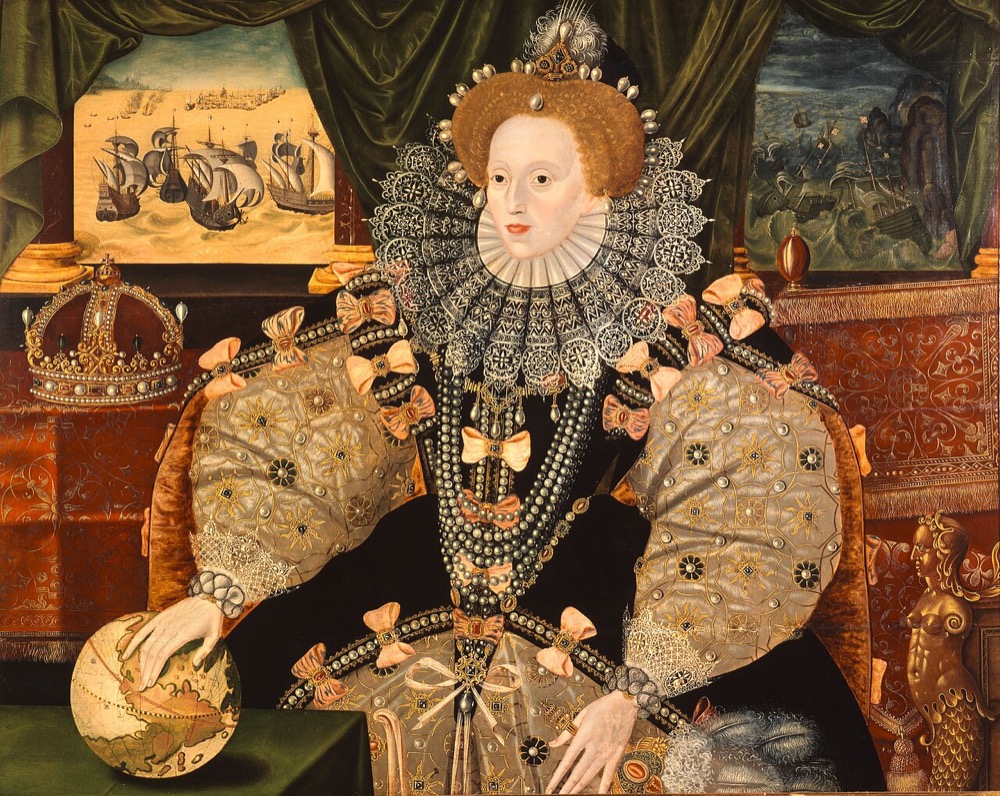
Spain could not invade England, and English naval power was growing
Spain conquered England
Elizabeth lost the throne
France controlled the seas
Storms and English tactics wrecked Philip II's fleet. Spain remained powerful for a long time but its dominance weakened.
Why did Henry VIII found the Church of England?
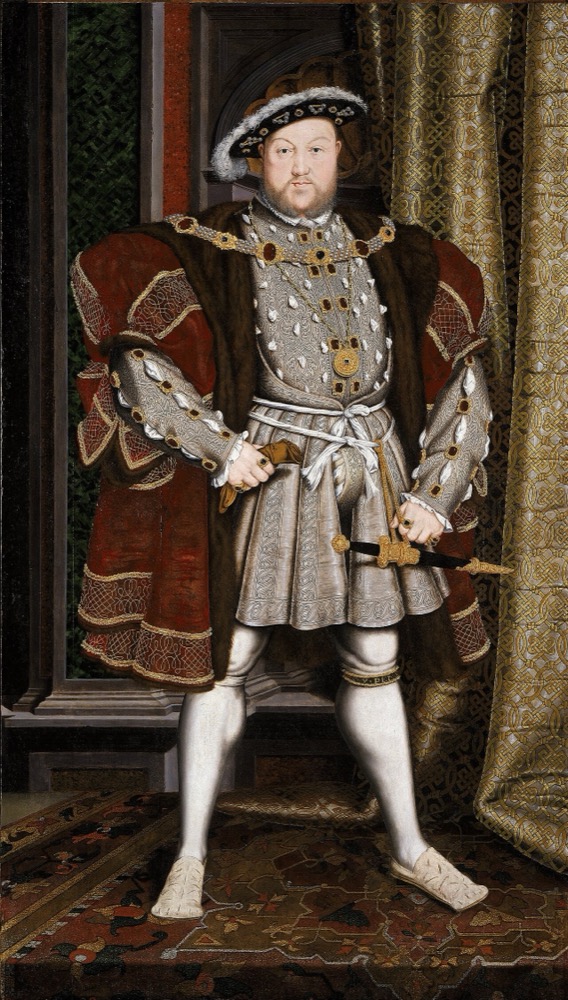
To obtain an annulment, strengthen his control and secure an heir
To follow Luther's teachings
To end the Wars of the Roses
To make peace with Spain
The pope would not annul his marriage to Catherine of Aragon. Henry's break was driven by political and dynastic needs more than theology.
Which sentence about the Scientific Revolution and the Renaissance is correct?
Scientists stopped using experiments
The Church supported all new theories
Galileo was never tried
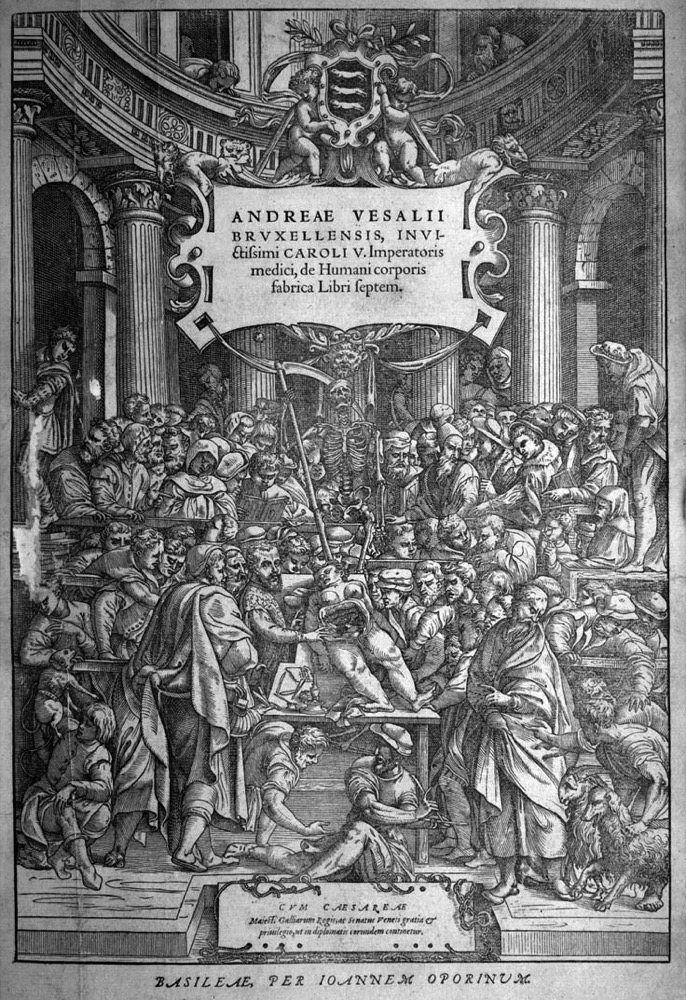
Observation and mathematics increasingly challenged ancient authorities such as Ptolemy and Galen
Vesalius, Copernicus and Galileo challenged older authorities. Galileo was tried by the Inquisition in 1633.
What event in 1494 changed Italian politics?
The Medici returned to Florence
The Armada sailed
Constantinople fell
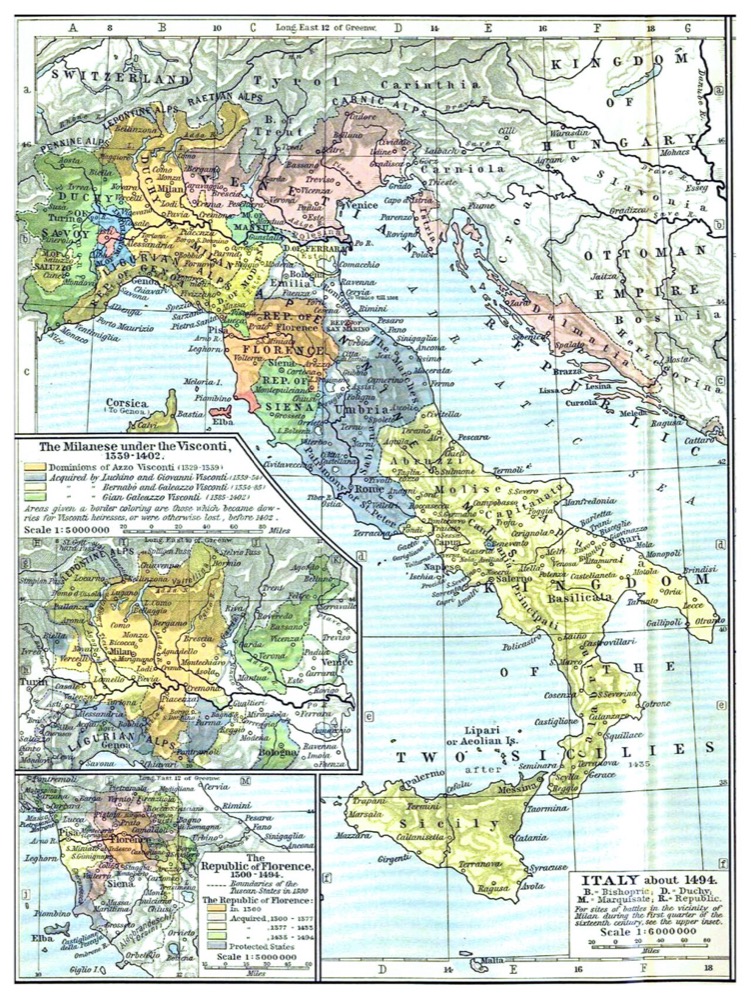
The French invasion by Charles VIII began the Italian Wars
Italy's divided states invited foreign intervention for decades. Constantinople fell in 1453.
What did the Renaissance rediscover and emphasize?
Viking sagas
Medieval feudal contracts
The Germanic law codes
Classical Greek and Roman art and learning
Renaissance means 'rebirth', and the 'rebirth' was of classical antiquity.
True or False: Renaissance thinkers generally rejected Christianity.
True
False
False. Most humanists, from Petrarch to Erasmus, were Christians. They combined classical learning with faith.
