Quiz · Medium
Freud, defense mechanisms, Jung, Adler, Maslow, Rogers and projective tests.
The theorist pictured proposed that personality consists of three structures. They are:
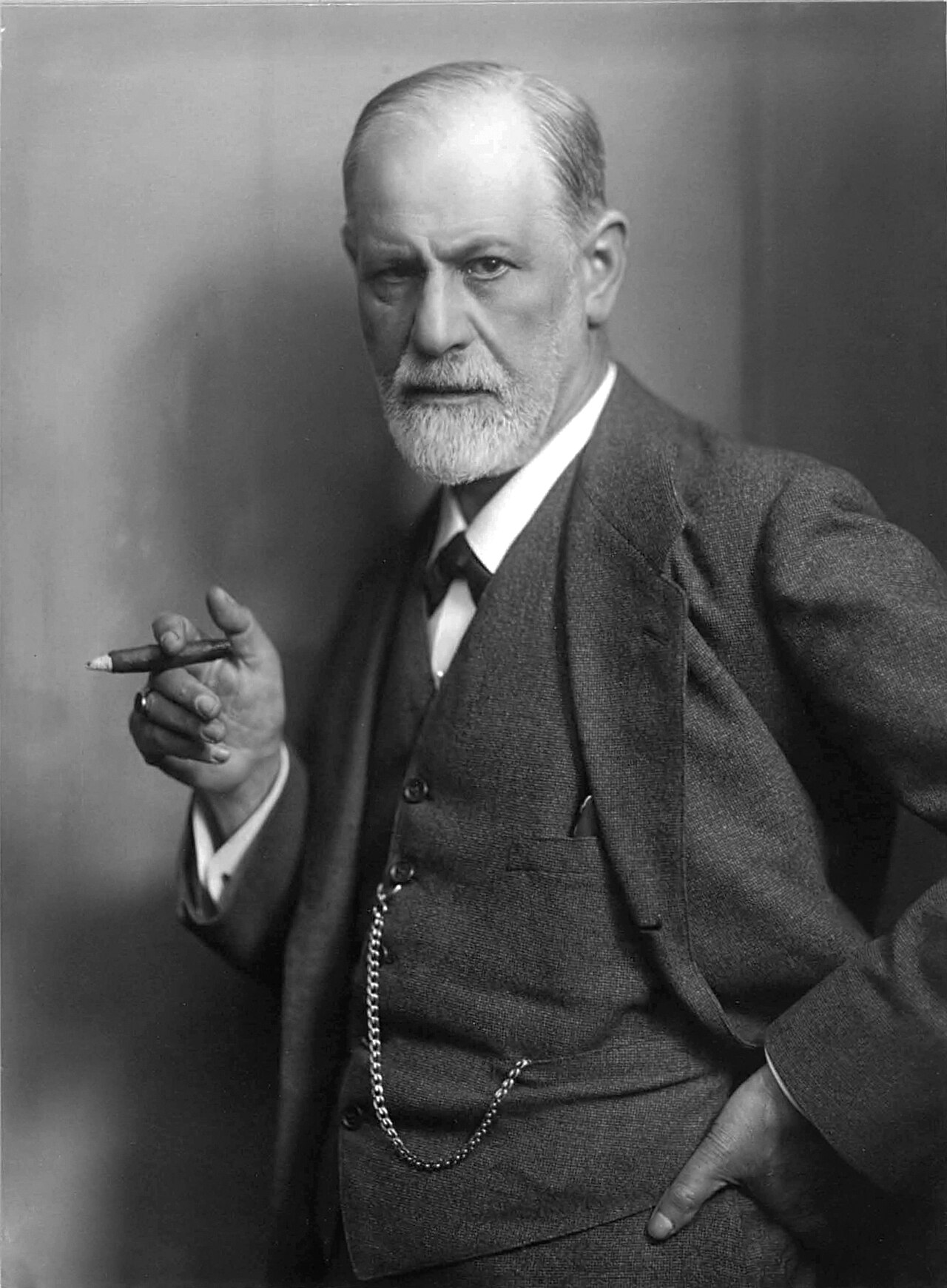
persona, shadow and self
id, ego and superego
real self, ideal self and conscience
traits, states and types
Freud's structural model; the ego operates on the reality principle.
A student who is furious with a teacher says, 'The teacher hates me.' This is an example of:
projection
displacement
sublimation
reaction formation
The student attributes their own unacceptable feeling to someone else.
After being scolded by her boss, Mia comes home and yells at her brother. Which defense mechanism is this?
Regression
Denial
Rationalization
Displacement
Aggression is redirected from the boss to a safer target.
A person with strong aggressive urges becomes a boxer. Freud would call this:
repression
regression
sublimation
projection
Unacceptable urges are channeled into a socially valued activity.
Which of Freud's psychosexual stages occurs from about age 3 to 6?
Oral stage
Phallic stage
Anal stage
Latency stage
The Oedipus complex is said to arise in this stage.
Which feature is a major criticism of Freud's theory?
Many ideas cannot be tested or falsified
It ignores childhood
It denies the unconscious
It relies on large random samples
Freud's ideas were based on case studies and are hard to falsify.
Jung's collective unconscious contains:
repressed personal memories
only conscious memories
learned habits
universal archetypes shared by all humans
The personal unconscious holds individual material.
According to Adler, people develop a desire to overcome feelings of:
oral frustration
penis envy
inferiority
anxiety about death
Striving for superiority is compensation for felt inferiority.
In Maslow's hierarchy, which need must be mostly satisfied before safety needs?
Esteem needs
Physiological needs
Self-actualization
Love and belonging
The base of the pyramid is physiological needs.
Which statement best describes Maslow's growth needs?
They are never fully satisfied and drive personal development
They are the same as physiological needs
They disappear after childhood
They always need to be met first
Self-actualization is a growth need.
The humanistic psychologist pictured is best known for:
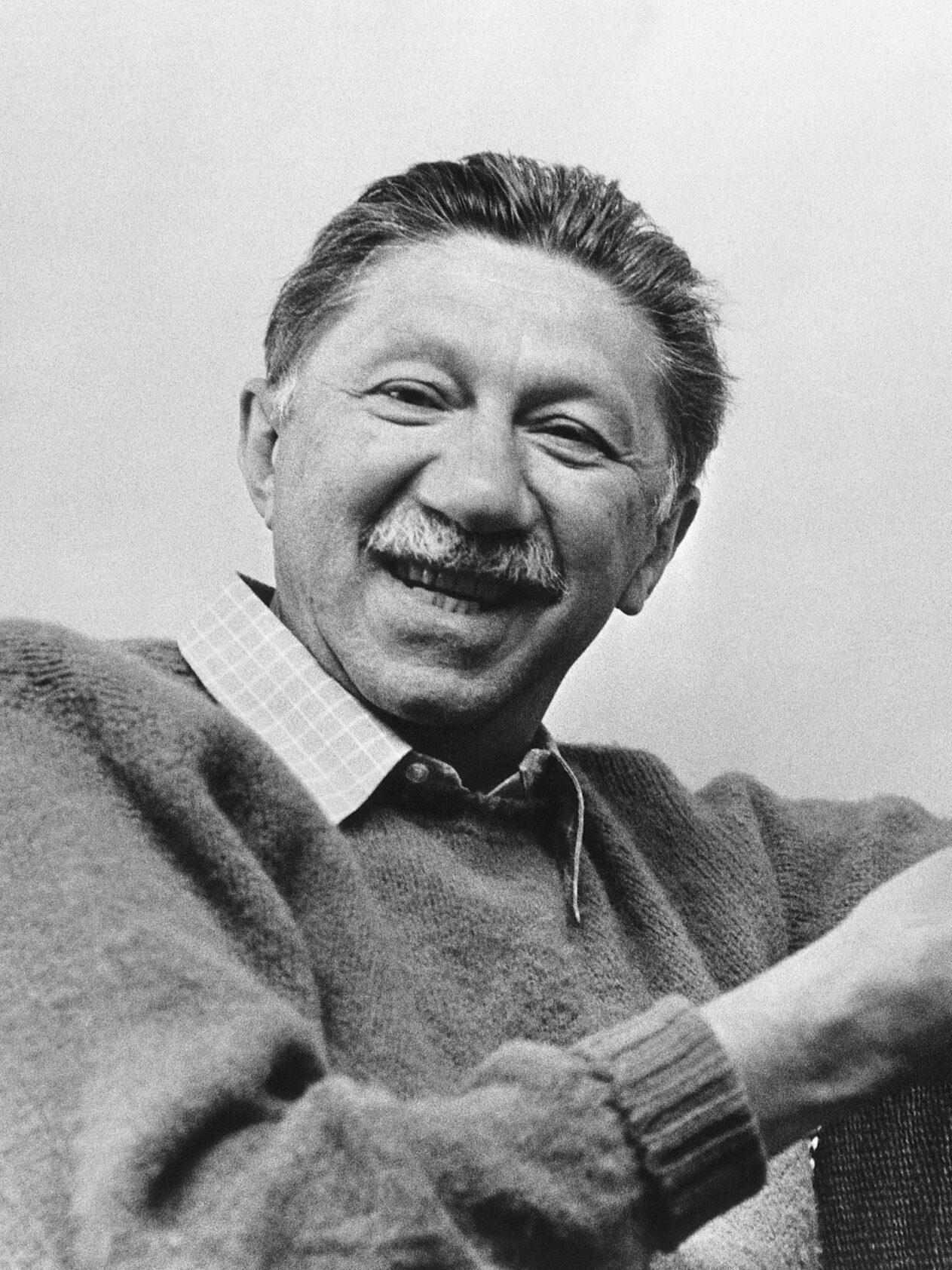
the collective unconscious
reciprocal determinism
the PEN model
the hierarchy of needs
Maslow proposed that needs are arranged in a hierarchy ending in self-actualization.
A therapist who accepts a client regardless of what the client says is demonstrating:
conditions of worth
transference
unconditional positive regard
reaction formation
A core condition in Rogers's person-centered therapy.
According to Rogers, anxiety results when there is:
a strong superego
incongruence between the self-concept and experience
an external locus of control
low openness
A large gap between real and ideal self creates distress.
Which of the following is a criticism of humanistic theories?
Concepts like self-actualization are hard to measure
They ignore free will
They stress unconscious drives
They are too deterministic
They are subjective and difficult to test scientifically.
The Rorschach inkblot test is classified as:

an objective self-report test
an intelligence test
a behavioral observation
a projective test
Its validity is widely criticized.
A person who becomes overly polite to someone they dislike is displaying:
rationalization
regression
reaction formation
displacement
The impulse is turned into its opposite.
Which pair of psychologists are the main founders of humanistic psychology?
Freud and Jung
Maslow and Rogers
Skinner and Watson
Cattell and Eysenck
They formed the 'third force' in the 1950s.
