Quiz · Medium
Dissonance, attribution, social identity, contact, attraction, aggression and prosocial behavior.
The fundamental attribution error is best illustrated by:
Blaming a late colleague's character without considering traffic
Crediting your success to hard work
Assuming others share your opinions
Rating an attractive person as intelligent
It is overestimating dispositional causes of others' behavior.
Participants paid $1 to lie about a boring task later rated it more enjoyable than those paid $20. This supports:
Cognitive dissonance theory
Social exchange theory
Realistic conflict theory
The matching hypothesis
With insufficient external justification, they changed their attitude.
A person buys a car and then focuses on its advantages and ignores its flaws. This is:
Post-decision dissonance reduction
Foot-in-the-door
Reactance
Mere exposure
People rationalize the choice they made.
According to the elaboration likelihood model, a distracted viewer is most influenced by:
Strong arguments
Peripheral cues like an attractive spokesperson
Statistics
Logical reasoning
Without motivation or ability, peripheral cues dominate.
What did Sherif's Robbers Cave study show reduced intergroup conflict?
Contact alone
Competition
Superordinate goals
Punishment
Cooperation on shared goals reduced hostility, while contact alone did not.
In the minimal group paradigm, boys were assigned to groups based on art preferences. They then:
Gave more rewards to in-group members
Gave rewards equally
Disliked their group
Refused to take part
Mere categorization created in-group favoritism.
Students told a test measures intellectual ability perform worse when negative stereotypes about their group exist. This is:
Stereotype threat
The halo effect
Self-serving bias
The false consensus effect
Fear of confirming a stereotype can impair performance.
Which pairing of terms is correct?
Stereotype: behavioral
Prejudice: cognitive
Discrimination: behavioral
Stereotype: affective
Stereotype is cognitive, prejudice affective, discrimination behavioral.
A teacher who expects a student to do well gives more attention, and the student improves. This is:
Self-fulfilling prophecy
Hindsight bias
Belief in a just world
Illusion of transparency
Expectations can shape behavior, as in Rosenthal and Jacobson's Pygmalion study.
In the Westgate study, friendships formed most between residents who:
Lived near stairways or mailboxes
Shared hobbies
Had similar jobs
Came from the same town
Functional proximity predicts friendship.
In Sternberg's theory, a long-term couple with high intimacy and commitment but low passion has:
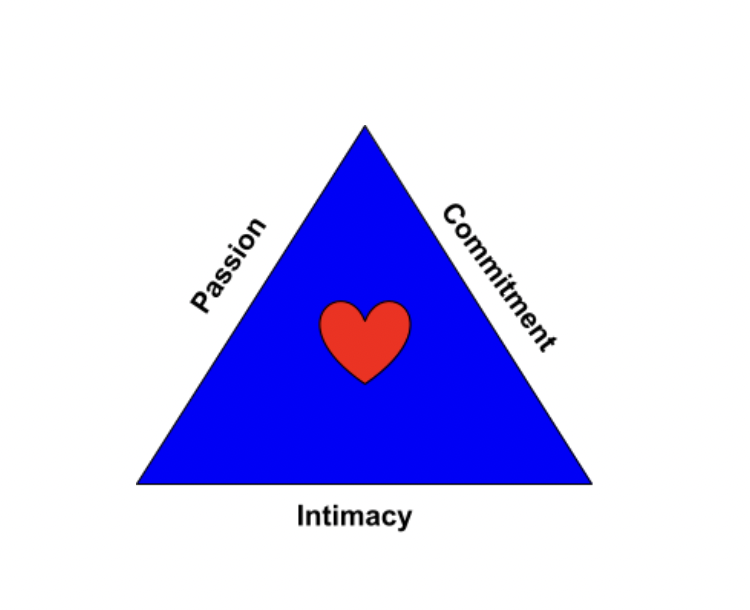
Romantic love
Companionate love
Fatuous love
Infatuation
Intimacy plus commitment is companionate love.
Children who saw an adult hit a Bobo doll later hit it more. This supports:
Social learning theory
Frustration-aggression
Catharsis
Deindividuation
Bandura showed observational learning of aggression.
Seminary students in a hurry helped much less than those who were not hurried. This suggests:
Situational factors strongly affect helping
Religious people never help
Personality is the only factor
Empathy is unimportant
Darley and Batson's findings emphasize situational factors.
Which motivation is described by Batson's empathy-altruism hypothesis?
Helping to reduce one's own distress
Helping out of genuine concern for the victim
Helping to gain rewards
Helping to follow norms only
Empathic concern produces altruistic helping.
A negative attitude toward a group is called:
Stereotype
Prejudice
Discrimination
Attribution
Prejudice is an attitude with an affective component.
Which is NOT one of Allport's conditions for successful contact?
Equal status
Competition
Common goals
Institutional support
Cooperation, not competition, is required.
