Quiz · Medium
Questions on Yalta, the Iron Curtain, Truman Doctrine, Berlin, Korea, Hungary, Sputnik and Cuba.
What was the policy of containment?
Rolling back Soviet control in Eastern Europe by force
Preventing the spread of communism beyond its existing borders
Isolating the US from world affairs
Breaking up the USSR into smaller states
Containment (Kennan, 1946-47) accepted Soviet control where it already existed but aimed to stop expansion. 'Rollback' was a more aggressive idea.
Where did Churchill say 'an iron curtain has descended across the Continent'?
Fulton, Missouri, in 1946
The Yalta Conference, 1945
The Potsdam Conference, 1945
The House of Commons, 1948
The speech by the former prime minister called for Anglo-American unity against Soviet expansion.
The black line on this map represents the:
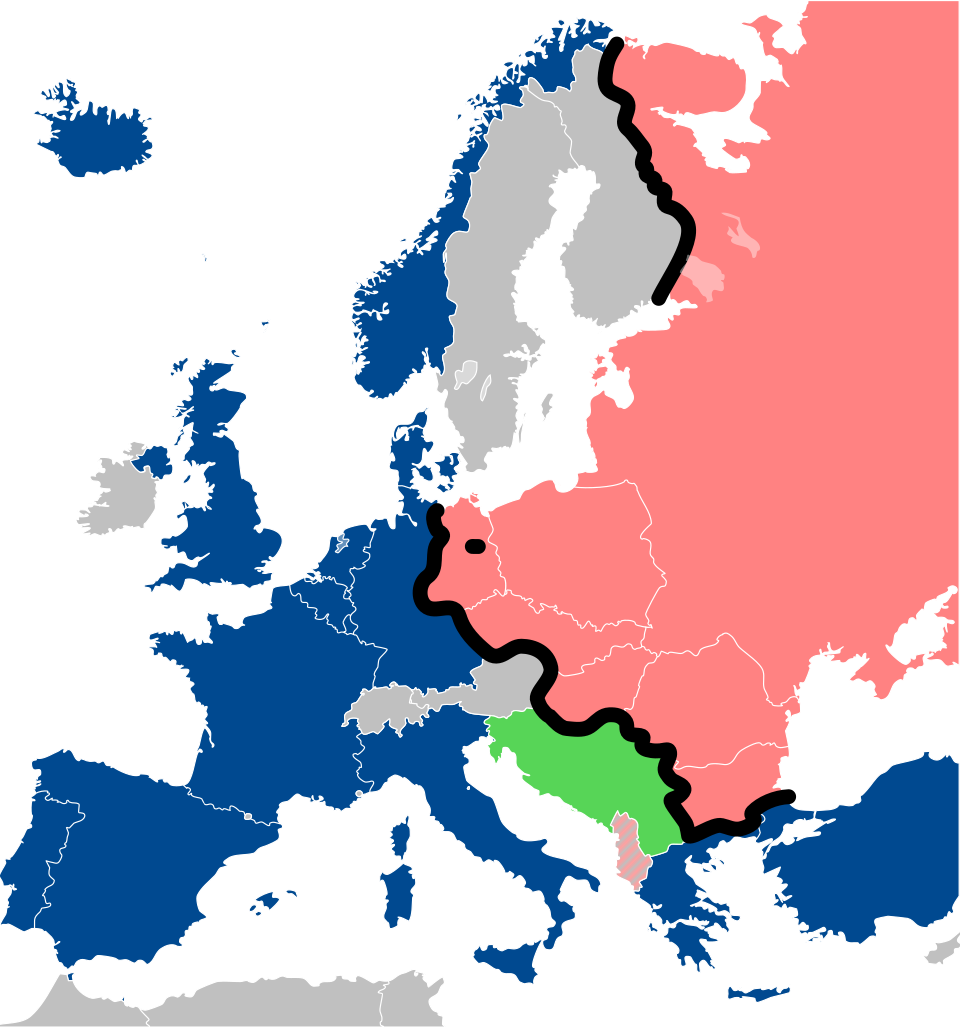
Maginot Line
Treaty of Versailles border
Line of the Berlin Wall
Iron Curtain dividing Western and Soviet-dominated Europe
The green country is Yugoslavia, a communist state outside the Soviet bloc after 1948; grey states were neutral. Image: Sémhur, CC BY-SA 4.0, via Wikimedia Commons.
What was the main purpose of the Marshall Plan?
To provide military bases in Europe
To fund the United Nations
To rebuild Western European economies and reduce the appeal of communism
To arm Greece and Turkey
The Truman Doctrine gave military aid to Greece and Turkey; the Marshall Plan was economic. The USSR refused it and blocked its satellites from joining.
What triggered the Berlin Blockade in 1948?
The building of the Berlin Wall
The introduction of a new currency in the Western zones
Soviet loss of the atomic monopoly
The formation of the Warsaw Pact
Stalin feared a strong West Germany. The Wall was built in 1961; the Warsaw Pact came in 1955.
What was the outcome of the Berlin Airlift?
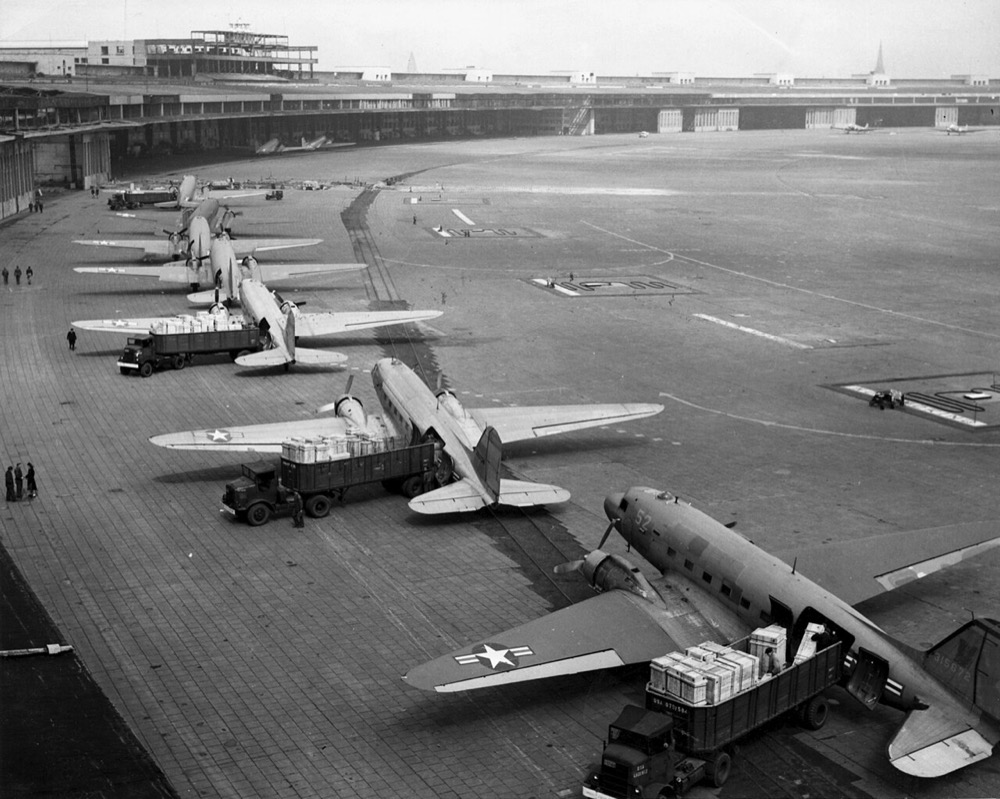
The West kept West Berlin and Stalin ended the blockade
The Western powers withdrew from Berlin
Berlin became a neutral city under UN rule
Germany was reunified in 1949
Germany was formally divided into two states in 1949.
Which event led directly to the creation of the Warsaw Pact in 1955?
The Hungarian uprising
The Cuban Missile Crisis
The building of the Berlin Wall
West Germany's entry into NATO
Hungary's 1956 uprising came after the Pact; the Pact was Moscow's answer to West German rearmament.
In 1949, which two developments alarmed the United States?
The Korean War and the Berlin Wall
The U-2 incident and Sputnik
The Soviet atomic bomb test and the communist victory in China
The Suez Crisis and the Hungarian uprising
These two shocks led to NSC-68 and the Korean War buildup in 1950.
What was the main result of the Korean War (1950-53)?
Korea was reunified under the South
Korea remained divided near the 38th parallel under an armistice
The US used atomic weapons
China occupied the South
No peace treaty was signed. The US-led UN forces and China fought to a stalemate.
What does the domino theory claim?
If one country falls to communism, its neighbors will follow
Communism will collapse one country at a time
Free trade spreads from nation to nation
Alliances prevent war
Eisenhower's 1954 image was used to justify the US role in Vietnam.
Why did Soviet tanks enter Hungary in 1956?
To restore Imre Nagy
To prevent a NATO invasion
To support Hungary's membership in the UN
To crush a revolt that wanted to leave the Warsaw Pact
Nagy announced Hungary's neutrality; the West, distracted by Suez, did not intervene.
Why was the launch of Sputnik in 1957 so significant?
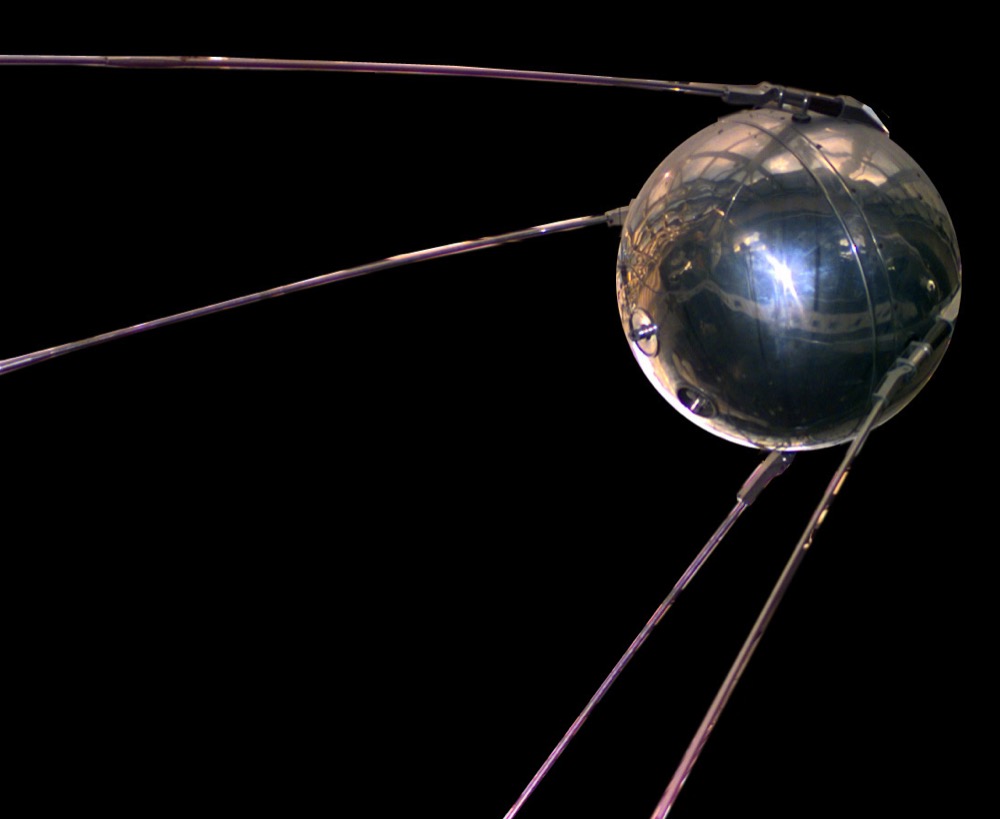
It was the first manned spaceflight
It led to a US moon landing in 1958
It showed Soviet rockets could reach the US and started the space race
It ended the arms race
Yuri Gagarin's flight (1961) was the first human in space; Apollo 11 landed in 1969.
Why did East Germany build the Berlin Wall in 1961?
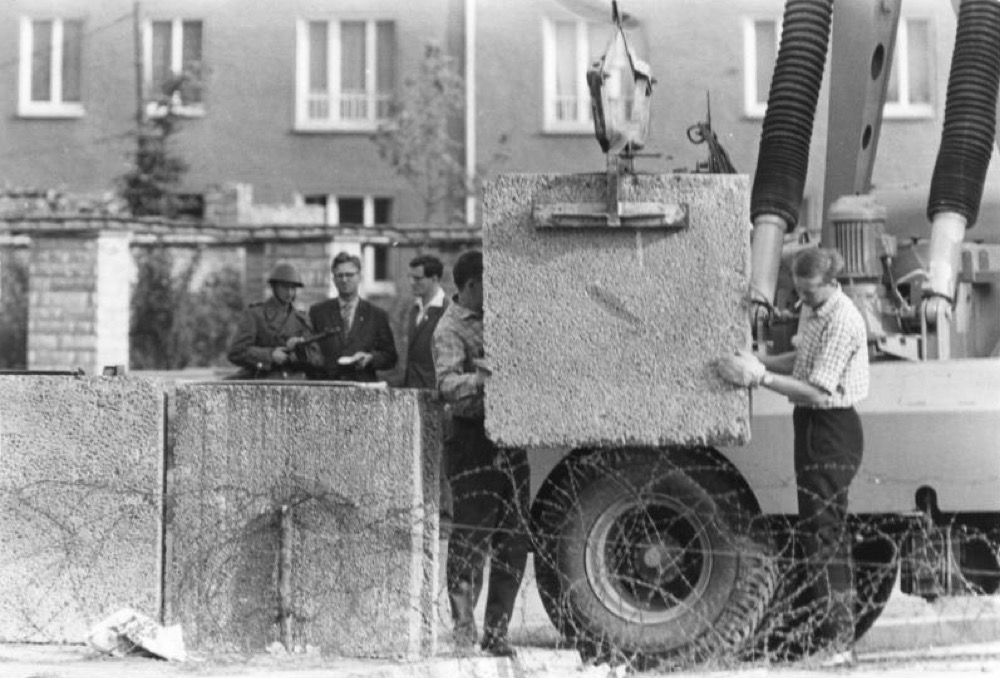
To prepare an attack on West Berlin
To stop skilled workers from fleeing to the West
To protect Berlin from NATO nuclear missiles
To separate Berlin from Poland
About 3.5 million had left since 1949, damaging the East German economy. Image: Helmut J. Wolf (Bundesarchiv), CC BY-SA 3.0 de, via Wikimedia Commons.
What did the US learn about Soviet activity in Cuba in October 1962?
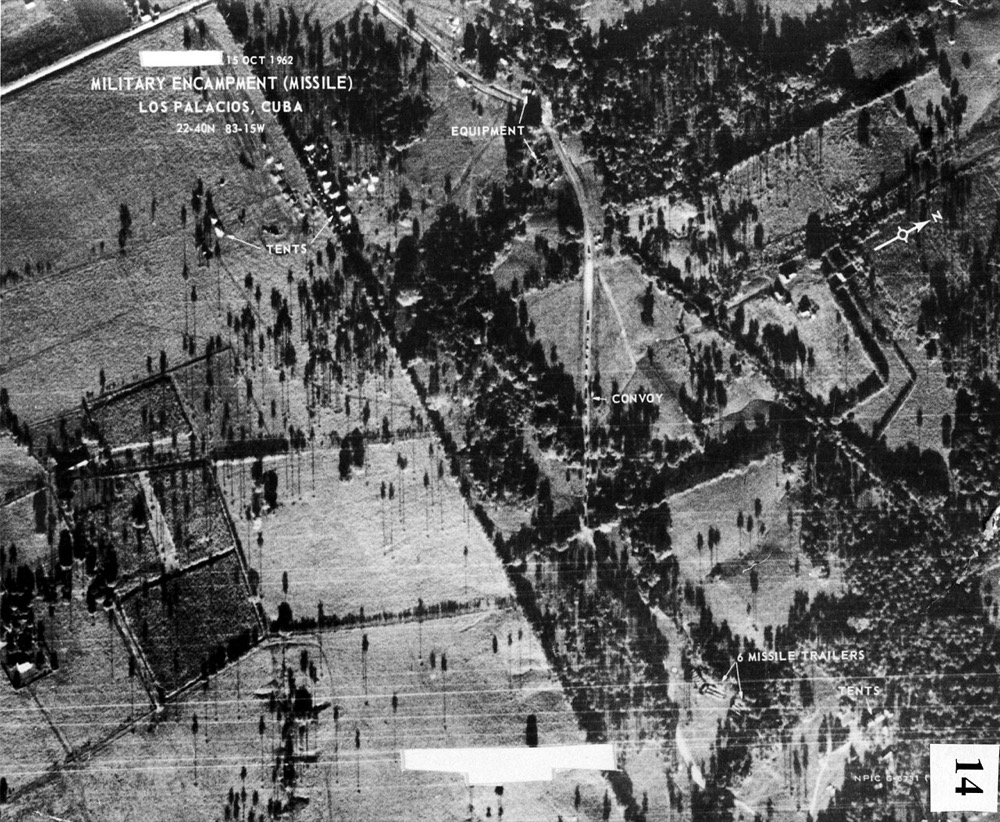
Photographs from a U-2 spy plane showed nuclear missile sites under construction
Soviet submarines had attacked Florida
Cuba had signed a military alliance with China
A Soviet invasion of Guantanamo was planned
Kennedy responded with a naval quarantine.
How did Khrushchev and Kennedy resolve the Cuban Missile Crisis?
Both sides invaded Cuba
The UN seized the missiles
The US bombed the missile sites
The USSR removed its missiles from Cuba; the US promised not to invade and secretly agreed to remove missiles from Turkey
The Turkey part was secret. The settlement avoided war but led Khrushchev to be seen as having backed down.
The Marshall Plan offered aid only to Western European countries; the USSR rejected it for the Eastern bloc.
True
False
Aid was offered to all of Europe, but Stalin refused it and forced the satellites to refuse.
What is brinkmanship?
Withdrawing from a crisis early
Winning a war by naval blockade
Taking a crisis to the edge of war to force the other side to back down
Appeasing an opponent
Dulles used the term for Eisenhower's nuclear threats; the Cuban Missile Crisis is a classic example.
What was the effect of the Truman Doctrine?
It created NATO
It committed the US to supporting nations resisting communism, starting in Greece and Turkey
It ended the Korean War
It ordered the Berlin airlift
NATO came in 1949, after the Doctrine.
Which statement about Yalta (1945) is accurate?
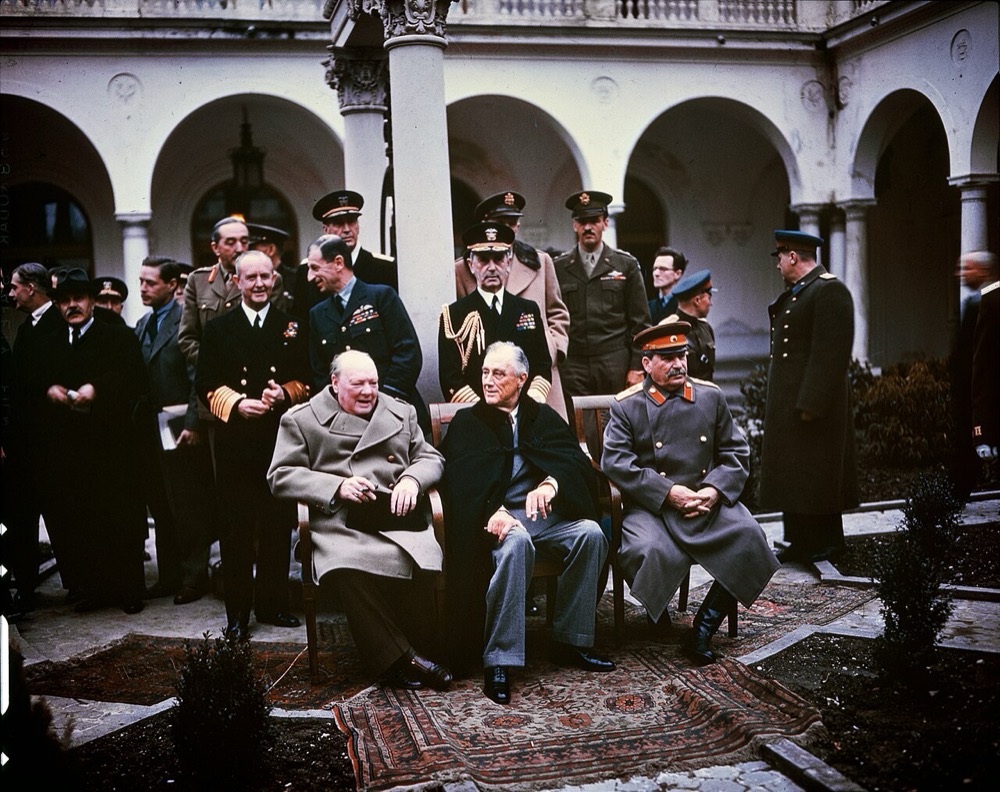
Stalin promised free elections in Eastern Europe, but did not keep the promise
The US and USSR agreed to divide Asia
The Allies agreed to use atomic weapons
Germany was left unoccupied
Disagreement over the promise became a major Cold War grievance.
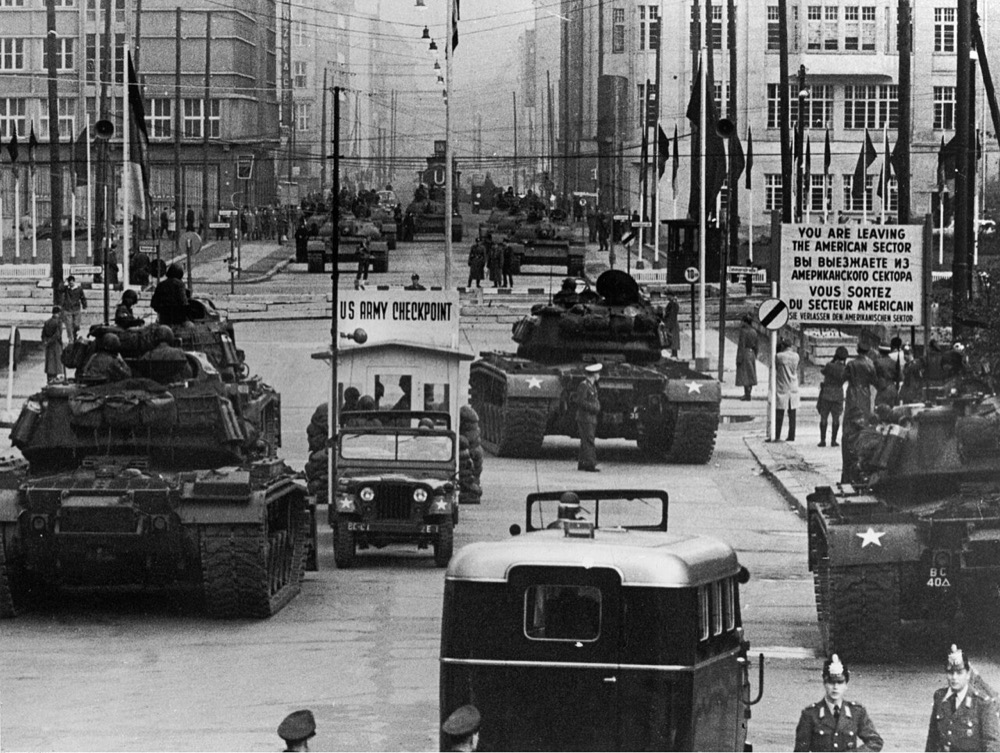
Which event, in October 1961, nearly caused a US-Soviet clash in Berlin?
The Berlin Airlift
The U-2 incident
The Hungarian uprising
The tank standoff at Checkpoint Charlie
The tanks withdrew after about 16 hours.
