Quiz · Hard
Analysis questions on the Crusades, the papacy, Byzantium, the Hundred Years' War and the connected medieval world.
Why were the Mongol invasions of Japan (1274 and 1281) unsuccessful?
Storms, Japanese defenses and logistical problems wrecked the invasion fleets
Japan had gunpowder weapons the Mongols lacked
Kublai Khan never sent a fleet
The shogun converted to Buddhism
Typhoons destroyed much of the fleets, later called kamikaze, 'divine wind'. Kublai did send large forces.
Why did Pope Urban II call the First Crusade in 1095?
Saladin had threatened Rome
He responded to a Byzantine request for help against the Seljuk Turks and wanted to channel knightly violence
He wanted to conquer Constantinople
The Mongols had invaded Europe
Alexios I asked for mercenaries. Urban turned it into a call to retake Jerusalem. The sack of Constantinople came in 1204.
How did the Fourth Crusade differ from earlier ones?
It conquered Egypt permanently
It was led by Saladin
It never reached the Holy Land and sacked Christian Constantinople
It was a peaceful pilgrimage
Heavily in debt to Venice, the crusaders were diverted to Constantinople in 1204. The Latin Empire there lasted until 1261.
Which was a long-term consequence of the Investiture Controversy?
It made the pope an absolute ruler of Europe
It created the Byzantine Empire
It fixed the idea that the Church and secular rulers were separate powers, with ongoing conflicts
It ended Church influence
Canossa and Worms did not settle the question permanently. The papacy's power grew but kings kept resisting, as Philip IV of France later did.
Which factor best explains the weakness of central rule in the early Middle Ages?
Invasions and a lack of money led kings to depend on local lords bound by oaths
Strong Roman bureaucracy continued
The pope ruled directly
Universities controlled government
With little coinage and constant raids by Vikings, Magyars and Muslims, local protection mattered more than distant kings, so feudal ties grew.
What happened at the Council of Clermont and what happened later at Canossa?
Urban II called for a crusade (1095); Henry IV did penance to Gregory VII (1077)
Gregory VII called for a crusade; Urban II did penance
Both were battles
Both were trials of Joan of Arc
Note the order: Canossa (1077) came before Clermont (1095). Both show the papacy's rising power.
Which statement best reflects the historical debate over the Battle of Tours (732)?
It was a turning point that saved Europe, but many historians see it as a raid defeated, not an invasion stopped
It was won by Charlemagne
It ended the Muslim presence in Spain
It was fought in England
Charles Martel beat a Muslim raiding force, strengthening Frankish power. Muslim rule in Iberia lasted until 1492, and Charlemagne was his grandson.
Which is the best reason why Constantinople fell in 1453 despite its walls?
Plague had killed all defenders
Its empire had shrunk and weakened, and the Ottomans used huge cannon and a large army
Venice sided with the Ottomans
The walls had never been built
By 1453 Byzantium was a small city-state with few defenders. The Fourth Crusade (1204) had already damaged it.
Why did English kings call parliaments in the 13th and 14th centuries?
To declare war on Scotland
To judge heresy
To choose the pope
To raise taxes, which required consent from the barons, knights and townspeople
After Magna Carta, kings needed consent for taxes. Edward I's Model Parliament (1295) included knights and burgesses.
What was a main cause of the Peasants' Revolt of 1381?
Poll taxes and attempts to hold wages down after the plague
The Great Schism
The end of the Crusades
A new pope at Avignon
Labor shortages after the plague brought rising wages. Laws to control wages and the poll tax triggered the revolt led by Wat Tyler. It arrived decades after the first plague.
Which is a correct comparison of Japan and Europe's feudal systems?
Both had warrior elites tied to lords by obligation, but Japan's shogun ruled in the emperor's name
Japanese samurai were serfs
Japan had no warrior class
European knights ruled through a shogun
Samurai served daimyo and the shogun. The emperor remained a symbolic figure.
Which statement about Ibn Battuta is accurate?
He was a Moroccan who traveled across Africa and Asia in the 14th century
He was an Abbasid caliph
He was a Mongol general
He was a Venetian merchant in China
Marco Polo was the Venetian. Ibn Battuta's Rihla describes Mali and many Muslim lands.
What does the Hereford Mappa Mundi show about the medieval worldview?
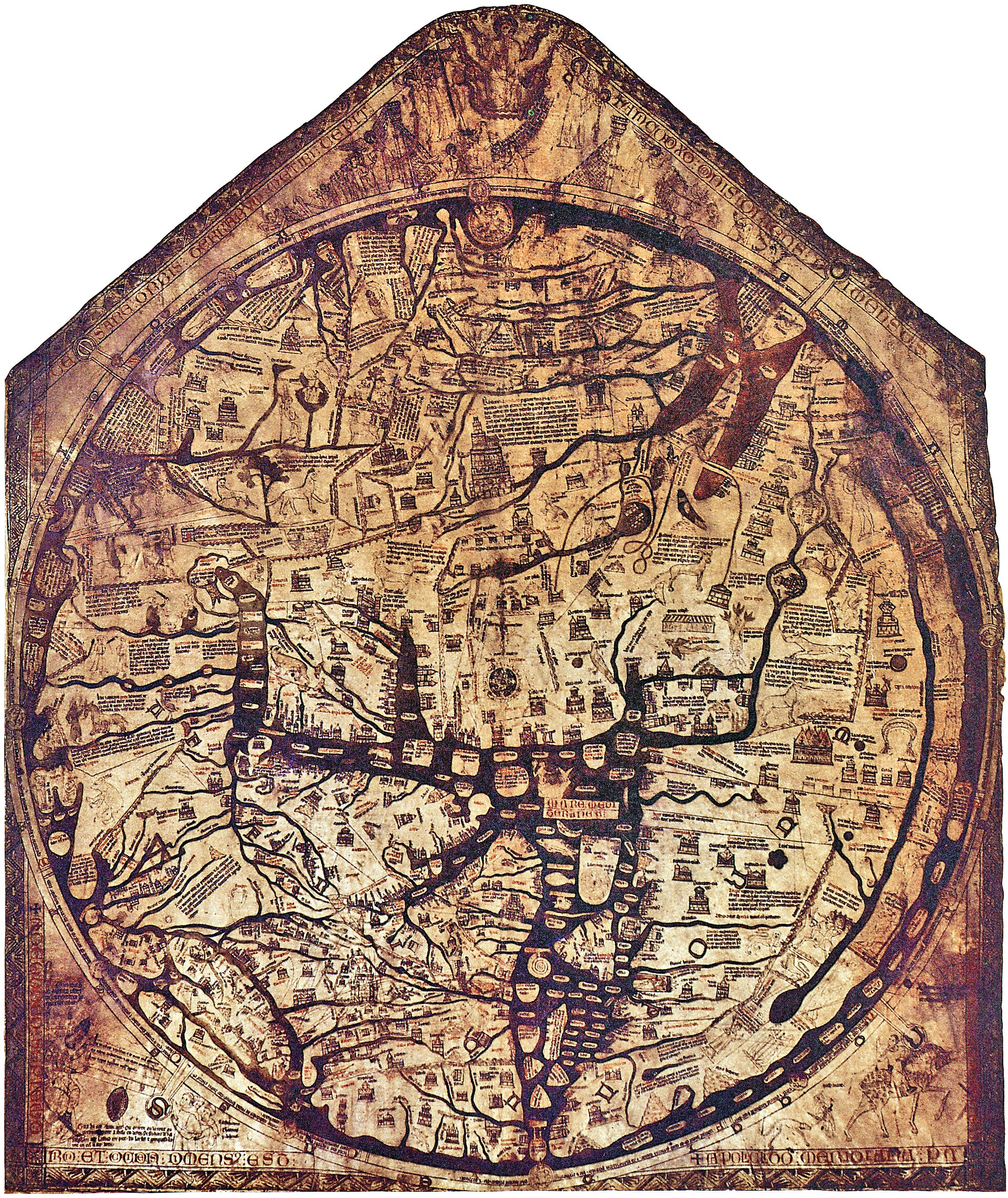
A map made for sailors
The world arranged around Jerusalem with Christian and legendary content
A precise navigation chart
Proof that Europeans knew the Americas
Medieval mappae mundi were more religious and symbolic than navigational, which is why portolan charts were used for sailing.
Which pair of events is in the correct order?
Domesday Book (1086) then Magna Carta (1215)
Peasants' Revolt (1381) then Black Death (1347)
Magna Carta (1215) then Domesday Book (1086)
Fall of Constantinople (1453) then First Crusade (1095)
Check each pair by date: only the first is in the right order.
How did the Hundred Years' War help create stronger national identities?
It made Flanders independent
Fighting against a foreign enemy encouraged loyalty to the French crown and English as the language of court
It united England and France
It ended the use of national languages
Joan of Arc became a symbol of French unity. In England, English replaced French as the language of government by the late 1300s.
Why did medieval cities like Venice and Genoa grow richer?
They refused to trade with Muslims
They exported grain to China
They carried crusaders and traded with the East, bringing spices and luxury goods to Europe
They were ruled by the pope
Italian ports profited from the Crusades and from Mediterranean trade. Their wealth later helped fund the Renaissance.
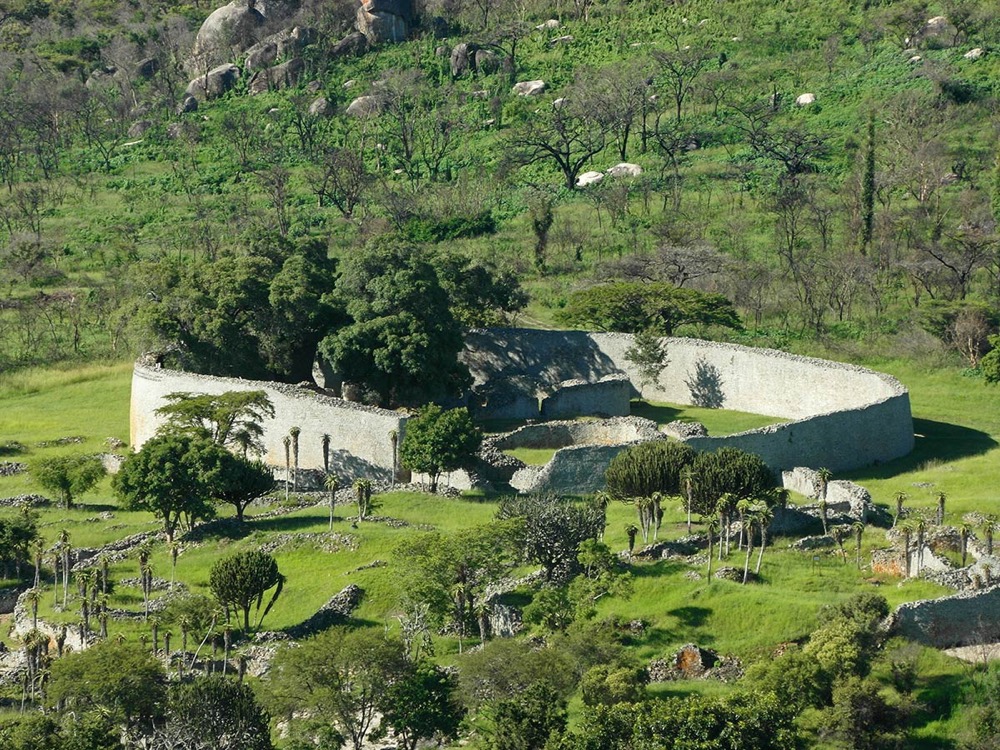
Which statement about Great Zimbabwe is best supported?
It was built by Egyptians
It was built in the 1800s
It was a Portuguese fort
It was built of dry stone by Shona-speaking peoples and tied to gold and cattle trade
The site was a major trading center linked to the Indian Ocean networks. Colonial-era claims that outsiders built it have been refuted by archaeology. Image: Edwin Smith and Andrew Dale, CC BY-SA 4.0, via Wikimedia Commons.
Which statement best explains why Ghana, Mali and Songhai were wealthy?
They controlled the Silk Road to China
They had the world's biggest navies
They controlled trans-Saharan trade, especially gold for salt
They sold sugar to Europe
Gold came from West African regions and salt from the Sahara. Taxing the trade funded their states.
A medieval manor included all of the following EXCEPT:
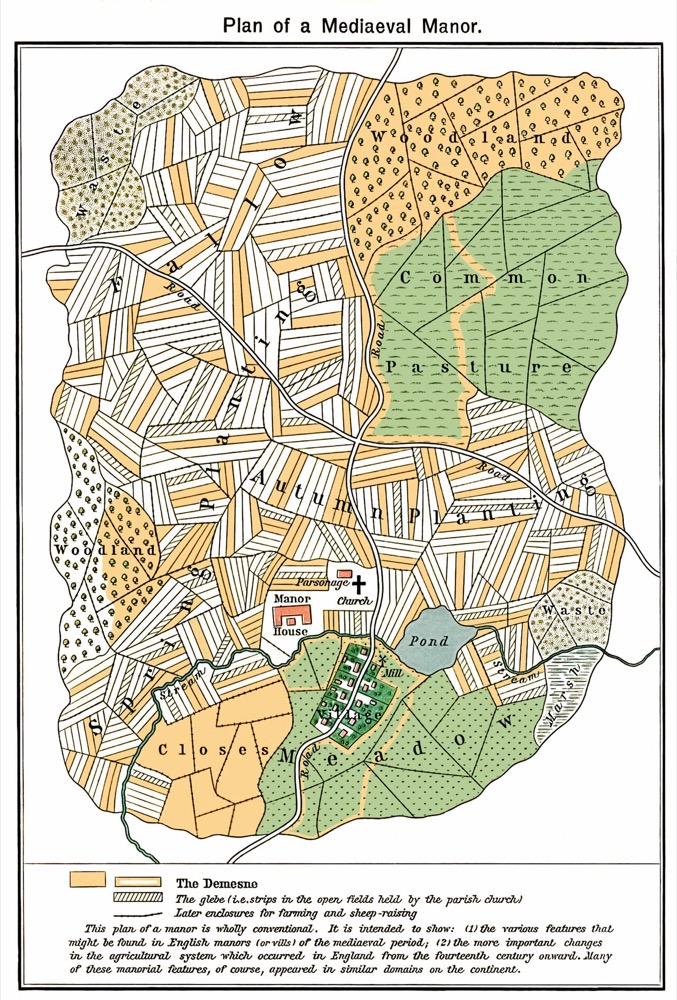
Open fields farmed by peasants
The lord's demesne
A village church
A university with a law faculty
The manor was a rural, largely self-sufficient estate. Universities appeared in towns, not on manors.
