Quiz · Medium
Test your grasp of culture concepts, with photos and diagrams: norms and sanctions, ethnocentrism, cultural lag, syncretism, Hofstede, Hall and rites of passage.
What does this image show?
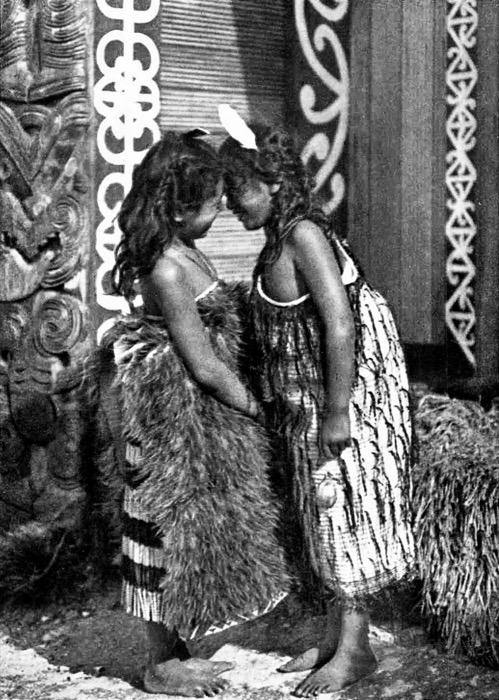
A Maori hongi greeting, a culturally specific norm
A Maori haka performed before battle
A Japanese rite of passage
A Mexican Day of the Dead ritual
The hongi is a Maori greeting in which two people press noses and foreheads. A haka is a group dance, not a greeting between two people.
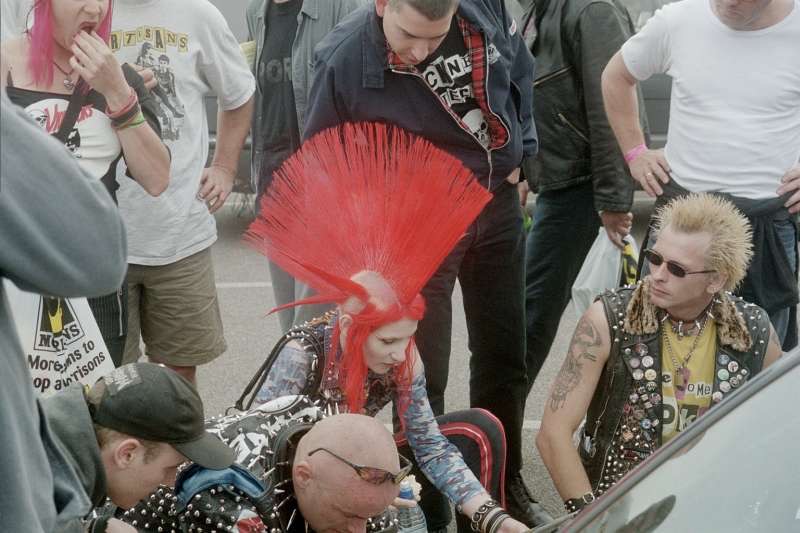
Which subculture concept does this photograph best illustrate?
High culture displayed as cultural capital
Assimilation into the dominant culture
Cultural lag between technology and norms
Style used as symbolic resistance to the mainstream (Hebdige)
A punk look (mohawk, studs) is a classic subculture example. Hebdige argued that subcultural style carries meaning and resists mainstream norms.
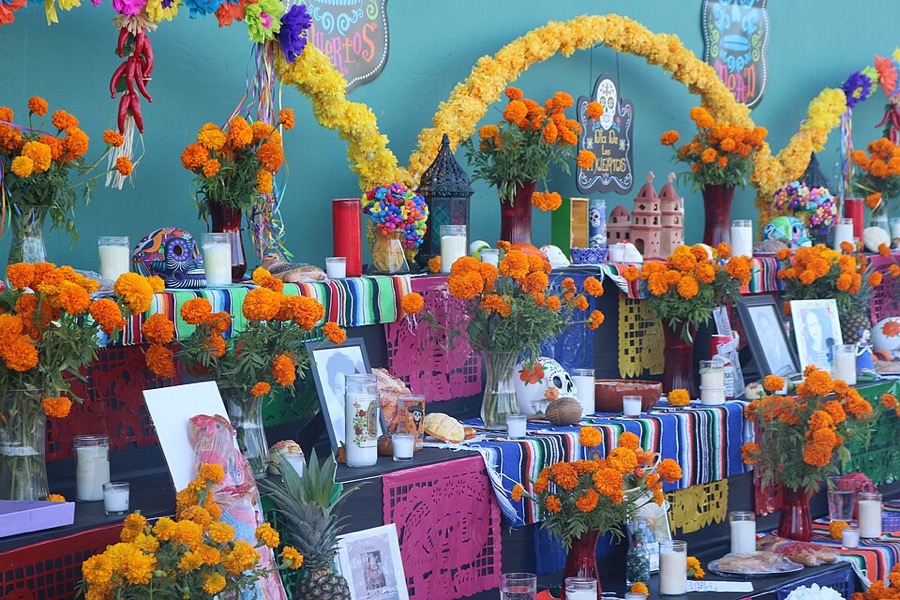
This altar, an ofrenda, blends Indigenous and Catholic traditions. The best sociological term is:
cultural leveling
anomie
syncretism
ethnocentrism
Syncretism is the blending of elements from different traditions. Ethnocentrism is judging cultures by one's own standard.
Which is an example of material culture?
A belief in honesty
A greeting norm
The English language
A smartphone
Material culture is tangible objects. Beliefs, norms and language are nonmaterial culture, although a smartphone's meaning is nonmaterial.
A value differs from a norm because a value:
is always written down
is a general idea about what is good, while a norm is a specific rule for behavior
applies only to subcultures
is legally enforced while a norm is not
Example: valuing education (a value) leads to the expectation that students attend class (a norm). Laws are formal norms, not values.
Wearing pajamas to a formal wedding violates a:
folkway or mild norm, which brings disapproval
value, which is always legally punished
law, which brings prison
taboo, which brings revulsion
Dress breaches are usually informal sanctions (stares). Taboos such as incest bring strong reactions; laws are formalized and enforced by the state.
A student from Country A describes the dinner customs of Country B as "backward." This is:
cultural relativism
ethnocentrism
culture shock
xenocentrism
Ethnocentrism judges others by one's own standards. Xenocentrism is the reverse, valuing another culture over one's own.
An anthropologist refuses to judge a food taboo until she understands its role in the community. This is:
ethnocentrism
cultural lag
a counterculture
cultural relativism as a research method
Cultural relativism seeks to understand practices in context. It does not mean abandoning all moral judgment.
Ogburn's "cultural lag" is best illustrated by:
a tourist feeling uneasy in a new country
a family keeping old recipes
laws on online privacy trailing behind new data technologies
two groups blending traditions
Cultural lag: nonmaterial culture (laws, norms) adjusts more slowly than material culture (technology).
Which statement about the Sapir-Whorf hypothesis is most accurate?
All languages have the same color terms
Language influences perception and thought in some ways, but does not determine them
Language fully determines what people can think
Language has no effect on thought
The strong deterministic version is rejected; research such as the Russian blues study supports a weak influence.
A country's McDonald's serves local dishes and has become a local hangout. This best illustrates:
cultural lag
counterculture
glocalization
assimilation
Glocalization = global products adapted to local culture. Assimilation concerns minority groups adopting the dominant culture.
Which pair is correctly matched?
Dominant culture: the smallest group in a society
Counterculture: 1960s hippie movement
Counterculture: a group sharing most dominant values
Subculture: a group that rejects all dominant norms
A counterculture rejects dominant values; subcultures coexist with them. The dominant culture is that of the most powerful group, not necessarily the largest.
In Van Gennep's model, the stage between leaving an old status and joining a new one is called:
effervescence
liminality (transition)
incorporation
separation
Separation, transition (liminal) and incorporation. The middle stage is the one Turner later highlighted.
In Hall's terms, a culture in which meaning is conveyed through context, relationships and what is left unsaid is:
monochronic
low-context
high-context
individualist
High-context communication relies on shared understanding. Monochronic refers to the use of time, not message style.
A person standing 3 feet from a coworker in conversation is in which of Hall's zones?
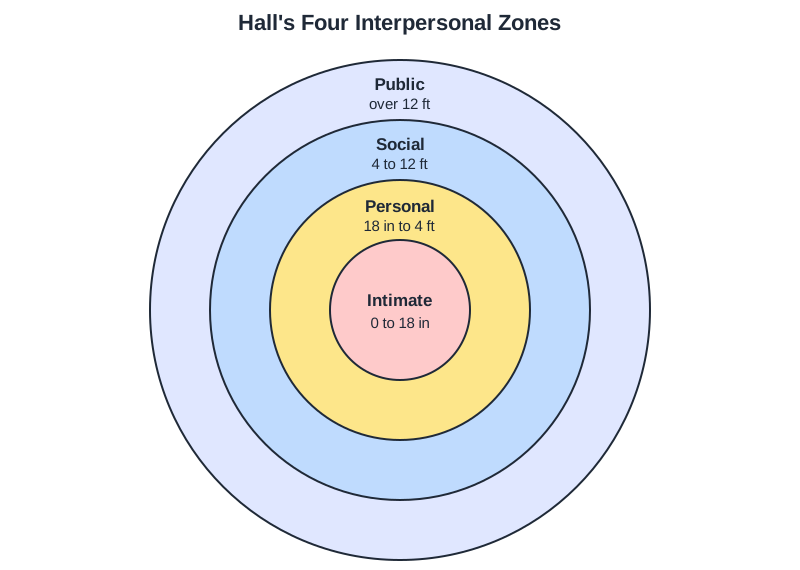
Personal zone
Public zone
Intimate zone
Social zone
Personal: 18 inches to 4 feet. Intimate is under 18 inches; social is 4-12 feet.
What do green countries show on this world map?
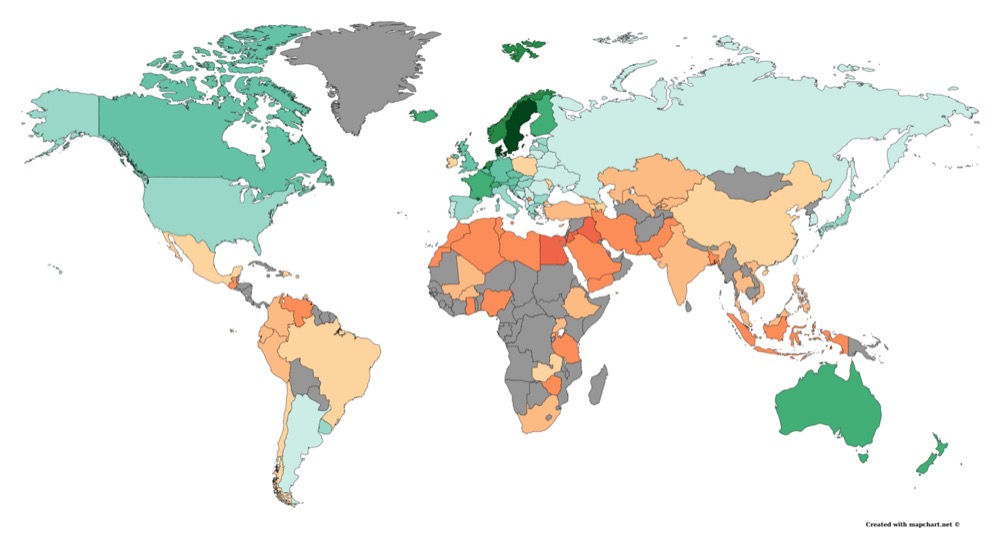
Cultures with higher power distance
Cultures with more material wealth
Cultures with the highest population
Cultures more individualistic than the world average
The map shows relative individualism; red countries are relatively collectivistic. It is about cultural dimensions, not wealth or population. Image: TheCultureDemystifier, CC BY-SA 4.0, via Wikimedia Commons.
Which of Hofstede's dimensions concerns acceptance of unequal power distribution?
Long-term orientation
Power distance
Uncertainty avoidance
Masculinity
Power distance measures how much less powerful members accept inequality. Uncertainty avoidance concerns tolerance of ambiguity.
What is Hofstede's data source for his original dimensions?
Ethnographies of Pacific islands
Surveys of IBM employees in many countries
Archaeological records
World Bank statistics
The data came from IBM surveys (1967-73). Critics say it generalizes from one company and treats nations as cultures.
What does a "culture shock" curve show after the honeymoon stage?
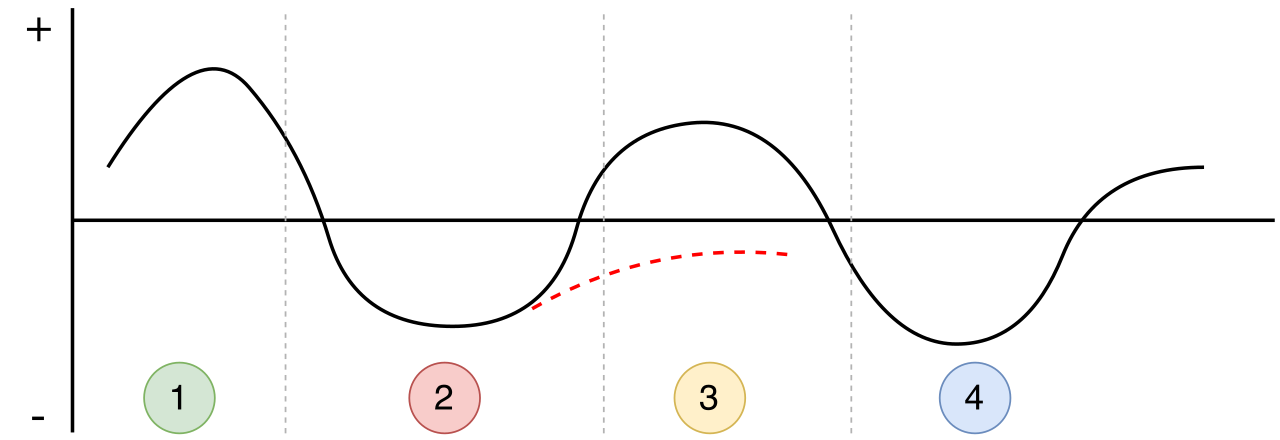
A sudden return to the home culture
Permanent confusion
Immediate mastery of the new culture
A drop in mood, then adaptation
The honeymoon is followed by frustration (culture shock), then adjustment. The W-curve adds re-entry shock when returning home. Image: Blacktc, CC BY-SA 4.0, via Wikimedia Commons.
Which perspective argues that a dominant culture mainly serves elite interests?
Symbolic interactionism
Structural functionalism
Conflict theory (including Gramsci's hegemony)
Positivism
Functionalists see culture as integrating society; conflict theorists see it as reflecting and protecting power.
Bourdieu would call a taste for opera and fine art, used to signal class position:
xenocentrism
a counterculture
cultural capital
cultural lag
Cultural capital: knowledge and tastes that convey status. Opera appreciation is a classic example.
Malinowski's study of the Kula ring showed that:
exchange can create prestige, alliances and trust rather than just profit
exchange systems always collapse after contact
Kula was a form of barter for survival goods
traditional societies have no economy
Kula exchange of shell valuables (mwali and soulava) carried social meaning alongside ordinary trade. It was not mere barter.
Murdock's cultural universals include:
identical marriage customs
the same religion
a family system, funeral rites and language
a monarchy, democracy and capitalism
Universals are general patterns found in all known societies; their forms differ. Specific political systems or religions are not universal.
The Nacirema article (Miner, 1956) is used to teach that:
American culture is unique
all rituals are medical
anthropologists should avoid fieldwork
familiar customs look strange when described by an outsider
Nacirema is American spelled backward; Miner satirized ethnographic writing and showed the danger of ethnocentric descriptions.
