Quiz · Medium
Definitions of abnormality, the diathesis-stress model, anxiety disorders, OCD, PTSD, stress and depression.
Which definition of abnormality would label an IQ of 55 as abnormal but also labels an IQ of 145 as abnormal?
Statistical infrequency
Deviation from social norms
Failure to function adequately
Jahoda's ideal mental health
Statistical infrequency labels both extremes as rare, which is its weakness.
Which criterion is NOT part of the '4 Ds'?
Deviance
Distress
Diagnosis
Danger
The 4 Ds are deviance, distress, dysfunction and danger.
In Rosenhan's study, pseudopatients were released after about:
1 day
7 to 52 days (average about 19)
6 months
They were not released
Stays ranged from 7 to 52 days, with an average of 19.
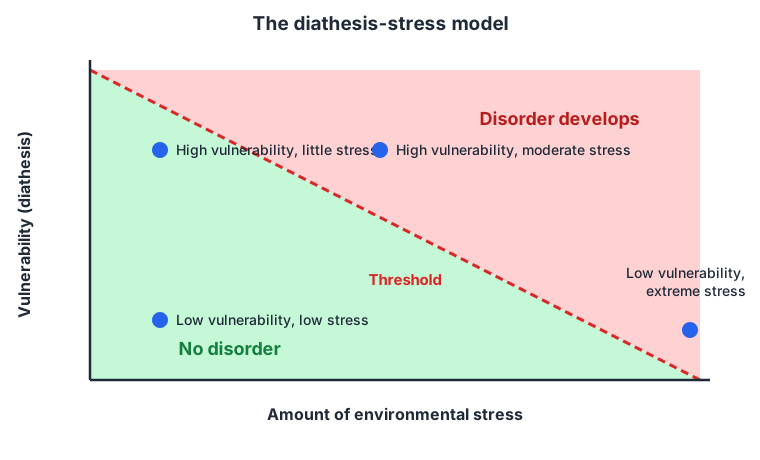
The diathesis-stress model proposes that a disorder develops when:
Stress alone is high
Vulnerability alone is high
Vulnerability and stress combine beyond a threshold
A person has no coping skills
Both factors together determine whether a disorder emerges.
A person fears the unpredictable return of panic attacks and avoids leaving home. The attacks themselves are unexpected. Which diagnosis fits best?
Specific phobia
Panic disorder
OCD
Social anxiety disorder
Panic disorder involves recurrent unexpected attacks with persistent worry about them.
Repeatedly washing hands to reduce distress about contamination is a:
Obsession
Compulsion
Delusion
Panic attack
Compulsions are repetitive behaviors performed to reduce anxiety; the contamination thought is the obsession.
According to Mowrer's two-factor theory, avoidance of the feared object maintains a phobia because it is:
Positively punished
Negatively reinforced
Extinguished
Classically conditioned
Avoidance reduces anxiety, which negatively reinforces the avoidance.
Which treatment involves a fear hierarchy and relaxation?
Flooding
Systematic desensitization
Aversion therapy
Token economy
Wolpe's systematic desensitization pairs relaxation with graduated exposure.
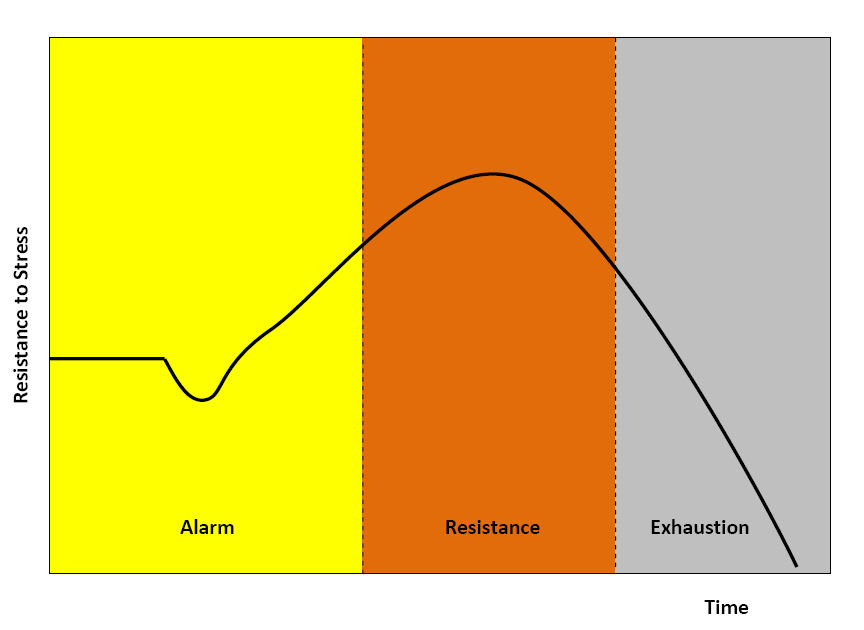
Which stage of the general adaptation syndrome involves depleted resources and increased vulnerability to illness?
Alarm
Resistance
Exhaustion
Appraisal
Prolonged stress leads to exhaustion.
Beck's cognitive triad includes negative views of:
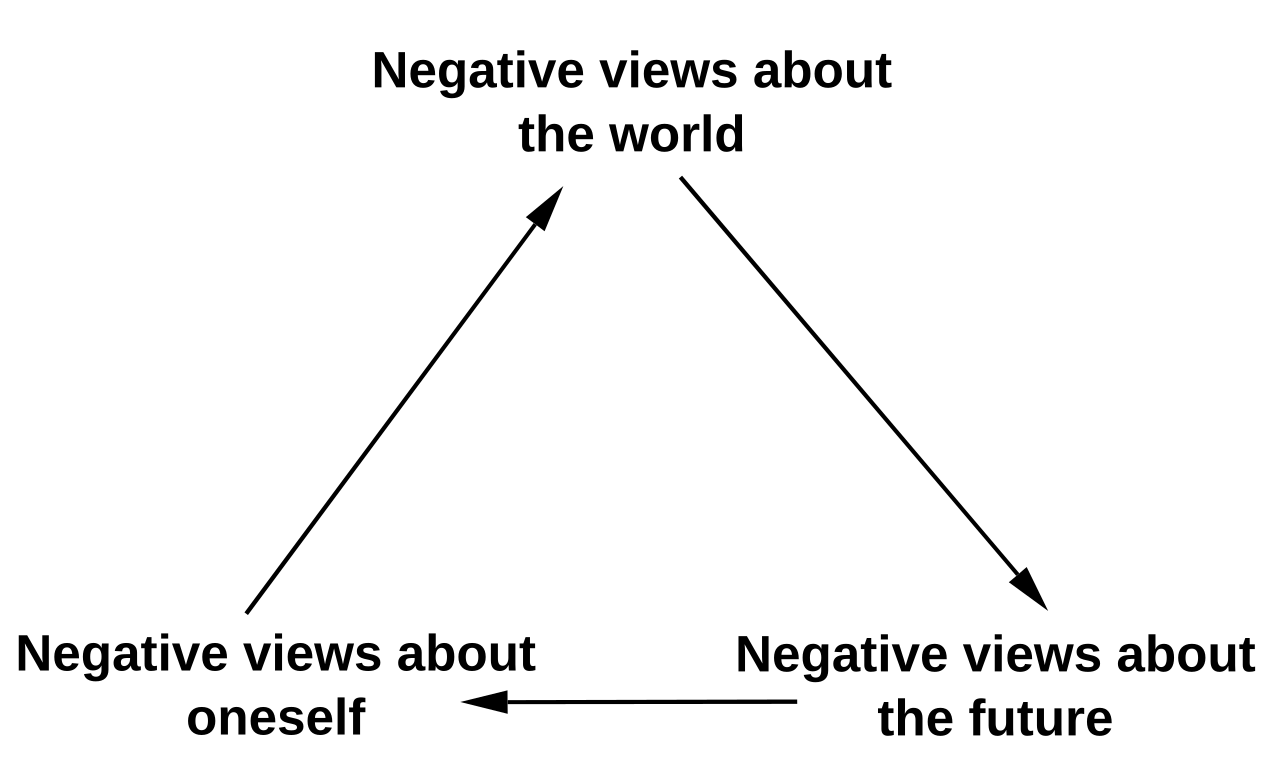
Self, world and future
Mother, father and self
Past, present and future
Thoughts, feelings and behavior
Self, world and future form the triad.
Dogs that received inescapable shocks later failed to escape when they could. This is evidence for:
Classical conditioning
Learned helplessness
Preparedness
Latent learning
Seligman and Maier's finding is the basis of learned helplessness.
Someone explains a failed exam as 'I'm just stupid, and I'll always fail at everything'. Which attributional style is this?
External, unstable, specific
Internal, stable, global
External, stable, global
Internal, unstable, specific
This is the pessimistic style linked to depression.
Which diagnosis requires a manic episode lasting at least one week?
Bipolar II
Cyclothymia
Bipolar I
Persistent depressive disorder
Bipolar I requires at least one full manic episode.
Which statement about SSRIs is correct?
They work immediately
They increase serotonin availability in the synapse
They block dopamine
They are the treatment of choice for mania
SSRIs block serotonin reuptake, but their therapeutic effect takes weeks.
Which treatment is first-line for OCD?
Flooding without response prevention
Exposure and response prevention
Free association
Lobotomy
ERP, with or without an SSRI, is the best-supported treatment.
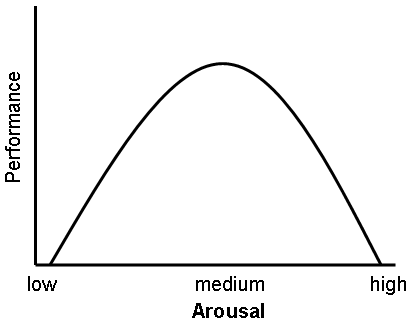
The Yerkes-Dodson law suggests that for a complex task, performance is best at:
Very high arousal
Moderate to low arousal
Zero arousal
Variable arousal
Complex tasks have a lower optimal arousal level than simple tasks.
