Quiz · Hard
Harder reading questions: conjuncts, reph, nukta letters, nasal signs and real signboards.
What is the conjunct क्ष made of?
क् + स
ख् + ष
क् + ष
क् + श
क्ष = क् (k with halant) + ष (ṣa). Said 'ksh'. Do not confuse ष with स or श.
How is ज्ञान (knowledge) normally said in Hindi?
jñān with a separate j and ñ
zyān
dnyān
gyān
ज्ञ = ज् + ञ, said 'gya' in Hindi. In Marathi the same conjunct is said 'dnya'.
In कर्म (karma), what is the small hook above म?
The reph, a र् read before the म
A halant
A nasal anusvāra
A nukta
The reph is a र at the start of a conjunct, written above the following letter but pronounced before it: kar-ma.
Which letters make up the conjunct cluster in राष्ट्र (nation)?
श् + ट् + र
ष् + ट् + र
ष् + त् + र
स् + ट् + र
राष्ट्र = rā-ṣṭra. Letters ending in a retroflex ट take the र as a small caret ( ्र ). Check the first letter: ष, not श or स.
Why is it माँ (with ँ) but मैं (with ं)?
Because ै cannot be nasalised
Because ँ is used only for feminine nouns
By convention ँ is replaced by ं when part of the vowel sign rises above the headline
It is random; both are always interchangeable
With ा, ु, ू and full vowels written below or on the line, ँ is used (माँ, आँख). With े ै ो ौ ि ी a dot ं is used (में, मैं, नहीं). Some writers use ं everywhere.
What does a halant (्) do?
Nasalises the vowel
Lengthens the vowel
Marks a foreign sound
Removes the inherent a of a consonant
क् = k. It is how conjuncts are built: क् + ष = क्ष.
Which spelling is 'to read' (paṛhnā)?
पढ़ना
पड़ना
पढना
पठना
ढ़ is ढ plus a nukta (ṛh). पड़ना (paṛnā) means 'to fall', a different word. Without the nukta, पढना is a spelling error.
Which letter writes the z sound in ज़रूर (certainly)?
ज
ज़ (ज with nukta)
झ
ड़
The nukta marks sounds borrowed from Persian, Arabic and English. ज is j and झ is jh.
Which sign writes the open o of the English word 'college' in कॉलेज?
ो
ौ
ॉ
ृ
ॉ is a loanword sign for the vowel in 'dog' or 'college'. ो is the native long o of 'go' and ौ is au.
How is स्थान (place) read?
satān
stān
sathān
sthān
The conjunct स्थ = स् + थ gives 'sth'. Without the halant it would be सथान (sathān).
In चिट्ठी (letter), why are ट and ठ stacked rather than joined side by side?
Letters without a vertical stem are stacked
It is a spelling mistake
Because it is a loanword
Because ठ is aspirated
ट, ठ, ड, ढ and others without a stem cannot drop a bar, so the first is placed above the second. Letters with a stem lose it instead: स्त, क्य.
Which of these words contains the conjunct द्व (dv)?
दरवाज़ा (door)
द्वार (door)
दीवार (wall)
दुकान (shop)
द्वार = dvār is a formal word for 'door'. दरवाज़ा (darvāzā) is the common word and has no conjunct.
Which is an alternative spelling of हिंदी?
हिण्दी
हिम्दी
हिन्दी
हिङ्दी
The nasal before a consonant takes the place of articulation of that consonant. द is dental, so the nasal is the dental न. ण is retroflex, म labial, ङ velar.
Which statement about ड़ and ढ़ is true?
They are plain ड and ढ with a decorative dot
They appear only in English loanwords
They are conjuncts of ड and र
They never start a word and are flaps made with a curled tongue
ड़ (ṛ) and ढ़ (ṛh) occur inside or at the end of words (बड़ा, पढ़ना, घोड़ा). They are native Hindi sounds, written with a nukta.
In जं॰ on a railway board, what does the small circle ॰ show?
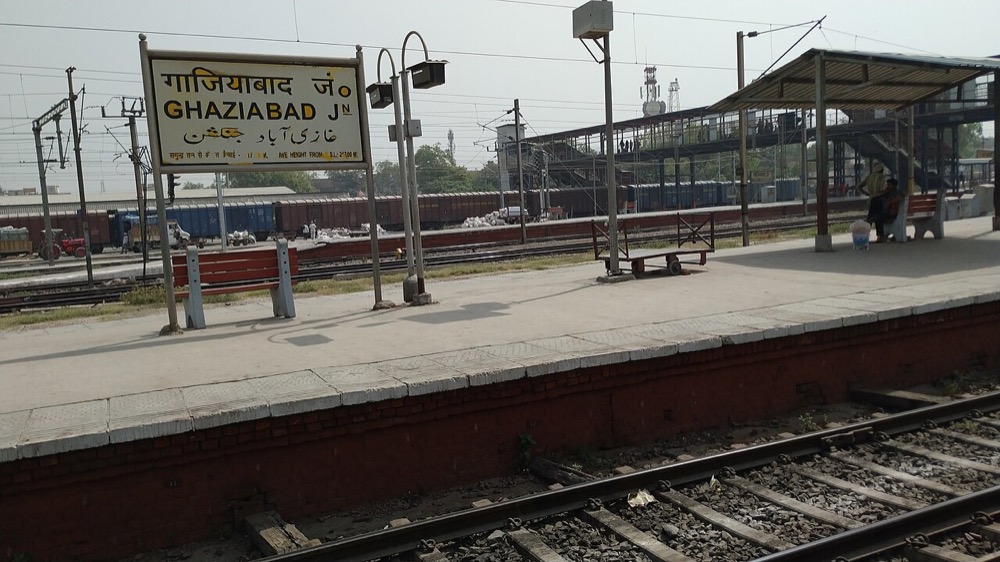
An abbreviation (जं॰ = जंक्शन, junction)
The number zero
A nasalising anusvāra
A vowel-cancelling halant
The small circle marks that a word is shortened. The anusvāra is a dot ं above the line, not a circle on the baseline.
In the Ghaziabad sign below, जं॰ stands for junction.
Image: Ravi Dwivedi, CC BY-SA 4.0, via Wikimedia Commons.
The last letter of मोड़ in द्वारका मोड़ is:
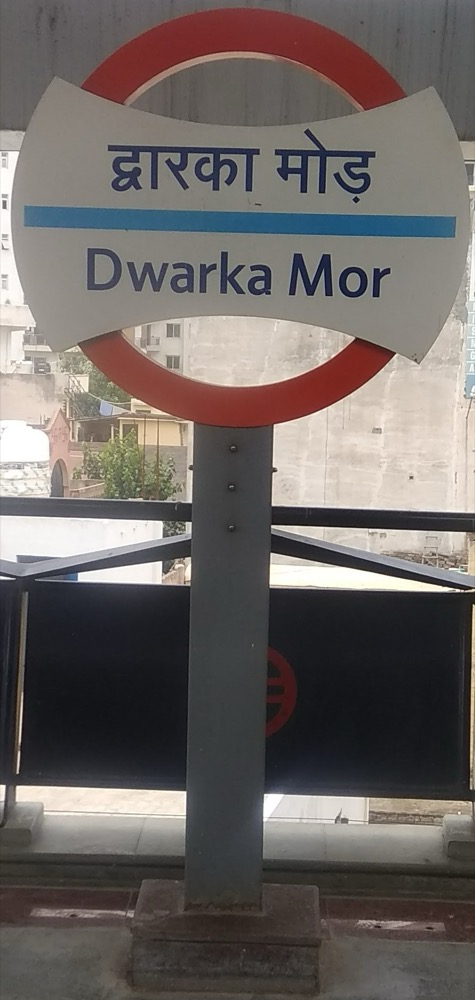
ड
ड़ (ṛ)
ढ
ढ़
मोड़ (moṛ, a turn) ends in ड़: ड plus a nukta. Dwarka Mor is a Delhi Metro station.
Image: Ashish itct, CC BY-SA 4.0, via Wikimedia Commons.
Why is नई (new, feminine) written with the full vowel letter ई instead of the sign ी?
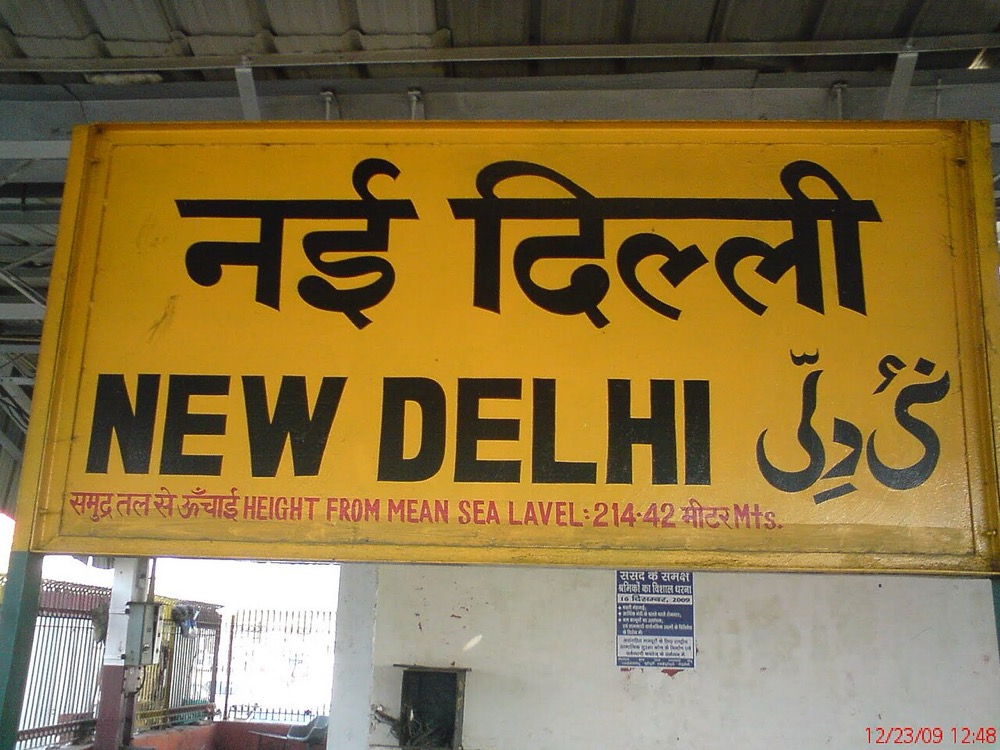
ी cannot attach to न
It is a spelling mistake for नी
The ई begins a new syllable (na-ī) with no consonant before it
Because the word is feminine
After a vowel sound, a new syllable that starts with a vowel uses the full letter: नई, गई, आइए. The sign ी is only for consonant plus ī: नीला.
Image: MikeLynch, CC BY-SA 3.0, via Wikimedia Commons.
Which year is written १९४७ in Devanagari digits?
1974
1749
1497
1947
१ = 1, ९ = 9, ४ = 4, ७ = 7. Read the digits left to right like any number.
True or false: in सूर्य (sūrya) the र is pronounced after the य.
False
True
The reph (र् written above) is read before the letter it sits on: sūr-ya, not sū-ya-r.
