Quiz · Medium
26 questions on the polite present, past, future, formal and request forms, plus ㅂ, ㄷ, ㅅ, ㄹ, 르, 으 and ㅎ irregulars.
Which ending does 먹다 take in the polite present?
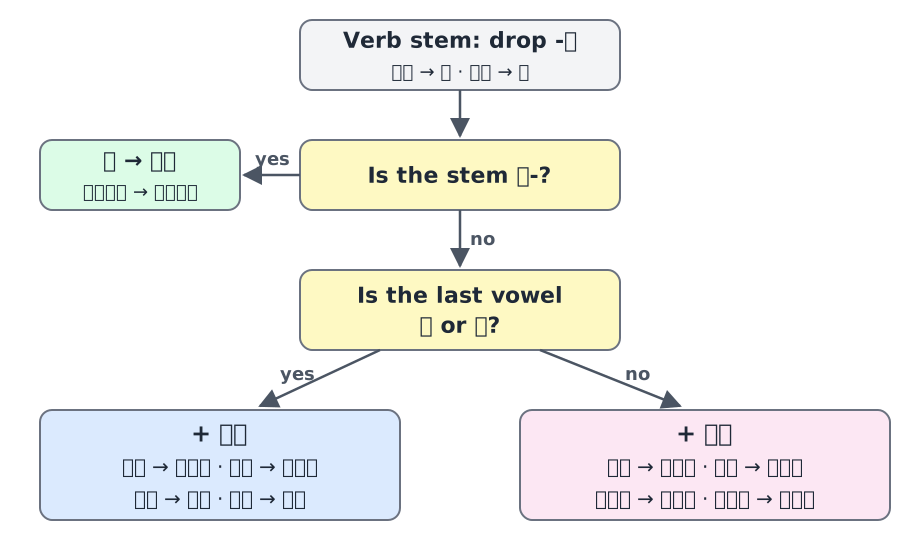
먹어요
먹아요
먹해요
먹여요
The last vowel of 먹 is ㅓ, not ㅏ/ㅗ, so the ending is 어요.
What is the polite present of 살다 (to live)?
살해요
사어요
살어요
살아요
The last vowel of 살 is ㅏ, so use 아요: 살아요.
What is the polite present of 공부하다?
공부하아요
공부해요
공부하어요
공부하요
All 하다 verbs become 해요, not 하아요 or 하어요.
What is the polite present of 마시다?
마셔요
마시어요
마시요
마세요
마시 + 어요 → 마셔요 (ㅣ + ㅓ merge into ㅕ). 마세요 is the request form "please drink".
What is the polite present of 보다 (to see)?
봐요
버요
보어요
보아요
보 + 아요 → 봐요 (ㅗ + ㅏ = ㅘ). 보아요 is possible in writing but sounds stiff.
Which spelling is correct for "to become" in the polite present?
되요
대요
뒈요
돼요
되 + 어요 → 돼요. Test: replace with 하 + 여요 → 해요: if 해요 fits, use 돼요.
What is the past polite form of 먹다?
먹었어요
먹았어요
먹을 거예요
먹었어
Stem 먹 ends in ㅓ, so 었: 먹었어요. 먹을 거예요 is future.
What is the past polite form of 마시다?
마셔았어요
마싰어요
마셨어요
마시었어요
마시 + 었 contracts to 마셨. 마시었어요 exists but is rare.
What is the past polite form of 바쁘다 (to be busy)?
바빴어요
바뻤어요
바뿠어요
바쁘었어요
으 drops, and the vowel before it (ㅏ) triggers 았: 바 + 았 → 바빴. 예쁘다 uses 었: 예뻤어요.
What is the past polite form of 이다 after a vowel, as in 의사 ___?
의사이었어요
의사였어요
의사 있었어요
의사였어
이었어요 contracts to 였어요 after a vowel. After a consonant: 학생이었어요.
Choose the correct future form of 가다.
가는 거예요
가을 거예요
갈 거예요
간 거예요
Vowel stem + ㄹ 거예요 = 갈 거예요. 간 거예요 is past.
What is the formal polite form of 살다?
살ㅂ니다
삼니다
살습니다
삽니다
ㄹ stems drop ㄹ before ㅂ: 삽니다. Similarly 알다 → 압니다, 만들다 → 만듭니다.
What is the polite present of 덥다 (to be hot)?
더와요
더워요
덥어요
덥아요
ㅂ-irregular: ㅂ becomes 우 before a vowel: 더우 + 어요 → 더워요.
Which verb is a REGULAR ㅂ verb?
덥다
입다
맵다
춥다
입다 → 입어요. 덥다, 춥다 and 맵다 are irregular (더워요, 추워요, 매워요).
What is the polite present of 듣다 (to listen)?
들려요
듣아요
들어요
듣어요
ㄷ-irregular: ㄷ → ㄹ before a vowel. 들려요 comes from 들리다 (to be heard).
Which verb is a REGULAR ㄷ verb?
듣다
묻다 (to ask)
걷다
받다
받다 → 받아요. 듣다, 걷다 and 묻다 (ask) change ㄷ to ㄹ.
What is the polite present of 모르다?
몰라요
모르어요
모라요
몰러요
르-irregular: the vowel before 르 is ㅗ, so 라: 몰라요. 부르다 → 불러요 (ㅜ → 러).
What is the polite present of 부르다 (to call, to sing)?
부러요
불러요
부르어요
불라요
The vowel before 르 is ㅜ, so ㄹ러: 불러요. 모르다 (ㅗ) takes 라.
What is the polite present of 쓰다 (to write)?
싸요
써서요
쓰어요
써요
으-drop. 쓰 has no vowel before 으, so 어: 써요.
What is the polite present of 아프다 (to hurt)?
아퍼요
아프아요
아푸어요
아파요
으 drops, and the vowel before it is ㅏ, so 아요: 아파요.
What is the polite present of 파랗다 (to be blue)?
파라요
파랗아요
파래요
파랗어요
ㅎ-irregular for color adjectives: ㅎ drops and the vowel becomes ㅐ: 파래요.
Which ㅎ word is REGULAR?
노랗다
좋다
그렇다
빨갛다
좋다 → 좋아요. Colors and 그렇다/어떻다 are irregular (빨개요, 그래요, 노래요).
How do you say "Please sit" politely?
앉세요
앉으요
앉으세요
앉아세요
Consonant stem + 으세요. Vowel stem + 세요.
What is the honorific request form of 먹다 (Please eat)?
먹어세요
잡수어요
먹으세요
드세요
먹다's honorific verb is 드시다 (or 잡수시다), so 드세요. 먹으세요 is grammatical but less respectful toward elders.
What is the polite request "Please make it" from 만들다?
만들으세요
만드세요
만들어세요
만들세요
ㄹ-stems drop ㄹ before ㅅ: 만들 → 만드 + 세요.
True or false: 좋다 is an irregular verb because it ends in ㅎ.
True
False
False. 좋다 is regular (좋아요). Only color adjectives and 그렇다/어떻다-type adjectives drop ㅎ.
