Quiz · Medium
Minimal pairs, devoiced vowels, pitch accent, listening strategy and matching spoken times to clock faces.
Which word means "building" and which means "beer"? ビル and ビール are different only by:
vowel length (ビル = building, ビール = beer)
pitch only
a doubled consonant
voicing
ー lengthens the vowel. Both words differ by length, which is the main source of listening mistakes.
おばさん and おばあさん mean:
grandmother and aunt
aunt (or middle-aged woman) and grandmother
sister and mother
aunt and mother
The longer vowel おばあ means grandmother. The same pattern gives おじさん (uncle) and おじいさん (grandfather).
きて (来て) and きって (切手) differ by:
vowel length
pitch accent only
a small っ (a pause before the t)
nothing, they are the same word
A small っ doubles the next consonant: きって is the stamp, きて is the te-form of くる.
びょういん and びよういん mean:
beauty salon and hospital
clinic and pharmacy
hospital and barber
hospital and beauty salon
病院 (びょういん) is a hospital. 美容院 (びよういん) is a beauty salon. The difference is ょ (a blended sound) versus よ plus a syllable.
Which pair differs because of a long vowel?
いえ (house) / いいえ (no)
かさ (umbrella) / かぜ (cold)
ここ (here) / そこ (there)
あめ (rain) / あし (leg)
いいえ has a long い. The other pairs differ in consonants or vowels, not length.
ゆき (snow) and ゆうき (courage) differ by:
a small っ
vowel length
voicing
a nasal ん
ゆうき has a long ゆう.
Japanese words like 雨 (あめ, rain) and 飴 (あめ, candy) are told apart by:
vowel length
stress on a syllable
pitch accent
tone like Chinese
Japanese uses pitch accent: the pattern of high and low syllables. It is not stress as in English, and it is not a lexical tone system.
Why is 7 often said なな instead of しち on the phone?
なな is more polite
しち is a rude word
しち is only for dates
しち sounds too much like いち (1)
しち and いち are easily confused over a poor line, so なな is used for clarity. 4 is similarly よん rather than し.
In です and ます, the final う is often:
devoiced, so です sounds like "des"
pronounced as a long vowel
dropped completely in writing
changed to お
Between voiceless sounds or at the end, i and u are often devoiced, so です sounds like des. The vowel is still part of the word.
A sentence ends with か on a rising pitch. This usually means:
it is a command
it is a question
it is polite past tense
it is an exclamation
か is the question particle. In spoken Japanese a rising intonation is common, but か alone marks the question.
In a conversation you hear 「いいですね。でも、今日はちょっと…」. What does the speaker mean?
Strong agreement
A request for help
A polite refusal
A question about the price
でも and a trailing ちょっと… is a soft way to say no in Japanese. Listen for hesitation rather than the word いいですね.
Listen for the key info. A speaker says 「会議は十時でしたが、十一時に変わりました。」 When is the meeting now?
10:00
11:30
9:00
11:00
The "but" (が) clause gives the change: it was 10:00 but changed to 11:00. The answer is usually after しかし, でも or が.
Which clock shows 七時半 (しちじはん)?
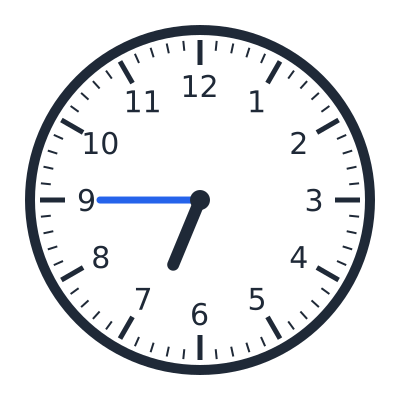
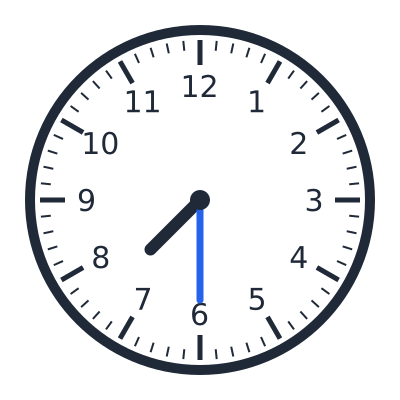
半 means half past, so 7:30. The minute hand points at 6.
Which clock shows 六時四十五分 (ろくじよんじゅうごふん)?
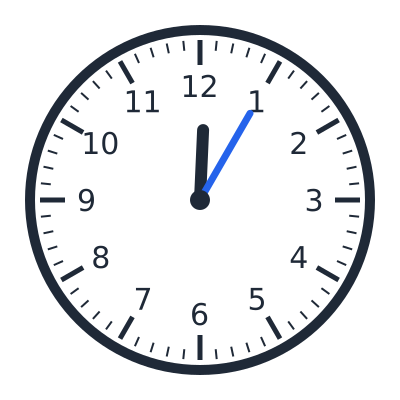
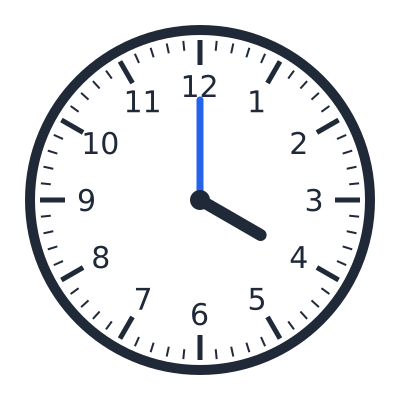
四十五分 = 45 minutes, so the minute hand is on 9 and the hour hand is nearly at 7.
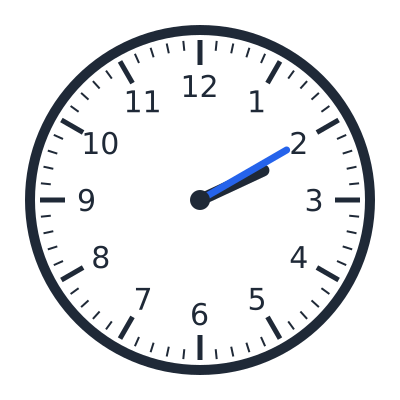
Which clock shows 十二時五分 (じゅうにじごふん)?
五分 = 5 minutes past 12, so the minute hand points at 1 and the hour hand is just past 12.
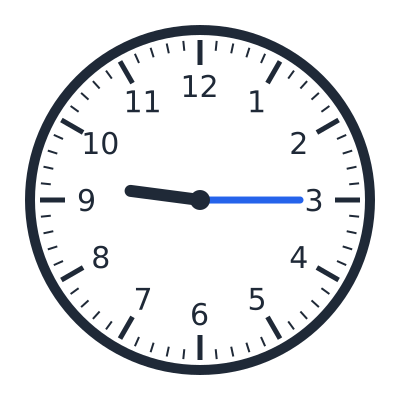
Which clock shows 九時十五分 (くじじゅうごふん)?
十五分 = 15 minutes past, so the minute hand points at 3.
