Quiz · Medium
Twenty-two questions on what to say in restaurants, shops and stations, reading real signs, polite phrases and common idioms.
You have finished your meal and want the check. What do you say?
いただきます。
おすすめは何ですか。
お会計をお願いします。
おかわりをください。
お会計をお願いします asks for the bill. いただきます is said before eating, おすすめは何ですか asks for a recommendation and おかわり asks for a refill.
A cashier says ポイントカードはお持ちですか。What are they asking?
Whether you have a point card
Whether you need a bag
Whether you want it heated
Whether you will pay by card
お持ちですか is the honorific way to ask "do you have?". Asking about a bag would be 袋はご利用ですか, and heating is 温めますか.
Which phrase tells a shop assistant that you do not need help?
これにします。
見ているだけです。
もっと大きいのはありますか。
試着してもいいですか。
見ているだけです means "I'm just looking". The other phrases are all active requests or decisions.
You do not want a plastic bag at the register. What do you say?
袋をください。
袋は高いですね。
袋はありますか。
袋はいりません。
袋はいりません means "I don't need a bag". 袋をください asks for one.
You are lost in a station. Which phrase fits best?
道に迷いました。
道を渡りました。
道が好きです。
道を作りました。
道に迷う means to lose one's way. So 道に迷いました is "I got lost".
What does this sign mean?
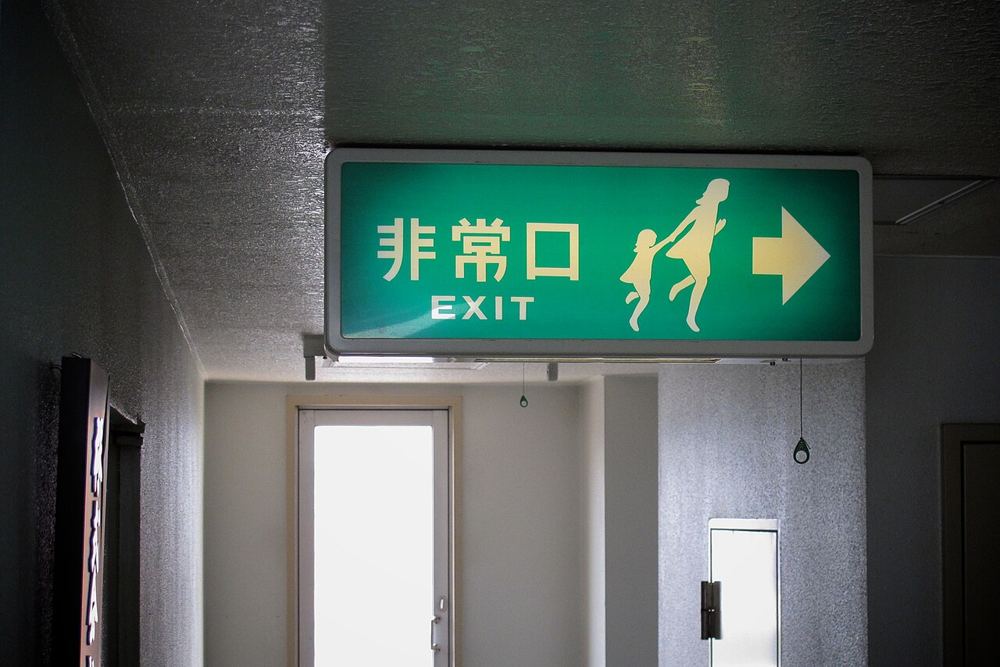
Ticket gate
Emergency exit
No smoking
Open for business
非常口 (ひじょうぐち) is an emergency exit, shown with a green running figure and an arrow. Image: MIKI Yoshihito, CC BY 2.0, via Wikimedia Commons.
What do you pass through at this sign?
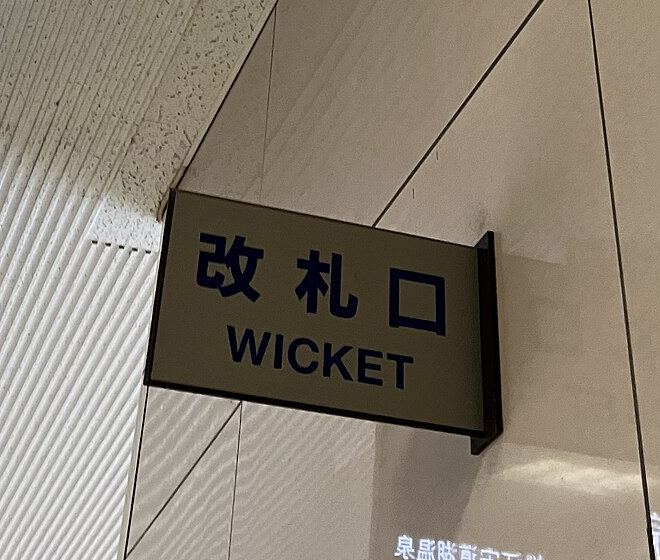
An emergency exit
A shop entrance
A ticket gate
A parking barrier
改札口 (かいさつぐち) is the ticket gate in a station, where you tap your IC card. Image: CHANCE TO, CC BY-SA 4.0, via Wikimedia Commons.
A colleague says 結構です after you offer them a drink. What do they most likely mean?
Yes, please.
It's delicious.
I'm very thirsty.
No, thank you.
結構です used for refusal means "no, thank you". It can also mean "that's fine", so tone and context matter.
Which phrase is used when leaving the office before your colleagues?
お先に失礼します。
お先にどうぞ。
お待たせしました。
お邪魔します。
お先に失礼します means "excuse me for leaving ahead of you". お先にどうぞ is "after you". お待たせしました apologizes for keeping someone waiting.
What does 猫の手も借りたい express?
Wanting a pet cat
Being so busy you'd accept any help
Being afraid of cats
Wanting to pass the time
Literally "I'd even borrow a cat's paw". It describes being overwhelmingly busy.
What does 猿も木から落ちる mean?
Monkeys should stay in trees.
Don't climb trees without help.
Even experts make mistakes.
The weak always lose.
Even monkeys, who are good at climbing, fall from trees: even experts slip up.
Which idiom matches "Haste makes waste"?
急がば回れ
花より団子
後の祭り
月とすっぽん
急がば回れ means that taking the longer, safer route can be faster than rushing. 後の祭り means "too late", and 月とすっぽん means two things are completely different.
Which idiom means "Treasure every encounter, since it may never happen again"?
以心伝心
十人十色
自業自得
一期一会
一期一会 comes from the tea ceremony. 以心伝心 is wordless understanding, 十人十色 is "to each their own" and 自業自得 is "you reap what you sow".
What does 顔が広い mean?
To have a large face
To know many people
To be arrogant
To be forgetful
顔 stands for your social connections here, so 顔が広い means you know many people.
What does 甘い物に目がない mean?
I can't see the sweets.
I don't like sweets.
I can't resist sweets.
I'm allergic to sweets.
目がない means to be crazy about something. It is a weakness, not a lack of sight.
What does 月とすっぽん mean?
Two things that are alike on the surface but very different in quality
Two things that are the same
Something that happens at night
A dream that comes true
The round moon and a soft-shelled turtle (すっぽん) are both round, but they are worlds apart in quality.
A staff member says いらっしゃいませ. When is it said?
When you pay
When you leave
When you ask a question
When you enter a shop or restaurant
いらっしゃいませ is the standard greeting to customers entering a shop. You usually do not need to reply.
Which is the most natural way to ask "Does it include tax?"
税金ですか。
税込みですか。
税をください。
税でいいですか。
税込み (ぜいこみ) means "tax included". The other options are not natural ways to ask about the price.
What does 耳が痛い mean?
Criticism hits close to home.
My ears hurt from loud noise.
I'm hard of hearing.
I don't want to listen.
耳が痛い means that someone's criticism is painful because it is true.
Which idiom means "Giving valuable things to someone who cannot appreciate them"?
猫をかぶる
猫の手
猫に小判
猫の額
猫に小判 means gold coins given to a cat. 猫をかぶる means to hide one's true character. 猫の額 refers to a tiny space (a cat's forehead).
Which phrase means "I'm looking forward to it"?
楽しかったです。
楽しみにしています。
楽しいでしょう。
楽にします。
楽しみにしています is the standard phrase. 楽しかったです means "it was fun" and looks back on something that already happened.
You show up late and apologize to the person who was waiting. Which phrase fits?
お待ちください。
お先に失礼します。
お願いがあります。
お待たせしました。
お待たせしました means "sorry to keep you waiting". お待ちください asks someone else to wait.
