Quiz · Medium
Choose the correct article, pronoun or preposition: dative verbs, accusative and dative prepositions, two-way prepositions and double objects.
Ich gehe jeden Tag ___ Arbeit.
zum
zu der Arbeit
zur
beim
Arbeit is feminine and zu takes the dative, so zu + der = zur. zum = zu + dem is for masculine and neuter nouns.
Das Geschenk ist für ___ Bruder.
meinen
mein
meinem
meiner
für always takes the accusative, and Bruder is masculine: mein becomes meinen. meinem would be dative.
Which preposition takes the dative?
ohne
durch
gegen
mit
mit always takes the dative. ohne, durch and gegen are accusative prepositions (with um, für, bis, entlang).
Er hilft ___ Frau.
die
der
den
des
helfen takes the dative and Frau is feminine: die Frau becomes der Frau. die would be accusative.
Wir fahren ___ Berlin.
in
zu
nach
bei
With cities (and most countries) the destination is expressed with nach. zu is for people and institutions; in needs an article.
Das Bild hängt ___ Wand.
an die
an der
an den
an dem
The picture is already hanging: position (Wo?), so dative. Feminine die Wand becomes der Wand: an der Wand.
Ich stelle die Lampe ___ Bett.
neben dem
neben den
neben der
neben das
stellen means putting something somewhere (Wohin?), so the accusative: das Bett stays das. neben dem would describe position.
Which verb takes the accusative, not the dative?
fragen
helfen
danken
gehören
You ask someone: jemanden fragen (accusative). helfen, danken and gehören are classic dative verbs.
Der Film gefällt ___.
mich
ich
mir
meiner
gefallen takes the dative: Der Film gefällt mir (the film is pleasing to me). mich would be accusative.
Sie wohnt ___ ihren Eltern.
bei
zu
nach
mit
bei + dative means living at someone's place. zu expresses going to someone; mit means 'together with'.
___ des Regens bleiben wir zu Hause.
Mit
Durch
Ohne
Wegen
wegen means 'because of' and takes the genitive: des Regens. The other options do not give this meaning.
Ich gebe ___ Kind einen Apfel.
das
dem
den
des
The recipient is the indirect object in the dative: das Kind becomes dem Kind. einen Apfel is the accusative object.
Which sentence is correct?
Ich gebe ihm es.
Ich gebe ihn es.
Ich gebe es ihm.
Ich gebe es er.
With two pronouns the accusative comes first: es ihm. With a noun and a pronoun, the pronoun comes first (Ich gebe ihm das Buch).
Wir warten ___ den Bus.
für
auf
an
zu
warten auf + accusative is a fixed combination. für (for) is the English-influenced mistake.
Er freut sich ___ die Ferien. (he is looking forward to them)
über
an
von
auf
sich freuen auf looks forward to something in the future. über would mean he is happy about something that already exists or has happened.
Der Hund liegt unter ___ Tisch.
dem
den
der
das
Position (Wo?): dative. Tisch is masculine: dem Tisch. den would be right for the movement: Der Hund läuft unter den Tisch.
Ich ___ meinem Vater im Garten.
frage
besuche
helfe
kenne
Only helfen takes the dative, which is what meinem Vater shows. frage, besuche and kenne all take the accusative (meinen Vater).
Seit ___ Woche lerne ich Deutsch.
einer
eine
einen
eines
seit always takes the dative; Woche is feminine: eine becomes einer.
Das Auto ___ Nachbarn ist neu. (the neighbor's)
dem
den
der
des
Possession needs the genitive: des Nachbarn. Nachbar is a weak noun and takes -n, not -s.
Wie heißt die Frage nach dem Dativ?
Wen?
Wem?
Wessen?
Wer?
Wem? is the dative question (to whom). Wen? is accusative, Wessen? genitive and Wer? nominative.
Which preposition always takes the accusative?
bei
aus
für
von
für is accusative. bei, aus and von always take the dative.
Mein Bruder wird ___ Arzt.
einen
ein
einem
eines
werden, like sein and bleiben, takes a predicate nominative: Er ist ein Arzt. No accusative.
Kommst du mit ___?
wir
ihr
unser
uns
mit takes the dative, and the dative of wir is uns. ihr is not a form of wir.
Der Lehrer erklärt ___ Schülern die Regel.
den
die
dem
der
Dative plural: die Schüler becomes den Schülern (noun with -n).
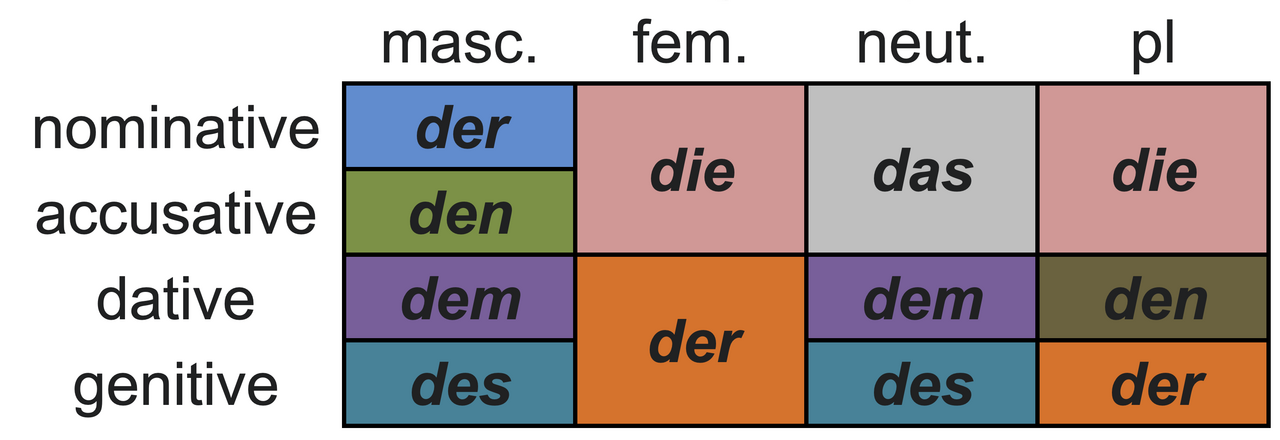
Look at the table. Which definite article is used for the masculine accusative?
den
der
dem
des
Masculine accusative: den. Only the masculine changes between nominative (der) and accusative (den). Image: DisillusionedBitterAndKnackered, CC BY-SA 4.0, via Wikimedia Commons.
In the table, which two cells share the same article 'der' in the feminine column?
Nominative and accusative
Dative and genitive
Nominative and dative
Accusative and genitive
Feminine: die (nominative and accusative), der (dative and genitive). Check the noun's job to know which case der is. Image: DisillusionedBitterAndKnackered, CC BY-SA 4.0, via Wikimedia Commons.
