Quiz · Medium
Read real Chinese signs, a railway ticket, shop promotions and public notices from photos and short texts. For learners at A2 to B1.
A shop advertises 全场打八折. What does this mean for the price?
You pay 8 percent
You pay 80 percent (20 percent off)
You get 80 percent off
You pay twice as much
打八折 = sell at 80 percent of the price. Chinese discounts state the fraction you pay: 打五折 is half price. The usual English habit of naming the discount (20% off) is the opposite.
This red octagonal sign on a street says 停. What should a driver do?
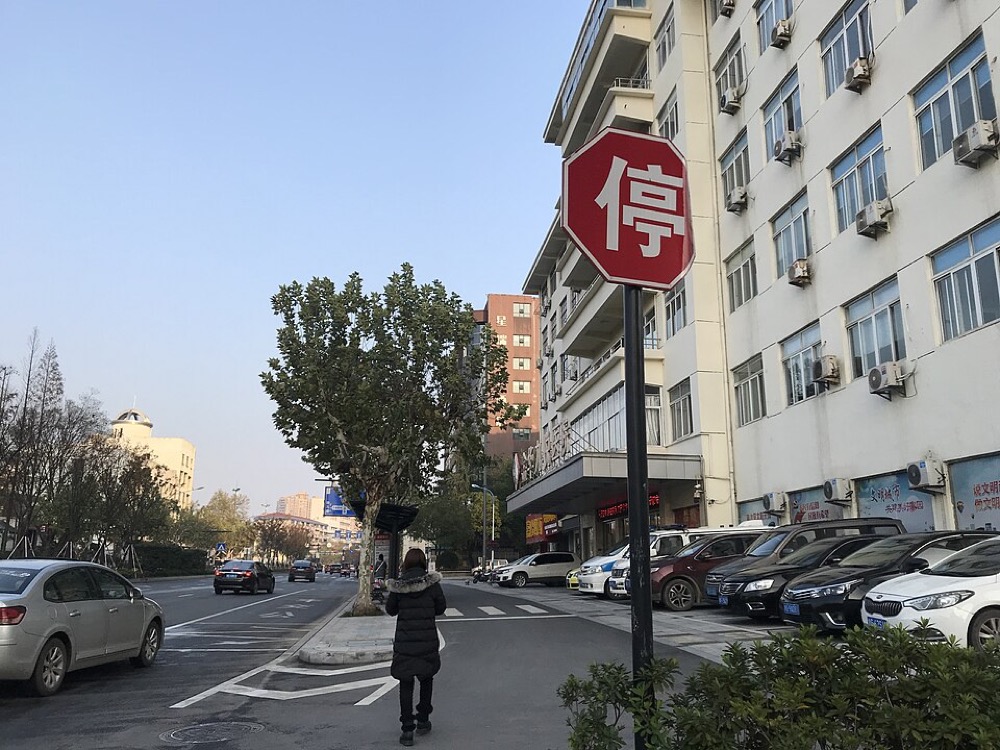
Slow down and give way
Turn left
Park here
Stop
停 (tíng) means to stop. Chinese stop signs are red octagons with 停, like their Western counterparts.
Image: MNXANL, CC BY-SA 4.0, via Wikimedia Commons.
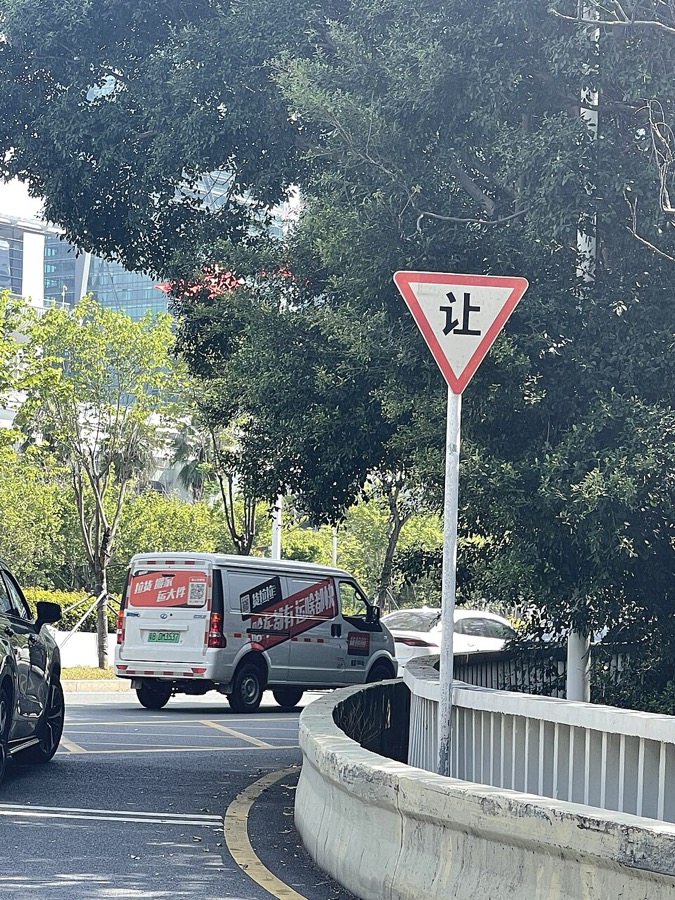
The red-and-white triangular sign in the photo carries the character 让. What does it ask drivers to do?
Stop completely
Give way (yield)
Park
Stop and wait for a signal
让 (ràng) means to give way or let. The inverted red triangle is the yield (give way) sign; the full wording on such signs is 减速让行 (slow down and give way).
Image: Yejianfei, CC0, via Wikimedia Commons.
A shop poster says 买一送一. What does it offer?
Buy one, get one half price
One item per customer
Buy one, get one free
Free delivery
买 = buy; 送 = give as a gift. 买一送一 = buy one and one is given.
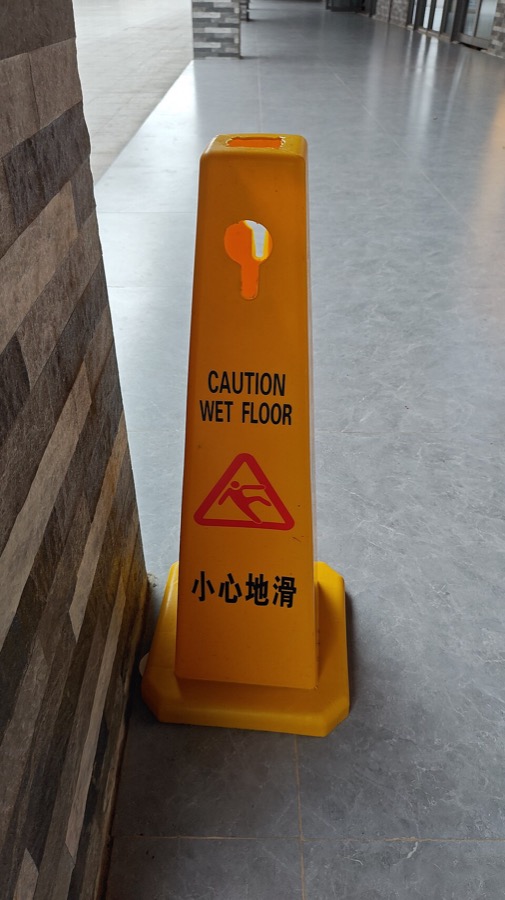
The cone in the photo says 小心地滑. What does it warn about?
Falling objects
A hot surface
A wet, slippery floor
A step down
小心 = be careful; 地 = floor/ground; 滑 = slippery. The English on the cone says CAUTION WET FLOOR.
Image: メイド理世, CC BY-SA 4.0, via Wikimedia Commons.
The sign 满100减20 means:
Spend 100 or more and get 20 off
Spend 20 and get 100 off
100 items cost 20
Buy 100 and pay 120
满 = reach/full; 减 = subtract. 满100减20 = once you reach 100 you subtract 20. A common promotion on shopping apps.
On this train ticket, which two stations does the journey connect?
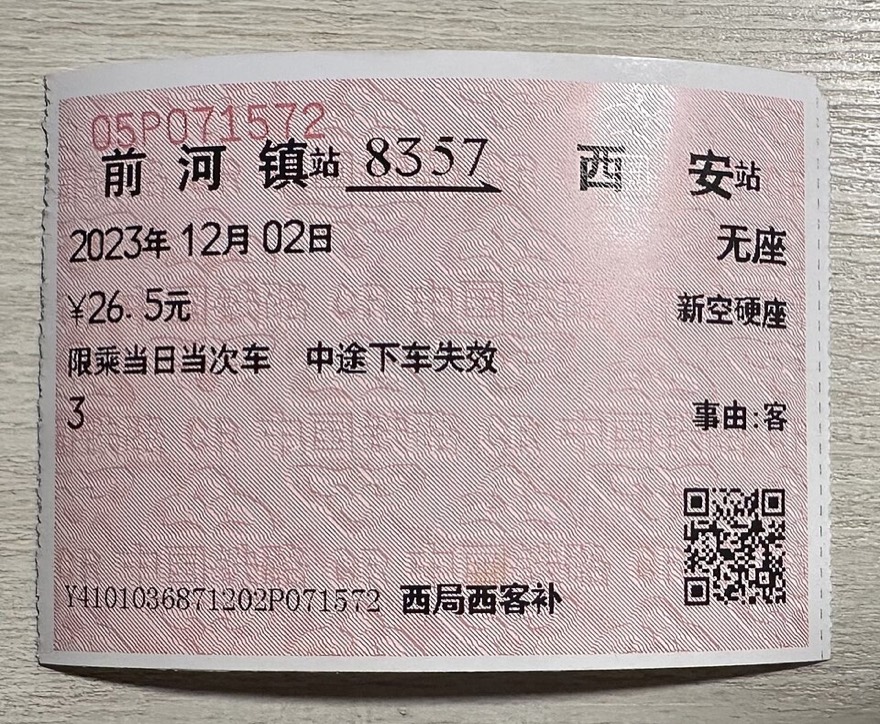
前河镇站 to 西安站
西安站 to 前河镇站
北京站 to 西安站
前河镇站 to 上海站
Tickets read from left to right: the departure station is on the left (前河镇站), the arrow points to the destination on the right (西安站). 站 = station.
Image: P. K. Koo, CC BY-SA 4.0, via Wikimedia Commons.
What date is printed on this ticket (2023年12月02日)?
12 February 2023
2 December 2032
2 December 2023
20 January 2023
Chinese dates go year, month, day: 2023年 12月 02日. 年 = year, 月 = month, 日 = day, so it is 2 December 2023.
Image: P. K. Koo, CC BY-SA 4.0, via Wikimedia Commons.
What does the price ¥26.5元 on the ticket mean?
26.5 yuan
26.5 dollars
265 yuan
2.65 yuan
¥ and 元 both mean yuan; the number is 26.5. 元 (yuán) is the written word; in speech people say 块 (kuài).
Image: P. K. Koo, CC BY-SA 4.0, via Wikimedia Commons.
The ticket says 无座 on the right. What does it tell you?
First class seat
Window seat
Sleeper berth
No seat is assigned (standing ticket)
无 = without; 座 = seat. 无座 tickets let you board without a reserved seat.
Image: P. K. Koo, CC BY-SA 4.0, via Wikimedia Commons.
The ticket also says 限乘当日当次车 中途下车失效. What does this mean?
Valid for a week on any train
Valid only for that day and that train; invalid if you get off midway
Valid for children only
Free for all passengers
限乘 = limited to riding; 当日 = that day; 当次车 = that very train; 中途下车 = getting off midway; 失效 = becomes invalid.
Image: P. K. Koo, CC BY-SA 4.0, via Wikimedia Commons.
The upper signpost in the photo reads 爱晚亭 (Autumn-Admiring Pavilion). What does the last character 亭 mean?
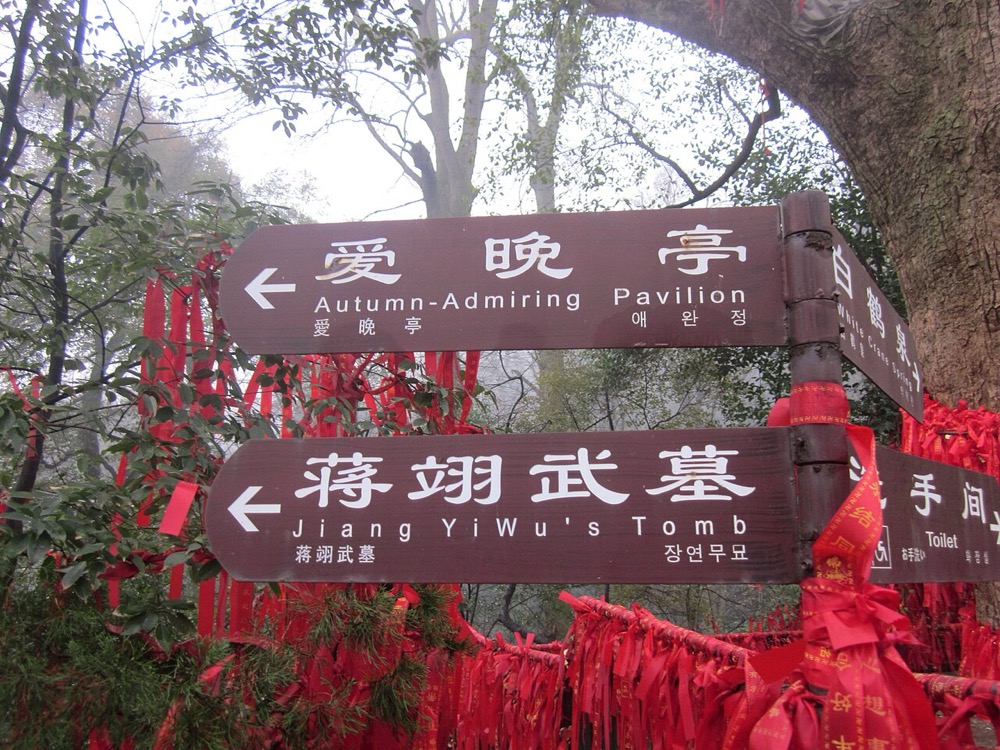
Tomb
Pavilion
Toilet
Spring
亭 (tíng) is a pavilion. The lower sign ends in 墓 (mù), tomb, and the next sign on the right ends in 间: 洗手间 is the toilet.
Image: Huangdan2060, CC0, via Wikimedia Commons.
Which sign do you follow to leave a building?
入口
禁止入内
售票处
出口
出口 (chūkǒu) = exit; 入口 (rùkǒu) = entrance. 出 means out and 入 means in.
A door has the character 拉 on it. What do you do?
Pull
Push
Knock
Slide it sideways
拉 (lā) = pull; 推 (tuī) = push. The two look different: 推 has the hand radical 扌 and 隹 on the right.
The sign 禁止吸烟 means:
No parking
No photography
No smoking
No entry
禁止 = prohibited; 吸烟 = to smoke. 吸 = inhale; 烟 = smoke. 禁止 + verb is the standard pattern for prohibition signs.
A shop door shows 营业时间:09:00–21:00. When does it close?
9 am
12 noon
1 am
9 pm
营业时间 = business hours. China uses the 24-hour clock on signs: 21:00 is 9 pm.
A museum shows 请勿拍照. What is asked of visitors?
Please speak quietly
Please line up
Please do not take photos
Please buy a ticket
请勿 = please do not (a polite formal notice); 拍照 = to take photos.
The sign 紧急出口 marks:
The emergency exit
The ticket window
The toilets
A car park
紧急 = urgent; 出口 = exit. 安全出口 (safety exit) is another common label.
A restaurant door says 暂停营业. What does it mean?
Open 24 hours
Under new management
Closed forever
Temporarily closed
暂停 = pause temporarily; 营业 = do business. If it were permanent the sign would say 停止营业 or 已关门.
Where would you see 售票处?
At a hospital pharmacy
At a station or attraction (ticket office)
At an airport gate
In a bank
售票 = sell tickets; 处 = place, office. 检票口 is the ticket check gate.
