Quiz · Medium
Identification and reasoning questions on mineral properties, igneous, sedimentary and metamorphic rocks, with photo questions.
Which of the following is a mineral?
Obsidian
Quartz
Coal
Granite
Quartz (SiO₂) is a naturally occurring, inorganic, crystalline solid with a definite composition. Obsidian is volcanic glass (no crystal structure), coal is organic, and granite is a rock made of several minerals.
A mineral can scratch calcite (3) but not fluorite (4). Which of these could it be?
Hardness 3.5
Hardness 2
Hardness 5
Hardness 7
It has to be harder than calcite and softer than fluorite, so hardness is between 3 and 4. A copper penny (about 3.5) fits this range.
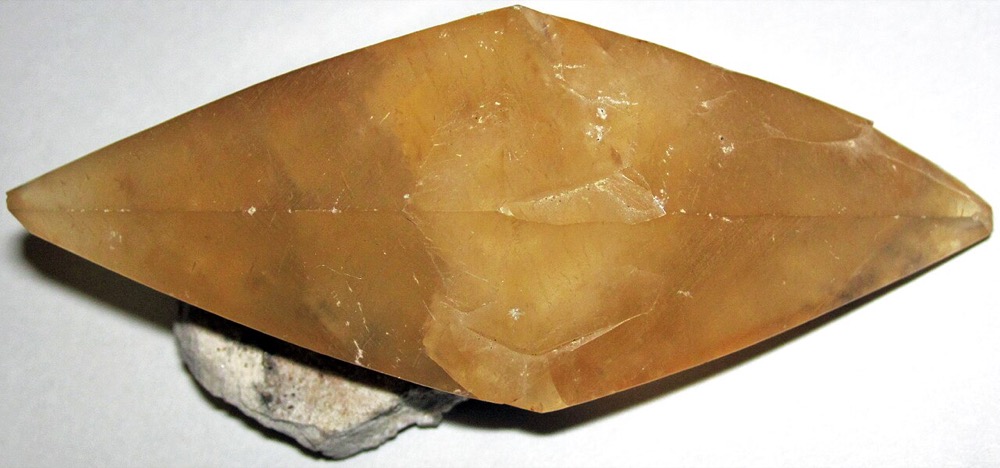
Which test confirms that a specimen of white, rhombohedral crystals is calcite?
It is attracted to a magnet
It leaves a red-brown streak
It tastes salty
It fizzes in dilute hydrochloric acid
Calcite (CaCO₃) effervesces with dilute HCl. A magnet picks out magnetite, a red-brown streak suggests hematite, and a salty taste is halite.
Image: James St. John, CC BY 2.0, via Wikimedia Commons.
Select the correct sequence of increasing metamorphic grade starting from shale.
Slate, phyllite, schist, gneiss
Gneiss, schist, phyllite, slate
Phyllite, slate, gneiss, schist
Schist, slate, gneiss, phyllite
Increasing heat and pressure grows the mica crystals and finally separates minerals into bands (gneiss).
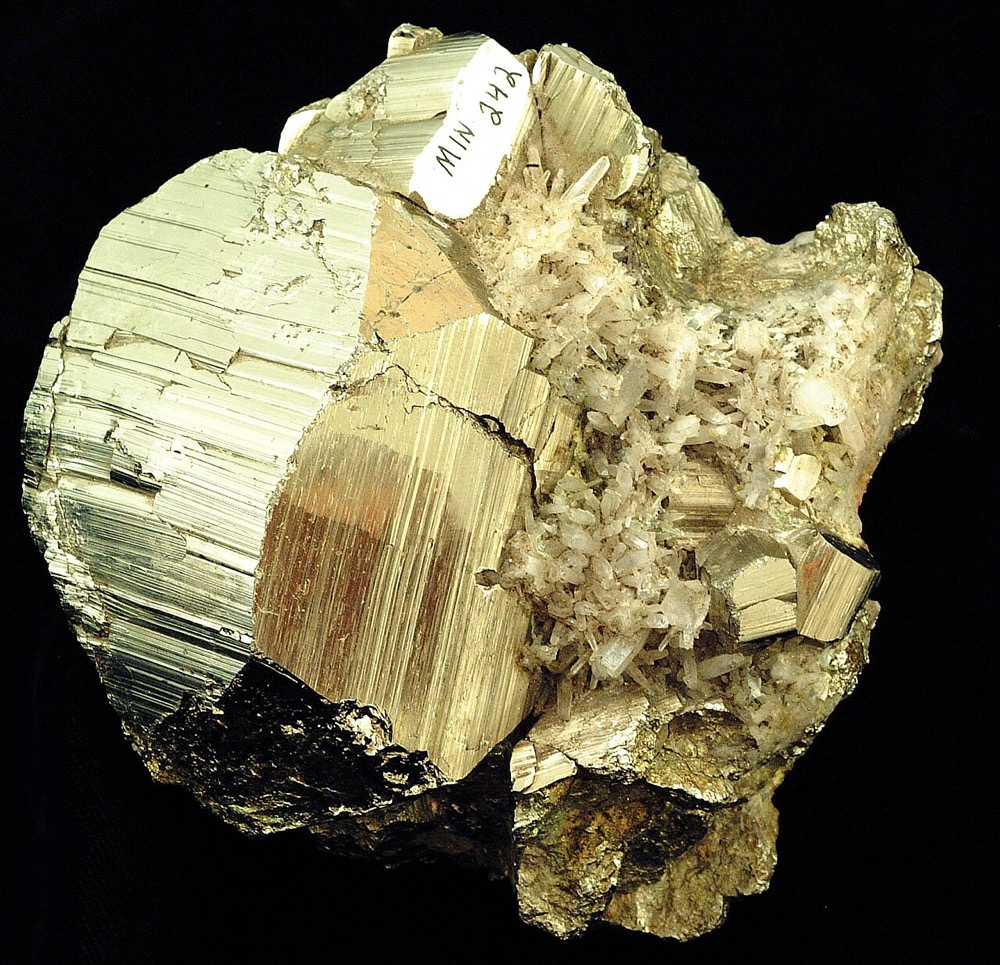
The brassy mineral shown scratches glass, is brittle and leaves a greenish-black streak. What is it?
Gold
Chalcopyrite
Pyrite
Mica
Real gold is soft (2.5-3), malleable and has a golden streak. Pyrite is harder, brittle and gives a greenish-black streak, hence 'fool's gold'.
Image: Darla Sondrol, CC0, via Wikimedia Commons.
Which silicate structure do quartz and the feldspars share?
Isolated tetrahedra
Three-dimensional framework
Single chains
Sheets
In framework silicates all four oxygens of every tetrahedron are shared. Olivine has isolated tetrahedra, pyroxenes have single chains, and micas have sheets.
A rock has interlocking, visible crystals of quartz, pink feldspar and some dark mica. Which rock is it?
Granite
Basalt
Gabbro
Rhyolite
Coarse crystals mean slow cooling at depth (intrusive). A light color and quartz-feldspar mix means felsic composition. Basalt and rhyolite are fine-grained, and gabbro is dark and quartz-free.
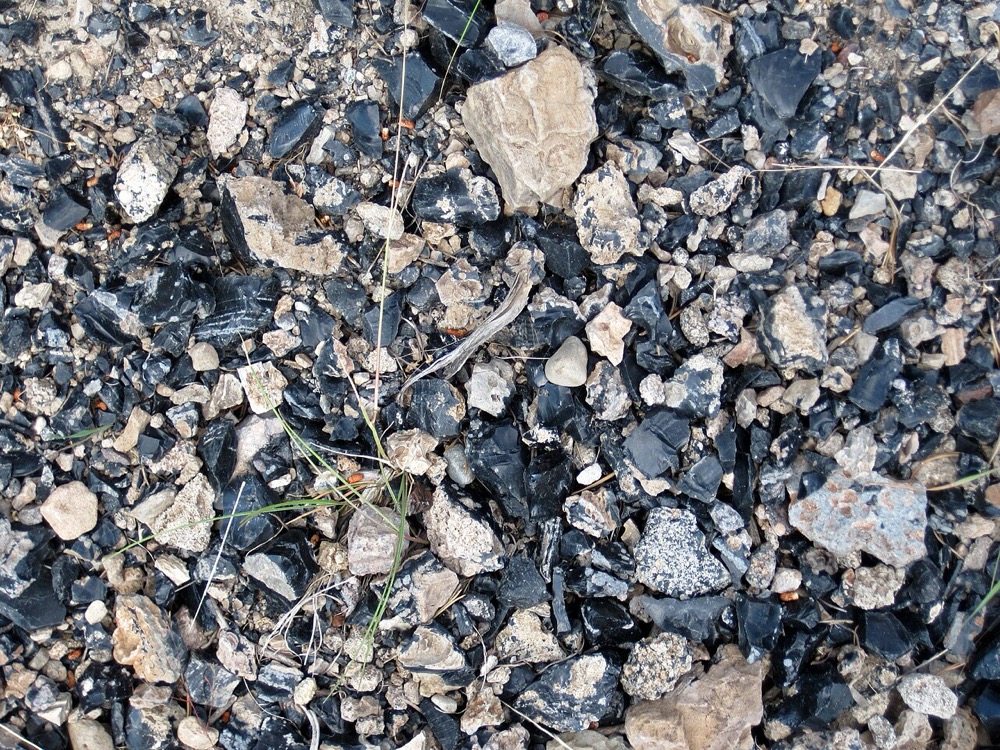
Obsidian has no visible crystals because:
It formed at very high pressure underground
It is made of coal
It is made of sand grains
The lava cooled so fast that atoms could not arrange into crystals
Obsidian is volcanic glass. Rapid cooling of viscous felsic lava prevents crystal growth. It is not formed by compaction of sediment.
Image: James St. John, CC BY 2.0, via Wikimedia Commons.
Which pair is an intrusive rock and its extrusive equivalent?
Granite and basalt
Granite and gabbro
Gabbro and basalt
Rhyolite and scoria
Gabbro and basalt are both mafic; they differ only in cooling rate. Granite pairs with rhyolite, not basalt.
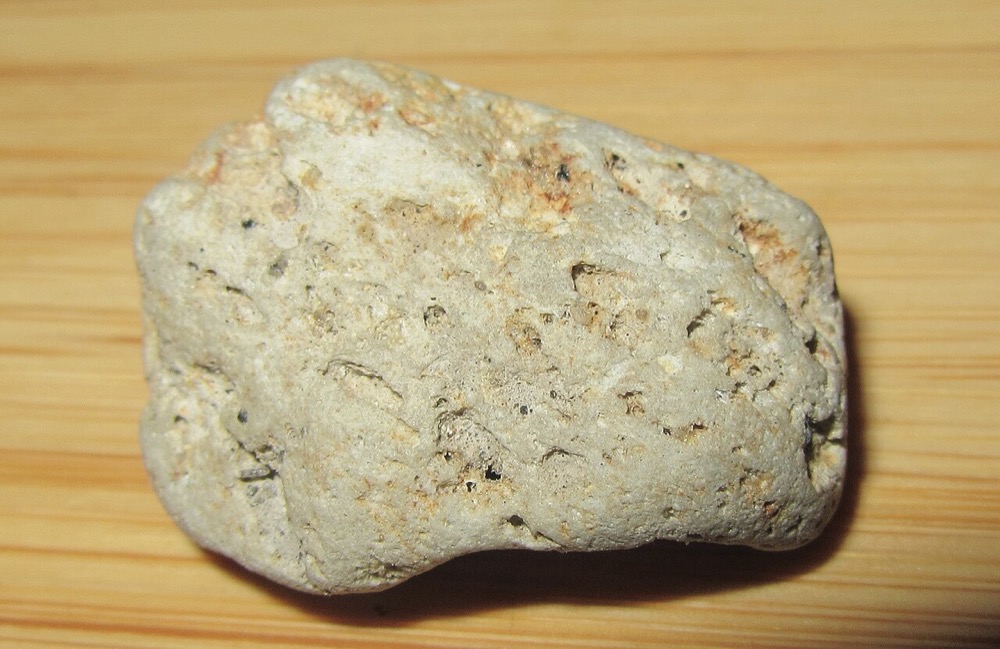
Which of the following floats on water because it is full of gas bubbles?
Scoria
Pumice
Basalt
Obsidian
Pumice has so many vesicles that it can float. Scoria has bigger, fewer holes and is usually denser than water.
Image: ScoriaPumice, CC0, via Wikimedia Commons.
In Bowen's reaction series, which mineral crystallizes first from a cooling mafic magma?
Olivine
Quartz
Muscovite
Orthoclase
Olivine and calcium-rich plagioclase crystallize at high temperatures. Quartz, muscovite and K-feldspar crystallize last, at the lowest temperatures.
Which sedimentary rock is made of rounded gravel-sized pebbles cemented together?
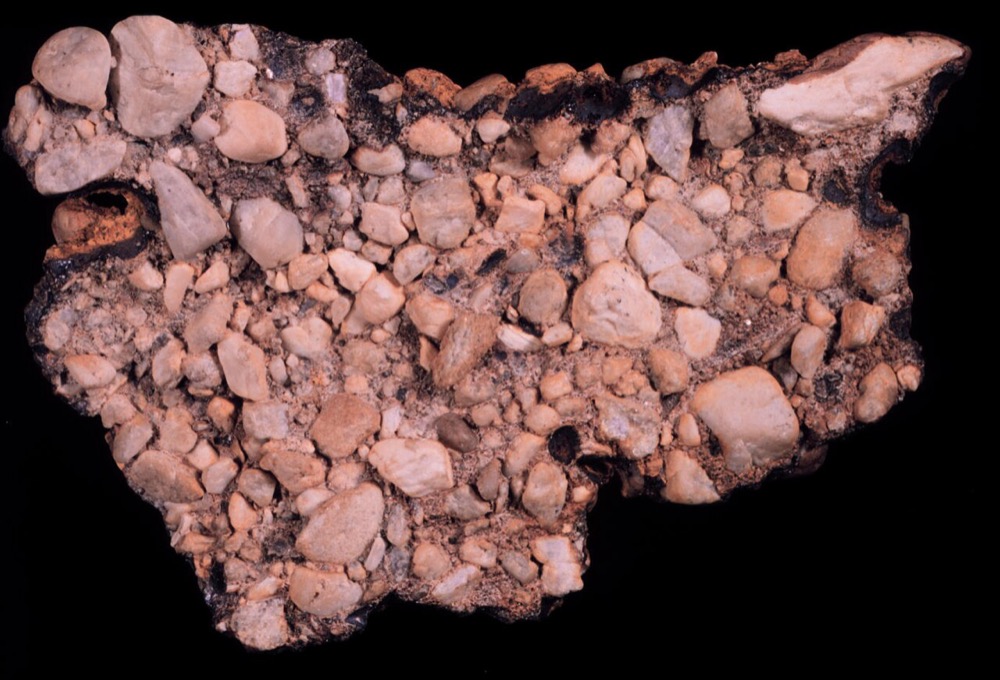
Breccia
Sandstone
Shale
Conglomerate
Conglomerate has rounded clasts. Breccia has angular clasts, sandstone is sand-sized and shale is clay-sized.
Image: Dexter Perkins, CC0, via Wikimedia Commons.
A thinly layered, fine-grained rock that splits into flat chips and contains plant fossils was likely deposited:
In a fast mountain stream
On a windy dune
In quiet water such as a lake or deep ocean basin
In a magma chamber
Clay and silt settle only where the water is still, producing shale. Fast currents leave coarse sediment.
Which sedimentary rock is made mostly of microscopic marine shells and fizzes in acid?
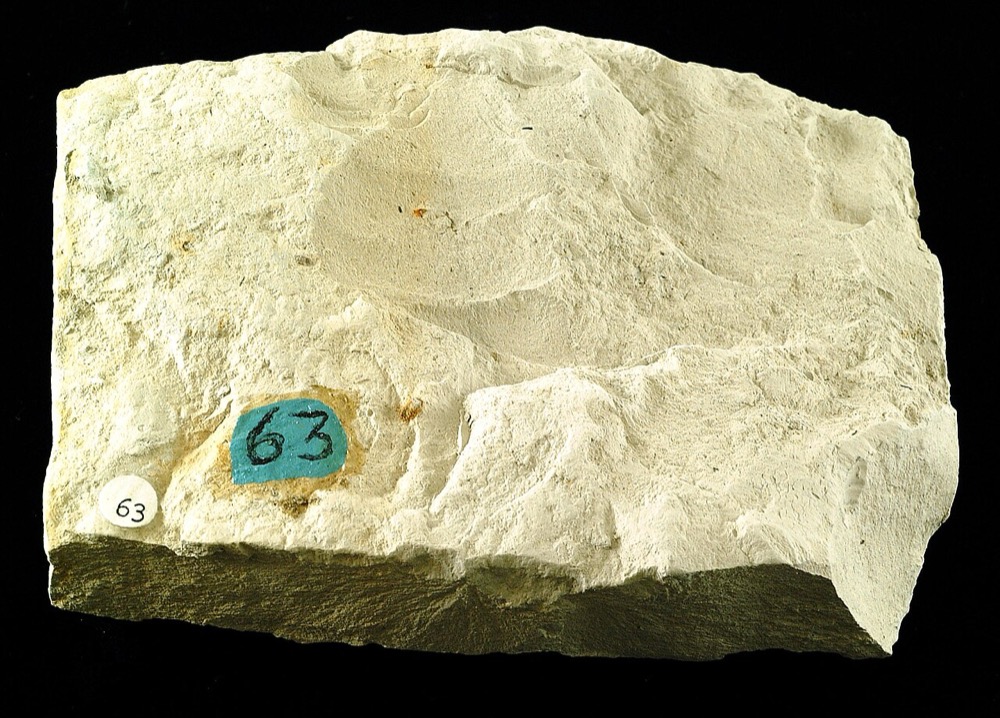
Conglomerate
Chalk
Rock salt
Sandstone
Chalk is a biochemical limestone built from coccolithophore plates of calcite, which react with acid. Rock salt is halite and dissolves in water.
Image: Mike Davis, CC0, via Wikimedia Commons.
What is the photographed rock, and what was its parent rock?
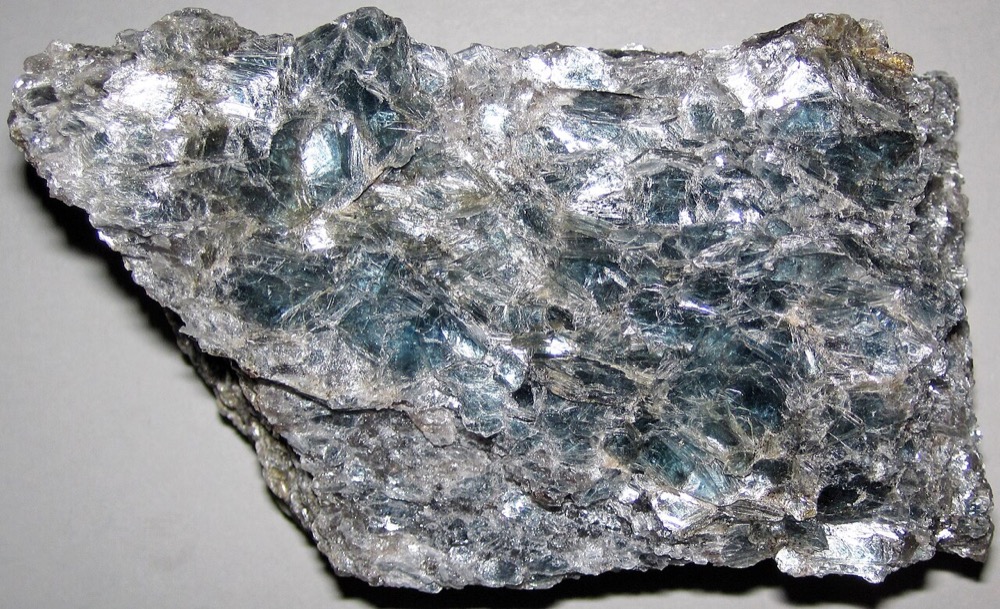
Marble, formed from limestone
Granite, formed from magma
Pumice, formed from lava
Schist, formed from shale or other mudrock
Visible, aligned mica flakes (a glittery, scaly look) indicate schist. Marble is made of interlocking calcite grains, and pumice and granite are igneous.
Image: James St. John, CC BY 2.0, via Wikimedia Commons.
Quartzite differs from sandstone because it:
Contains fossils
Is made of calcite
Breaks through its grains because they have recrystallized
Has foliation
Metamorphism fuses the quartz grains together. A sandstone breaks around grains at the cement; quartzite breaks across them. It is non-foliated.
Which rock is non-foliated?
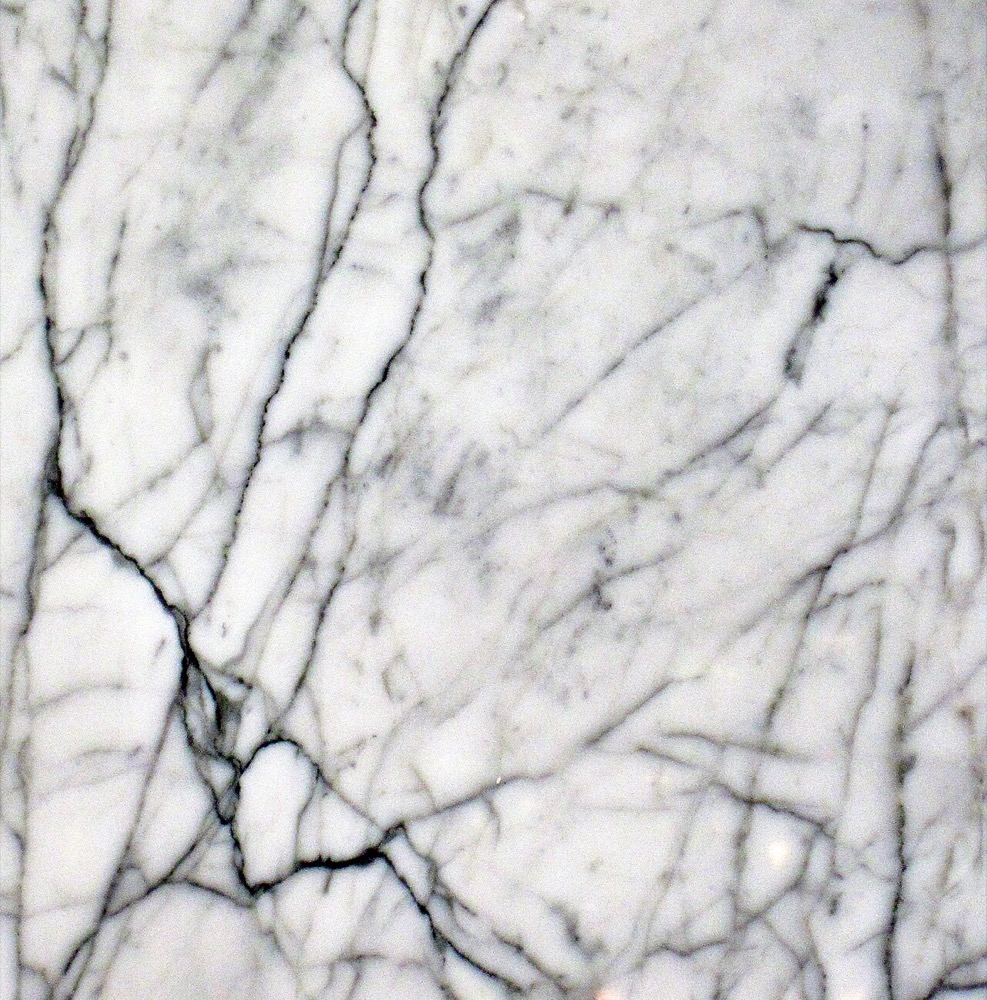
Gneiss
Marble
Slate
Schist
Marble is a recrystallized mass of calcite crystals without alignment. Slate, schist and gneiss are all foliated.
Image: James St. John, CC BY 2.0, via Wikimedia Commons.
In the rock cycle, which process changes sediments into sedimentary rock?
Lithification (compaction and cementation)
Crystallization
Metamorphism
Melting
Compaction squeezes out water and cementation glues grains together. Crystallization forms igneous rock, and metamorphism and melting need heat.
In the diagram, what is the label for the process that turns magma into igneous rock?
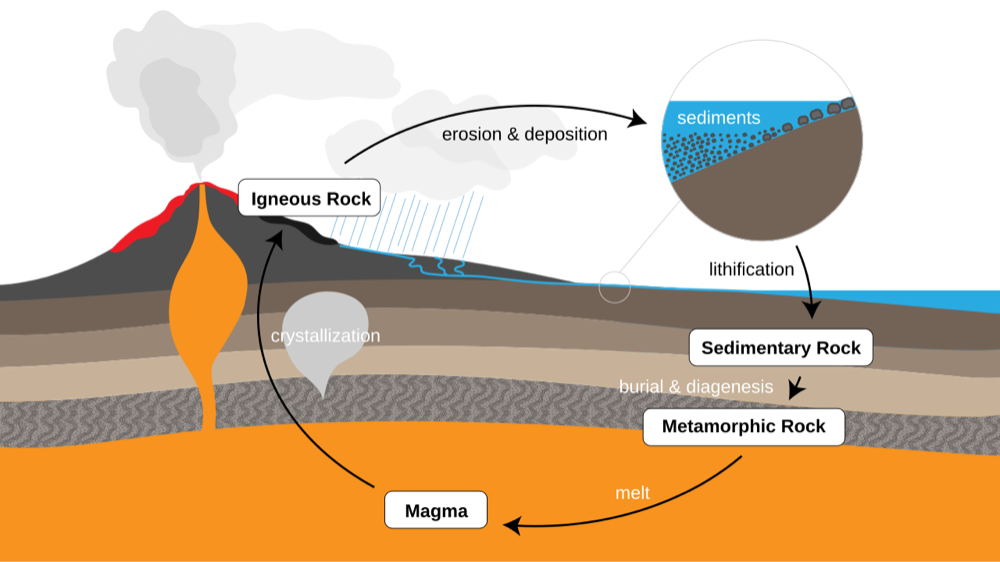
Lithification
Erosion and deposition
Melting
Crystallization
Cooling magma crystallizes into minerals. Melting is the reverse; erosion and deposition make sediments.
Image: Carie Frantz, CC BY-SA 4.0, via Wikimedia Commons.
A student claims every rock must first become a sedimentary rock before it becomes metamorphic. Why is that incorrect?
Metamorphic rock can only form from magma
Sedimentary rocks cannot be changed by heat
Igneous and sedimentary rocks can be metamorphosed directly, with no intermediate steps
Rocks do not change over time
The rock cycle has many pathways. Any rock can be metamorphosed, melted or weathered depending on conditions.
Which mineral has hardness 7 and conchoidal fracture and is the most resistant common mineral to weathering?
Calcite
Quartz
Olivine
Gypsum
Quartz is hard and chemically stable, so it survives weathering and becomes the main mineral of sand. Olivine weathers quickly and calcite dissolves in acid.
A mineral cleaves into thin flexible sheets in one direction. Which is it?
Mica
Halite
Calcite
Garnet
Mica has perfect one-direction cleavage owing to its sheet silicate structure. Halite has cubic cleavage, calcite rhombic, and garnet has none.
True or false: marble fizzes with dilute HCl.
False
True
Marble is metamorphosed limestone made of calcite, which fizzes in dilute acid. Quartzite would not fizz.
Image: James St. John, CC BY 2.0, via Wikimedia Commons.
