Quiz · Easy
Mixed picture and word questions on food, home, body, time and travel, including traps like halb vier, der See and das Gift.
What is this in German?
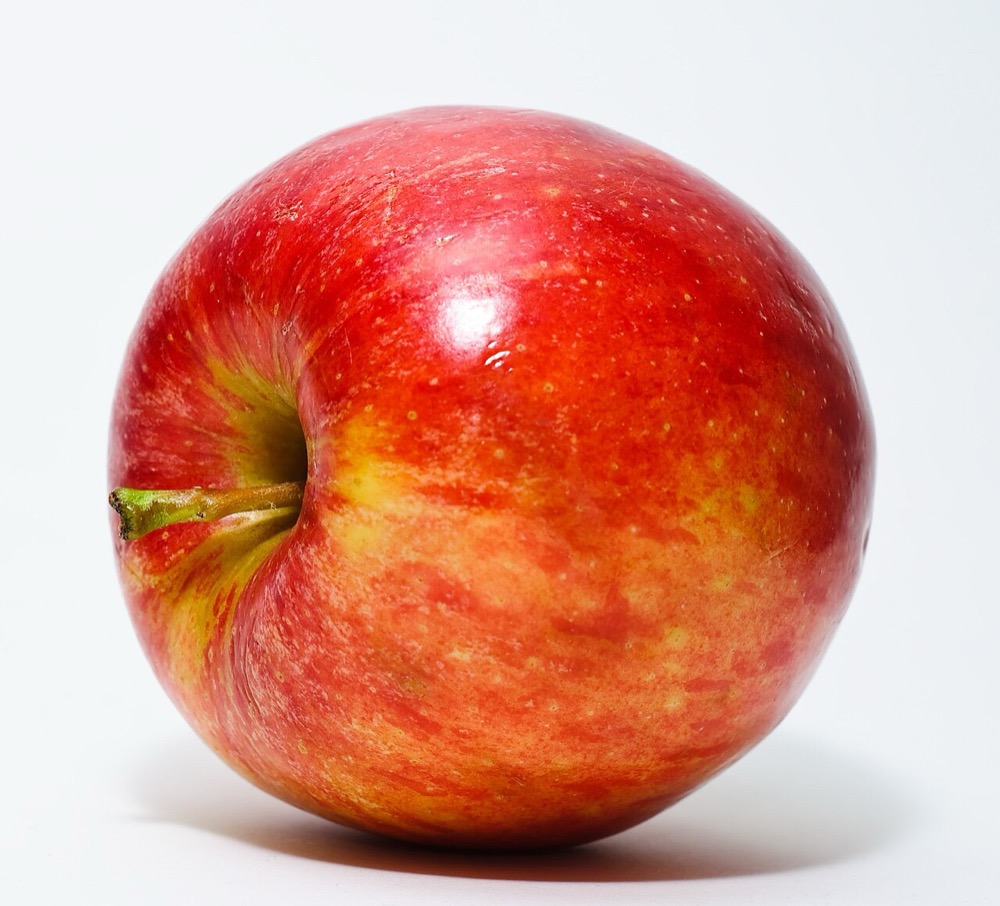
die Birne
die Tomate
der Apfel
die Orange
It is der Apfel (masculine), plural die Äpfel. Die Birne is the pear, which has a different shape. Image: Abhijit Tembhekar from Mumbai, India, CC BY 2.0, via Wikimedia Commons.
Which picture shows das Pferd?
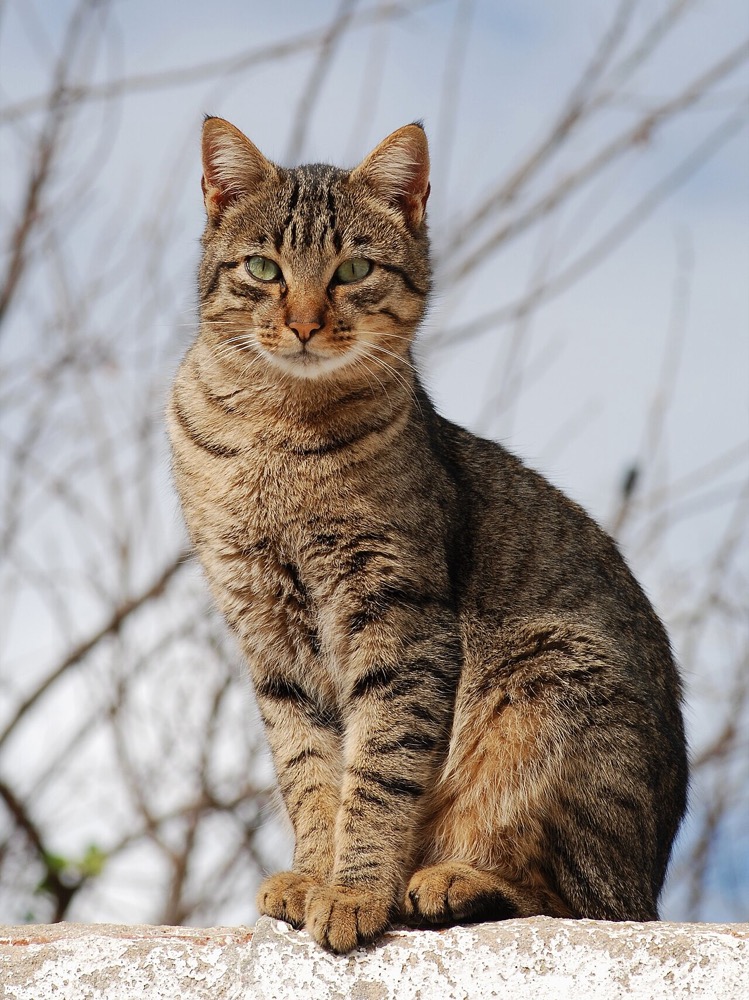
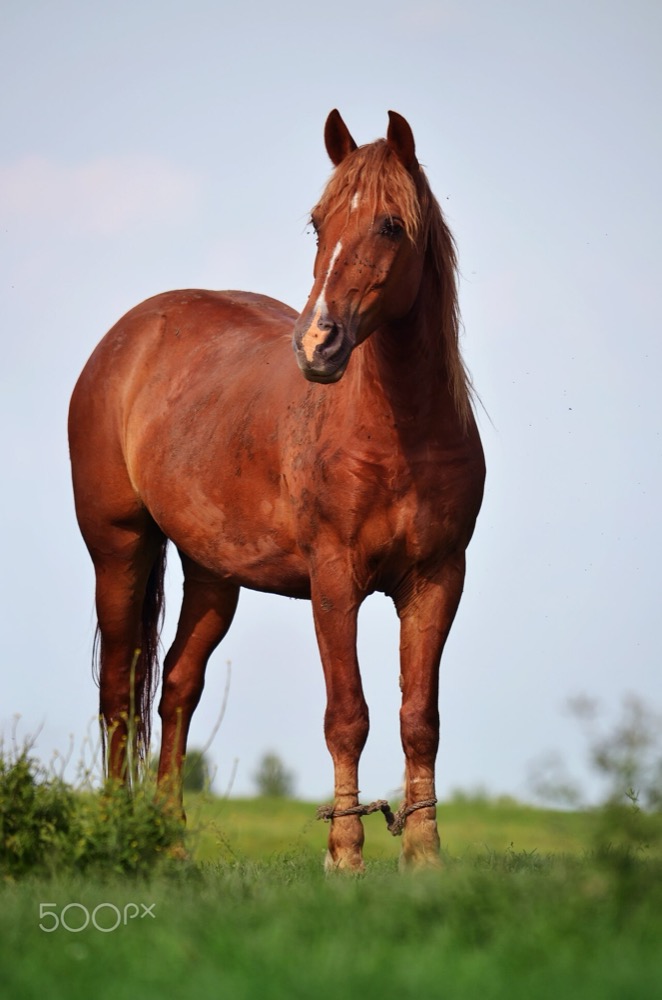
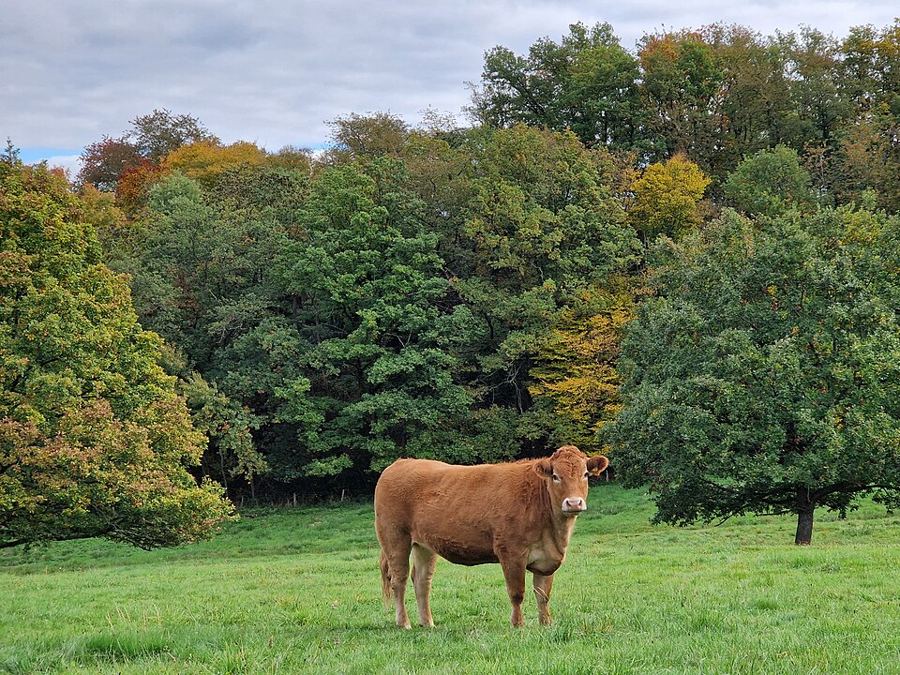

Das Pferd is the horse. The others are die Katze (cat), die Kuh (cow) and der Hund (dog). Image: Alvesgaspar, CC BY-SA 3.0, via Wikimedia Commons.
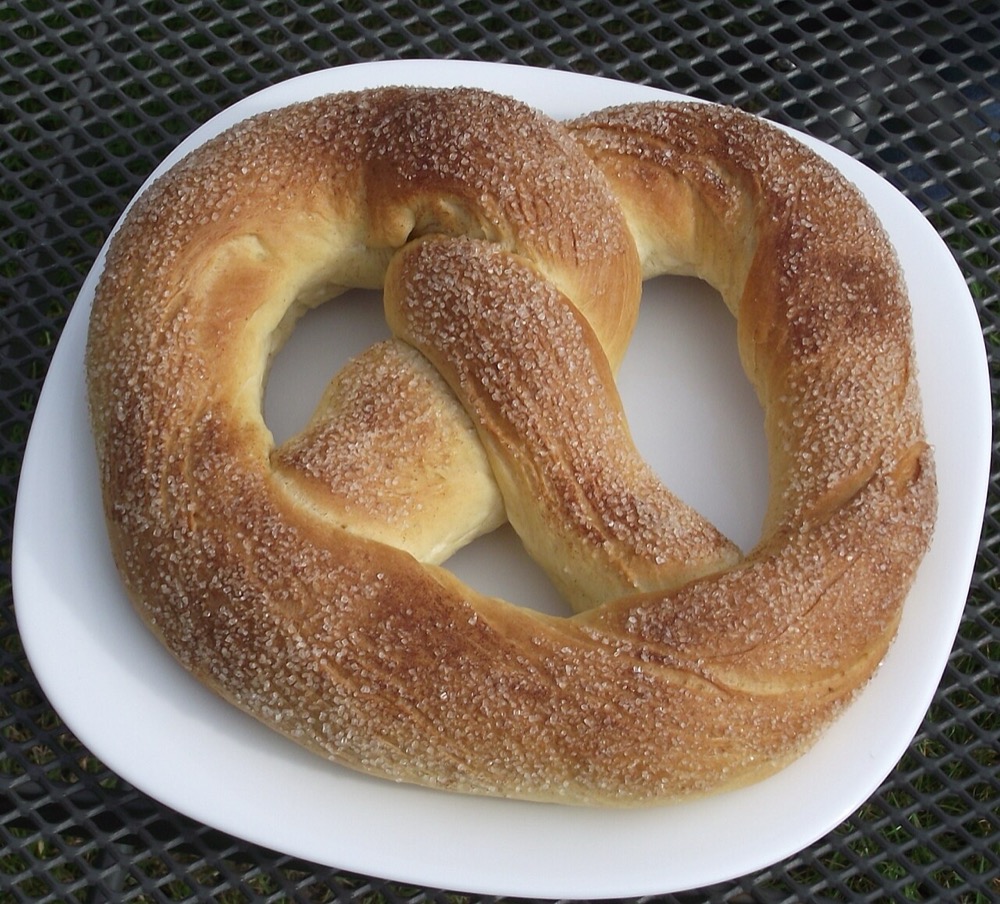
This baked snack is typical of Bavaria and southern Germany. What is it called?
die Brezel
das Brötchen
der Lebkuchen
die Nudel
Die Brezel (also die Breze in Bavaria) is the pretzel. Das Brötchen is a plain bread roll and der Lebkuchen is a spiced Christmas gingerbread.
Which article goes with Mädchen (girl)?
die
der
den
das
Das Mädchen: all nouns ending in the diminutive -chen are neuter, even if they refer to a female person. Die would be the logical guess but the suffix wins.
Which word means 'the lake'?
die See
der See
das Meer
der Fluss
Der See is a lake. Die See is the sea (as in die Nordsee), and das Meer is the sea or ocean. Articles change the meaning here.
What does the sentence 'Das ist Gift!' mean?
That is a gift!
That is poison!
That is a present!
That is a trick!
Das Gift means poison. A present is das Geschenk. English speakers often fall for this false friend.
What time is 'halb vier'?
4:30
3:45
4:15
3:30
Halb vier means half (way) to four, so 3:30. This is a classic trap for English speakers, who expect 4:30.
Which picture shows die Straßenbahn?
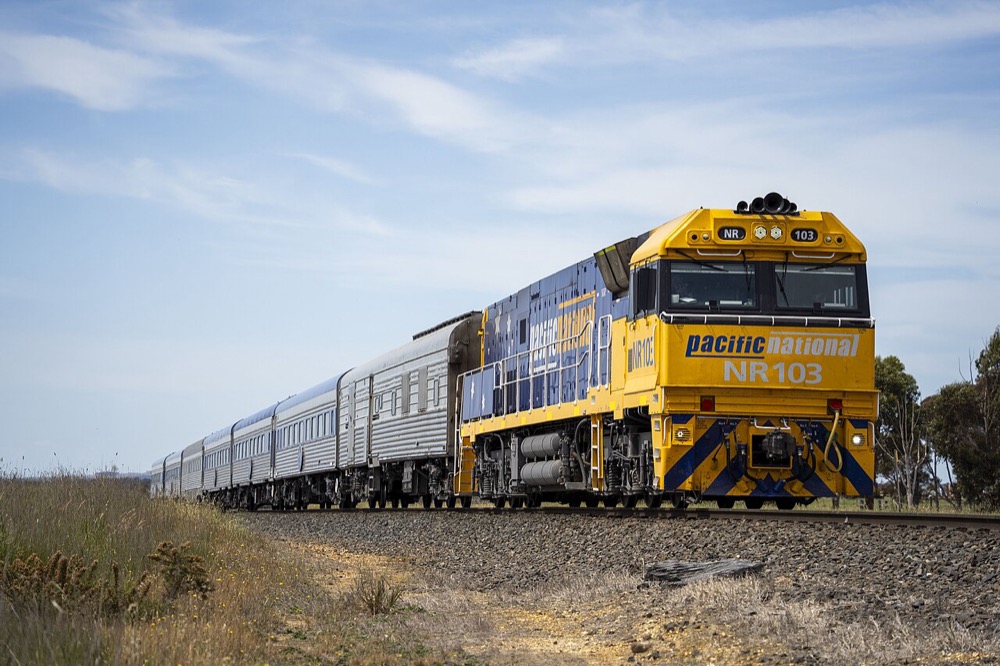
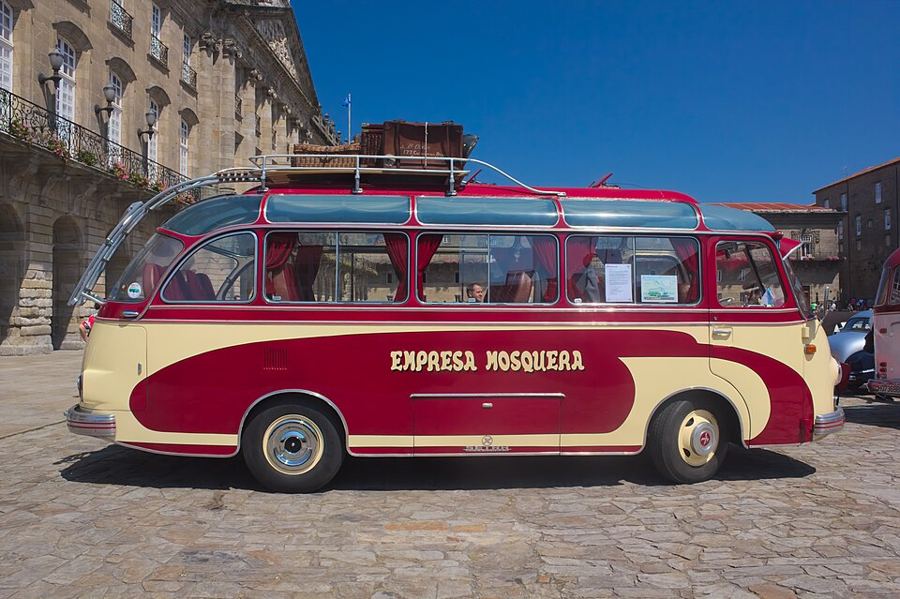
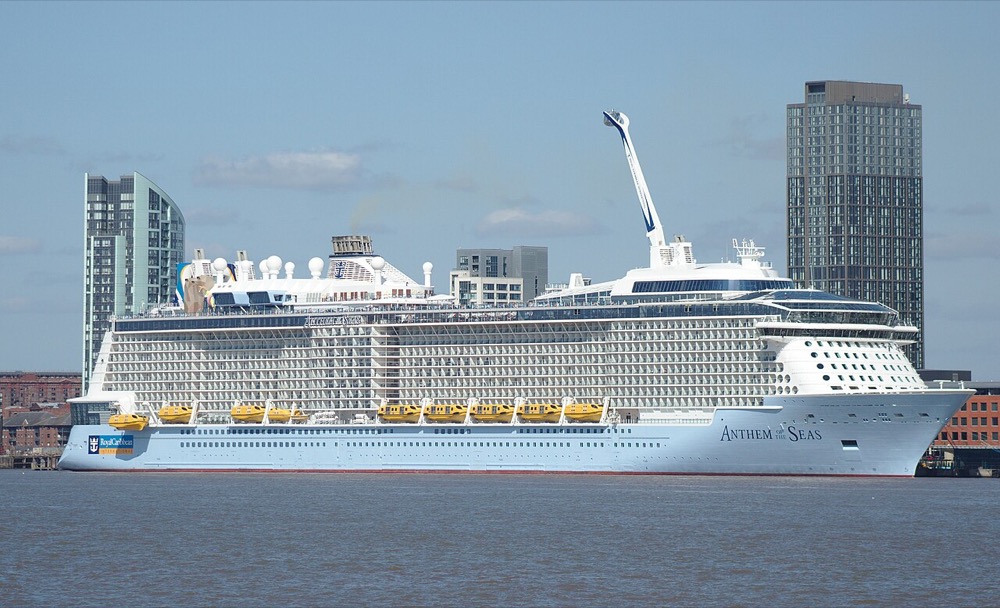
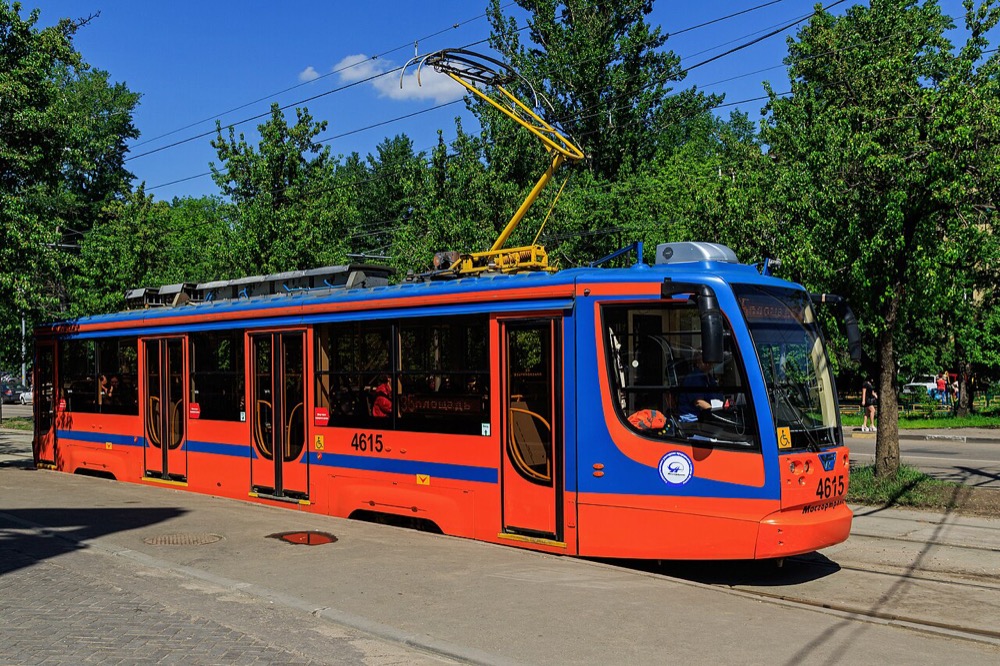
Die Straßenbahn is the tram. The other pictures show der Zug (train), der Bus and das Schiff (ship). Image: Tomoyn, CC BY 4.0; Xosema, CC BY-SA 4.0; Rodhullandemu, CC BY-SA 4.0; A.Savin, CC BY-SA 3.0, via Wikimedia Commons.
What is this popular German street food?
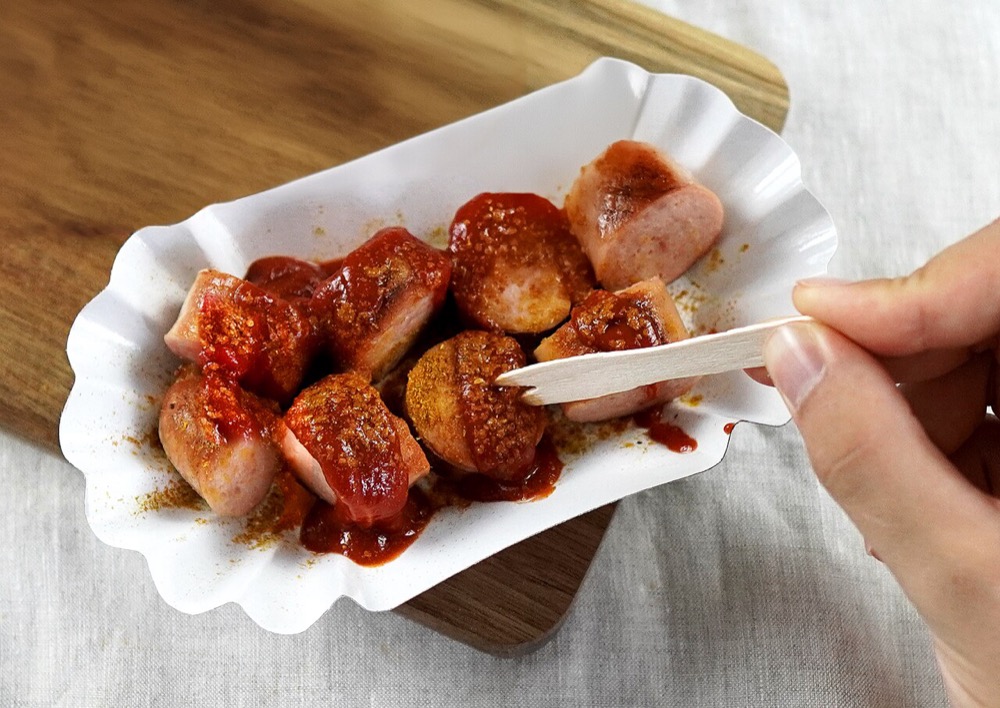
die Currywurst
der Apfelstrudel
die Spätzle
der Kartoffelsalat
Die Currywurst is sliced sausage with curry ketchup, famous in Berlin and the Ruhr area. Image: Richard Mischau, Britta Mischau, CC BY-SA 4.0, via Wikimedia Commons.
Which word is NOT a body part?
der Rücken
das Knie
der Rock
der Magen
Der Rock is the skirt. Der Rücken is the back, das Knie the knee and der Magen the stomach.
Which German word means 'to get, to receive'?
werden
bleiben
bekommen
geben
Bekommen means to get or receive. Werden means to become (the trap for English speakers), bleiben means to stay and geben means to give.
What is the plural of das Kind?
die Kinder
die Kinds
die Kinden
die Kinde
Das Kind has the irregular plural die Kinder (-er). Many neuter nouns use -er, often with an umlaut: das Buch, die Bücher.
Where do you buy medicine such as aspirin or prescription drugs?
in der Drogerie
in der Bäckerei
in der Bibliothek
in der Apotheke
Die Apotheke is the pharmacy. Die Drogerie sells toiletries and cosmetics, and die Bibliothek is the library, not a bookstore (that is die Buchhandlung).
Which word means 'sad'?
wütend
traurig
müde
stolz
Traurig is sad. Wütend is furious, müde is tired and stolz is proud.
Which number is 'siebzehn'?
7
17
16
70
Siebzehn is 17 (sieben + zehn, with the -en dropped). 16 is sechzehn and 70 is siebzig.
Which verb means 'to try on' clothing?
probieren
tragen
anziehen
anprobieren
Anprobieren means to try on. Probieren is to taste or try, tragen is to wear and anziehen is to put on.
How do you say 'I have a cold' (the illness)?
Ich habe eine Erkältung.
Ich habe kalt.
Ich bin kälter.
Ich habe Kälte.
Eine Erkältung is a cold (illness). Mir ist kalt means I feel cold. Ich habe kalt is not German.
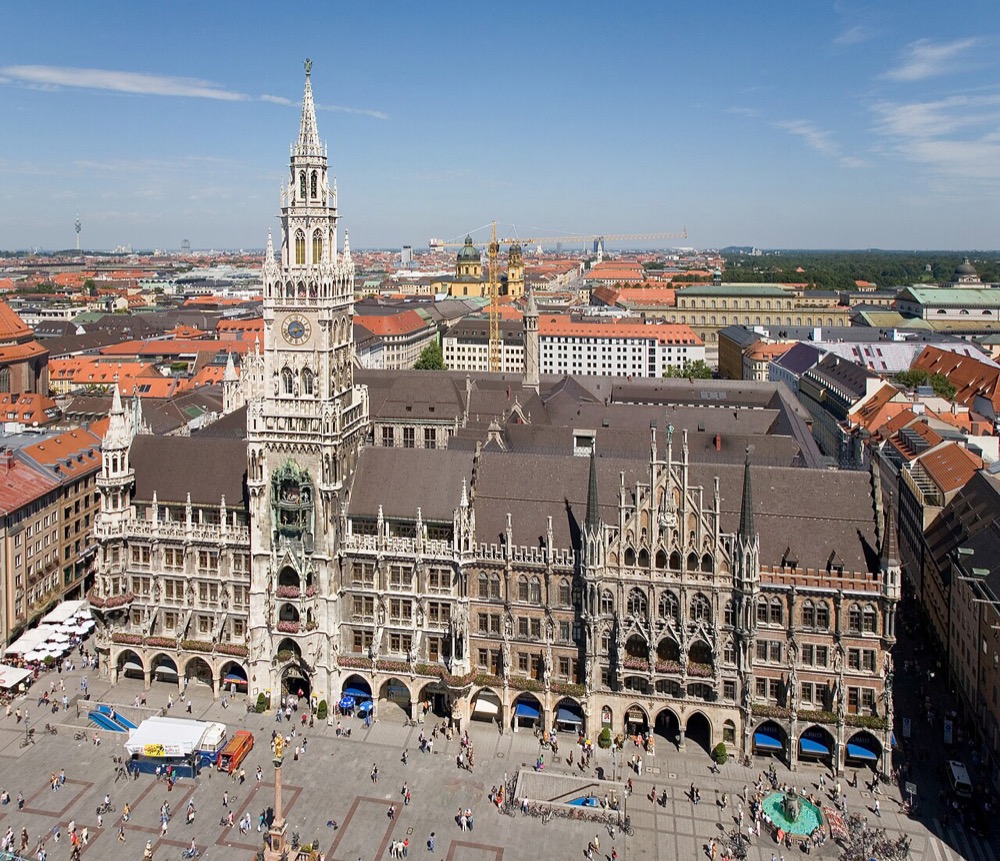
What is this building on Munich's Marienplatz?
die Kirche
das Museum
das Rathaus
das Kaufhaus
Das Rathaus is the town hall. This is the Neues Rathaus in Munich, famous for its Glockenspiel. Image: Diliff, CC BY-SA 3.0, via Wikimedia Commons.
True or false: die Bank has the same plural whether it means the bench or the financial institution.
True
False
False. Bench: die Bänke. Bank (financial): die Banken.
What does 'der Chef' mean?
the chef
the cook
the boss
the cashier
Der Chef is the boss. A chef is der Koch (female: die Köchin).
Complete: Ich esse ein Stück ___.
Kuchen
Kuche
Kuchens
Kuchen's
Der Kuchen (cake) is a masculine noun: ein Stück Kuchen. No ending is added after Stück (partitive without genitive).
What is der Staubsauger?
the lawnmower
the hair dryer
the washing machine
the vacuum cleaner
Staub (dust) + Sauger (sucker) = the vacuum cleaner. The lawn mower is der Rasenmäher.
Which season is 'der Herbst'?
spring
autumn
summer
winter
Der Herbst is autumn (fall). Spring is der Frühling, summer der Sommer, winter der Winter.
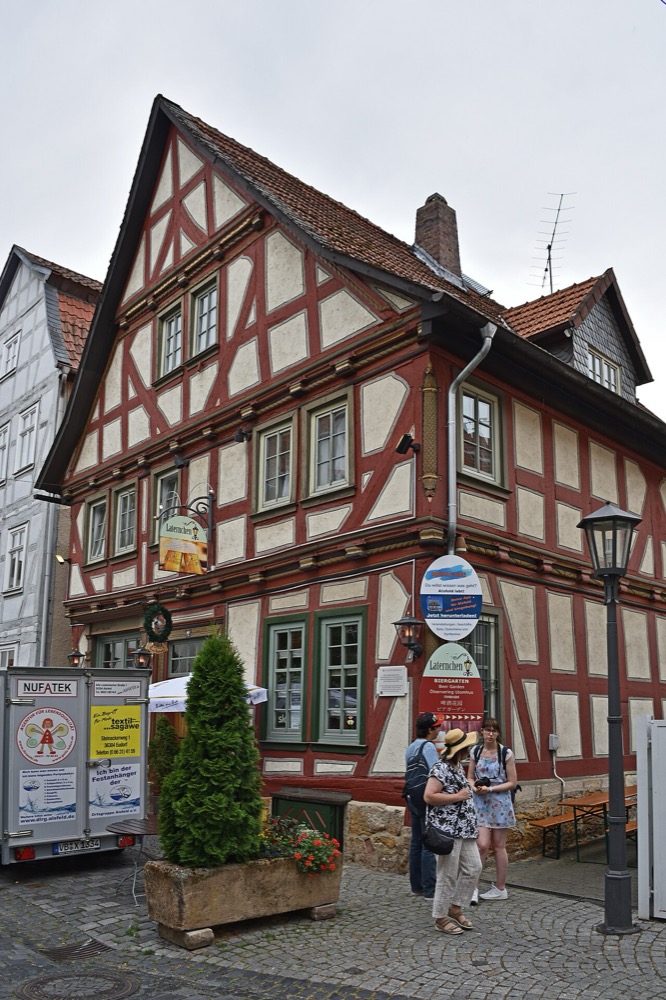
What is this traditional type of house called?
das Hochhaus
das Fachwerkhaus
die Burg
das Reihenhaus
Das Fachwerkhaus is a half-timbered house, typical in many old German towns. Image: Ymblanter, CC BY-SA 4.0, via Wikimedia Commons.
Which word means 'the weekend'?
die Woche
der Feierabend
der Urlaub
das Wochenende
Das Wochenende = weekend. Die Woche is the week, der Feierabend the end of the working day, and der Urlaub a vacation.
What is the German word for 'the key'?
der Schlüssel
die Klingel
das Schloss
der Griff
Der Schlüssel is the key. Das Schloss means lock (and also castle). Die Klingel is the doorbell.
