Quiz · Medium
Mining methods, fossil fuels and fracking, nuclear and renewable power, soil horizons and erosion, aquifers and irrigation, forestry and fisheries.
Which of the following is a perpetual resource?
Soil
Natural gas
Solar energy
Groundwater
Solar energy is effectively unlimited on human timescales. Groundwater and soil are renewable only if used sustainably; natural gas is nonrenewable.
A copper mine has 600 million tonnes of reserves and produces 15 million tonnes per year. At the current rate, about how many years will the reserves last?
40
90
9
4
R/P = 600 / 15 = 40 years. 9 and 90 come from mis-calculating the ratio.
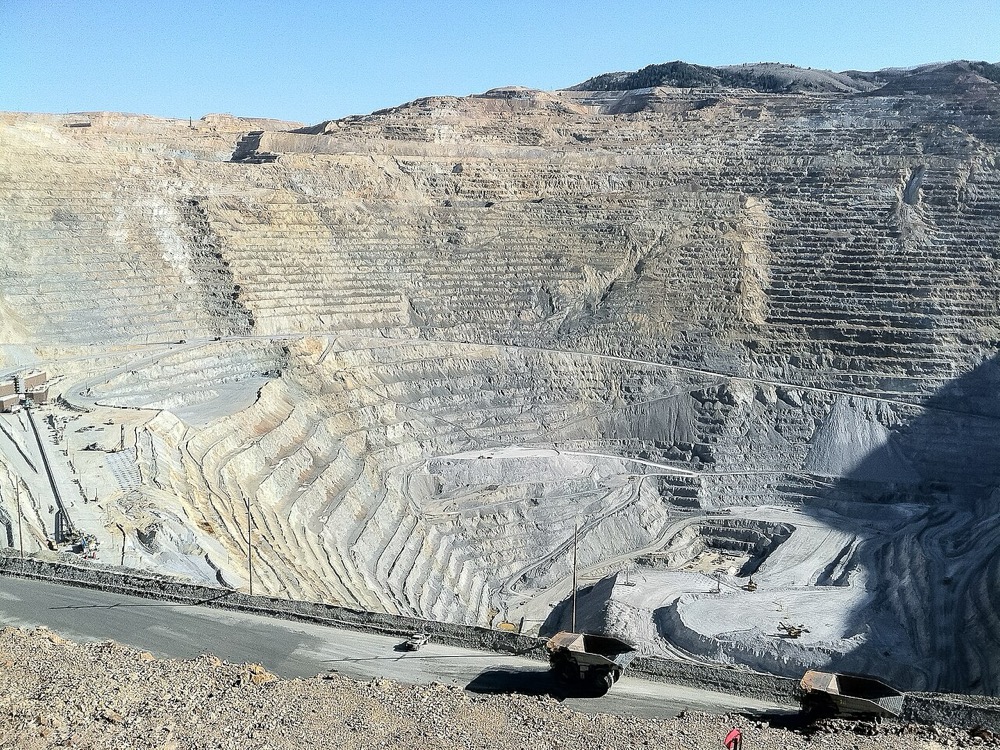
Which mining method is shown in the image?
Placer mining
Subsurface shaft mining
Mountaintop removal
Open-pit mining
Bingham Canyon, Utah, is a huge open-pit copper mine, mined by cutting benches into the ground. Image: David Ratledge, CC BY 4.0.
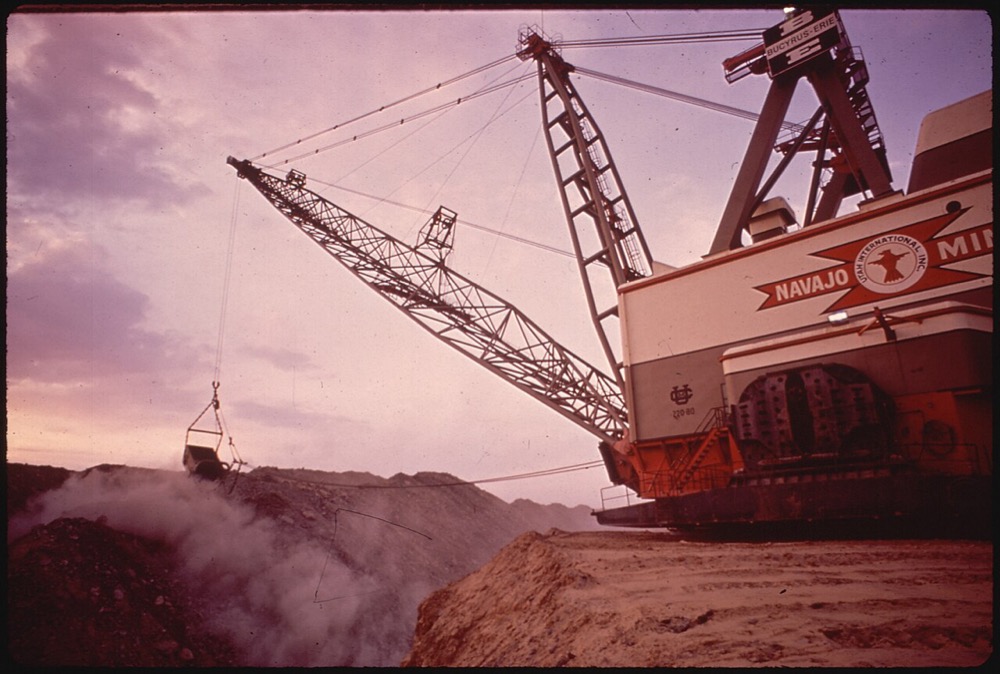
A dragline removing long strips of soil and rock to reach a shallow coal seam is an example of:
Hydraulic fracturing
Strip mining
In situ leaching
Underground longwall mining
Strip mining exposes shallow seams by removing overburden in strips. Image: Lyntha Scott Eiler, public domain.
Acid mine drainage is MOST directly caused by:
Burning coal in power plants
Oxidation of sulfide minerals such as pyrite exposed to air and water
Acid rain falling on mine tailings only
Mixing fertilizer with groundwater
Pyrite oxidizes to sulfuric acid, which dissolves metals and acidifies streams.
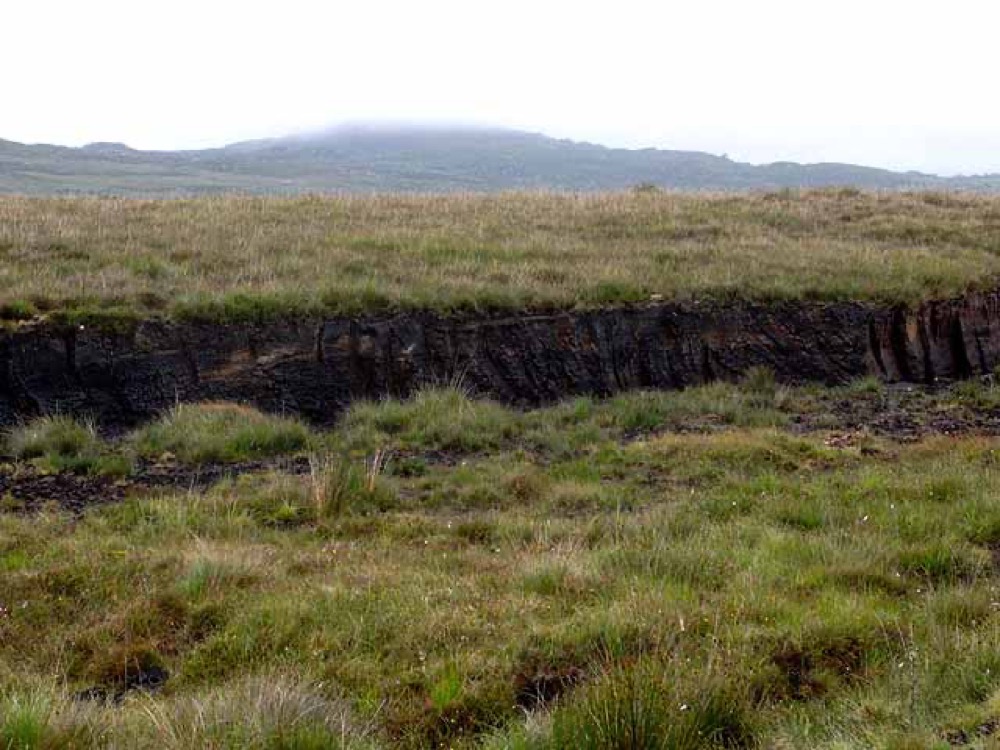
Which sequence correctly lists coal ranks from lowest to highest carbon content?
Lignite, peat, anthracite, bituminous
Anthracite, bituminous, lignite, peat
Bituminous, peat, lignite, anthracite
Peat, lignite, bituminous, anthracite
Coal forms as heat and pressure drive off water and increase carbon content.
Compared with burning coal, burning natural gas for electricity produces:
Less CO2 per unit of energy and almost no SO2 or mercury
More mercury
The same CO2
More SO2 per unit of energy
Gas is the cleanest fossil fuel, though leaks of methane can offset some of its benefit.
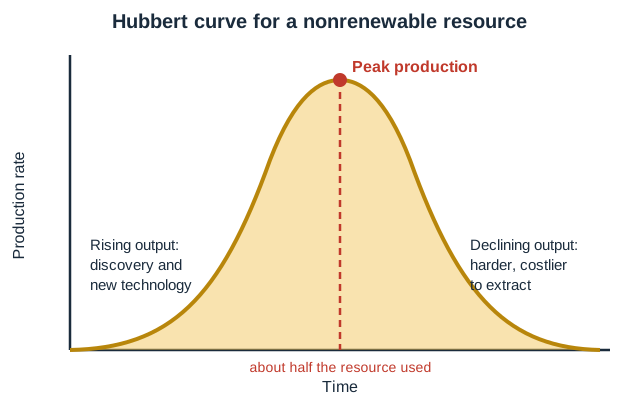
The curve shows production of a nonrenewable resource over time. The peak in production happens when:
Prices fall to zero
The resource has run out
About half of the total recoverable resource has been extracted
New discoveries stop
Hubbert predicted production peaks near the midpoint of depletion, then declines.
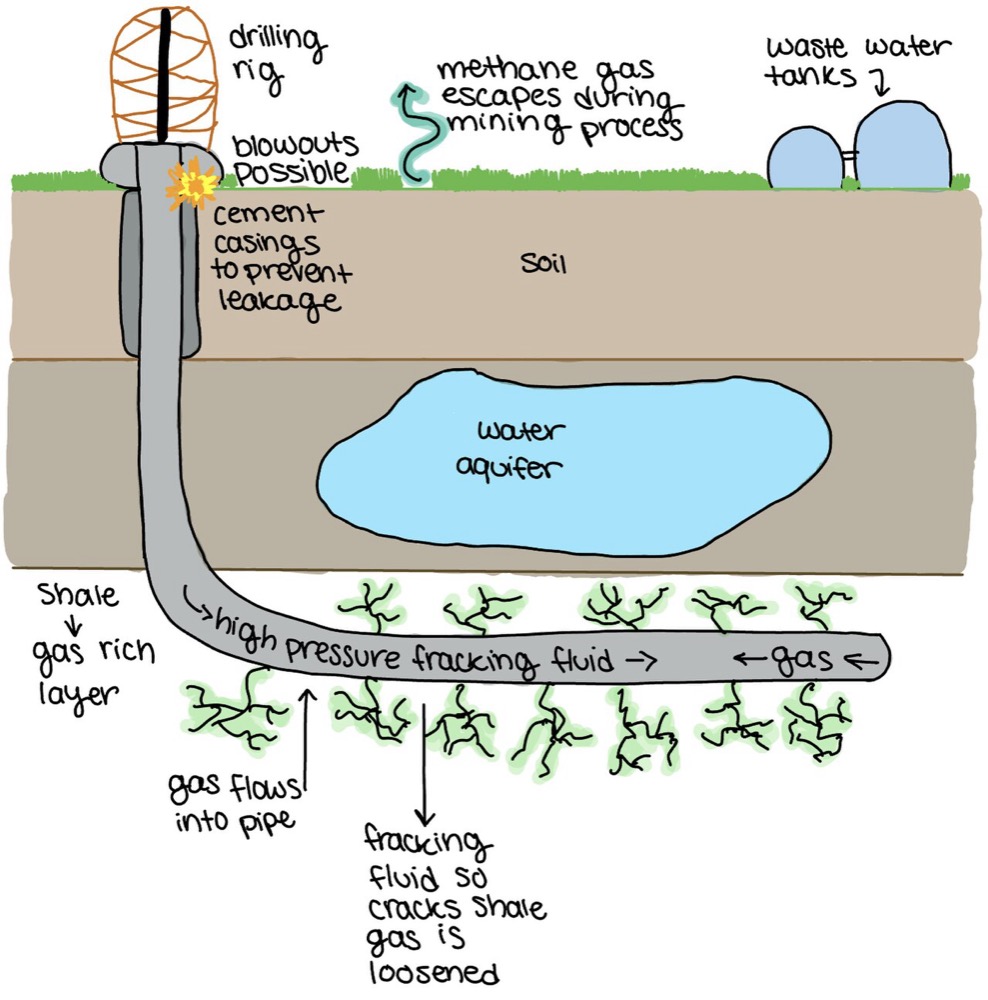
In hydraulic fracturing, a fluid is injected into a well to:
Cool the reactor core
Filter groundwater
Crack shale rock and release trapped gas or oil
Generate steam to turn a turbine
Water, sand and chemicals at high pressure open fractures, and sand props them open. Image: Emiliawilkinson, CC BY-SA 4.0.
A coal power plant burns fuel containing 400 MWh of energy and produces 140 MWh of electricity. Its efficiency is:
35%
28%
65%
140%
140 / 400 = 0.35. The rest is waste heat.
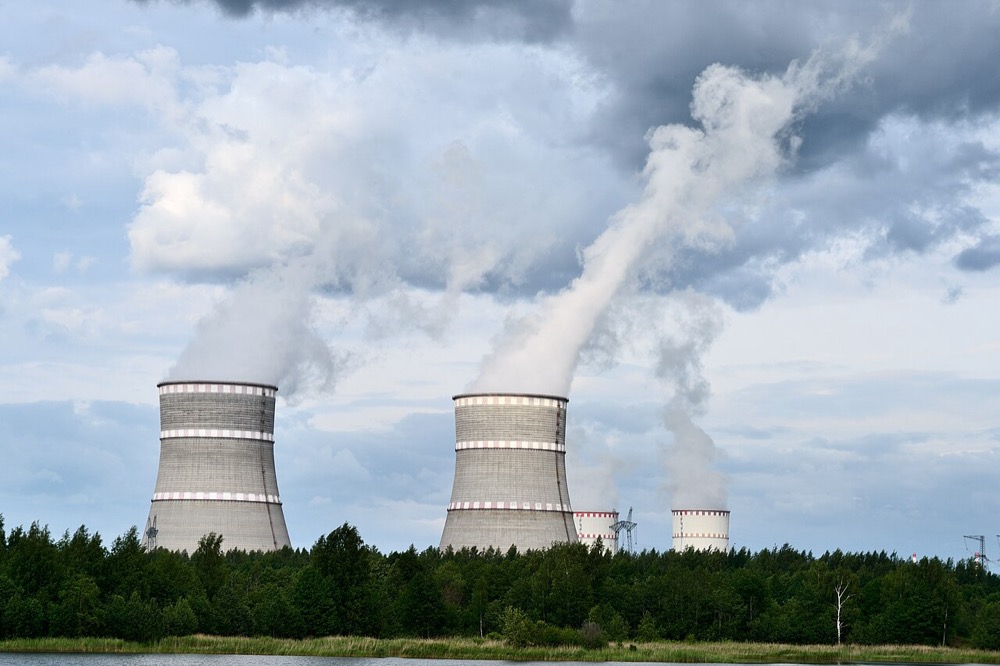
What is the white plume coming out of the nuclear plant's cooling towers?
Burning fuel
Carbon dioxide
Radioactive smoke
Water vapor
Cooling towers release evaporated water. The reactor's fission products stay in sealed systems. Image: Vsatinet, CC BY-SA 4.0.
Which statement about nuclear power is correct?
It has no waste
It emits almost no CO2 during operation but produces long-lived radioactive waste
It uses renewable uranium
It releases large amounts of CO2 during fission
Fission produces heat without combustion. Spent fuel remains hazardous for thousands of years.
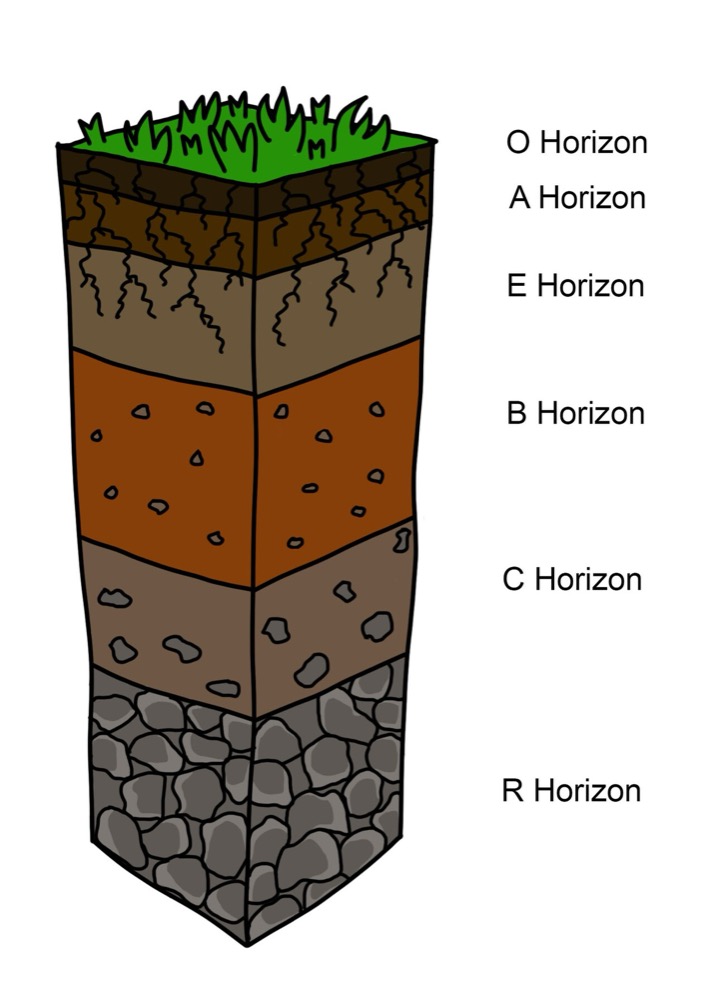
Which soil horizon is described as 'topsoil' with humus and minerals, where most roots are found?
O horizon
A horizon
C horizon
B horizon
The O horizon is surface litter, A is topsoil, B is subsoil, C is weathered parent material, and R is bedrock. Image: Lewi1224, CC BY-SA 4.0.
Which practice would best reduce erosion on a sloping cornfield?
Leaving the soil bare after harvest
Plowing up and down the slope
Removing field-edge trees
Contour plowing with strip cropping
Rows across the slope slow runoff; plowing straight up and down creates channels.
The 1930s Dust Bowl was caused mainly by:
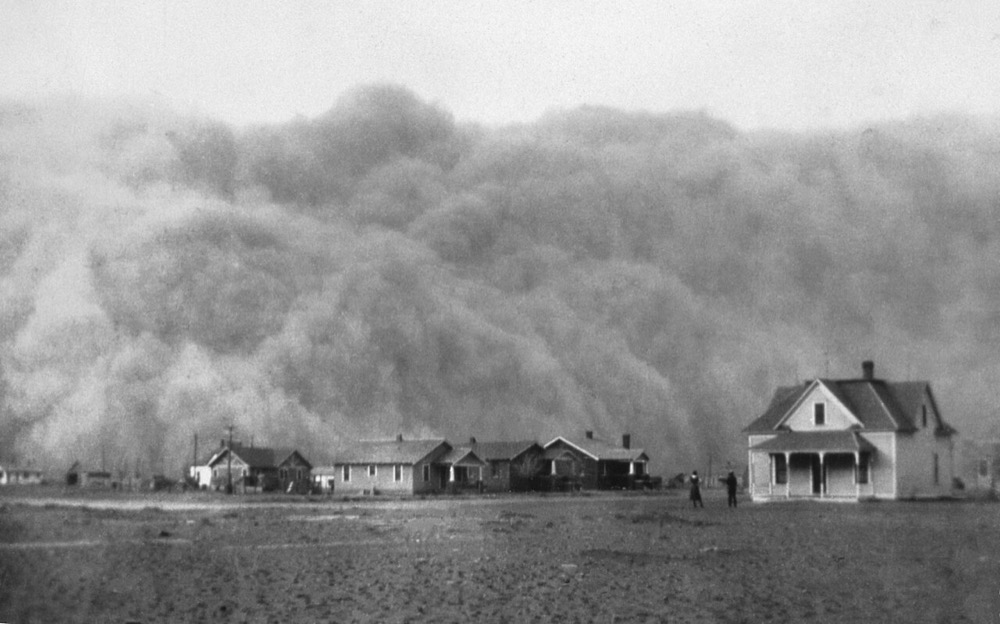
Drought plus plowing of prairie grasses and poor farming practices
Flooding of the Mississippi River
Volcanic eruptions
Overfishing
Without deep-rooted grasses, dry topsoil blew away. Image: public domain, NOAA.
Irrigating dry farmland with water containing dissolved salts tends to cause:
Higher cation exchange capacity
Soil formation
Salinization of the soil
More humus
Water evaporates and leaves salts behind, which stunt plant growth.
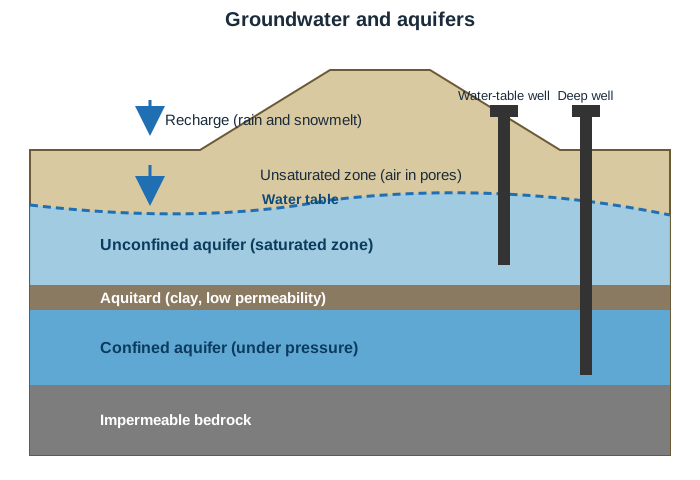
Which feature of the aquifer diagram identifies the top of the saturated zone in an unconfined aquifer?
The recharge zone
The aquitard
The water table
The bedrock
The water table is the boundary between the saturated and unsaturated zones. An aquitard is a low-permeability layer.
The Ogallala Aquifer is a concern mainly because:
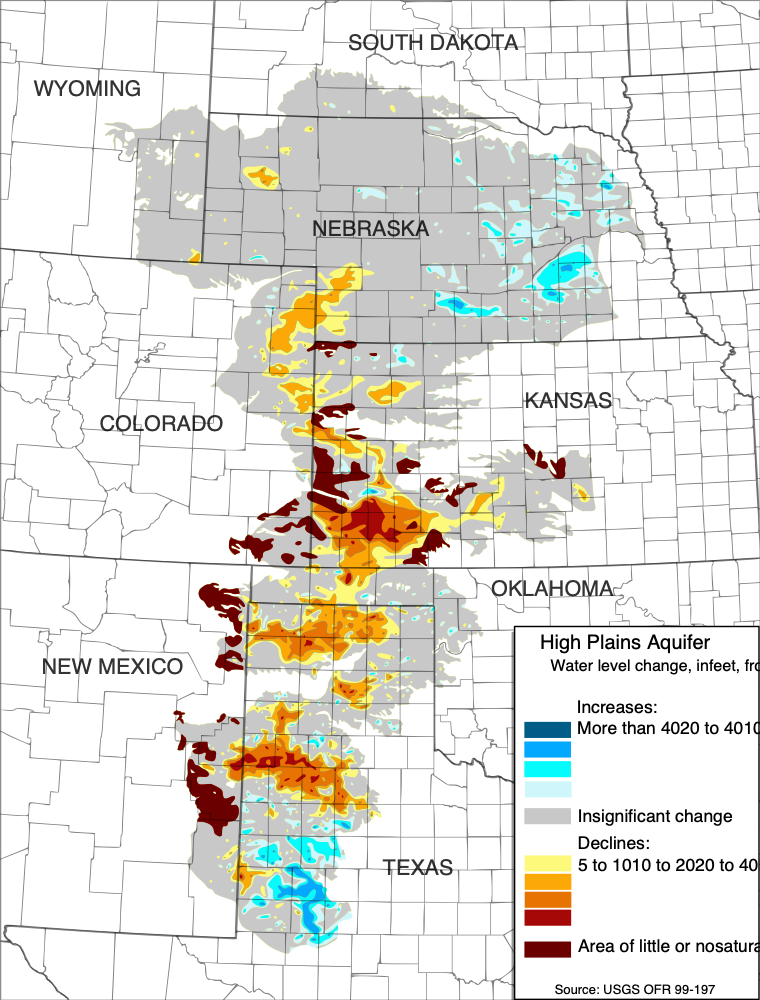
Water is being pumped much faster than it recharges
It is renewable on an annual basis
It is polluted by ocean water in every state
It is located entirely underground in Canada
Overdraft is lowering water levels, especially in the southern High Plains. Image: Kbh3rd, CC BY-SA 3.0.
The shrinking of the Aral Sea was caused mainly by:
Rising sea level
Dam construction on the sea itself
Volcanic activity
Diversion of its feeder rivers for irrigation
Water from the Amu Darya and Syr Darya was diverted to irrigate cotton, so inflow dropped.
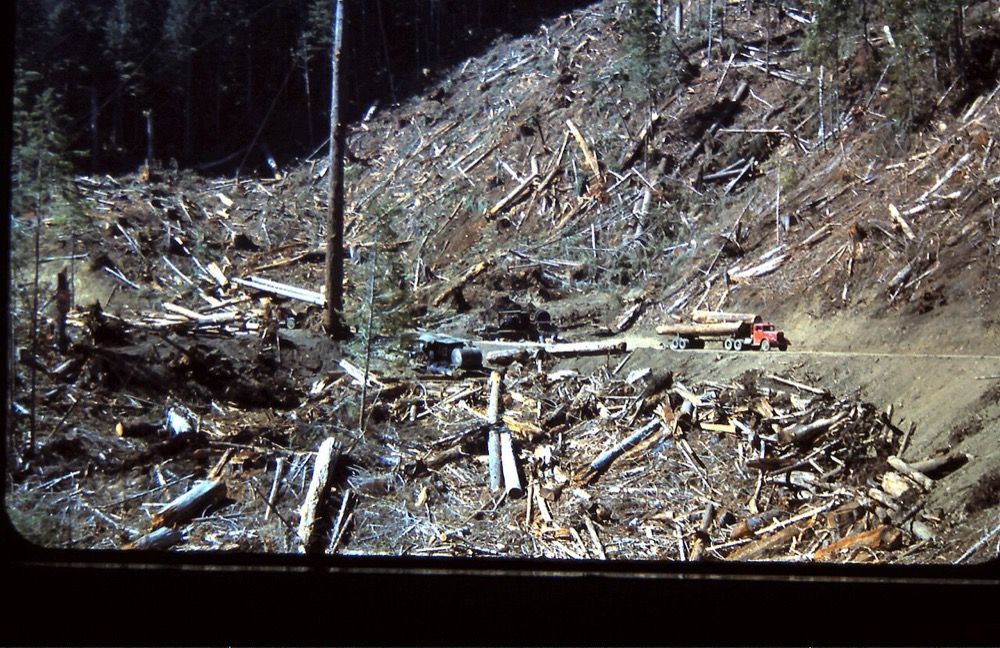
Which of the following is a disadvantage of clear-cutting?
It increases old-growth forest
Soil erosion and loss of habitat
It is more expensive than selective cutting
It always protects streams
It is cheaper per tree but exposes soil and removes habitat. Image: US Forest Service, public domain.
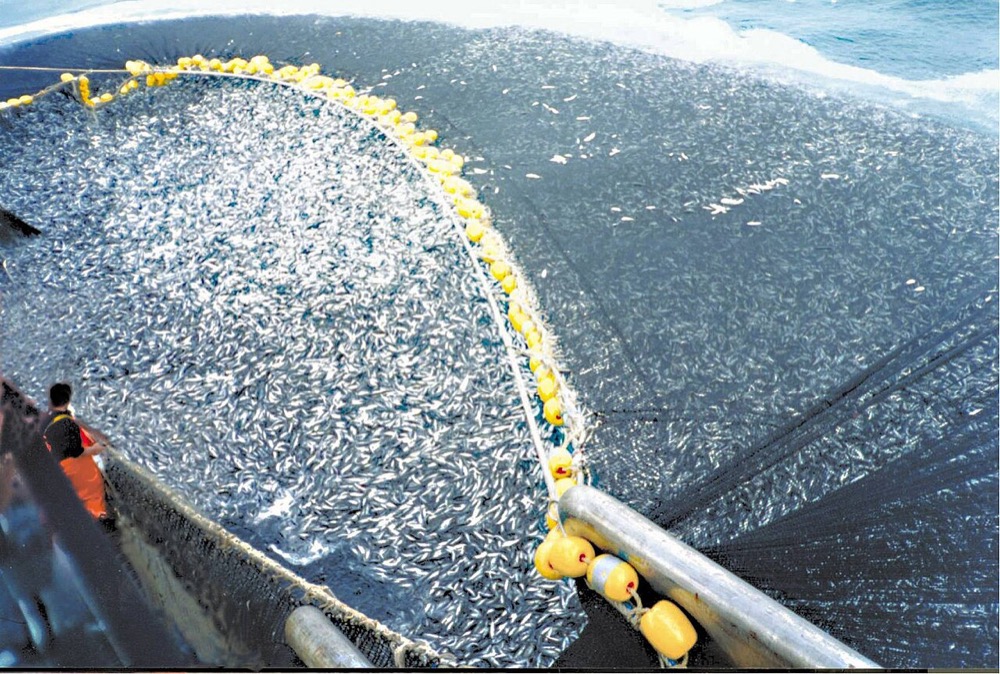
Which fishing method is MOST associated with large amounts of bycatch and seafloor habitat damage?
Pole-and-line fishing
Bottom trawling
Trapping with pots only
Hook-and-line fishing by hand
Trawl nets drag over the seabed and catch non-target species. Image: Asc1733, CC BY-SA 4.0.
What happened to the Atlantic cod fishery on the Grand Banks?
Pollution wiped out the cod in 1950
It became a successful aquaculture industry
Warm water eliminated all fish
Overfishing caused a collapse and a moratorium in 1992
A textbook case of overexploitation.
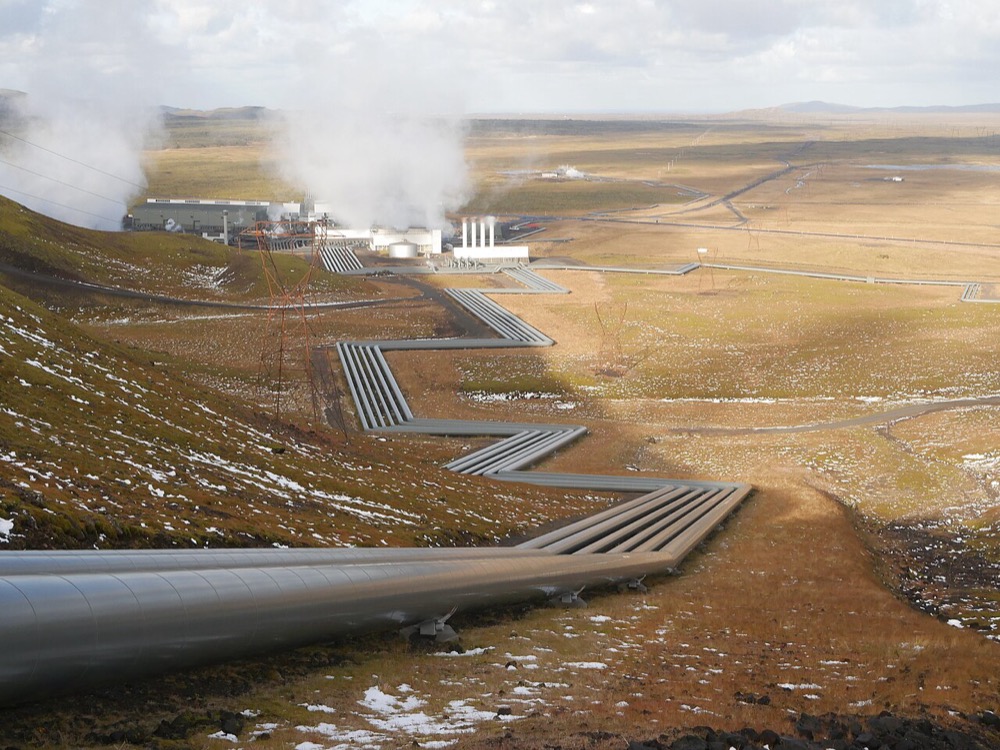
Which energy source uses heat from underground hot water or steam to drive a turbine?
Geothermal
Photovoltaic
Tidal
Biomass
Geothermal power plants tap Earth's internal heat. Image: Mathieu Neville, CC BY 4.0.
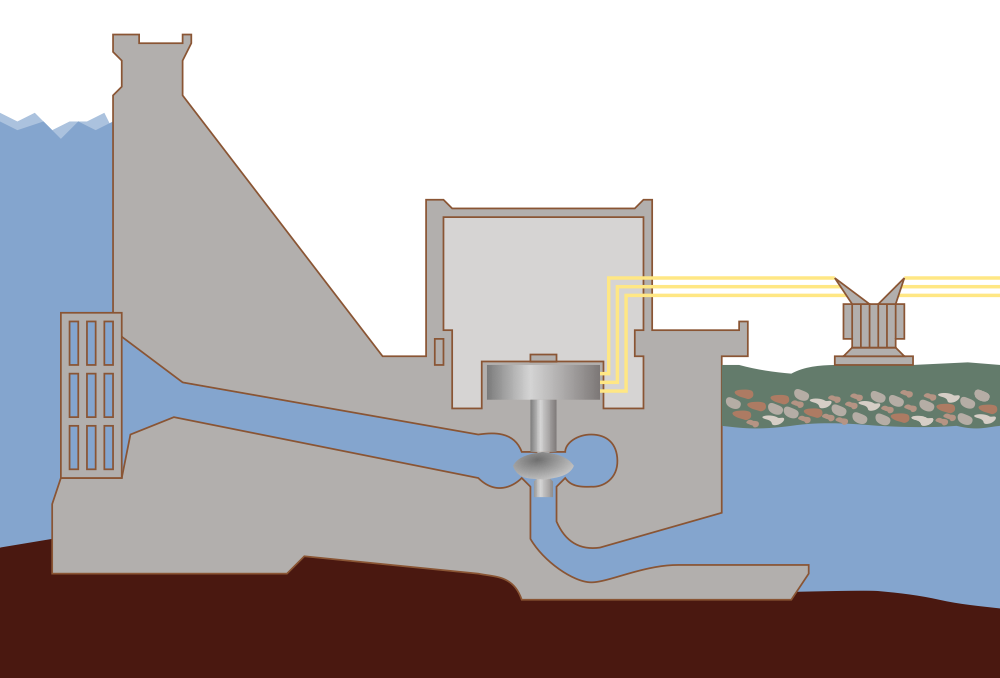
In a hydroelectric dam, which sequence correctly shows the energy conversions?
Chemical, thermal, electrical
Light, chemical, electrical
Gravitational potential energy, kinetic energy, mechanical energy of the turbine, electrical energy
Nuclear, heat, electrical
Falling water spins the turbine, which drives the generator. Image: TVA, public domain.
