Quiz · Medium
Foundational questions on assessment, malnutrition, nutrition support and diet therapy.
A man is 1.80 m tall and weighs 90 kg. What is his BMI category?
Overweight (BMI 27.8)
Healthy weight
Obesity class 1
Underweight
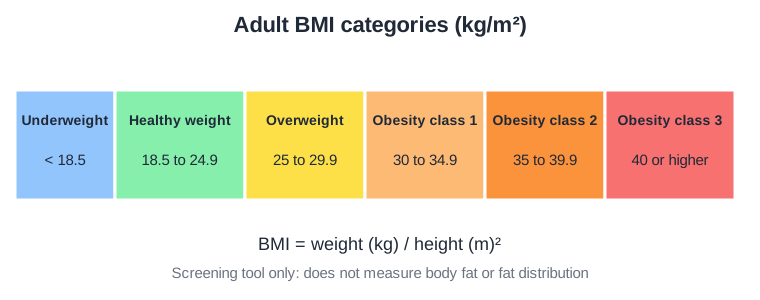
90 / 1.8² = 90 / 3.24 = 27.8, in the 25 to 29.9 range.
Which BMI range is classified as healthy weight for adults?
20 to 30
18.5 to 24.9
25 to 29.9
17 to 22
Below 18.5 is underweight and 25 or more is overweight.
Which condition features edema, fatty liver and normal-appearing weight due to protein deficiency?
Marasmus
Rickets
Kwashiorkor
Pellagra
Marasmus is energy deficiency with wasting and no edema.
Which is the first-choice route for feeding a patient with a working GI tract who cannot eat enough?
Parenteral nutrition
Fasting
Intravenous dextrose only
Enteral nutrition
Enteral feeding keeps the gut working and has fewer complications.
Which electrolyte changes characterize refeeding syndrome?
Low phosphate, potassium and magnesium
High phosphate
High sodium only
High calcium
Insulin released during refeeding drives these ions into cells.
Which diet is recommended for celiac disease?
Low-FODMAP
Strict lifelong gluten-free
Low-protein
Ketogenic
Gluten in wheat, barley and rye triggers intestinal damage.
What fasting plasma glucose indicates diabetes?
100 mg/dL
110 mg/dL
126 mg/dL or higher
140 mg/dL
100 to 125 mg/dL is prediabetes.
What should a conscious patient with a glucose of 60 mg/dL take first?
A candy bar with nuts
A glass of milk
Nothing; recheck in an hour
15 g of fast-acting carbohydrate
Fat and protein slow absorption. Recheck in 15 minutes.
Which diet pattern is designed to lower blood pressure?
DASH
Atkins
Paleo
Raw food
DASH emphasizes fruits, vegetables, low-fat dairy and low sodium.
A patient with chronic kidney disease (stage 4, not on dialysis) has high potassium. Which food should be limited?
White rice
Baked potato
Apple juice
Egg whites
A baked potato is very high in potassium; white rice has little.
Which nutrient is limited in PKU?
Tyrosine
Lactose
Phenylalanine
Purine
PKU is a deficiency of phenylalanine hydroxylase. Tyrosine becomes conditionally essential.
On the Nutrition Facts label, 5% DV or less of a nutrient is considered:
High
Moderate
Unsafe
Low
20% DV or more is high.
Which of these is a major food allergen?
Sesame
Corn
Beef
Lettuce
The US 'Big 9' are milk, eggs, fish, shellfish, tree nuts, peanuts, wheat, soy and sesame.
Which of the following is a negative acute phase reactant and is a poor marker of nutrition status?
C-reactive protein
Albumin
Ferritin
Fibrinogen
Albumin falls in inflammation regardless of intake. CRP, ferritin and fibrinogen rise.
A patient with hepatic encephalopathy needs nutrition. The best protein advice is:
Strict protein restriction
No protein for a week
Do not restrict protein; give 1.2 to 1.5 g/kg
Only plant protein
Restriction worsens muscle loss, which worsens ammonia handling.
In which condition would you expect a low-FODMAP diet to be tried?
Celiac disease
Gout
Kwashiorkor
Irritable bowel syndrome
FODMAPs are poorly absorbed fermentable carbohydrates that cause gas and pain in IBS.
What does PES stand for in a nutrition diagnosis?
Problem, etiology, signs and symptoms
Protein, energy, supplements
Plan, evaluate, support
Patient, exam, screening
The format links the nutrition problem to its cause and evidence.
Which food should a person with gout limit the most?
Cherries
Organ meats and beer
Low-fat milk
Whole grains
Purines and alcohol raise uric acid.
