Quiz · Easy
Beginner-friendly questions on CPR, AEDs, bleeding, burns, choking, stroke and common emergencies.
What does FAST stand for in stroke recognition?
Fever, Ache, Swelling, Tingling
Fall, Alert, Sleepy, Tired
Fainting, Anxiety, Sweating, Tremor
Face, Arm, Speech, Time
Face drooping, arm weakness, speech difficulty, time to call emergency services.
A person is choking and cannot speak or cough. What is the first aid?
Back blows and abdominal thrusts
Give them water
Slap them on the back once and wait
Have them lie down and rest
Complete obstruction needs forceful maneuvers to dislodge the object. Water won't pass the blockage.
You find an adult who has collapsed, is unresponsive and not breathing normally. After calling 911, what is the next step?
Start chest compressions
Give two rescue breaths first
Check for a pulse for 30 seconds
Move the person to a chair
Cardiac arrest needs immediate compressions (C-A-B). Delays for breaths or long pulse checks reduce survival.
What is the recommended compression rate for adult CPR?
60 to 80 per minute
100 to 120 per minute
80 to 100 per minute
120 to 160 per minute
Guidelines recommend 100-120 compressions per minute, which balances blood flow with rescuer fatigue.
What is the correct compression-to-breath ratio for a single rescuer performing adult CPR with breaths?
30 : 2
15 : 2
5 : 1
10 : 1
Single rescuers use 30:2. 15:2 is for two rescuers on a child or infant.
Where do you place the pads of an AED on an adult?
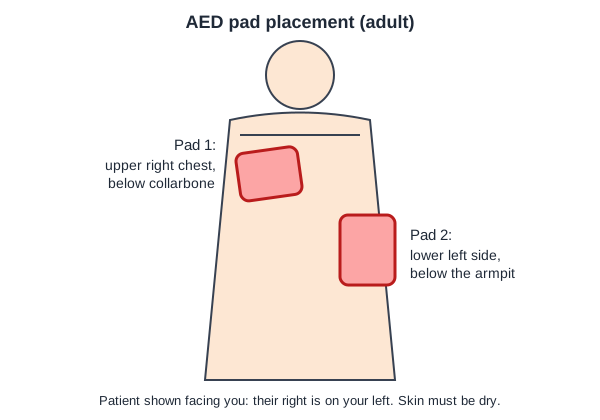
Both on the front of the chest side by side
One on the abdomen and one on the thigh
Upper right chest and lower left side
Both on the back
The pads create a path through the heart: below the right collarbone and on the left side below the armpit.
Which burn is shown by blistering and severe pain?
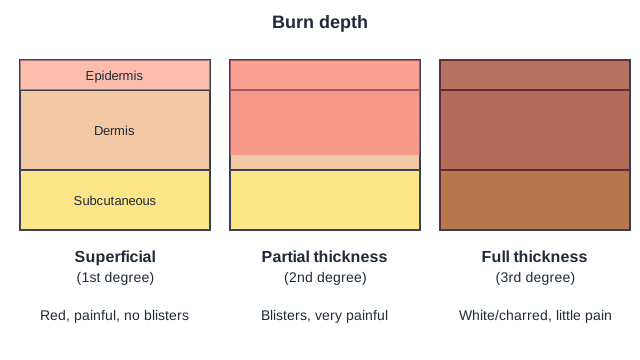
Second-degree (partial thickness)
First-degree
Third-degree
Chemical burn only
Blisters mean damage into the dermis. First-degree burns are red without blisters; third-degree burns can be painless due to nerve destruction.
Which action is correct for a minor burn?
Apply ice directly
Cool it under cool running water
Spread butter on it
Pop any blisters
Cool running water limits tissue damage. Ice can damage skin; butter traps heat; popping blisters risks infection.
Which sign suggests heat stroke rather than heat exhaustion?
Heavy sweating with cool clammy skin
Muscle cramps only
Confusion with hot skin and temperature around 40 C
Mild nausea after exercise
Heat stroke involves core temperature of 40 C (104 F) or more and altered mental state, and needs urgent cooling and 911.
A person is having a seizure. What should you do?
Put a spoon in their mouth
Cushion their head, time it and clear the area
Hold them still
Give water to drink
Never put anything in the mouth or restrain the person. Protect from injury and call 911 if it lasts over 5 minutes.
What is the best way to control severe bleeding from a limb wound?
Apply firm direct pressure
Lift the dressing frequently to check
Apply ice only
Wash the wound repeatedly
Direct pressure stops most bleeding; keep adding dressings without removing blood-soaked ones.
When should a tourniquet be used?
For every cut
For nosebleeds
For small scrapes
For life-threatening limb bleeding not controlled by pressure
A tourniquet is a last resort for severe bleeding because it can cause tissue damage. Note the time applied.
What is the first aid for anaphylaxis?
Antihistamine tablet only
Epinephrine auto-injector in the outer thigh and call 911
Cold shower
Give a large drink of water
Epinephrine is the first-line drug; antihistamines alone act too slowly and don't treat airway swelling or shock.
A conscious diabetic person is shaky, sweaty and confused. What should you give?
Insulin
Nothing, wait for them to recover
15 g of fast-acting sugar such as juice or glucose tablets
A fatty meal
These are signs of low blood sugar. Insulin would make it worse; fat is absorbed too slowly.
True or false: You should remove an object embedded in a wound to stop bleeding.
True
False
False. Removing it can increase bleeding. Pad around it and apply pressure around the object.
What does RICE stand for?
Rest, Ice, Compression, Elevation
Rest, Immobilize, Cool, Exercise
Relax, Ice, Cover, Elevate
Rest, Inhale, Compress, Exercise
RICE is the classic treatment for sprains and strains.
Which is a sign of shock?
Flushed warm skin with a slow strong pulse
Pale, cool, clammy skin with a fast weak pulse
Normal skin and calm breathing
Red face and hot dry skin only
Shock means poor circulation; skin is pale and clammy and the heart races to compensate.
What should you do first when you arrive at an emergency scene?
Start CPR immediately
Move the patient
Check for danger to you and others
Ask who is at fault
Scene safety comes first so you don't become another casualty.
Which START triage color is a walking patient?
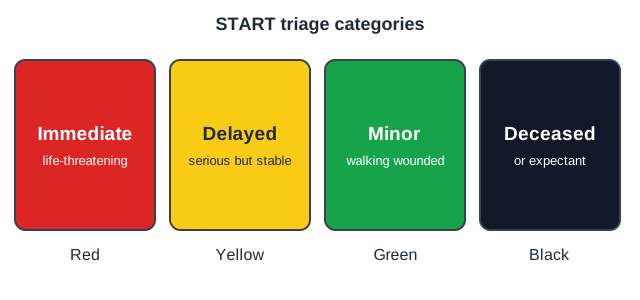
Red
Yellow
Black
Green
Anyone who can walk is tagged minor (green) in the first pass.
How long should you pinch the nose during a nosebleed?
About 10 minutes, leaning forward
30 seconds
Tilt head back and pinch 1 minute
Until the bleeding stops, leaning back
Lean forward so blood doesn't run down the throat, and pinch the soft part for about 10 minutes without releasing.
