Quiz · Medium
Twenty foundation-level questions on ECG rhythms, MI, heart failure, DVT, chest tubes, COPD, diabetes, thyroid, renal, neuro and post-op care.
Which laboratory value should the nurse monitor for a patient on a heparin infusion?
INR
Hemoglobin A1C
Troponin
aPTT
aPTT is used to monitor heparin (goal 1.5 to 2.5 times control). INR monitors warfarin.
The nurse sees this rhythm strip on the monitor of an unresponsive patient with no pulse. What is the first action?
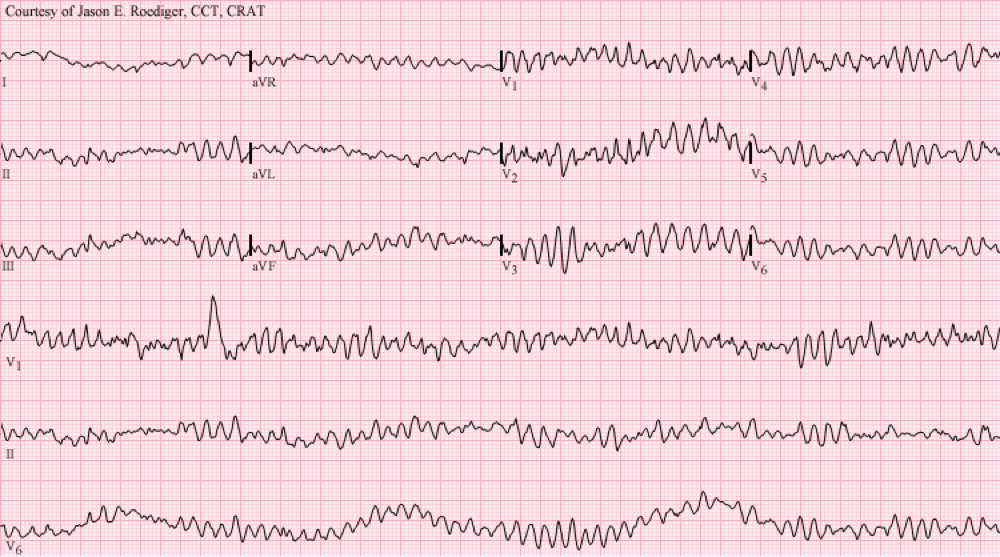
Start CPR and prepare to defibrillate
Administer amiodarone
Perform synchronized cardioversion
Obtain a 12-lead ECG
The rhythm is ventricular fibrillation, a shockable pulseless rhythm. Start high-quality CPR immediately and defibrillate as soon as the defibrillator is ready. Synchronized cardioversion is for unstable patients who still have a pulse.
Image: Jer5150, CC BY-SA 3.0, via Wikimedia Commons.
A patient's monitor shows an irregularly irregular rhythm with no distinct P waves. Which complication is the patient at highest risk for?
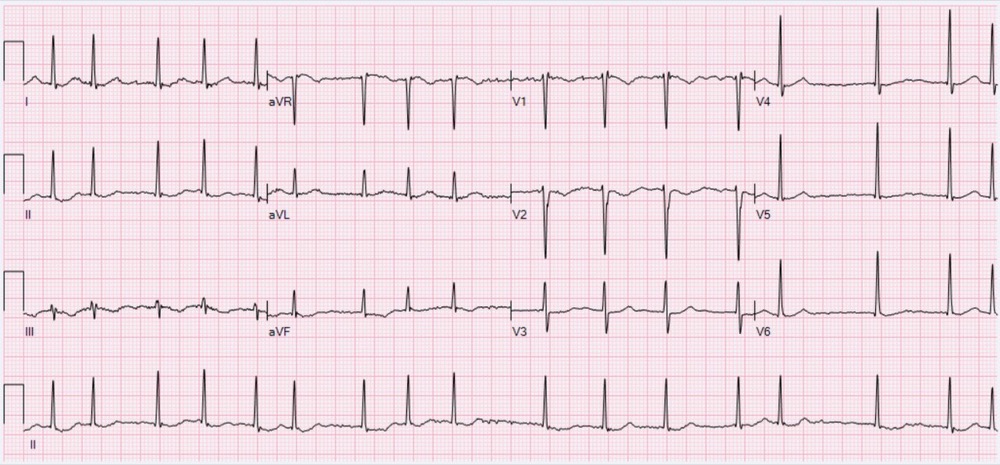
Pulmonary edema
Hyperkalemia
Cardioembolic stroke
Aortic dissection
This is atrial fibrillation. The atria quiver, blood pools, and clots can embolize to the brain. That is why anticoagulation is central to treatment.
Image: Ewingdo, CC BY-SA 4.0, via Wikimedia Commons.
A pulseless patient's monitor shows the flat line at the right of this strip, confirmed in two leads. Which drug does the nurse expect to give?
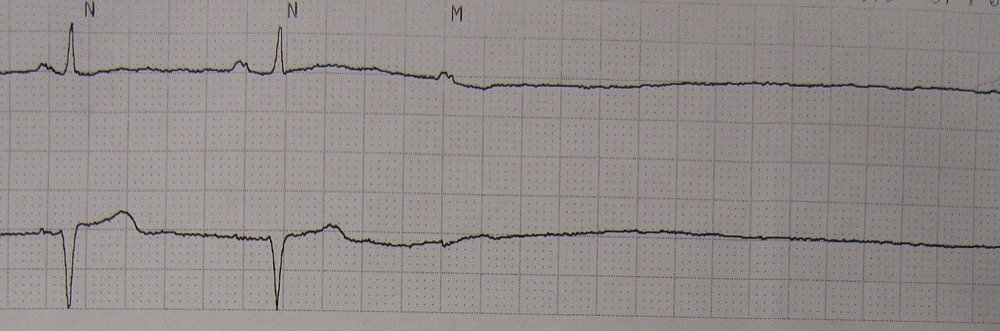
Epinephrine 1 mg every 3 to 5 minutes
Atropine 1 mg
Lidocaine
Amiodarone 300 mg
Asystole is not shockable. Treatment is CPR and epinephrine every 3 to 5 minutes while looking for reversible causes (H's and T's).
Image: James Heilman, MD, CC BY-SA 3.0, via Wikimedia Commons.
The nurse is caring for a patient with this finding of the fingers. Which condition is most commonly associated?
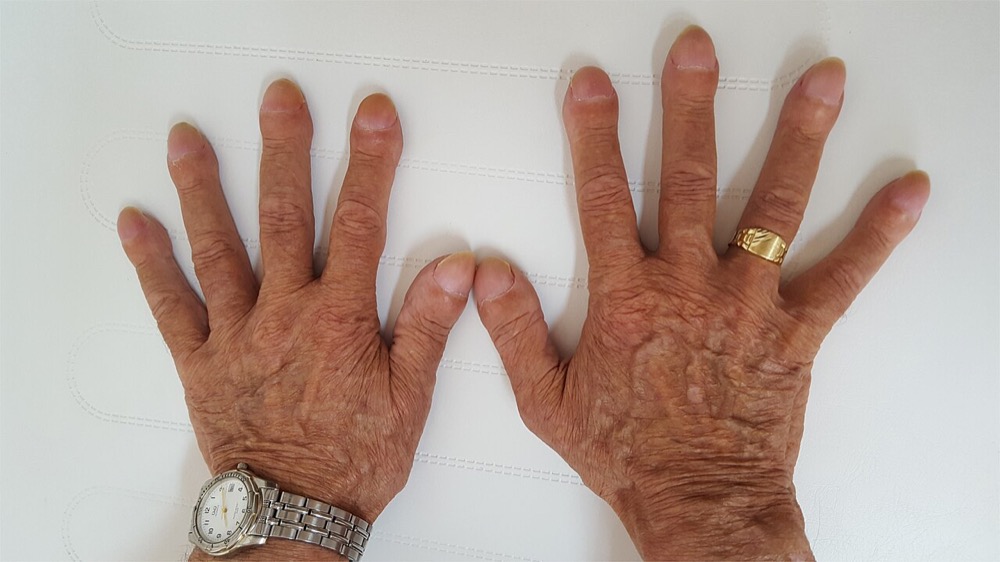
Iron deficiency anemia (koilonychia)
Raynaud's disease
Chronic hypoxia such as lung cancer or COPD
Acute pericarditis
Digital clubbing results from chronic hypoxia. Koilonychia (spoon nails) is the nail change of iron-deficiency anemia, which looks different.
Image: Wesalius, CC BY-SA 4.0, via Wikimedia Commons.
A patient reports chest pain. After placing the patient on a monitor and obtaining a 12-lead ECG, which medication should the nurse expect to give first if there are no contraindications?
Heparin infusion before the ECG
Aspirin 162 to 325 mg chewed
Metoprolol IV
Furosemide IV
Aspirin inhibits platelet aggregation and reduces mortality in acute coronary syndrome. Beta-blockers and heparin follow provider orders; furosemide is for pulmonary edema.
A patient with heart failure gained 3 pounds in 24 hours. What does the nurse instruct?
Skip the diuretic
Continue as usual and weigh in a week
Increase fluid intake
Report the weight gain to the provider
A gain of 2 to 3 lb in a day or 5 lb in a week signals fluid retention. Report it so the diuretic dose can be adjusted.
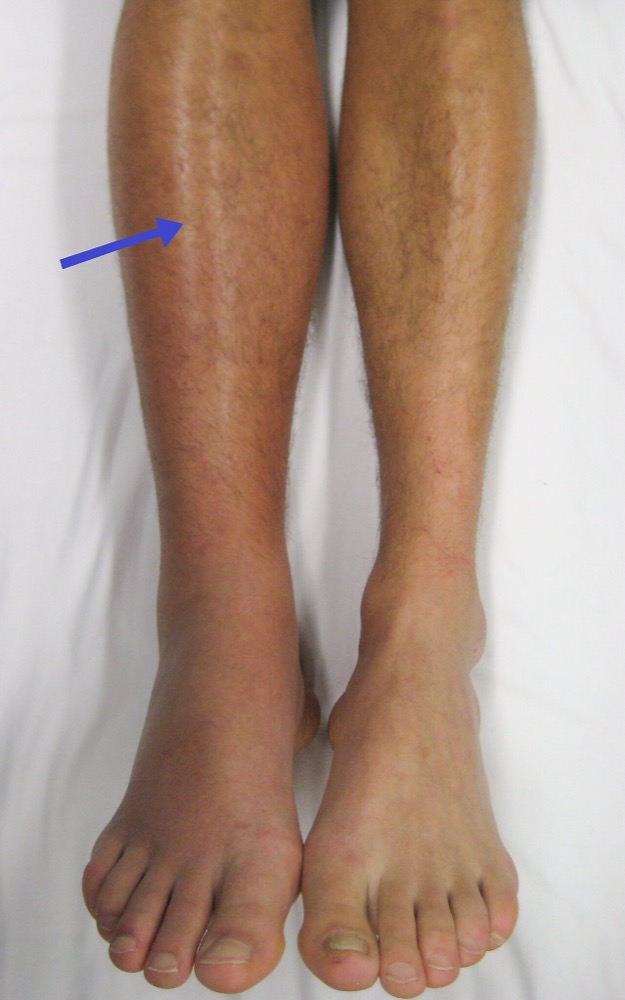
A patient has the following: unilateral calf swelling, warmth and tenderness. What should the nurse do?
Massage the calf to improve circulation
Elevate the leg, avoid massage, and notify the provider
Apply an SCD to the affected leg
Encourage vigorous walking
Suspect DVT. Massage or SCDs can dislodge the clot and cause a pulmonary embolism. Notify the provider for imaging and anticoagulation.
Image: James Heilman, MD, CC BY-SA 3.0, via Wikimedia Commons.
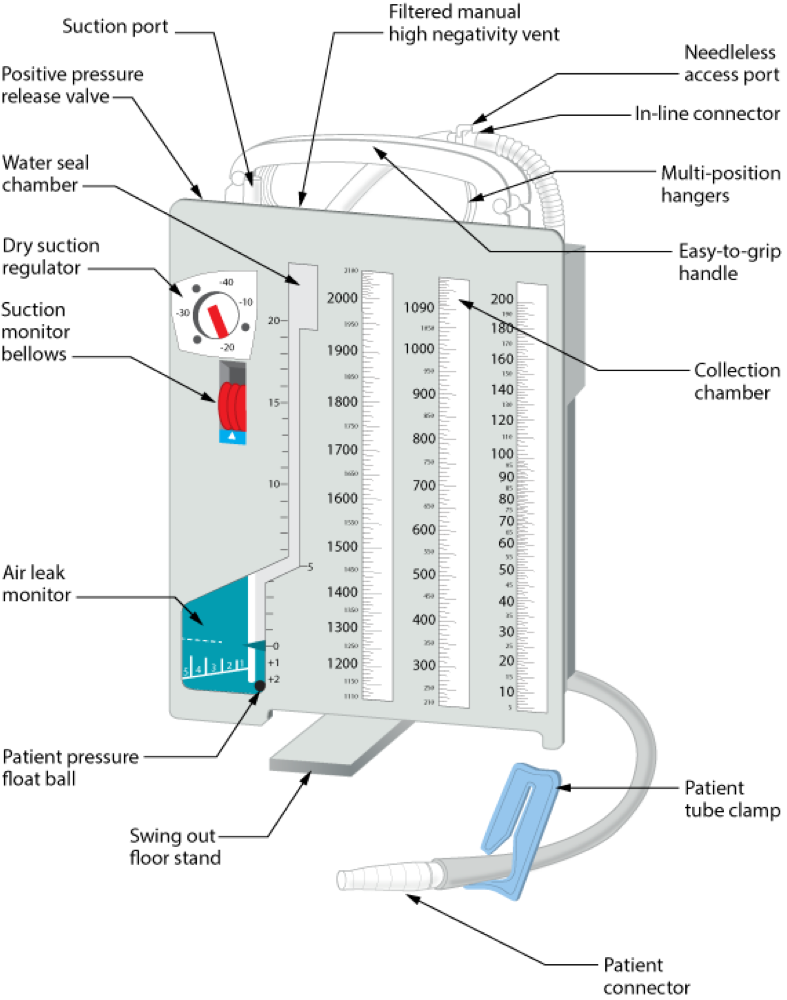
A patient with a chest tube has continuous bubbling in the water seal chamber. What does this indicate?
The tube is draining correctly
The suction is too low
An air leak in the system or lung
Normal function
Continuous bubbling in the water seal chamber means air is leaking in the system or from the lung. Check the connections and notify the provider if it continues. Tidaling is expected.
Image: British Columbia Institute of Technology (BCIT), CC BY-SA 4.0, via Wikimedia Commons.
A patient with COPD is admitted with an exacerbation. Which oxygen saturation goal is appropriate?
88 to 92%
80 to 85%
100%
95 to 100%
CO2 retainers can lose their hypoxic drive with excessive oxygen. Target 88 to 92%.
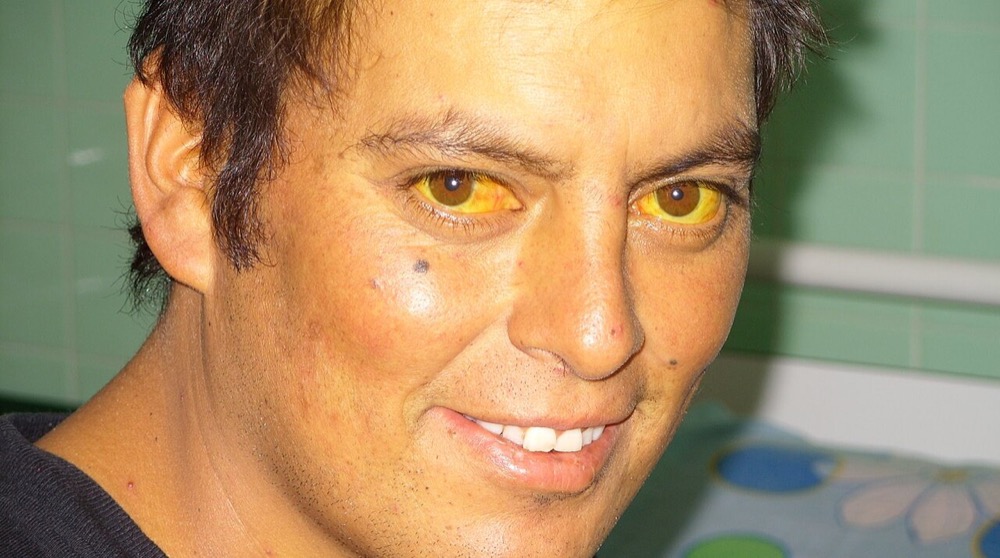
The nurse notes yellow discoloration of the patient's sclera. Which laboratory test is most closely linked to this finding?
Serum troponin
Serum amylase
Serum bilirubin
Serum creatinine
Scleral icterus results from elevated bilirubin (usually above 2 to 3 mg/dL).
Image: Sheila J. Toro, CC BY 4.0, via Wikimedia Commons.
A patient is brought to the ED with DKA. Which finding does the nurse expect?
Kussmaul respirations and fruity breath
Cool clammy skin and tremors
Slow shallow breathing and pallor
Bradycardia and hypothermia
DKA has metabolic acidosis, so the lungs blow off CO2 (Kussmaul breathing) and ketones cause fruity breath. Cool, clammy, tremulous skin suggests hypoglycemia.
A diabetic patient is shaky, sweaty and confused. Blood glucose is 54 mg/dL, and the patient can swallow. What is the best action?
Give 10 units of regular insulin
Give a glass of milk and recheck in an hour
Give IM glucagon
Give 15 g of fast-acting carbohydrate and recheck in 15 minutes
Use the rule of 15 in an alert patient who can swallow. Glucagon or IV dextrose is for patients who cannot take oral sugar.
Which statement by a patient taking levothyroxine indicates understanding?
'I take it with my breakfast cereal.'
'I take it every morning on an empty stomach.'
'I'll stop it when I feel better.'
'I take it at bedtime with calcium.'
Take levothyroxine daily on an empty stomach, 30 to 60 minutes before breakfast, separate from calcium and iron, and lifelong in most cases.
After a thyroidectomy, the patient reports tingling around the mouth. The nurse suspects which complication?
Hypoglycemia
Hypernatremia
Hypokalemia
Hypocalcemia
Parathyroid glands may be damaged or removed, causing hypocalcemia (perioral tingling, tetany). Have calcium gluconate available.
A patient with an arteriovenous fistula for dialysis is admitted. Which action is correct?
Draw labs from the fistula arm
Assess the thrill and bruit every shift
Apply a tourniquet to the fistula arm
Take blood pressure in the fistula arm
Assess thrill and bruit to ensure patency. Never take BP, draw blood or start IVs in the fistula arm.
A patient with a head injury has BP 190/90, HR 52 and irregular respirations. What do these findings suggest?
Increased intracranial pressure (Cushing triad)
Anxiety
Hypovolemic shock
Sepsis
Hypertension with a widened pulse pressure, bradycardia and irregular respirations are Cushing's triad, a late sign of rising ICP.
A patient is having a generalized tonic-clonic seizure. Which action is appropriate?
Give water as soon as it ends
Insert a padded tongue blade
Turn the patient to the side and protect the head
Restrain the patient's arms
Never place anything in the mouth or restrain. Side-lying protects the airway; cushion the head, note the time.
The nurse is caring for a patient 2 days after abdominal surgery. The patient has a temperature of 38.5 °C, crackles at the lung bases and shallow breathing. What is the likely cause?
Atelectasis
Wound infection
Deep vein thrombosis
Paralytic ileus
Fever and crackles with shallow breathing in the first 48 hours point to atelectasis. Encourage incentive spirometry, coughing and ambulation.
A burn patient from a house fire has singed nasal hair and hoarseness. What is the nurse's priority?
Starting IV fluids
Treating the pain
Preparing for airway management
Applying burn dressings
Singed nasal hair, soot and hoarseness suggest inhalation injury. Airway edema can progress quickly: secure the airway early.
