Quiz · Medium
Entry-level and nursing-exam questions on how antibiotics work, which class to use and what to monitor.
Which antibiotic is associated with Clostridioides difficile infection more than the others listed?
Doxycycline
Nitrofurantoin
Vancomycin by mouth
Clindamycin
Clindamycin (along with fluoroquinolones and cephalosporins) disrupts gut flora. Oral vancomycin treats C. difficile.
Penicillins and cephalosporins inhibit which process?
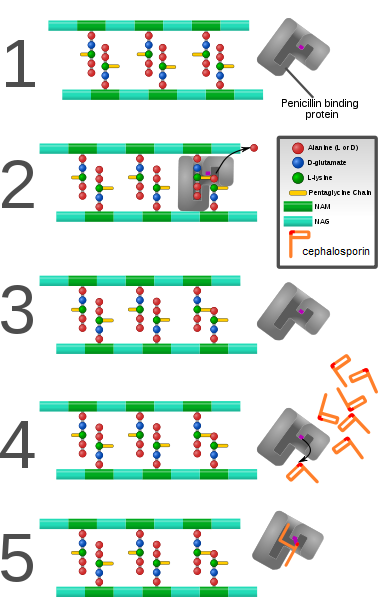
Cross-linking of peptidoglycan by penicillin-binding proteins (cell wall synthesis)
Protein synthesis at the 50S ribosome
DNA gyrase activity
Folate synthesis
Beta-lactams bind PBPs (transpeptidases). The other options describe macrolides, quinolones and sulfonamides. Image: Mcstrother, CC BY-SA 3.0, via Wikimedia Commons.
Which antibiotic class binds the 30S ribosomal subunit?
Macrolides
Clindamycin
Aminoglycosides
Chloramphenicol
30S: aminoglycosides and tetracyclines. 50S: macrolides, clindamycin, chloramphenicol, linezolid.
A patient receiving gentamicin should be monitored for which toxicities?
Tendon rupture and QT prolongation
Nephrotoxicity and ototoxicity
Photosensitivity and tooth staining
Disulfiram-like reaction
Aminoglycosides injure kidney tubules and the cochlea and vestibular system. The other choices describe fluoroquinolones, tetracyclines and metronidazole.
A patient develops flushing and an itchy rash on the upper body during a rapid vancomycin infusion. What is the best action?
Slow the infusion rate and give an antihistamine
Stop vancomycin permanently and document anaphylaxis
Give epinephrine IM
Increase the infusion rate
Red man syndrome is a histamine-mediated infusion reaction, not true allergy. Slow infusion prevents it.
A woman taking metronidazole asks about drinking wine. What should the nurse advise?
Alcohol is safe in small amounts
Alcohol increases metronidazole absorption and is encouraged
Avoid alcohol because of a disulfiram-like reaction
Avoid only red wine
Alcohol with metronidazole causes flushing, nausea and vomiting; avoid during and for 48 to 72 hours after.
A child under 8 needs an antibiotic for an infection. Which should generally be avoided?
Amoxicillin
Cephalexin
Doxycycline
Azithromycin
Tetracyclines deposit in developing teeth and bone, causing discoloration and impaired growth (exceptions exist for life-threatening illnesses like rickettsial infection).
A patient on ciprofloxacin reports sudden heel pain. What is the concern?
Ototoxicity
Hepatic failure
Tendon rupture
Serotonin syndrome
Fluoroquinolones cause tendinopathy; risk is higher with age and steroids. Stop the drug and rest the limb.
Which antibiotic is bacteriostatic?
Gentamicin
Doxycycline
Ceftriaxone
Ciprofloxacin
Tetracyclines, macrolides, clindamycin, sulfonamides and chloramphenicol are generally bacteriostatic. Beta-lactams, aminoglycosides and fluoroquinolones are bactericidal.
Which antibiotic is used for outpatient treatment of uncomplicated lower UTI but not for pyelonephritis?
Ceftriaxone
Nitrofurantoin
Vancomycin
Doxycycline
Nitrofurantoin reaches therapeutic levels only in the urine, so it does not treat kidney or systemic infection.
Rifampin teaching should include which point?
It may turn the skin blue
Urine, sweat and tears may turn orange-red, and it can lower oral contraceptive effectiveness
Take with antacids
It is safe to drink alcohol freely
Rifampin is a potent CYP inducer. Staining is harmless but can stain soft contact lenses.
A patient taking isoniazid should also take which vitamin?
Vitamin K
Vitamin C
Vitamin B12
Pyridoxine (vitamin B6)
Isoniazid depletes B6, causing peripheral neuropathy. Supplementation prevents it.
Which antibiotic should be avoided in a patient with a prior severe IgE-mediated penicillin allergy?
Aztreonam
Vancomycin
Doxycycline
Amoxicillin
Amoxicillin is a penicillin. Aztreonam has minimal cross-reactivity; vancomycin and doxycycline are structurally unrelated.
Which statement about vancomycin is true?
It covers Gram-negative rods and anaerobes broadly
It is well absorbed orally for systemic infection
It inhibits ribosomes
It is active against Gram-positive bacteria including MRSA
Vancomycin cannot cross the outer membrane of Gram-negatives. Oral vancomycin is not absorbed and is used for C. difficile.
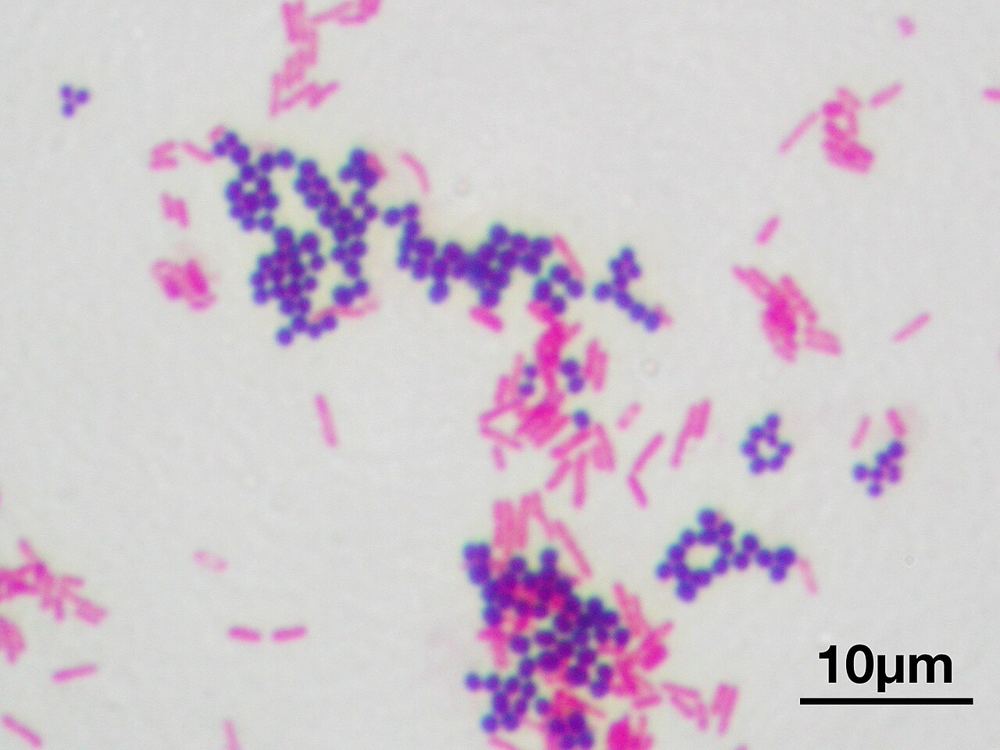
Which feature explains why Gram-positive cocci appear purple in this stain?
It has an outer membrane that retains safranin
It lacks a cell wall
It contains lipopolysaccharide
Its thick peptidoglycan layer retains crystal violet
Gram-positives have thick peptidoglycan and no outer membrane. Gram-negatives lose the crystal violet and appear pink. Image: Y tambe, CC BY-SA 3.0, via Wikimedia Commons.
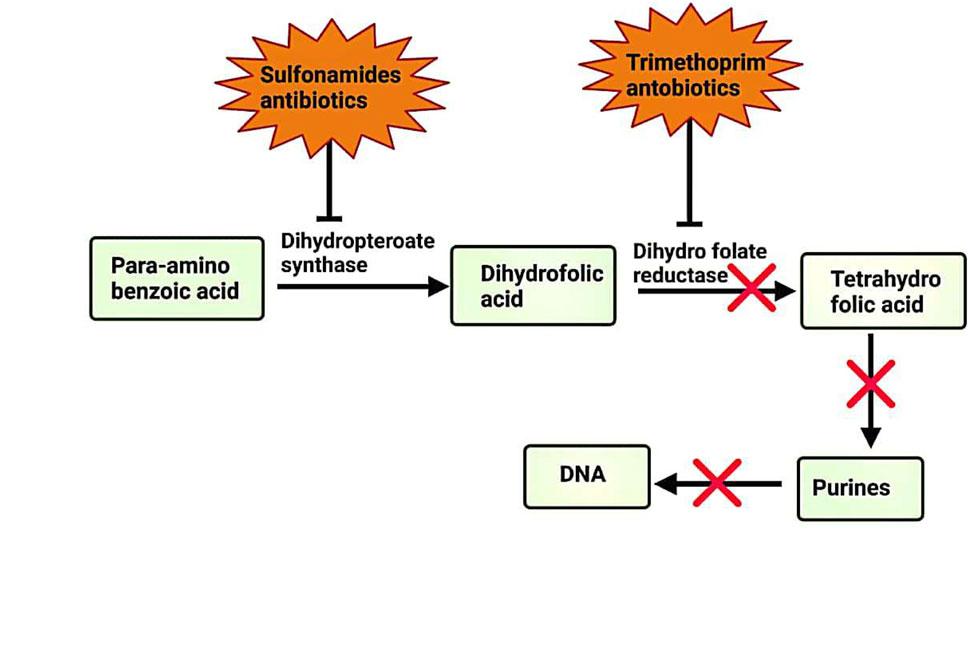
Which antibiotic combination blocks two sequential steps in folate synthesis?
Amoxicillin plus clavulanate
Piperacillin plus tazobactam
Azithromycin plus clindamycin
Trimethoprim plus sulfamethoxazole
Sulfonamides block dihydropteroate synthase; trimethoprim blocks dihydrofolate reductase. The other pairs are a beta-lactam with an inhibitor, or two ribosomal inhibitors. Image: Halawa EM et al., CC BY 4.0, via Wikimedia Commons.
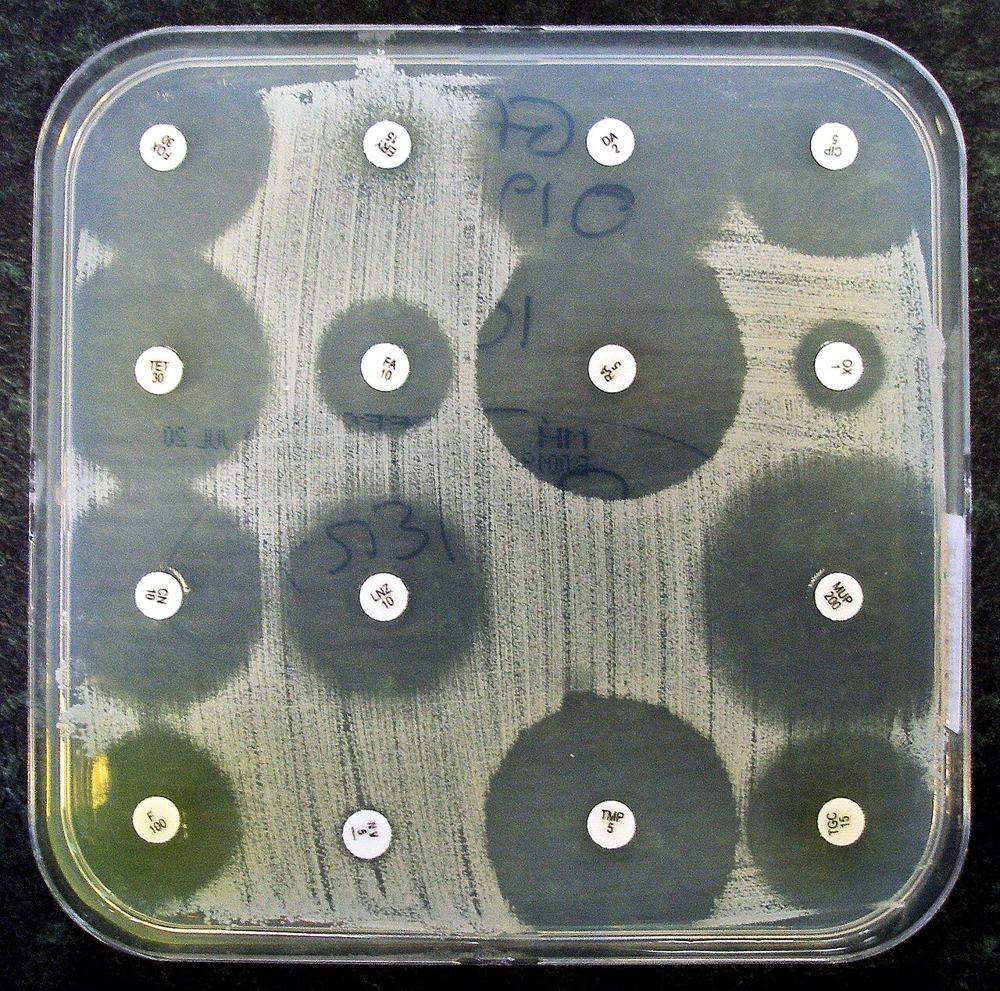
The disk diffusion plate shows clear circles around the disks. What does the clear circle indicate?
The bacteria are growing best there
The agar is contaminated
The antibiotic has no effect
The bacteria were inhibited by the antibiotic in that disk
A zone of inhibition is where the antibiotic diffused and stopped growth of the bacterial lawn. Image: Dr Graham Beards, CC BY-SA 4.0, via Wikimedia Commons.
In the diagram, which antibiotics act on the cell wall?
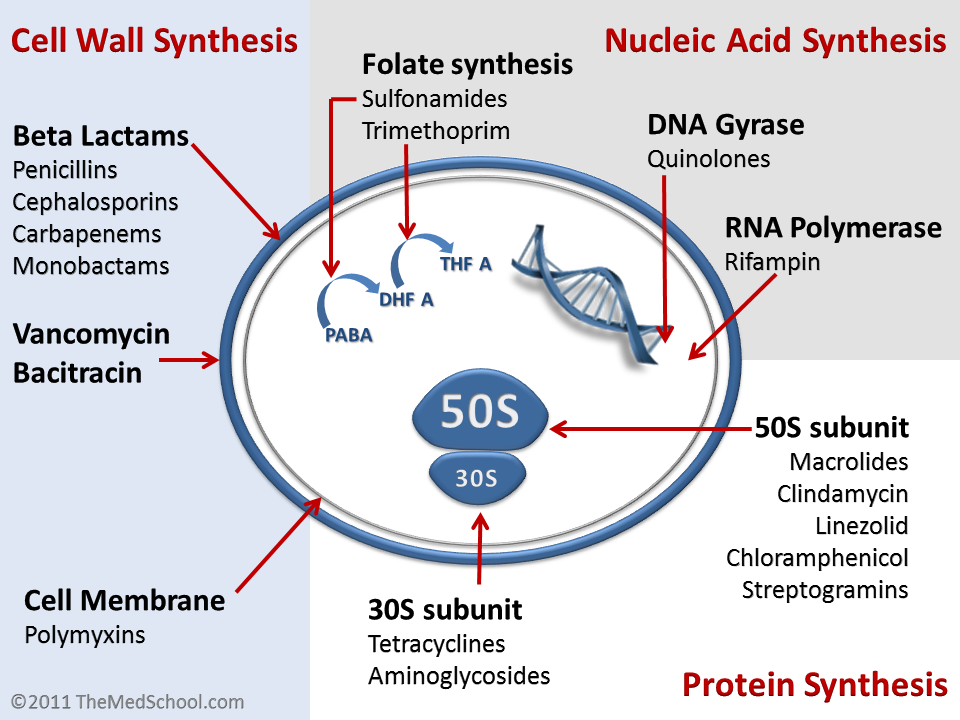
Beta-lactams and vancomycin
Macrolides and clindamycin
Quinolones and rifampin
Sulfonamides and trimethoprim
Cell wall synthesis inhibitors: beta-lactams, vancomycin, bacitracin. The other pairs are protein, nucleic acid and folate inhibitors. Image: Kendrick Johnson, CC BY-SA 3.0, via Wikimedia Commons.
Which antibiotic is a first-line treatment for syphilis?
Ciprofloxacin
Gentamicin
Metronidazole
Penicillin G benzathine
Treponema pallidum remains highly sensitive to penicillin.
