Quiz · Medium
Twenty foundation-level questions on pediatric airway emergencies, rashes and infectious diseases, development, safety, newborn assessment and GI/neuro conditions.
A mother brings a 3-year-old with a barking cough and stridor that worsened at night. Which action is the best initial nursing intervention?
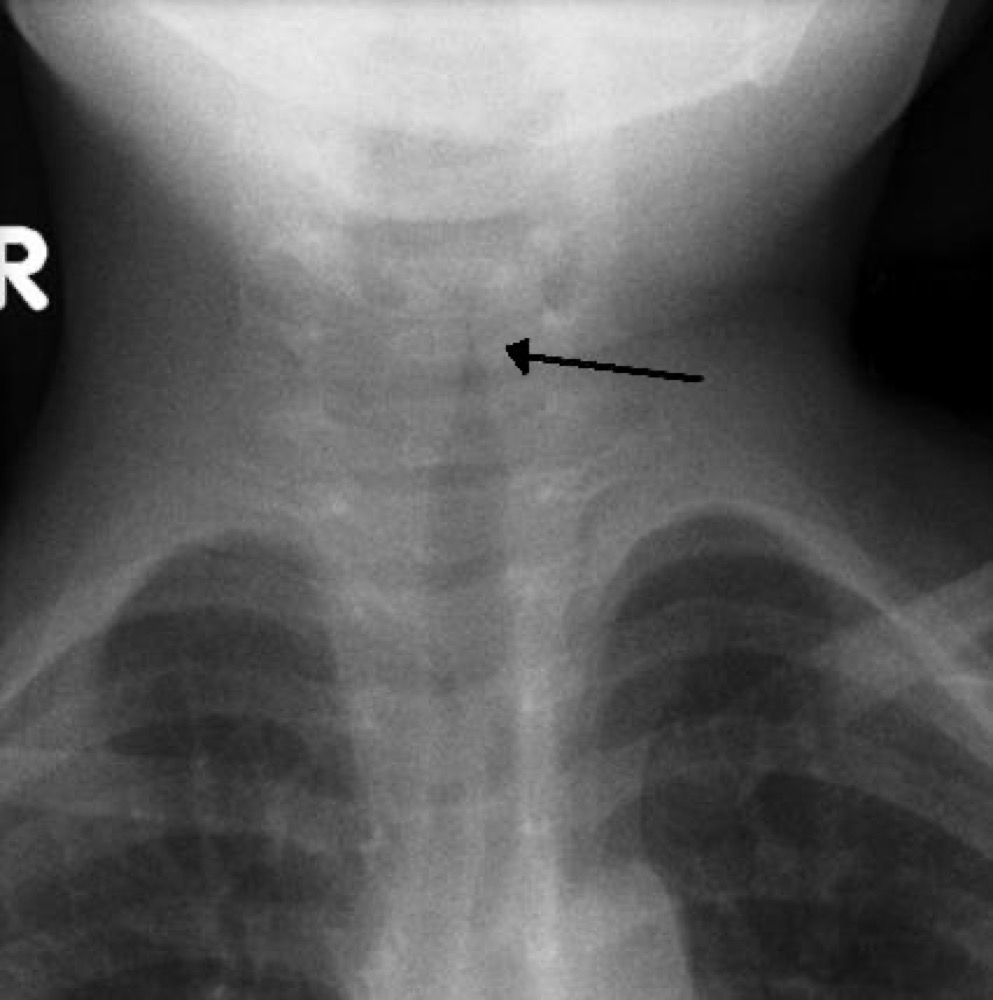
Keep the child calm and provide cool mist or humidified air
Examine the throat with a tongue blade
Lay the child flat and give warm fluids
Give an oral cough suppressant
This is croup. Crying and agitation worsen the airway obstruction. Cool mist and calming help, and dexamethasone or racemic epinephrine may be ordered. Examining the throat is dangerous when epiglottitis is possible.
Image: Frank Gaillard, CC BY-SA 3.0, via Wikimedia Commons.
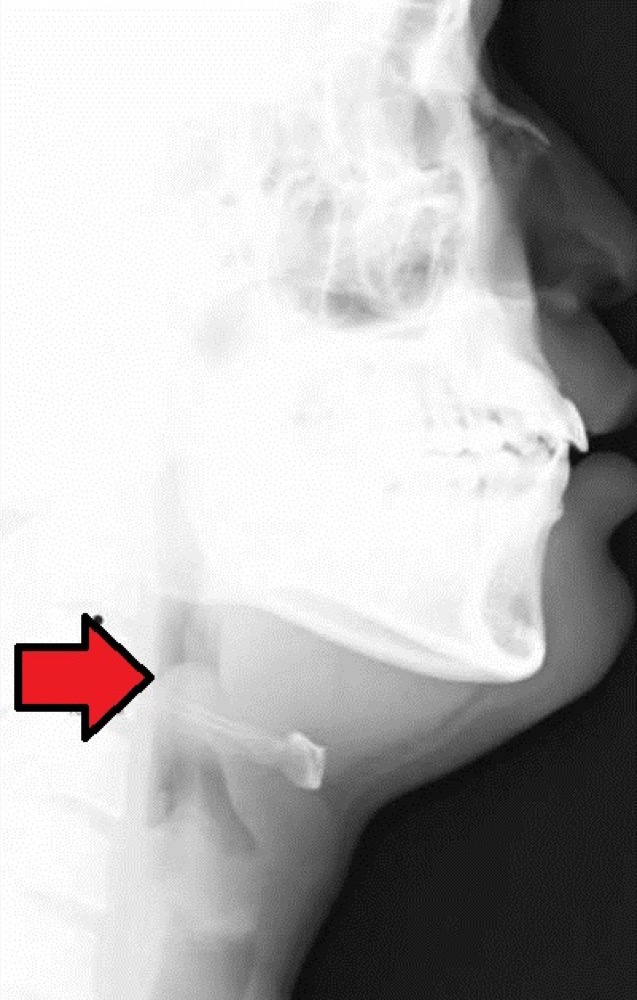
A 4-year-old has sudden high fever, drooling, muffled voice and sits leaning forward. What should the nurse do first?
Obtain a throat culture
Inspect the throat with a tongue depressor
Keep the child upright and calm and notify the provider for emergency airway management
Give oral antipyretics and send home
This is epiglottitis. Examining the throat or lying the child down can cause complete obstruction. Prepare for intubation.
An infant has projectile non-bilious vomiting after every feeding and a palpable olive-shaped mass. Which acid-base disorder is expected?
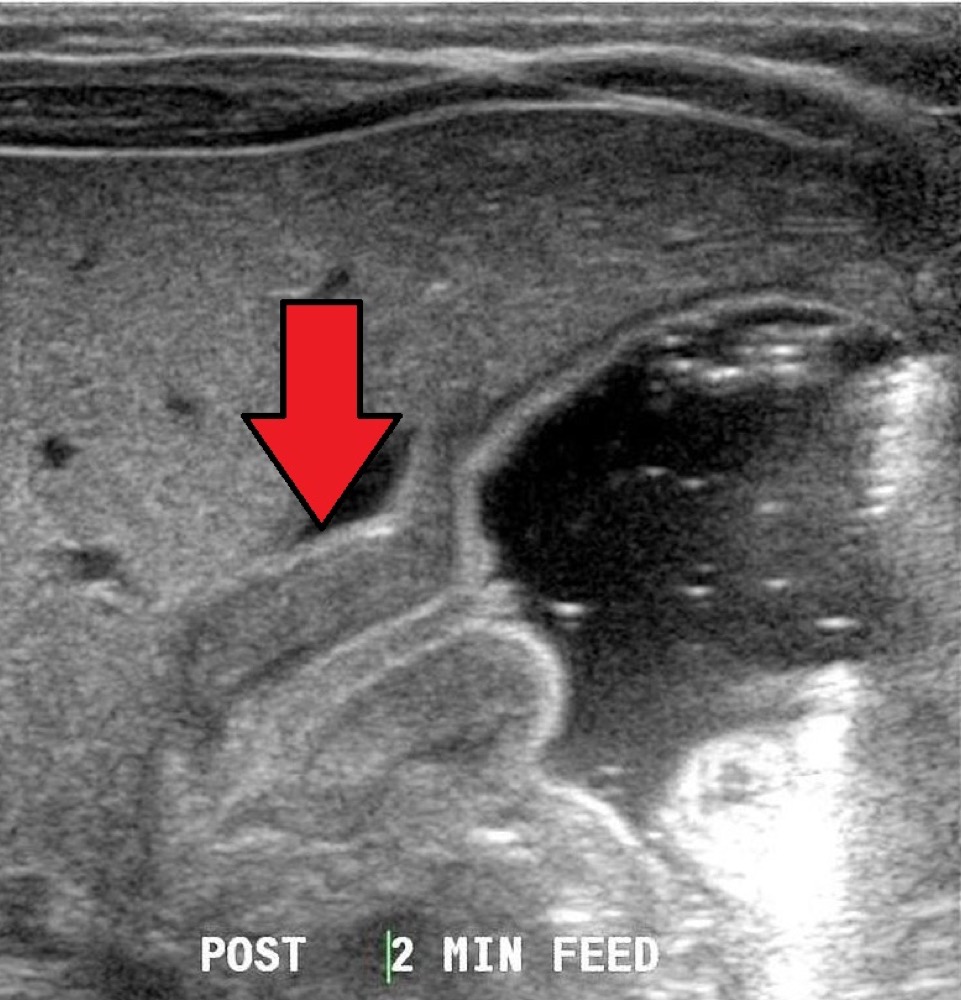
Metabolic alkalosis
Respiratory acidosis
Respiratory alkalosis
Metabolic acidosis
Loss of gastric acid (HCl) causes hypochloremic metabolic alkalosis. This is typical of pyloric stenosis.
Image: Dr Laughlin Dawes, CC BY-SA 4.0, via Wikimedia Commons.
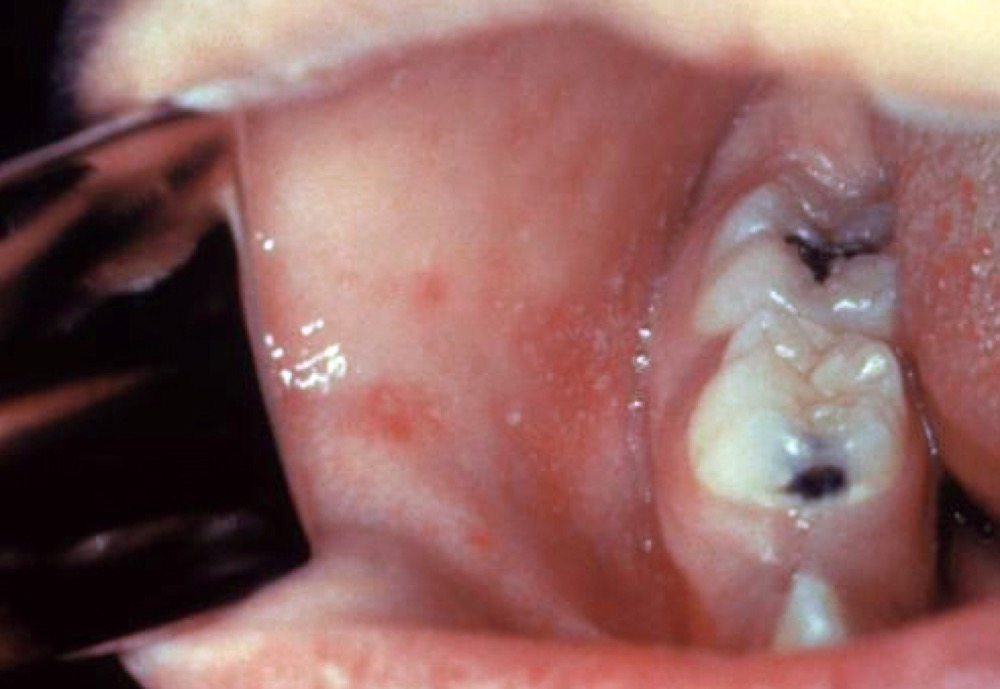
The nurse sees these white spots on the buccal mucosa of a febrile child with cough, coryza and conjunctivitis. Which precautions are needed?
Droplet
Standard only
Airborne
Contact
Koplik spots indicate measles, which is airborne. Place the child in a negative-pressure room and use an N95.
A child with chickenpox is admitted. The nurse should avoid giving which medication for fever?

Calamine lotion
Aspirin
Acetaminophen
Diphenhydramine for itching
Aspirin in a child with a viral illness such as varicella or influenza is linked to Reye syndrome. Acetaminophen is used for fever; antihistamines and calamine can ease itching.
Image: Unknown, CC BY-SA 3.0, via Wikimedia Commons.
Which sign is a pathognomonic early finding of measles?
Honey-colored crusts
Strawberry tongue
Slapped cheek rash
Koplik spots
Koplik spots appear 1 to 2 days before the rash. A strawberry tongue is scarlet fever, a slapped-cheek rash is fifth disease, and honey-colored crusts are impetigo.
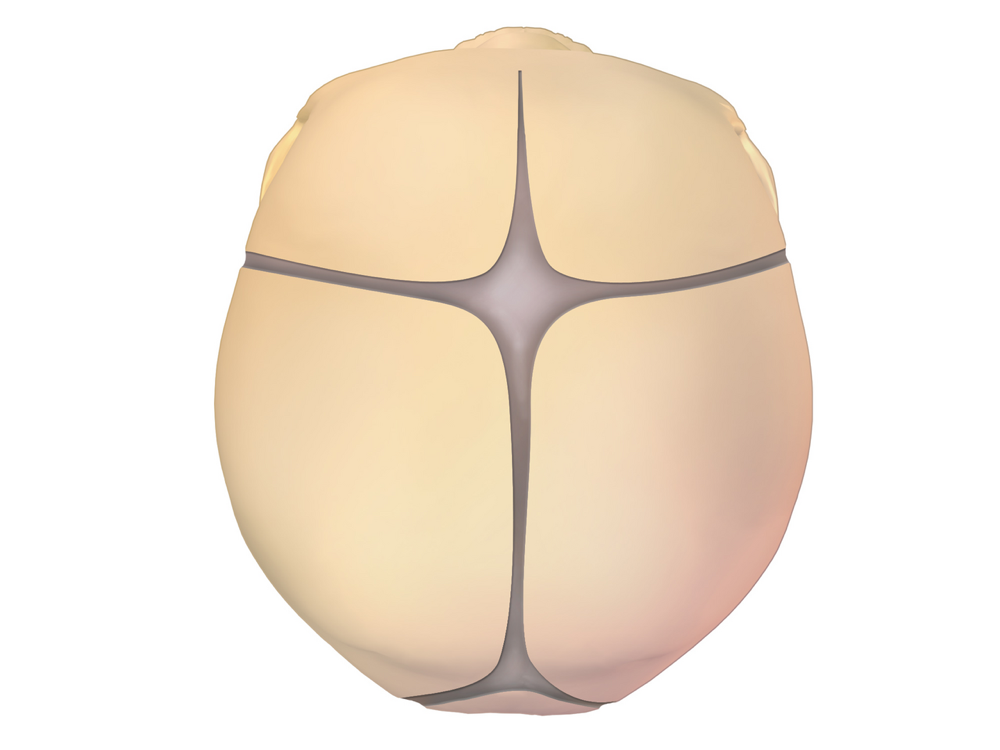
At what age is the anterior fontanelle expected to close?
2 to 3 months
12 to 18 months
6 months
24 to 30 months
The anterior fontanelle closes at about 12 to 18 months. The posterior fontanelle closes at about 2 to 3 months.
Image: BruceBlaus, CC BY-SA 4.0, via Wikimedia Commons.
A 3-month-old infant still shows a strong Moro reflex. How should the nurse interpret this?

Abnormal and indicates brain injury
Normal only if asymmetric
A sign of dehydration
Normal; the reflex disappears by 4 to 6 months
The Moro reflex normally persists until about 4 to 6 months. Persistence beyond 6 months or asymmetry suggests a neurologic problem or fracture.
Which food should be avoided for an infant under 12 months?
Pureed meat
Mashed banana
Honey
Iron-fortified cereal
Honey can contain Clostridium botulinum spores and cause infant botulism.
Which developmental milestone does the nurse expect in a healthy 12-month-old?
Pulls to stand and says first words
Hops on one foot
Skips
Rides a tricycle
At 12 months infants pull to stand, walk with support, have a pincer grasp and say first words. Tricycle riding is at 3 years, hopping at 4, skipping at 5.
Which play type is expected in a toddler?
Cooperative
Solitary
Parallel
Associative
Toddlers play next to but not with other children (parallel play).
The nurse is preparing to give an IM vaccine to a 6-month-old. Which site is correct?
Vastus lateralis
Ventrogluteal
Deltoid
Dorsogluteal
The vastus lateralis has the greatest muscle mass in infants; the deltoid is used from about age 3 when muscle mass is adequate.
A newborn has an Apgar score of 4 at 1 minute. How is this interpreted?
Normal
Excellent condition
Not interpretable
Moderately depressed; requires stimulation and possibly respiratory support
4 to 6 is moderately depressed. 7 to 10 is normal, 0 to 3 severely depressed.
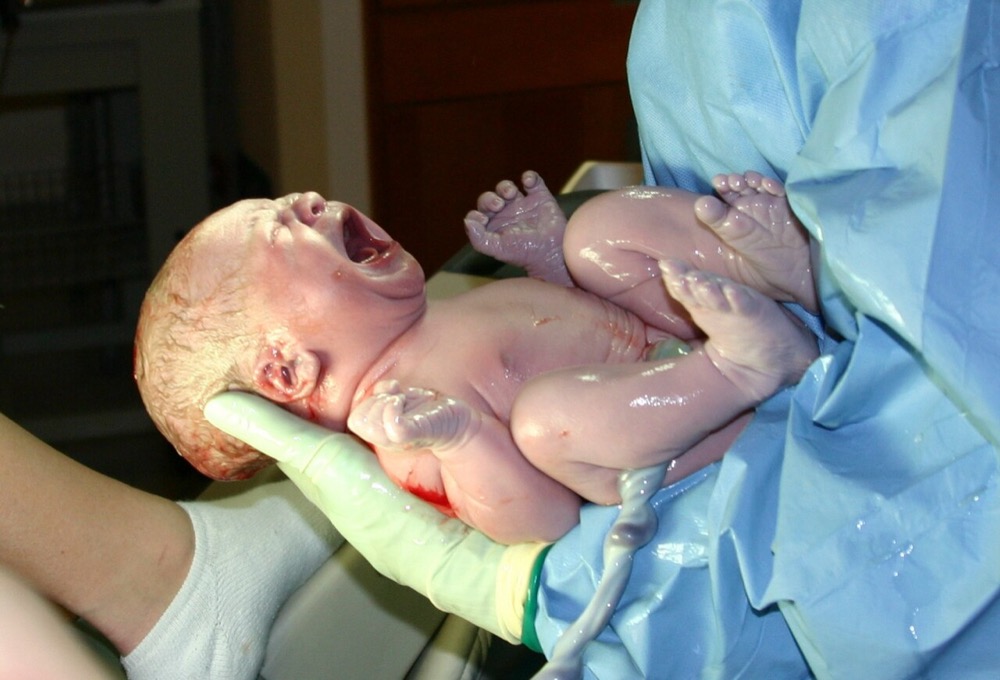
Which finding in a newborn requires immediate reporting?
Jaundice appearing on day 3
Jaundice appearing at 12 hours of age
Acrocyanosis of hands and feet
Vernix on the skin
Jaundice in the first 24 hours is pathologic (for example hemolysis). Physiologic jaundice appears after 24 hours. Acrocyanosis and vernix are normal.
Image: Ernest F, CC BY-SA 3.0, via Wikimedia Commons.
A child is receiving phototherapy for hyperbilirubinemia. Which intervention is a priority?
Keep the infant swaddled
Reduce feedings
Apply lotion to the exposed skin
Cover the eyes with opaque patches and expose as much skin as possible
Eye protection prevents retinal damage; exposing skin maximizes effect. Avoid lotions/oils that can burn under lights; encourage frequent feeds.
The nurse is teaching parents about a Pavlik harness for hip dysplasia. Which statement shows understanding?
'We will adjust the straps daily.'
'We will keep the harness on all the time except as instructed, and check the skin.'
'We will place a pillow under the baby's knees.'
'We will remove the harness for diaper changes and keep the legs together.'
The Pavlik harness maintains the hips in flexion and abduction; it is worn full time and adjusted only by the provider. Check the skin for breakdown.
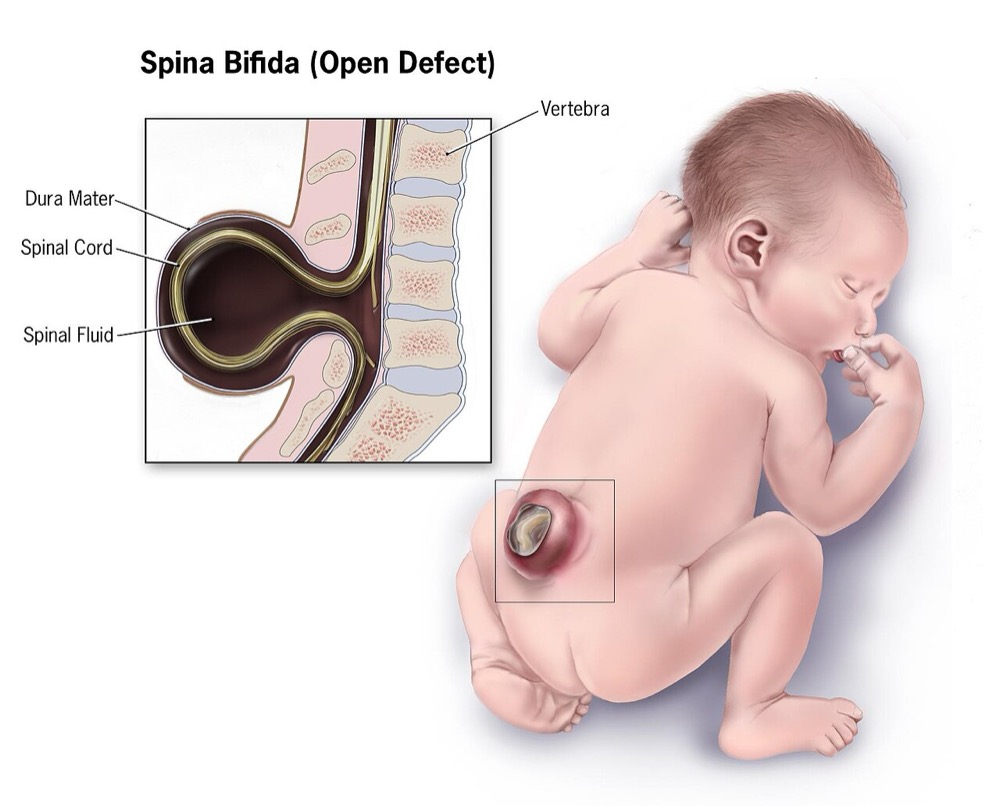
A child with spina bifida is at highest risk for which allergy?
Latex
Peanuts
Penicillin
Eggs
Repeated exposures to latex products in surgeries and catheterizations lead to a high risk of latex allergy.
A 2-year-old swallowed a bottle of an unknown liquid. What should the nurse advise first?
Wait for symptoms
Give syrup of ipecac
Call Poison Control (1-800-222-1222) and bring the container
Make the child drink milk
Do not induce vomiting. Call Poison Control immediately with the product details, or go to the emergency department.
What is the lowest acceptable systolic blood pressure for a healthy 5-year-old?
80 mmHg
60 mmHg
70 mmHg
90 mmHg
Lower limit of systolic BP = 70 + 2 x age, so for 5 years it is 70 + 10 = 80 mmHg. Hypotension in children is a late sign of shock.
Which statement about an infant with RSV bronchiolitis is correct?
Antibiotics are the treatment of choice
Steroids are given routinely
Care is supportive: suction, oxygen if needed, hydration
The child should be isolated with airborne precautions
RSV is viral, so treatment is supportive; contact precautions are used.
