Quiz · Medium
Foundational questions on IUPAC names, isomers, stereochemistry, SN1/SN2, simple addition and oxidation reactions, IR/NMR and lab technique.
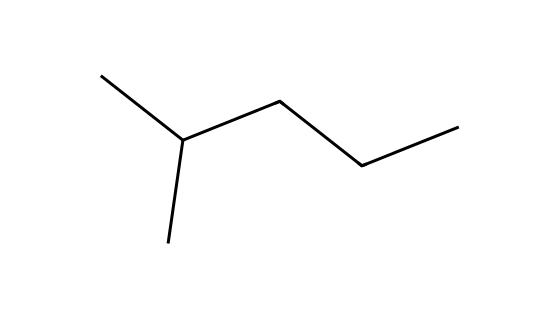
What is the IUPAC name of this compound?
4-methylpentane
2-methylpentane
2-methylhexane
3-methylpentane
The longest chain is 5 carbons with a methyl on C2. '4-methylpentane' is wrong because numbering must give the lowest locant, which is 2 from the other end. 3-methylpentane has its branch in the middle.
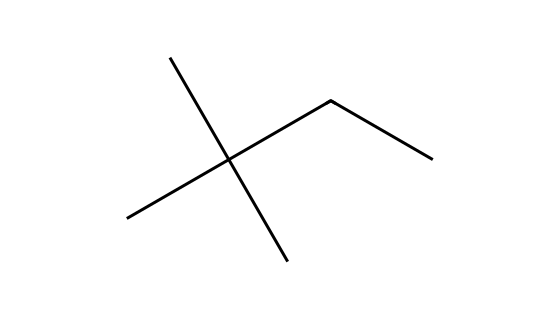
How many carbon atoms are in the longest chain of 2,2-dimethylbutane?
5
6
4
3
The parent is butane, 4 carbons. The two methyl groups are substituents, not part of the main chain, though they add to a total of 6 carbons.
Which pair are constitutional isomers?
Hexane and 2-methylpentane
Two conformers of butane
cis- and trans-but-2-ene
(R)- and (S)-2-bromobutane
Hexane and 2-methylpentane are both C6H14 with different connectivity. The other pairs have the same connectivity (stereoisomers or conformers).
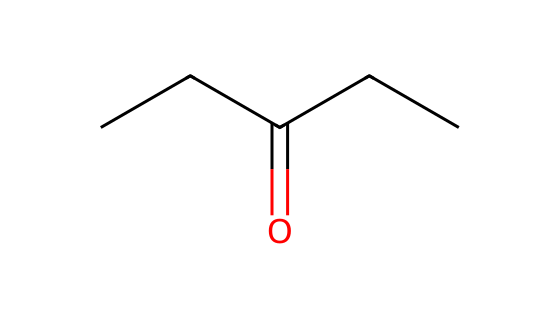
What is the name of this ketone?
Pentan-2-one
Pentan-3-ol
Pentanal
Pentan-3-one
The C=O is the middle carbon of a five-carbon chain. Pentan-2-one has C=O next to the end methyl; pentanal is an aldehyde.
A carbon with four different groups is called a
Nucleophilic center
Hybrid center
Stereocenter (chiral center)
Carbocation
Four different groups make a stereocenter. Having one usually makes the molecule chiral, unless it is meso.
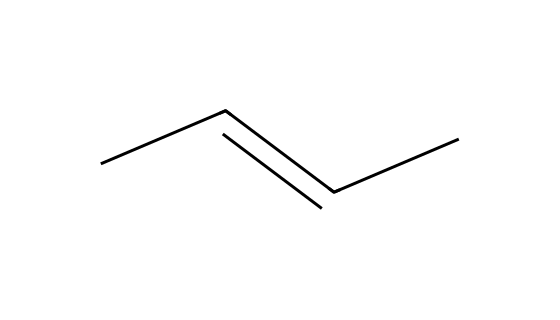
Is this alkene E or Z?
E, because both groups point up
Z, because the methyl groups are on the same side
E, because the methyl groups are on opposite sides
Neither: it has no stereoisomers
Opposite sides of the double bond with higher-priority groups (the methyls) trans to each other is E. This is trans-but-2-ene.
Which statement about enantiomers is true?
They are always diastereomers
They have different connectivity
They have different boiling points
They rotate plane-polarized light by equal amounts in opposite directions
Enantiomers have identical physical properties except for the direction of optical rotation. Diastereomers differ in physical properties.
In SN2 reactions, the nucleophile attacks from the side opposite the leaving group.
True
False
Backside attack explains the inversion of configuration. SN1 has no such requirement because the nucleophile attacks a planar carbocation.
Which solvent favors an SN2 reaction with an anionic nucleophile?
Acetic acid
Methanol
Water
DMSO
A polar aprotic solvent does not hydrogen bond to the nucleophile, leaving it more reactive. Protic solvents like water and methanol surround and weaken the nucleophile.
Which alkyl halide reacts fastest in an SN1 reaction?
(CH3)2CHBr
(CH3)3CBr
CH3Br
CH3CH2Br
SN1 rate follows carbocation stability, and the tertiary carbocation is the most stable. Methyl and primary halides almost never go SN1.
Markovnikov addition of HBr to propene gives mainly
2-bromopropane
1,2-dibromopropane
1-bromopropane
Propyne
H adds to the carbon with more hydrogens (C1), and Br goes to C2 through the more stable secondary carbocation. 1-Bromopropane is the anti-Markovnikov product.
Which reagent converts a secondary alcohol to a ketone?
H2, Pd/C
NaBH4
SOCl2
CrO3 / H2SO4
Chromium(VI) oxidizes secondary alcohols to ketones. NaBH4 and H2/Pd are reductions, and SOCl2 turns alcohols into chlorides.
What does PCC do to a primary alcohol?
Makes no change
Oxidizes it to a carboxylic acid
Oxidizes it to an aldehyde
Reduces it to an alkane
PCC is a mild oxidant used without water, so it stops at the aldehyde. Jones reagent would continue to the acid.
In IR spectroscopy, a strong sharp peak at about 1715 cm-1 indicates
O-H
C=O
C-H
C≡N
The carbonyl stretch appears near 1700 to 1750 cm-1. O-H is a broad band at 3200 to 3600, and a nitrile is near 2250.
A CH3 group next to a CH2 group appears in the 1H NMR as a
Doublet
Singlet
Triplet
Quartet
Two neighboring hydrogens split the signal into n + 1 = 3 peaks. The CH2 would be the quartet.
A dichloromethane layer and an aqueous layer are in a separatory funnel. Which layer is on the bottom?
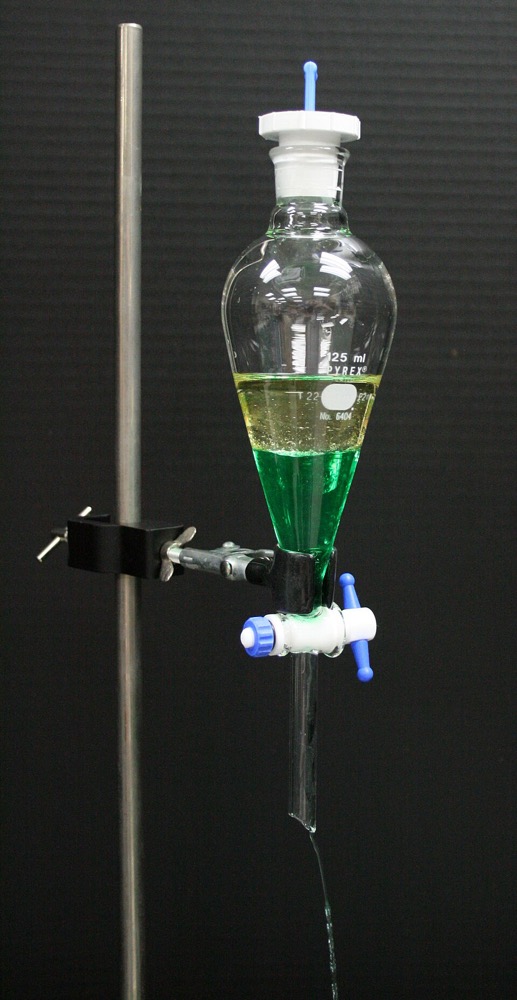
Dichloromethane, because it is denser than water
It depends on the temperature
Water, because water is polar
Whichever was added first
Dichloromethane has a density of about 1.33 g/mL, higher than water. The order of addition and polarity do not decide the layers: density does.
Which compound is aromatic?
Cyclobutadiene
Cyclooctatetraene (planar)
Benzene
Cyclohexene
Benzene is cyclic, planar, fully conjugated with 6 pi electrons (4n + 2). Cyclobutadiene has 4 pi electrons (antiaromatic), and cyclohexene has only one double bond.
Which substituent is a meta director in electrophilic aromatic substitution?
-NH2
-NO2
-OCH3
-CH3
The nitro group strongly withdraws electrons and directs meta. The methoxy, methyl and amino groups all donate electrons and direct ortho/para.
