Quiz · Hard
Harder, multi-step questions: stereochemical outcomes across steps, carbocation rearrangements, regiochemistry, Grignard additions and spectral deduction.
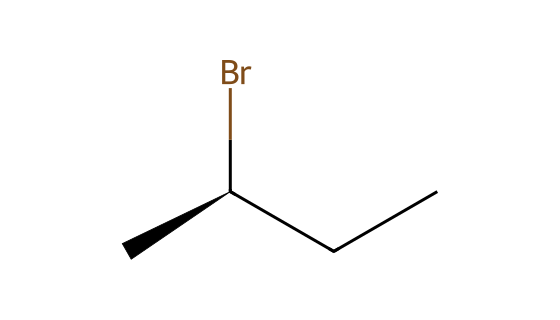
(R)-2-bromobutane is treated with NaCN in DMSO. Which statement describes the major product?
(S)-2-methylbutanenitrile
(R)-2-methylbutanenitrile
But-2-ene
Racemic 2-methylbutanenitrile
Cyanide is a good nucleophile and a weak base, and DMSO is polar aprotic, so SN2 wins and inverts the stereocenter. CN outranks ethyl as Br did, so the label goes R to S. Racemic product would need SN1.
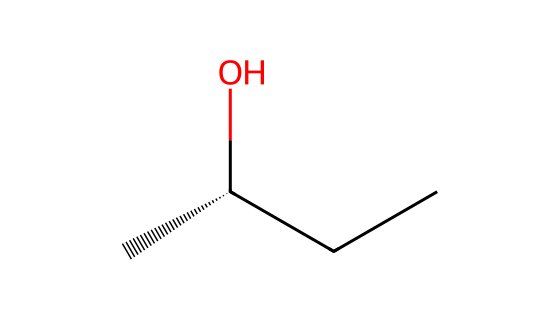
(S)-butan-2-ol is converted to its tosylate (TsCl, pyridine), then treated with NaBr. What is the final product?
But-1-ene
(R)-2-bromobutane
Racemic 2-bromobutane
(S)-2-bromobutane
Tosylation leaves the C-O bond intact, so there is retention. The SN2 displacement by bromide then inverts the center. The net result is inversion: (R)-2-bromobutane.
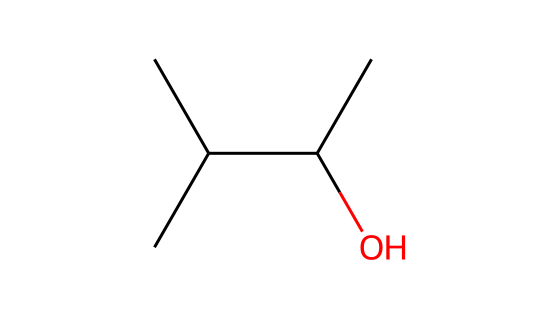
3-Methylbutan-2-ol reacts with concentrated HBr. The major product is
2-bromo-3-methylbutane
3-methylbut-1-ene
1-bromo-3-methylbutane
2-bromo-2-methylbutane
The secondary carbocation rearranges by a hydride shift to the more stable tertiary carbocation, which captures Br-. The unrearranged 2-bromo-3-methylbutane is a minor product.
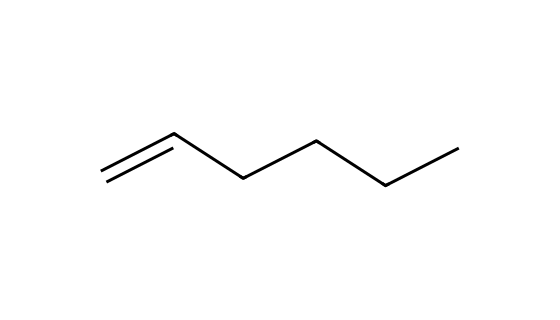
Which set of reagents converts hex-1-ene into hexan-1-ol?
BH3·THF, then H2O2, NaOH
H2O, H2SO4
OsO4, then NaHSO3
Hg(OAc)2, H2O, then NaBH4
Hydroboration-oxidation is anti-Markovnikov. The acid-catalyzed and oxymercuration hydrations are Markovnikov and give hexan-2-ol; OsO4 gives a diol.
Cyclohexene reacts with Br2 in CH2Cl2. The product is
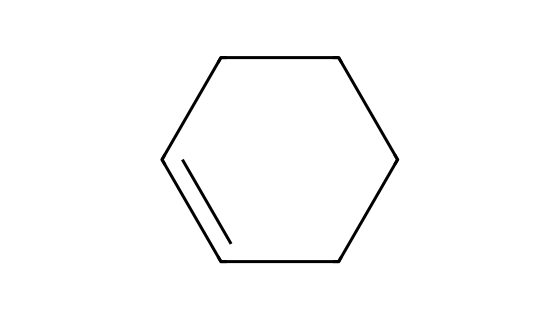
trans-1,2-dibromocyclohexane
1,1-dibromocyclohexane
1,3-dibromocyclohexane
cis-1,2-dibromocyclohexane
The cyclic bromonium ion is opened by Br- from the opposite face, so the addition is anti. This gives the trans product (as a racemate).
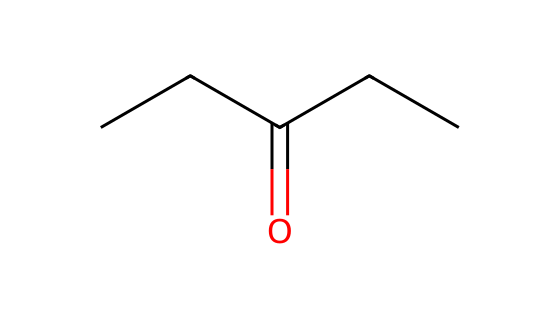
A compound C5H10O shows a strong IR peak at 1715 cm-1, no broad band above 3200 cm-1, and a 1H NMR spectrum with a triplet (6H), and a quartet (4H). What is it?
3-Methylbutan-2-one
Pentan-3-one
Pentanal
Pentan-2-one
The triplet and quartet with the ratio 3:2 correspond to two equivalent ethyl groups on a carbonyl: diethyl ketone (pentan-3-one). Pentan-2-one would show a singlet for the methyl next to C=O, and pentanal would show an aldehyde peak at 9-10 ppm.
A compound has a molecular ion at m/z 122 and 124 with equal intensity. This indicates
One bromine atom
One sulfur atom
Two chlorine atoms
One chlorine atom
Bromine has two isotopes (79 and 81) in about 1:1 ratio, so M and M+2 are equal. One chlorine gives about 3:1.
Which of these anions is the weakest base?
Acetate, CH3COO-
Ethoxide, CH3CH2O-
Amide, NH2-
Hydroxide, OH-
A weak base is the conjugate base of a strong acid. Acetic acid (pKa about 4.8) is the strongest acid here, so acetate is the weakest base. Amide (conjugate acid NH3, pKa about 38) is by far the strongest.
Toluene is nitrated with HNO3/H2SO4. The major products are
ortho- and para-nitrotoluene
benzoic acid
Only para-nitrotoluene
meta-nitrotoluene
The methyl group is an activating, ortho/para director. Para is slightly favored sterically, but ortho is also formed in significant amount.
Why does Friedel-Crafts alkylation of benzene with 1-chloropropane and AlCl3 give mainly isopropylbenzene?
AlCl3 reduces the chloride
Benzene prefers the more substituted position
The primary carbocation rearranges by a hydride shift to a secondary one
Propyl chloride is secondary
The incipient primary carbocation (or polarized complex) undergoes a 1,2-hydride shift to the more stable secondary carbocation. Acylation followed by reduction avoids this problem.
Which E2 reaction would give mainly the less substituted (Hofmann) alkene?
2-Bromobutane with NaOH, heat
2-Bromo-2-methylbutane with NaOEt
2-Bromo-2-methylbutane with H2O, heat
2-Bromo-2-methylbutane with KOC(CH3)3
A bulky base like tert-butoxide removes the more accessible H, giving the less substituted alkene. Small bases like ethoxide give the Zaitsev product, and water is not a strong base (it gives E1/SN1).
How many stereoisomers does 2,3-dibromobutane have?
3
2
1
4
Two stereocenters would give 4 by the rule, but the molecule is symmetrical: (2R,3R) and (2S,3S) are enantiomers and (2R,3S) is meso, so there are 3.
Which compound runs highest (largest Rf) on a silica TLC plate eluted with 20% ethyl acetate in hexane?
Hexan-1-ol
Hexan-2-one
Hexanoic acid
Hexane
Silica is polar, so the least polar compound moves furthest. Hexane has no polar group and runs near the solvent front. The acid is the most strongly retained, then the alcohol, then the ketone.
What is the major product of the reaction of pentan-3-one with CH3MgBr followed by aqueous acid?
Pentan-3-ol
3-methylpentan-2-ol
Hexan-3-one
3-methylpentan-3-ol
The Grignard carbon attacks the carbonyl carbon, giving a tertiary alcohol after protonation: C3 now carries OH, CH3 and two ethyl groups. Pentan-3-ol would come from reduction.
