Quiz · Medium
Twenty questions on symmetry, body cavities, protostomes vs deuterostomes and identifying the main animal phyla from photos.
Which nitrogenous waste is excreted by birds to save water?
Urea
Uric acid
Nitrate
Ammonia
Uric acid is a nearly insoluble paste. Ammonia is made by aquatic animals and urea by mammals.
True or False: All animals with radial symmetry are triploblastic.
True
False
Cnidarians have radial symmetry but only two germ layers (diploblastic), so the statement is false.
An animal has bilateral symmetry, three germ layers, a body cavity only partly lined with mesoderm and a complete digestive tract. It is most likely a:
Jellyfish
Flatworm
Roundworm
Earthworm
That describes a pseudocoelomate: nematode. Flatworms are acoelomates, annelids have a true coelom and jellyfish are radial and diploblastic.
Which phylum does the animal in the photo belong to?
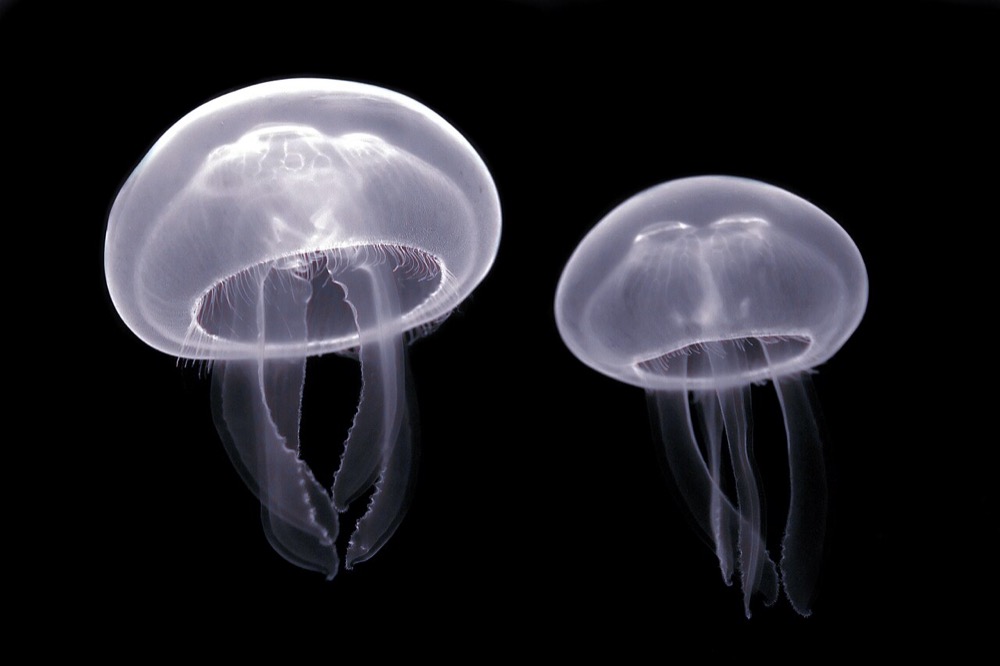
Cnidaria
Porifera
Echinodermata
Mollusca
A moon jellyfish is a cnidarian: radial symmetry, a medusa body form and stinging cells.
Image: Luc Viatour, CC BY-SA 3.0, via Wikimedia Commons.
The animal in the photo filters food from water using choanocytes. It is a:
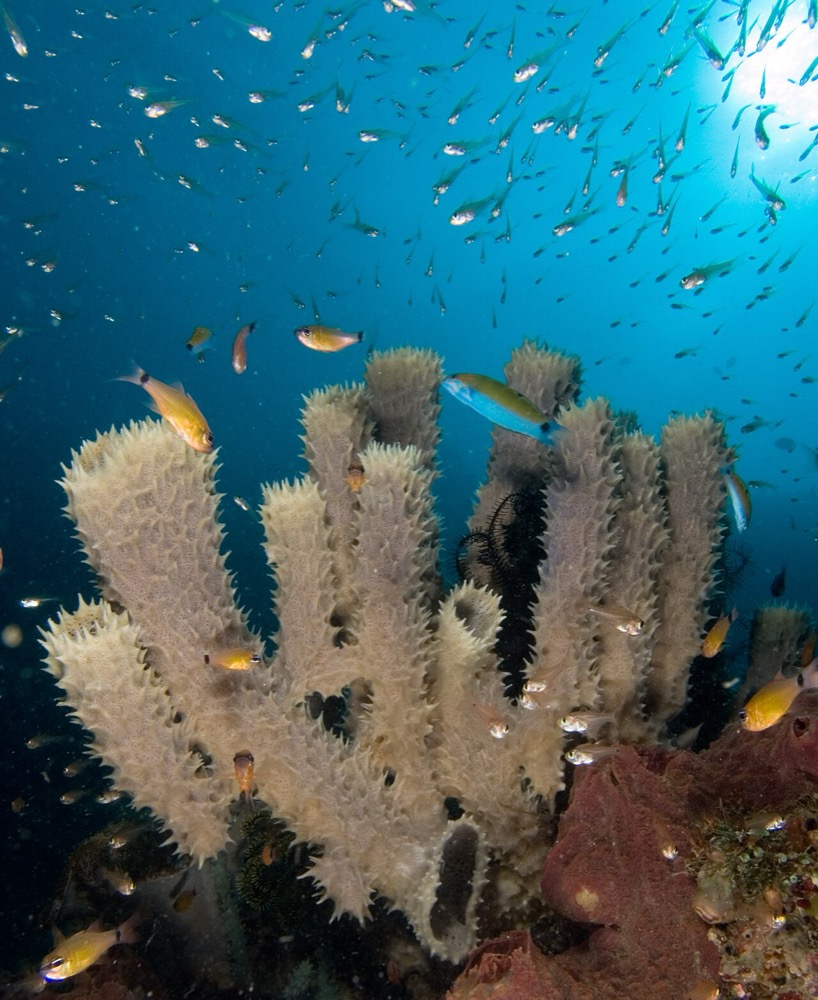
Planarian
Sea star
Sea anemone
Sponge
Only sponges (Porifera) have choanocytes.
Image: Nhobgood Nick Hobgood, CC BY-SA 3.0, via Wikimedia Commons.
Which of the following lists the four distinguishing features of chordates?
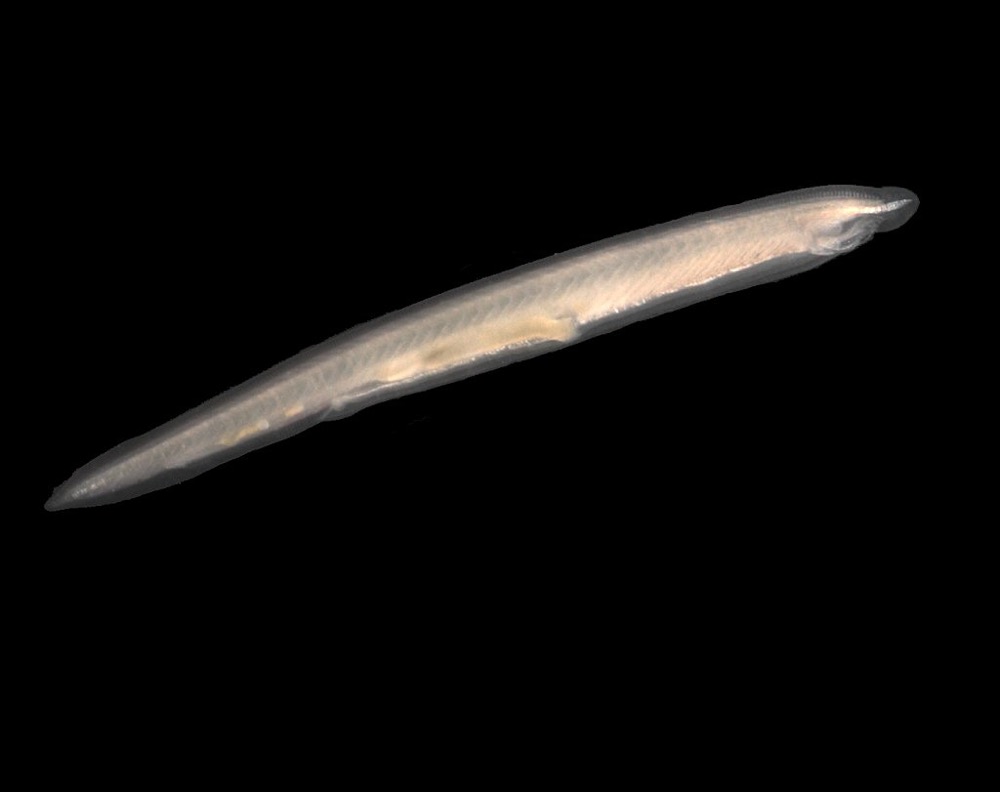
Exoskeleton, jointed legs, segmentation, compound eyes
Notochord, dorsal hollow nerve cord, pharyngeal slits, post-anal tail
Backbone, lungs, jaws, limbs
Hair, mammary glands, four-chambered heart, diaphragm
These four features are present in chordates at some stage. A backbone is found only in vertebrates, a subgroup of chordates.
Image: Hans Hillewaert, CC BY-SA 4.0, via Wikimedia Commons.
In protostome animals, the blastopore develops into the:
Anus
Mouth
Notochord
Coelom
Protostome = 'first mouth'. In deuterostomes it becomes the anus.
Which pair are both deuterostomes?
Octopus and earthworm
Crab and spider
Snail and clam
Sea star and human
Echinoderms and chordates are deuterostomes. The rest of the options are protostomes (mollusks, annelids, arthropods).
Which structure is defining for mollusks?
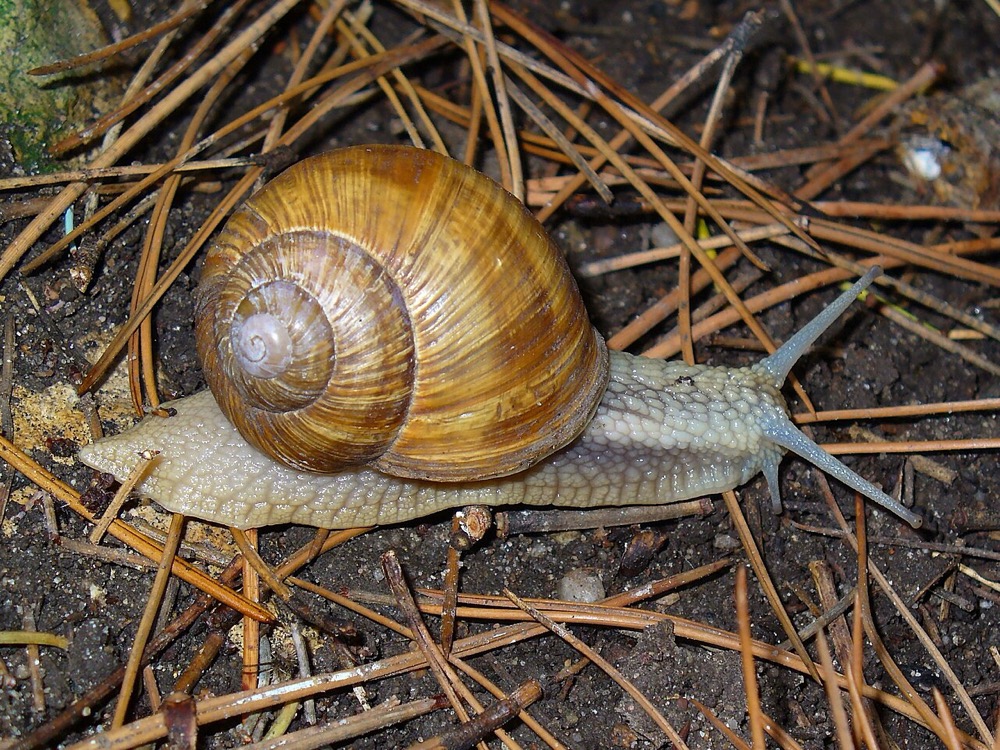
A muscular foot, mantle and visceral mass
A water vascular system
A notochord
A chitin exoskeleton
Mollusks share a muscular foot, a mantle and a visceral mass. The water vascular system is for echinoderms.
Image: H. Zell, CC BY-SA 3.0, via Wikimedia Commons.
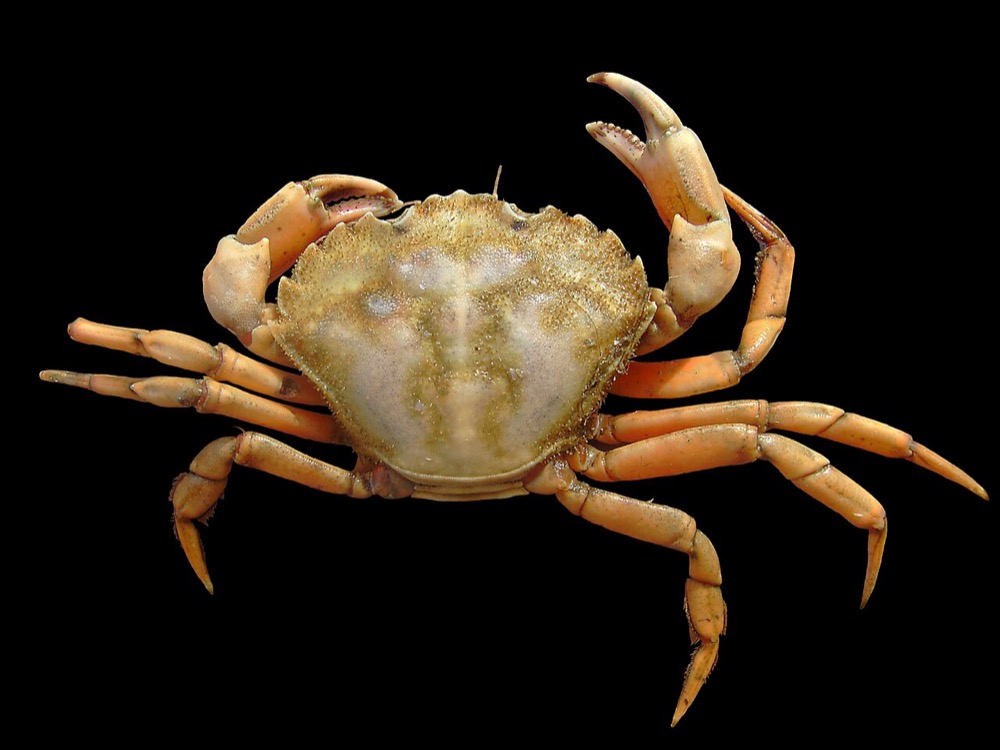
Why must arthropods molt?
To change sex
To get a new color
Because the rigid chitin exoskeleton cannot grow
To remove parasites
The exoskeleton does not grow with the animal, so it must be shed and replaced.
Image: Hans Hillewaert, CC BY-SA 4.0, via Wikimedia Commons.
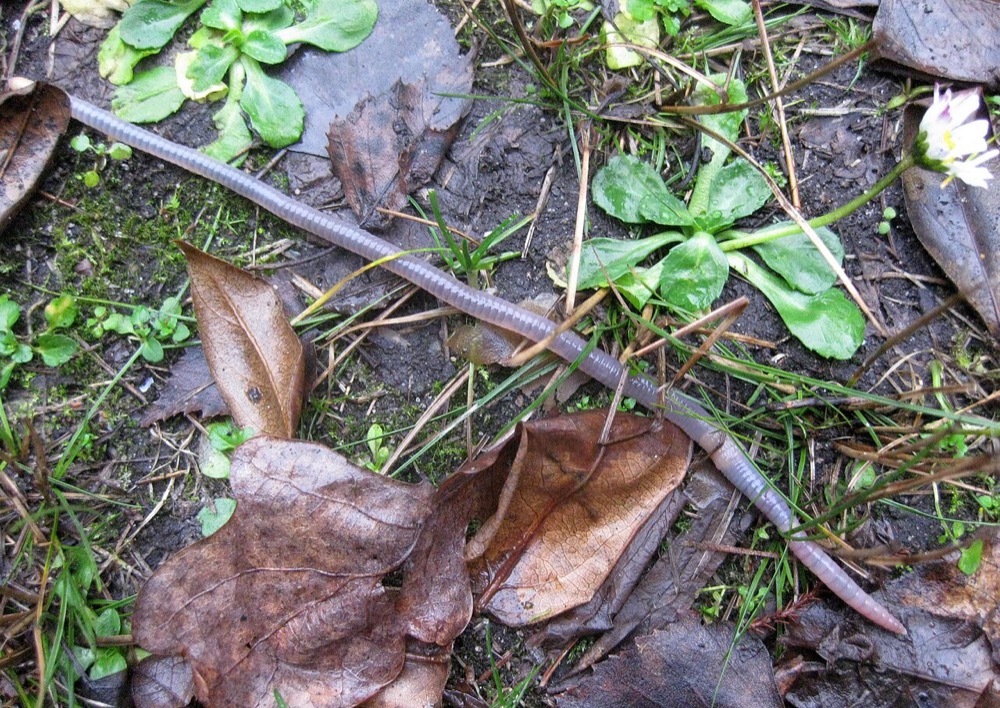
An earthworm and a leech both have a segmented body. They belong to the phylum:
Nematoda
Platyhelminthes
Annelida
Arthropoda
Annelida means little rings. Nematodes are unsegmented roundworms.
Image: Wilhelm Zimmerling PAR, CC BY-SA 4.0, via Wikimedia Commons.
The sea star in the picture has which adult symmetry?
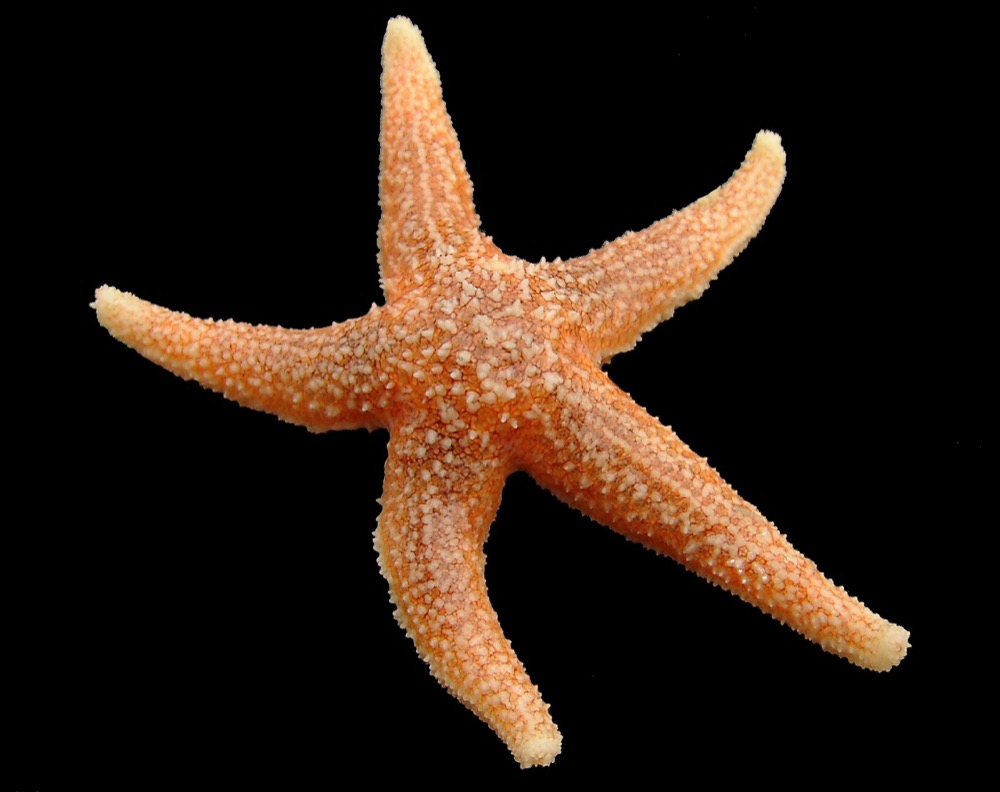
Pentaradial
Asymmetrical
Spherical
Bilateral
Adult echinoderms have five-part radial symmetry, although larvae are bilateral.
Image: Hans Hillewaert, CC BY-SA 4.0, via Wikimedia Commons.
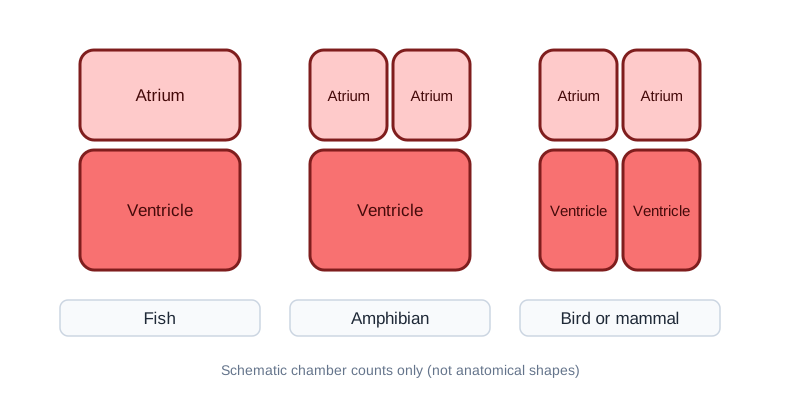
Which animal group has a three-chambered heart?
Birds
Mammals
Fish
Amphibians
Amphibians have two atria and one ventricle. Birds and mammals have four chambers; fish have two.
Which of the following is an example of a homologous structure?
Shark fin and dolphin flipper
Eye of an octopus and a human eye
Bird wing and insect wing
Human arm and bat wing
The human arm and bat wing have the same bones and ancestry. The other pairs are analogous structures from convergent evolution.
What is the correct order of early embryonic stages?
Zygote, blastula, gastrula
Gastrula, blastula, zygote
Zygote, gastrula, blastula
Blastula, zygote, gastrula
The zygote cleaves into a blastula, which then folds inward during gastrulation.
Which of the following animals is an endotherm?
Frog
Lizard
Penguin
Salmon
Birds and mammals are endotherms. Frogs, lizards and fish are ectotherms.
Which organ system do insects use to excrete uric acid?
Contractile vacuoles
Nephrons
Malpighian tubules
Nephridia
Malpighian tubules empty into the insect gut. Nephridia are for annelids and contractile vacuoles for freshwater protists.
The C. elegans in the photo is a nematode. Which description is correct?
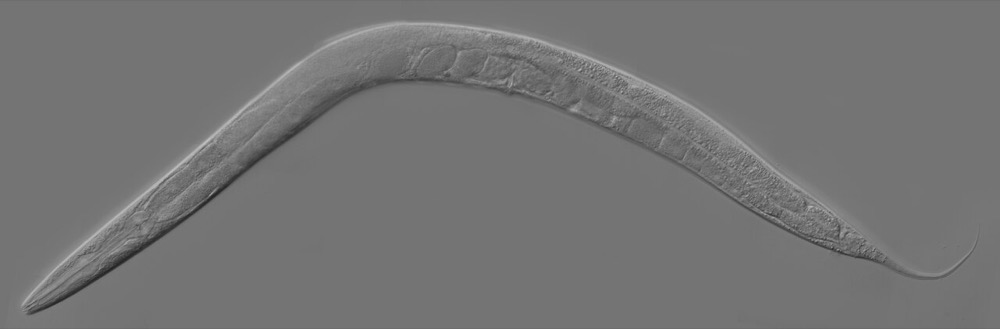
Pseudocoelomate with a complete gut
Coelomate with segments
Radial with tentacles
Acoelomate with a gastrovascular cavity
Nematodes are pseudocoelomates with a complete tract and a molted cuticle.
Image: The original uploader was Kbradnam at English Wikipedia. (Original text: Zeynep F. Altun, Editor of www.wormatlas.org), CC BY-SA 2.5, via Wikimedia Commons.
The planarian in the photo has a gastrovascular cavity with one opening. Which phylum fits this?
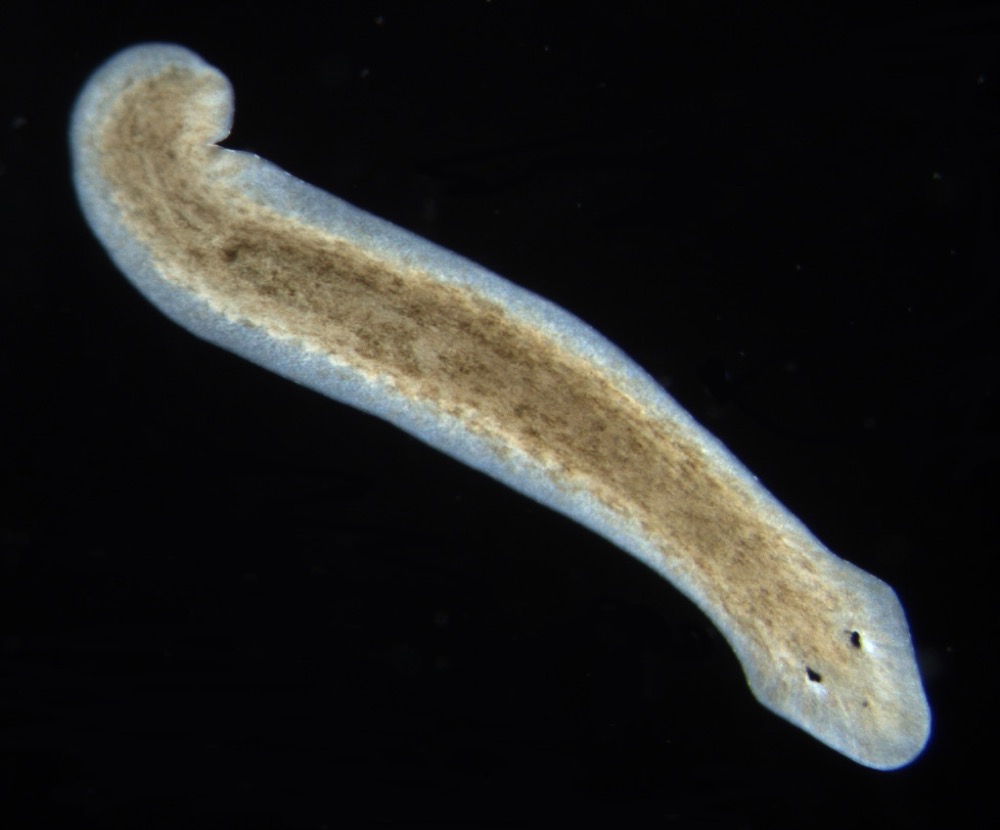
Nematoda
Annelida
Chordata
Platyhelminthes
Flatworms are acoelomates with an incomplete digestive system.
Image: Eduard Solà, CC BY-SA 3.0, via Wikimedia Commons.
