Quiz · Medium
Urbanisation, megacities, models of urban structure, primate cities, gentrification and informal settlements.
A primate city is:
The oldest city in a country
The capital city of any country
A planned city
A city more than twice as large as the next biggest and dominant in its country
Bangkok and Paris are classic examples.
A megacity is a city with more than:
1 million people
5 million people
50 million people
10 million people
There are over 30 megacities worldwide, most of them in Asia.
In Burgess's concentric zone model, zone A is the:
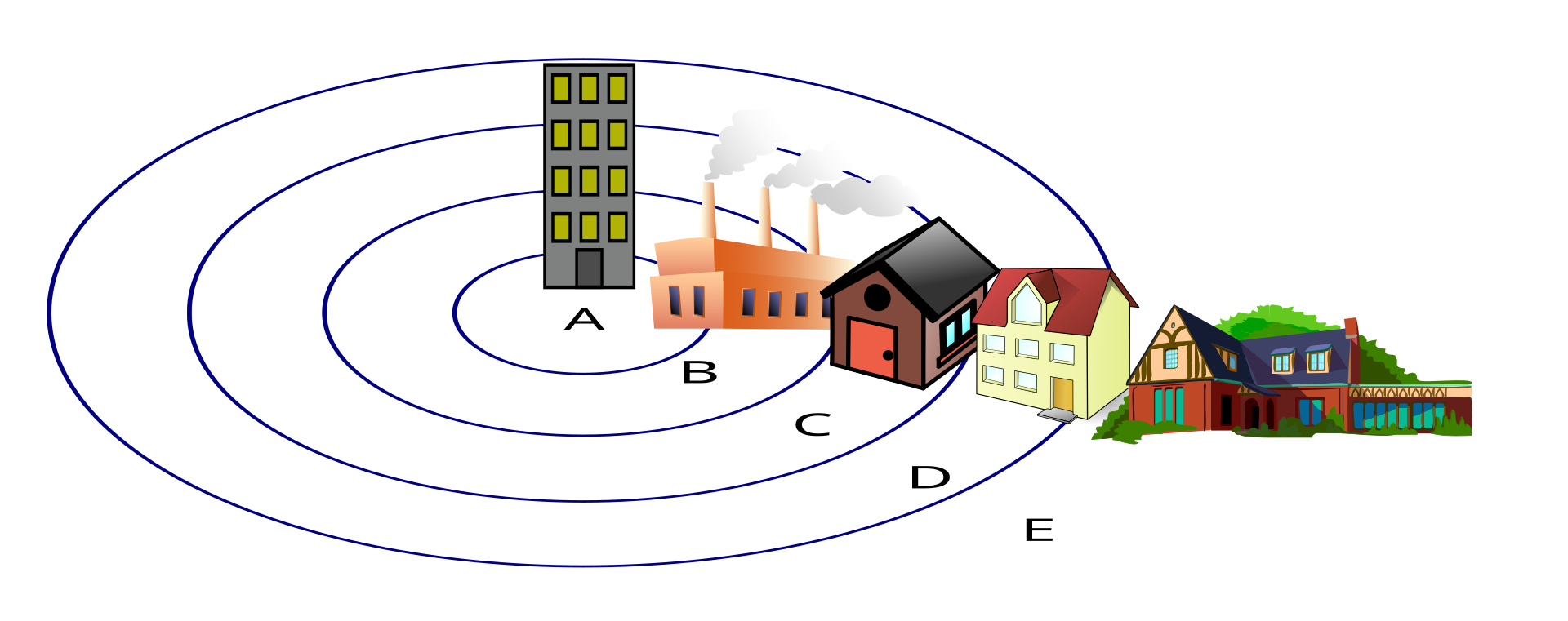
Commuter zone
Central business district
Zone of working-class homes
Industrial suburb
Zones A to E move outward from the centre.
Image: Zeimusu, Public domain, via Wikimedia Commons.
Which model says cities grow in wedges along transport routes?
Burgess's concentric zone model
Christaller's central place theory
Hoyt's sector model
The rank-size rule
Hoyt published it in 1939.
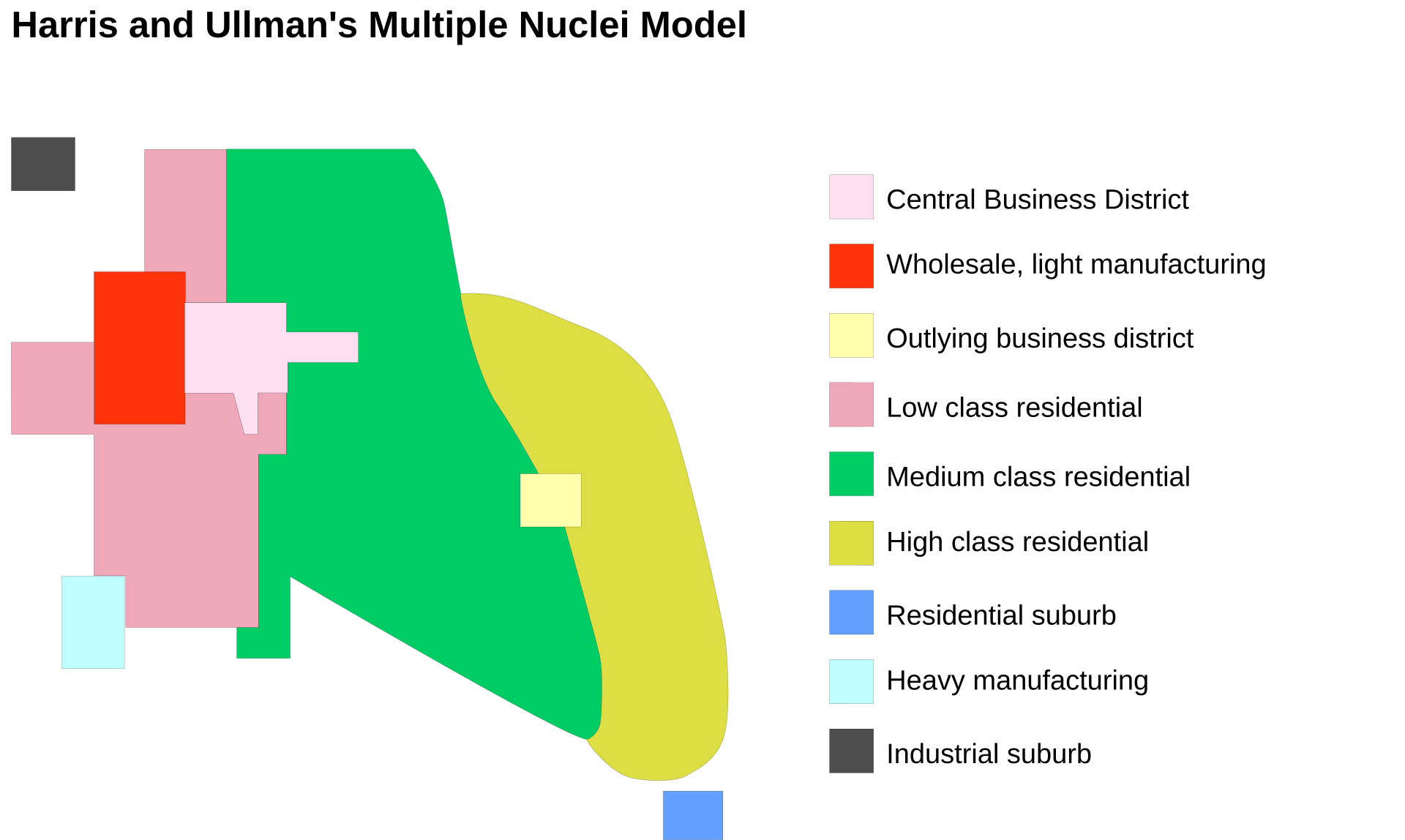
Which model proposes that a city grows around several separate centres?
Burgess's concentric zone model
Hoyt's sector model
Harris and Ullman's multiple nuclei model
Von Thunen's model
This fits sprawling, car-based cities best.
Image: Ulman2.png: The original uploader was SuzanneKn at English Wikipedia., Public domain, via Wikimedia Commons.
Central place theory was proposed by:
Ernest Burgess
Homer Hoyt
Walter Christaller
Johann von Thunen
He studied settlements in southern Germany.
The minimum number of customers needed to support a business is its:
Range
Threshold
Hierarchy
Situation
Range is the maximum distance people will travel.
The rank-size rule predicts that the third-largest city has about what fraction of the largest city's population?
One-half
One-tenth
One-third
One-quarter
The nth city is about 1/n the size of the largest.
Gentrification is when:
People leave an area for the suburbs
Wealthier people move into a poorer area, raising prices
A city is planned from scratch
Farmland becomes a suburb
It can displace long-term residents.
Low-density, car-dependent development spreading across farmland is called:
A conurbation
Gentrification
Urban sprawl
A central place
It increases commuting, congestion and land consumption.
Which term describes Brazilian informal settlements?
Banlieues
Favelas
Bidonvilles
Barangays
Barrios are the Latin American Spanish equivalent.
A continuous urban area formed when towns merge as they grow is a:
Conurbation
Megacity
Exclave
Edge city
The Ruhr and Randstad are examples.
Site refers to:
The physical land where a settlement is located
A settlement's position relative to other places
The size of a settlement
Its political status
Situation is its location relative to surroundings.
Which city was inaugurated as a planned capital in 1960?
Brasilia
Canberra
Washington, D.C.
Abuja
Canberra dates from 1913 and Abuja became Nigeria's capital in 1991.
Which phrase describes what happens in Pudong, Shanghai, since 1990?
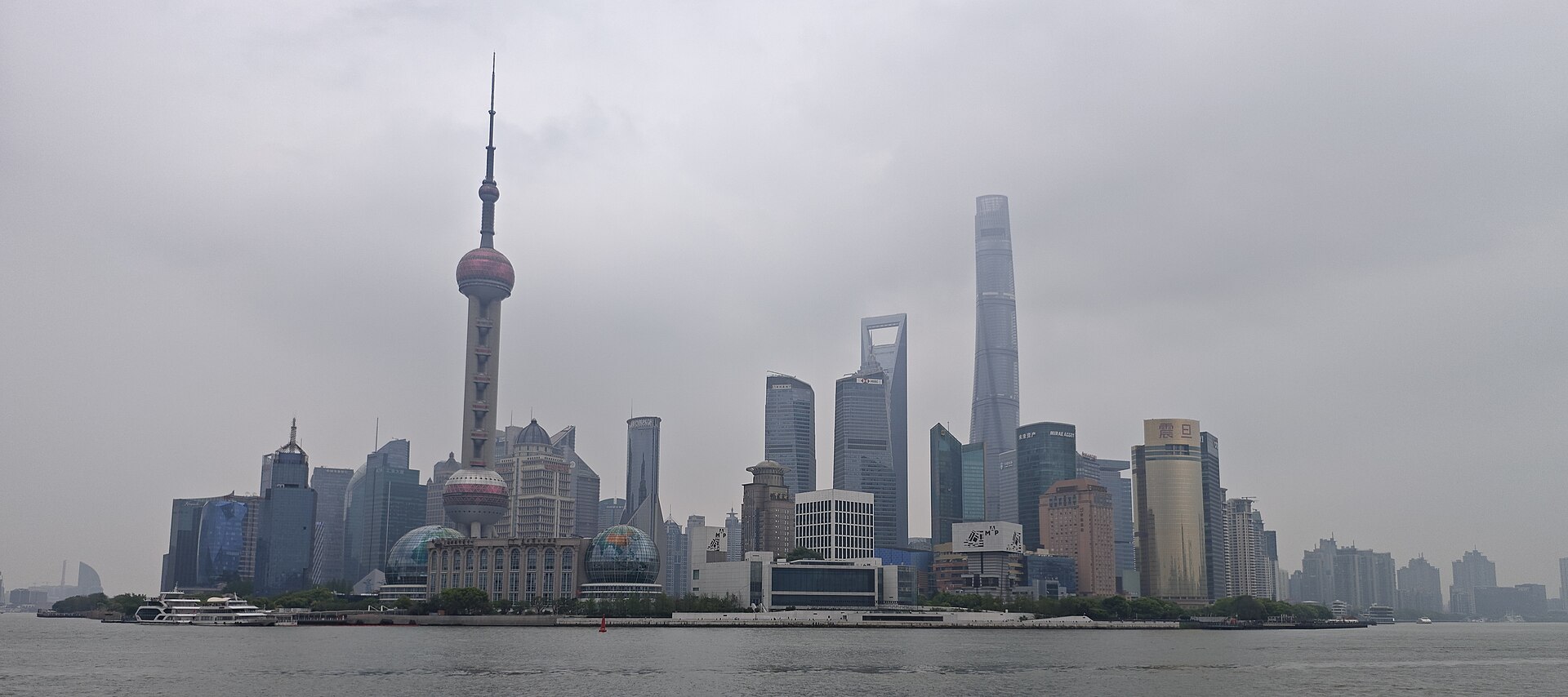
Rapid state-led urban development creating a new financial district
Population decline
Gradual medieval growth
Abandonment after resource loss
It now has skyscrapers such as the Shanghai Tower (632 m).
Image: DvTor8303, CC0, via Wikimedia Commons.
The majority of the world's megacities are in:
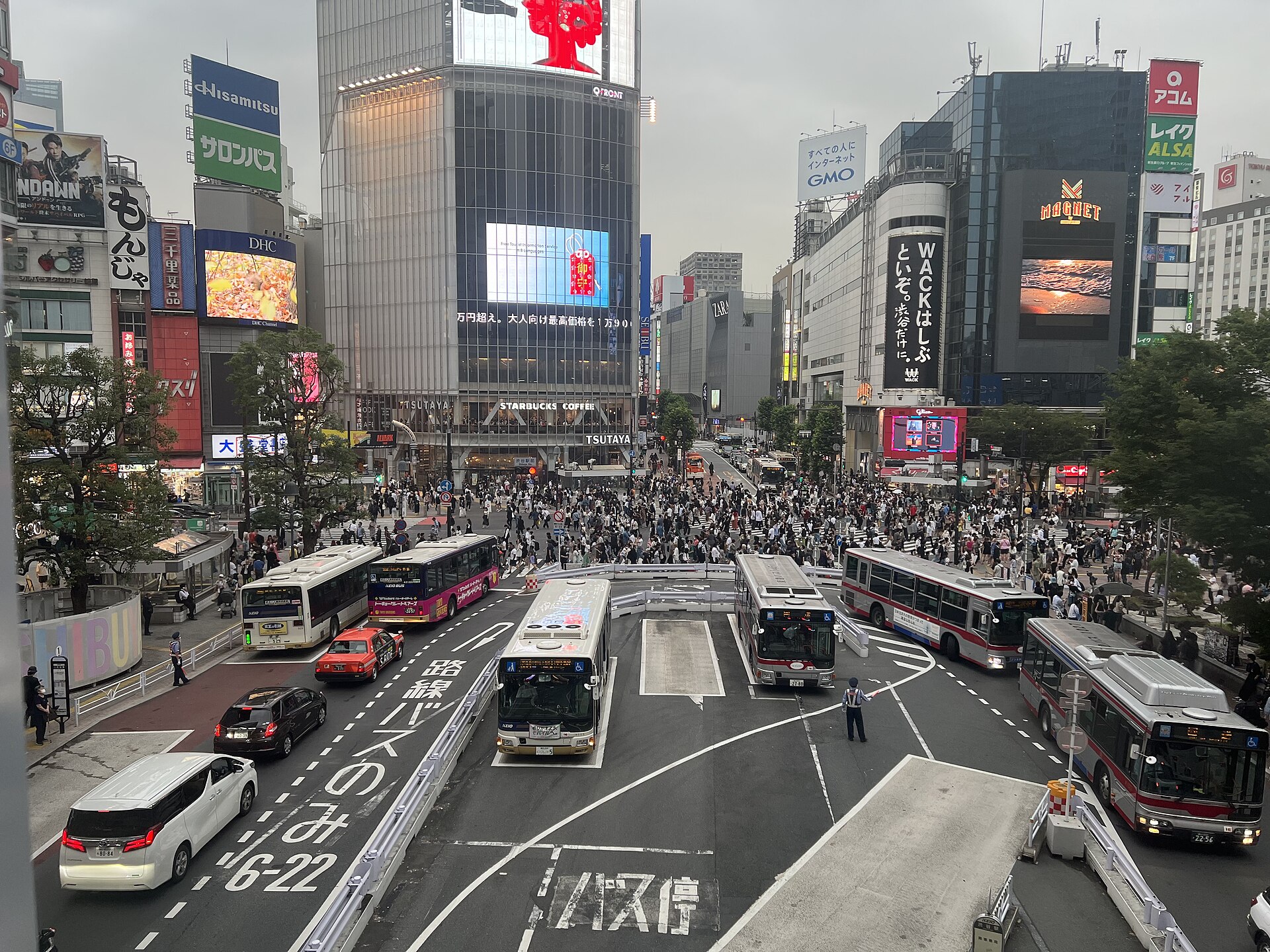
Asia
Europe
North America
Oceania
Tokyo, Delhi, Shanghai, Dhaka and Mumbai are examples.
Image: PEPSI697, CC BY-SA 4.0, via Wikimedia Commons.
Which 1947 development in New York helped launch the suburban housing boom in the United States?
Central Park
Levittown
Greenwich Village
Brooklyn Navy Yard
Mass production techniques and GI Bill mortgages made homes cheap.
What is the CBD?
A suburban mall
The core of a city with the highest land values and tallest buildings
A residential zone
An industrial park
The bid-rent curve explains why.
Which statement best describes urbanisation in low-income countries today?
It is shrinking
It is slower than in the 1800s
It is fast, often outpacing jobs and services
It is entirely planned
This leads to informal settlements and the informal economy.
