Quiz · Easy
Restaurant, shopping, transport, hotel, health and the formulaic wishes Turks use every day. For A1 to B1.
You finish eating and want to pay. What do you say?
Menü lütfen.
Bilet lütfen.
Hesap lütfen.
Su lütfen.
Hesap is the bill: Hesap lütfen. Menü is the menu, bilet is a ticket and su is water.
The cook made a great meal. What do you say to thank them?
Elinize sağlık.
Kolay gelsin.
Geçmiş olsun.
Hayırlı olsun.
Elinize sağlık (health to your hands) thanks the person who cooked. Geçmiş olsun is for illness, kolay gelsin wishes someone an easy day's work and hayırlı olsun is for new ventures.
A friend has just started a new job. What do you say?
Geçmiş olsun.
Başınız sağ olsun.
Afiyet olsun.
Hayırlı olsun.
Hayırlı olsun wishes success on a new job, house, car or business. Başınız sağ olsun is a condolence.
A friend has a cold. What do you say?
Mutlu yıllar.
Geçmiş olsun.
Hoş geldiniz.
Elinize sağlık.
Geçmiş olsun (may it be past) is said to someone who is ill or had a mishap.
Someone's relative has died. What do you say?
Hayırlı olsun.
Başınız sağ olsun.
Tebrikler.
Maşallah.
Başınız sağ olsun means may your head be healthy, the standard condolence.
Someone sneezes. What do people say?
Hoş geldin!
Afiyet olsun!
Güle güle!
Çok yaşa!
Çok yaşa (live long) is said after a sneeze. The sneezer may answer Sen de gör.
How do you ask the minibus driver to stop because you want to get off?
İnecek var!
Binecek var!
Giden var!
Kalacak var!
İnmek is to get off, so İnecek var! (There is someone getting off.) Binecek var would mean someone is getting on.
At this stall you ask 'Kilosu kaç lira?'. What are you asking?
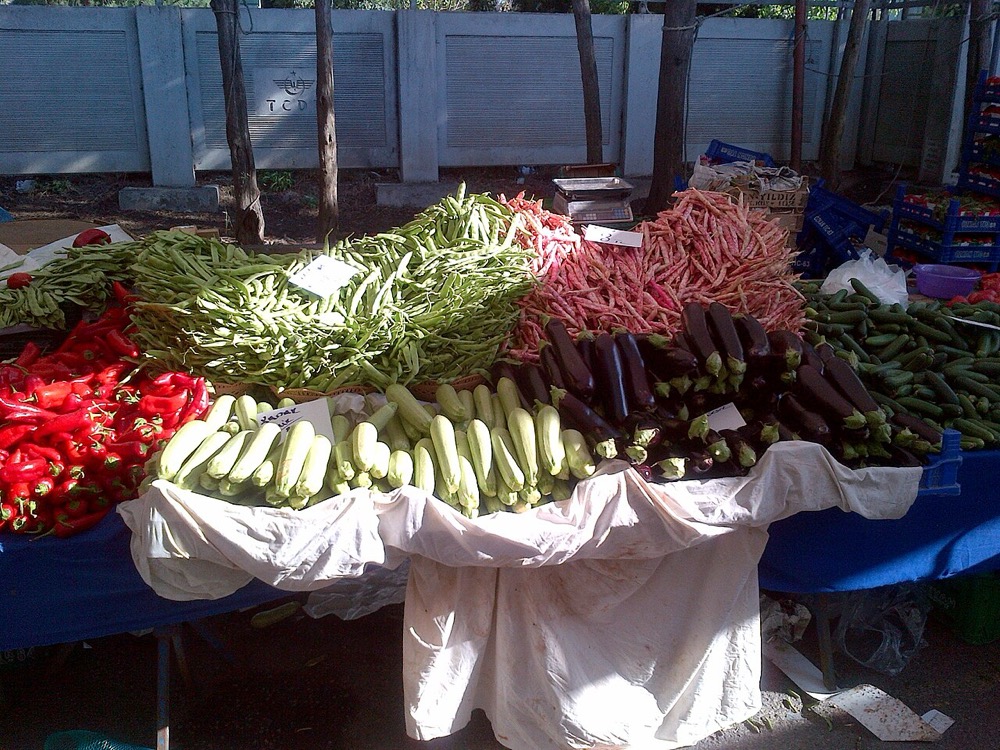
How many kilos are there?
What is your name?
How much is it per kilo?
Is it fresh?
Kilo + -su (its) + kaç lira: how many lira is its kilo? Taze mi? asks if it is fresh. Image: E4024, CC BY-SA 4.0, via Wikimedia Commons.
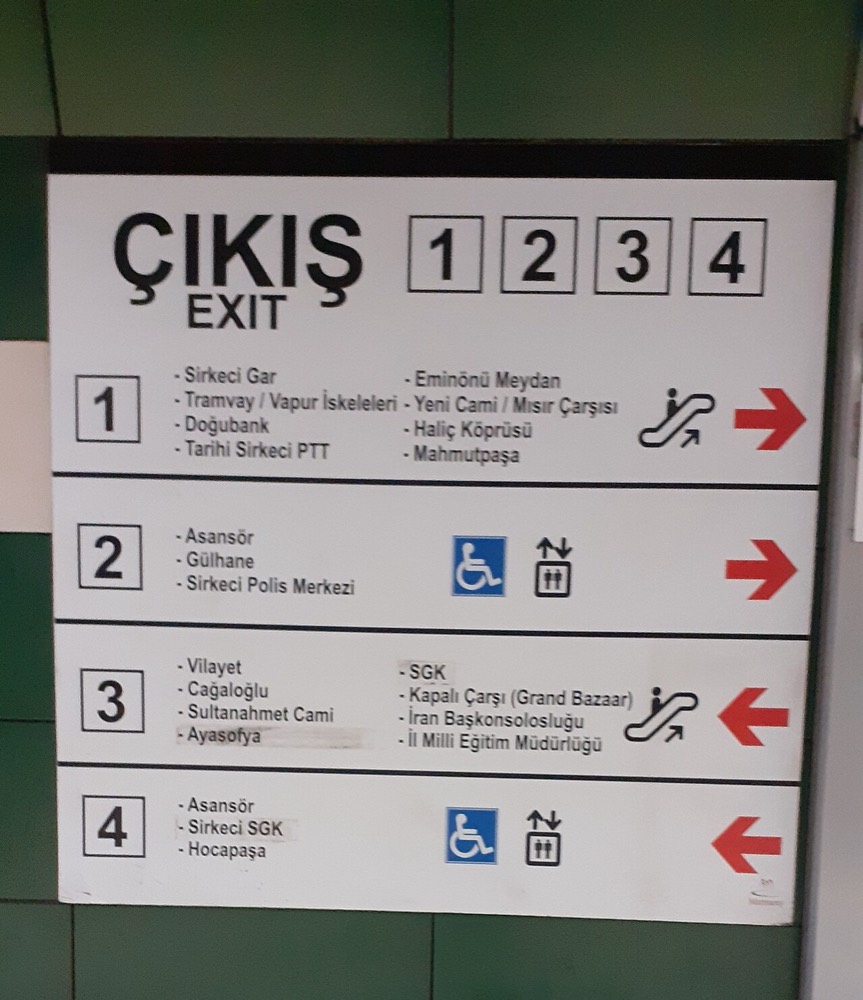
What does the sign ÇIKIŞ mean?
Ticket
Entrance
Exit
Attention
Çıkış is the exit and giriş is the entrance. Dikkat is attention. Image: Alikam1896, CC BY-SA 4.0, via Wikimedia Commons.
What does ACİL ÇIKIŞ mean?
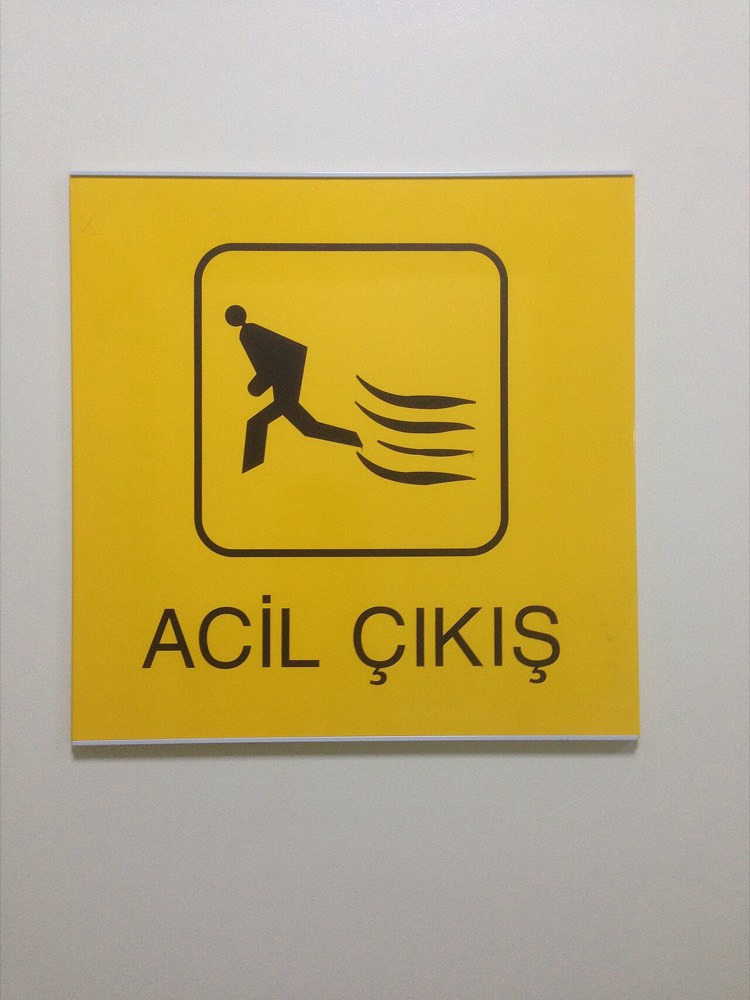
Emergency exit
Fast food
Quick entrance
No exit
Acil means urgent, emergency; çıkış is exit. Image: Vikiçizer, CC BY-SA 4.0, via Wikimedia Commons.
Someone says 'Hoş geldiniz'. What is the polite answer?
Hoş geldin.
Hoş gör.
Hoşça kal.
Hoş bulduk.
The reply is Hoş bulduk, literally we found it pleasant.
Someone praises your Turkish: 'Türkçeniz çok iyi!' What is a modest reply?
Hoşça kal.
Estağfurullah.
Buyurun.
Maalesef.
Estağfurullah means not at all, a polite modest answer to praise or thanks.
What does 'Olmaz' mean?
It is fine.
It is not possible, no way.
It will be soon.
I do not know.
Olmaz is a refusal: that won't do. Olur is the agreement: OK.
Which room do you ask for when travelling alone?
Çift kişilik oda
Boş oda
Aile odası
Tek kişilik oda
Tek kişilik is single (one person). Çift kişilik is double.
What does 'Yardım edin!' mean?
Help!
Excuse me!
Thank you!
Wait!
Yardım = help, edin is the polite plural imperative of etmek. The same call can also be İmdat!
What does 'Hesabı bölüşebilir miyiz?' mean?
Is the tip included?
Can we have the menu?
Can we split the bill?
May we sit here?
Hesabı = the bill (accusative), bölüşmek = to share, to split.
What does 'Yanlış numara' mean?
Phone number?
Please call me
Wrong number
The line is busy
Yanlış = wrong, numara = number: said when someone calls the wrong number.
What does 'inşallah' express?
Hope or 'God willing'
Anger
Regret
A greeting
İnşallah is used when talking about the future: hopefully, God willing.
What does 'Bozuk paranız var mı?' ask?
Do you have a broken coin?
Do you take cards?
Do you have my receipt?
Do you have small change?
Bozuk para is small change (coins). Bozuk also means broken, so literally this is broken money.
What does 'Yavaş konuşabilir misiniz?' ask?
Can you speak louder?
Can you speak slowly?
Do you speak English?
Can you write it down?
Yavaş = slowly, konuşabilir misiniz = can you speak (polite).
True or false: with an older person you have just met you should use 'sen', not 'siz'.
True
False
Use siz (and the -iniz forms) with strangers, elders and in formal situations. Sen is for friends, family and children.
What does 'Üstü kalsın' mean when you pay?
Add a tip card.
I want the change.
The price is high.
Keep the change.
Literally: let the top (the remainder) stay. You say it to let the other person keep the change.
