Quiz · Medium
Past and present endings, the subjunctive and jussive, the derived forms I-X, and hollow, defective and hamzated verbs.
What is the dictionary form of an Arabic verb?
The infinitive
The imperative
The 1st person present
The 3rd person masculine singular past
Arabic has no infinitive. Verbs are listed as the 'he' past form (كَتَبَ) and the verbal noun (maṣdar) is used where English uses an infinitive or -ing.
What is 'I wrote' in Arabic?
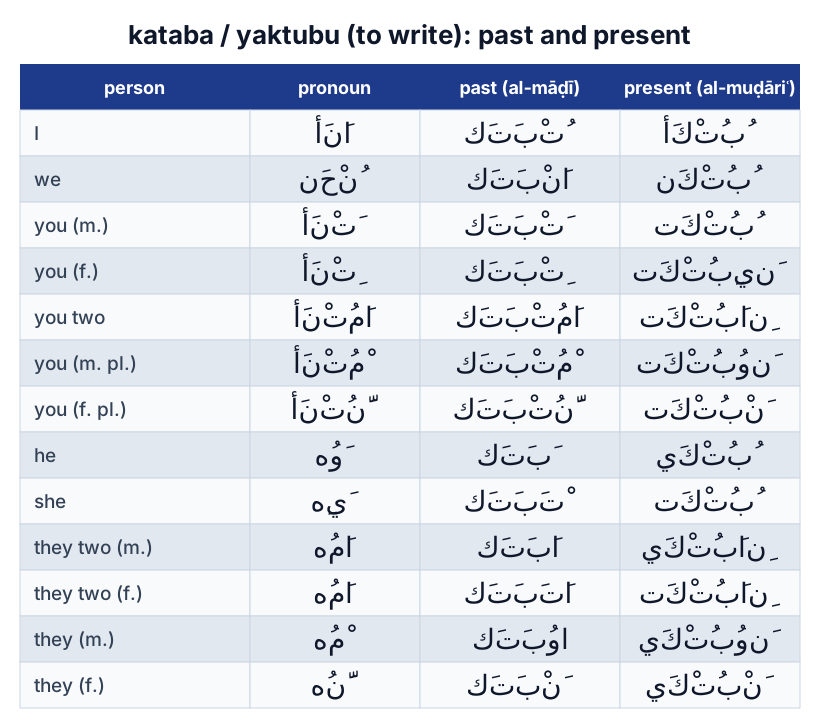
كَتَبْتَ
كَتَبْنَا
كَتَبْتِ
كَتَبْتُ
-tu (damma on ت) is 'I'. -ta is you (m.), -ti is you (f.), -nā is we.
Which verb form means 'they (m.) wrote'?
كَتَبُوا
كَتَبْنَ
كَتَبَا
كَتَبْتُمْ
-ū is the masculine plural. كَتَبْنَ is feminine plural, كَتَبَا is dual and كَتَبْتُمْ is 'you pl.'.
Which prefix marks 'I' in the present tense?
يَـ
أَـ
نَـ
تَـ
أَ is 'I' (أَكْتُبُ). نَ is 'we', تَ is you/she and يَ is he/they.
The correct present of 'you (f.) write' is:
تَكْتُبِينَ
تَكْتُبُونَ
يَكْتُبِينَ
تَكْتُبْنَ
Only the feminine singular 'you' ends in -īna. تَكْتُبُونَ is masculine plural, تَكْتُبْنَ feminine plural.
How do you say 'She wrote'?
كَتَبَتْ
كَتَبَا
كَتَبَ
كَتَبَتَا
'She' adds ـتْ to the 'he' form. كَتَبَتَا is 'they two (f.)'.
The command to a woman 'Write!' is:
اُكْتُبِي
اُكْتُبُوا
تَكْتُبِينَ
اُكْتُبْ
The feminine imperative ends in -ī: اُكْتُبِي. اُكْتُبُوا is for a mixed or masculine group.
Which sentence means 'I will write a letter'?
كَتَبْتُ رِسَالَةً
سَأَكْتُبُ رِسَالَةً
لَمْ أَكْتُبْ رِسَالَةً
اُكْتُبْ رِسَالَةً
سَـ + present expresses the future. The others mean 'I wrote', 'I did not write' and 'Write!'.
After أَنْ the present verb is:
jussive (sukun)
subjunctive (-a)
indicative (-u)
imperative
أَنْ takes the subjunctive: أَنْ أَكْتُبَ. Jussive follows لَمْ.
Complete: لَمْ ____ إِلَى السُّوقِ (he did not go).
يَذْهَبُ
ذَهَبَ
يَذْهَبْ
يَذْهَبَ
لَمْ takes the jussive (يَذْهَبْ, sukun). يَذْهَبَ is subjunctive.
What is the Form II verb meaning 'teach'?
تَعَلَّمَ
اِسْتَعْلَمَ
عَلِمَ
عَلَّمَ
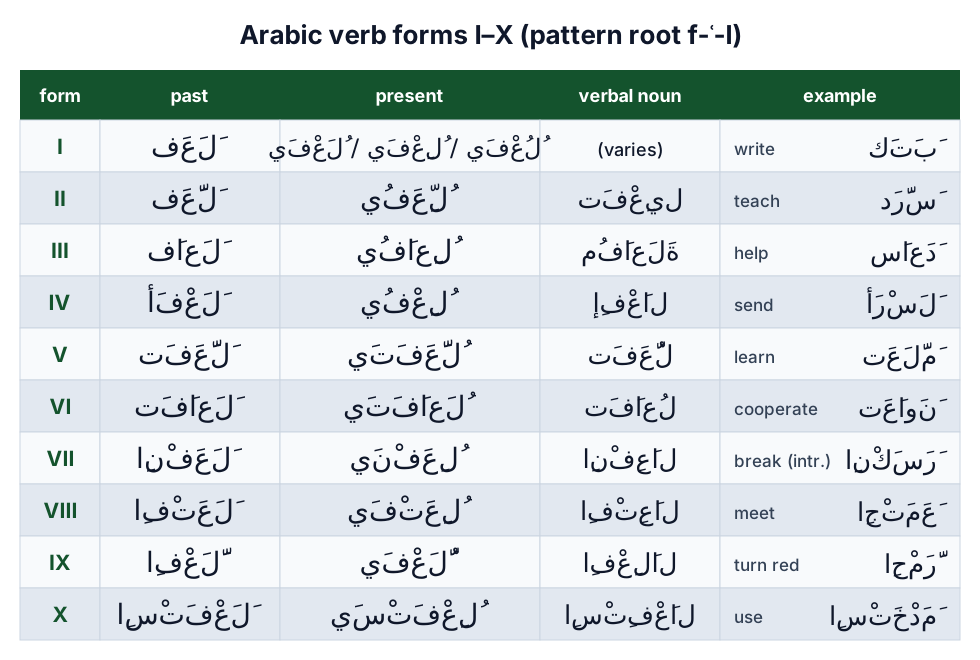
عَلَّمَ has a doubled middle radical (Form II) and means teach. تَعَلَّمَ (Form V) is learn and عَلِمَ (Form I) is know.
Which verb is Form X?
اِسْتَخْدَمَ
أَرْسَلَ
اِجْتَمَعَ
تَعَاوَنَ
اِسْتَخْدَمَ follows اِسْتَفْعَلَ (Form X). أَرْسَلَ is IV, تَعَاوَنَ is VI, اِجْتَمَعَ is VIII.
Which pattern is Form IV (past)?
تَفَعَّلَ
فَاعَلَ
أَفْعَلَ
فَعَّلَ
Form IV is أَفْعَلَ (أَرْسَلَ). فَعَّلَ is II, فَاعَلَ is III and تَفَعَّلَ is V.
What is 'I said'?
قَالْتُ
قُلْتُ
قَلْتُ
قَوَلْتُ
Hollow verbs shorten the long vowel before consonant endings: قَالَ → قُلْتُ.
The present of أَكَلَ for 'I eat' is:
أَكُلُ
يَأْكُلُ
أَأْكُلُ
آكُلُ
أَ + أْ merge into آ: آكُلُ. This is a spelling rule for hamzated verbs.
The command 'Take!' (to a man) is:
أُخُذْ
خُذْ
أَخَذَ
يَأْخُذْ
أَخَذَ drops the initial hamza in the imperative: خُذْ. The same happens with أَكَلَ → كُلْ.
'They (m.) walked' (from مَشَى) is:
مَشَيُوا
مَشَوْا
مَشَى
مَشُوا
Defective verbs form the masculine plural as مَشَوْا; the final weak letter is lost and a fatha precedes the و.
Which present form is correct for 'he sells'?
يَبْيَعُ
يُبَيِّعُ
يَبُوعُ
يَبِيعُ
بَاعَ is hollow with a ي: يَبِيعُ. يُبَيِّعُ would be Form II.
Which means 'I was'?
أَكُونُ
كَانَ
كُنْتُ
يَكُونُ
كُنْتُ is the 'I' past of كَانَ. أَكُونُ is 'I am / will be'.
Which verb is the Form I verb 'to find' with the dropped و in the present?
وَجَدَ → يَجِدُ
وَجَدَ → يُجِدُ
وَجَدَ → يَوْجُدُ
وَجَدَ → يَوْجِدُ
Assimilated verbs lose the initial و in the present: يَجِدُ. Compare وَصَلَ → يَصِلُ.
True or False: In Arabic the present tense form can also express the future with سَـ.
True
False
True. سَـ or سَوْفَ + present is the future: سَيَذْهَبُ (he will go).
What is the verbal noun of Form X اِسْتَخْدَمَ?
اِسْتِخْدَام
اِخْتِدَام
تَخْدِيم
خِدْمَة
Form X's maṣdar is اِسْتِفْعَال: اِسْتِخْدَام. خِدْمَة is a Form I noun (service).
