Quiz · Medium
Twenty questions on bubbles and crashes from tulip mania to 2008, Bretton Woods, exchange rate quotes, parity conditions and currency regimes.
EUR/USD is 1.25. How many euros do you get for $1,000?
1,250
800
1,000
125
1,000 / 1.25 = 800 euros.
EUR/USD = 1.20 and USD/JPY = 140. The EUR/JPY cross rate is:
168
116.7
1.20
140.0
1.20 x 140 = 168 yen per euro.
This painting by Jan Brueghel the Younger satirizes:
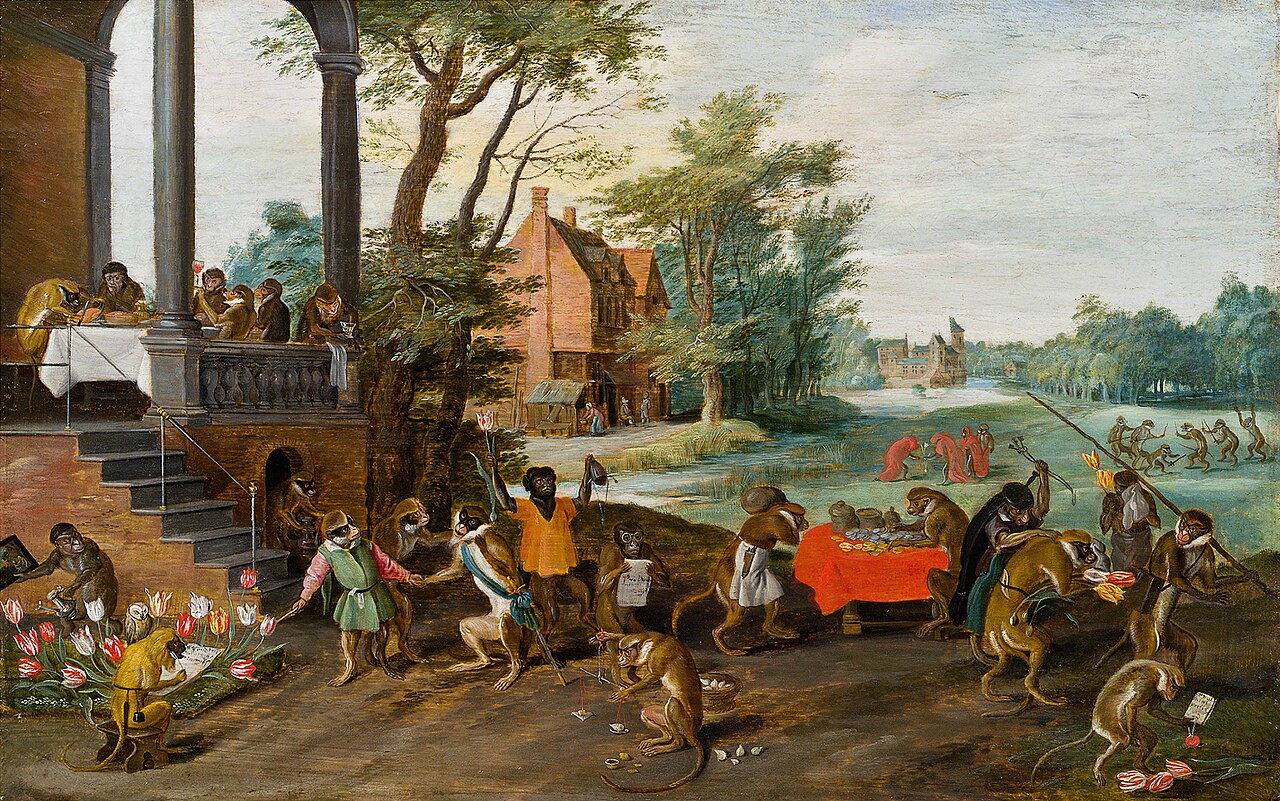
The South Sea Bubble
Tulip mania in the 1630s
The Mississippi Scheme
The 1929 crash
Prices of tulip bulb contracts surged and then collapsed in February 1637.
Image: public domain, via Wikimedia Commons.
The South Sea Bubble inflated and burst in which year?
1720
1637
1792
1873
Shares of the South Sea Company rose sharply in 1720 and crashed in the autumn, leading to the Bubble Act.
Which event prompted Congress to create the Federal Reserve in 1913?
The Great Depression
The 1987 crash
The Mexican Revolution
The Panic of 1907
J.P. Morgan had organized private rescues in 1907, which showed the US needed a lender of last resort.
From its 1929 peak to its 1932 low, the Dow fell by about:
25%
50%
89%
99%
It fell from about 381 to about 41. The Dow did not regain its 1929 high until 1954.
The Glass-Steagall Act of 1933:
Created the SEC
Separated commercial banking from investment banking and created the FDIC
Established the Federal Reserve
Ended the gold standard
The SEC came from the Securities Exchange Act of 1934. The Fed was created in 1913.
Under Bretton Woods, the US dollar was convertible to gold at:
$35 an ounce
$20.67 an ounce
$100 an ounce
$350 an ounce
Other currencies were pegged to the dollar. The system ended after the 1971 Nixon shock.
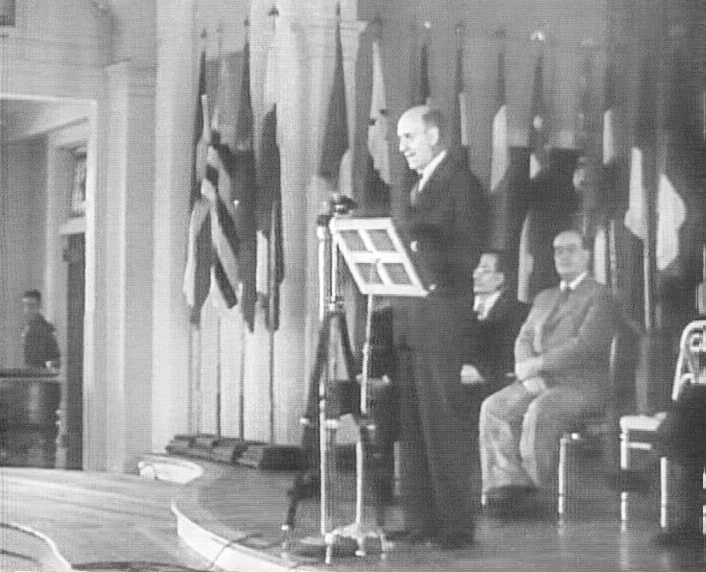
The conference shown, held in 1944, created which two institutions?
The WTO and the OECD
The Fed and the FDIC
The BIS and the ECB
The IMF and the World Bank
Delegates from 44 Allied nations met at Bretton Woods, New Hampshire.
Image: public domain, via Wikimedia Commons.
Black Monday on 19 October 1987 saw the Dow fall by about:
5%
10%
22.6% in one day
50%
It remains the largest one-day percentage fall in the Dow's history.
The hedge fund Long-Term Capital Management nearly failed in 1998 after:
The dot-com bubble
The Russian default, with extremely high leverage
The Lehman failure
The euro launch
The New York Fed organized a private rescue to avoid wider contagion.
The Nasdaq Composite peaked in March 2000 and then, by October 2002, fell by about:
78%
10%
35%
99%
The dot-com bubble burst, erasing trillions in market value.
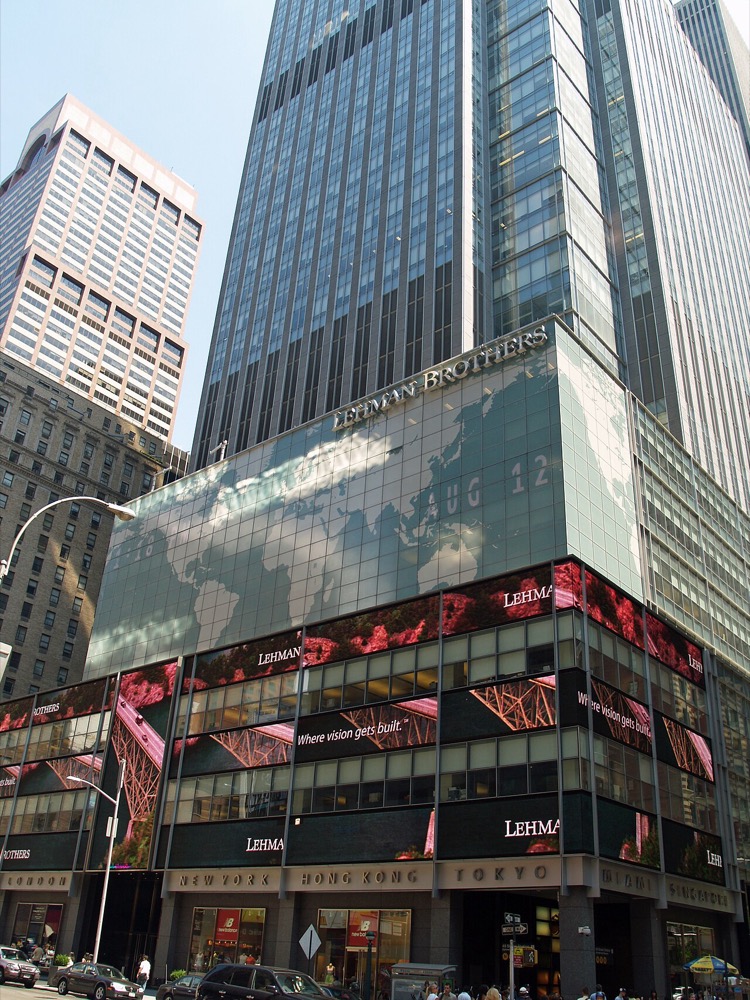
The investment bank shown filed the largest bankruptcy in US history on:
29 October 1929
19 October 1987
10 March 2000
15 September 2008
Lehman Brothers' failure deepened the global financial crisis.
Image: David Shankbone, CC BY-SA 3.0, via Wikimedia Commons.
Dodd-Frank (2010) created which new agency?
The Securities and Exchange Commission
The FDIC
The Consumer Financial Protection Bureau
The Federal Reserve
It also created the Financial Stability Oversight Council and introduced the Volcker Rule.
Spot GBP/USD is 1.25, the US one-year rate is 4% and the UK rate is 5%. Under covered interest parity the one-year forward GBP/USD rate is about:
1.2625
1.2500
1.2987
1.2381
F = 1.25 x 1.04 / 1.05 = 1.2381. The pound trades at a forward discount since UK rates are higher.
By relative PPP, if domestic inflation is 6% and foreign inflation is 2%, the domestic currency should:
Appreciate by about 4%
Appreciate by about 8%
Depreciate by about 4%
Stay unchanged
Higher inflation erodes a currency's purchasing power, so it should depreciate by about the inflation differential.
According to the impossible trinity, a country with free capital flows and an independent monetary policy must:
Peg its exchange rate
Allow its exchange rate to float
Impose capital controls
Hold more gold
Only two of the three goals can be met. With free flows and independent policy, the exchange rate cannot be fixed.
After a currency depreciation, a trade balance that first worsens and then improves is known as the:
J-curve
Phillips curve
Laffer curve
Kuznets curve
Volumes adjust slowly, while the price of imports rises at once.
A carry trade involves:
Buying gold with dollars
Hedging all currency exposure
Selling forwards of the stronger currency
Borrowing in a low-interest currency to invest in a high-interest currency
Profit depends on the exchange rate not moving enough to offset the interest differential.
A US exporter will receive 500,000 euros in six months. It sells euros forward at USD 1.12 per euro. It locks in:
$446,429
$500,000
$560,000
$612,000
500,000 x 1.12 = 560,000 dollars, whatever the spot rate becomes.
