Quiz · Hard
Harder questions on causes, consequences and comparisons across the ancient world, in the style of AP and IB exams.
Why did the Delian League's relationship with Athens help cause the Peloponnesian War?
Persia ordered the League dissolved
Athens turned a defensive alliance into a tribute-collecting empire, alarming Sparta and its allies
Athens refused to fight the Persians any longer
Sparta joined the League and took over its treasury
Athens moved the treasury to its own city and forced members to stay, which Sparta and Corinth saw as a threat. Sparta did not join the League.
Which statement about the end of the Peloponnesian War is correct?
Thebes won the war
Athens won with help from Persia
Sparta won, helped by Persian funding for its fleet
The war ended in a draw at Plataea
Persian money helped Sparta build a fleet and win at Aegospotami (405 BCE). Athens surrendered in 404 BCE.
Which is the best interpretation of Hannibal's victory at Cannae (216 BCE)?
It was a tactical masterpiece, but Rome kept fighting and later won at Zama
It destroyed Carthage
It won the war because Rome surrendered
It ended the First Punic War
Rome refused to make peace, kept resources in Italy, and eventually counterattacked in Spain and Africa. Option D confuses the events with 146 BCE.
Which statement best explains why Marius's reforms mattered for the end of the Republic?
They made the Senate stronger
They gave plebeians land
Soldiers came to depend on their generals for land and pay, increasing loyalty to individuals over the state
They weakened the army
Recruiting landless volunteers meant that retirement land came through a general. This enabled figures like Sulla and Caesar.
Which was NOT a reform of Diocletian or Constantine?
Dividing administration among multiple rulers (Tetrarchy)
Making Christianity the sole official religion
Founding a new eastern capital at Constantinople
Granting toleration to Christians (Edict of Milan)
Theodosius I made Christianity the state religion in 380 CE. Constantine tolerated and favored it in 313.
Which pair of empires is most closely compared for their decline in the 3rd–5th centuries CE?
Persia and Egypt
Olmec and Maya
Han China and Rome
Mauryan India and Greece
Both faced strong regional elites, plague, economic strain and pressure from nomadic or Germanic peoples.
What does the Edict of Milan (313 CE) show about Constantine's policy?
Pagan temples were closed
Christianity became the only legal religion
He moved the capital to Milan
Persecution ended and Christians gained legal toleration
It granted toleration to Christians and other cults. Making Christianity the only state religion came later, in 380.
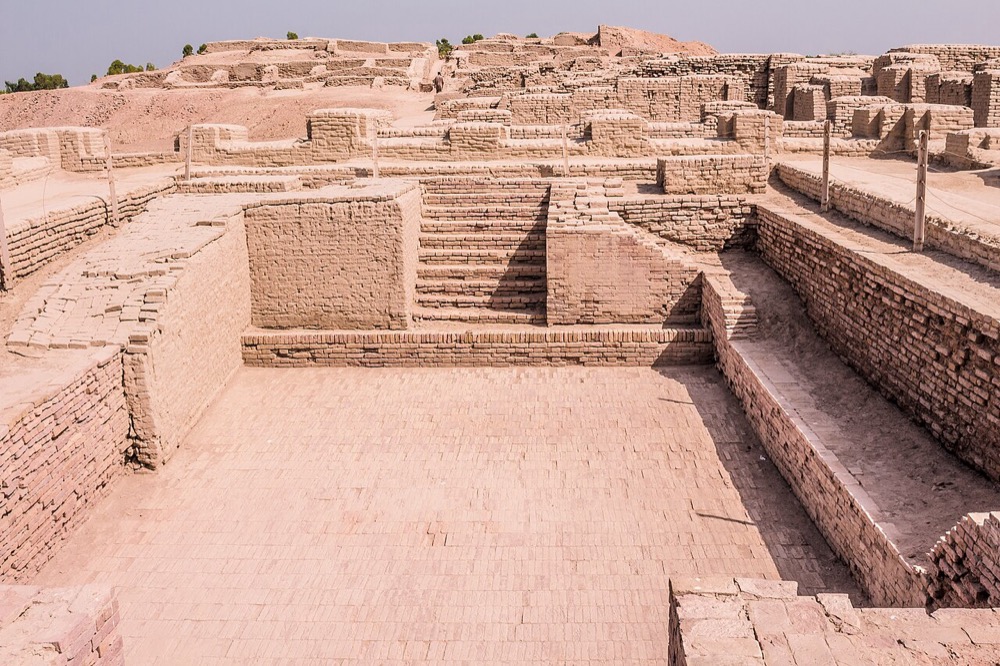
What can we say about the political system of Indus Valley cities?
They were ruled by pharaohs
They were ruled by priest-kings, according to their script
We lack clear evidence because the script is undeciphered and palaces are not clearly identified
They were an empire ruled from Mohenjo-daro
The Indus script cannot be read, so claims about kings or priests go beyond the evidence. Image: Soban, CC BY-SA 3.0, via Wikimedia Commons.
Which describes the Hellenistic kingdoms after Alexander?
Three Greek democracies
A single empire ruled by his son
Ptolemaic Egypt, Seleucid Asia and Antigonid Macedon, ruled by his generals' dynasties
Rule by the Persian satraps
The Diadochi fought for decades and split the empire into those kingdoms. Alexander's posthumous son was killed.
Which statement about Ashoka is most accurate?
He turned to Buddhist-influenced ethics after the bloody Kalinga war and promoted them in rock and pillar edicts
He ruled during the Gupta golden age
He founded the Mauryan Empire
He wrote the Four Noble Truths
Chandragupta founded the Mauryan Empire, Ashoka was his grandson, and the Buddha lived centuries earlier.
Which was a source of Qin's power and downfall?
Daoism: its minimal government allowed rebels to take over
Confucianism: it promoted peace but weakened the army
Buddhism: it made rulers pacifist
Legalism: strict control gave rapid unification but made the dynasty widely hated
Heavy taxes, forced labor and harsh punishments fueled rebellions that ended Qin within four years of the first emperor's death.
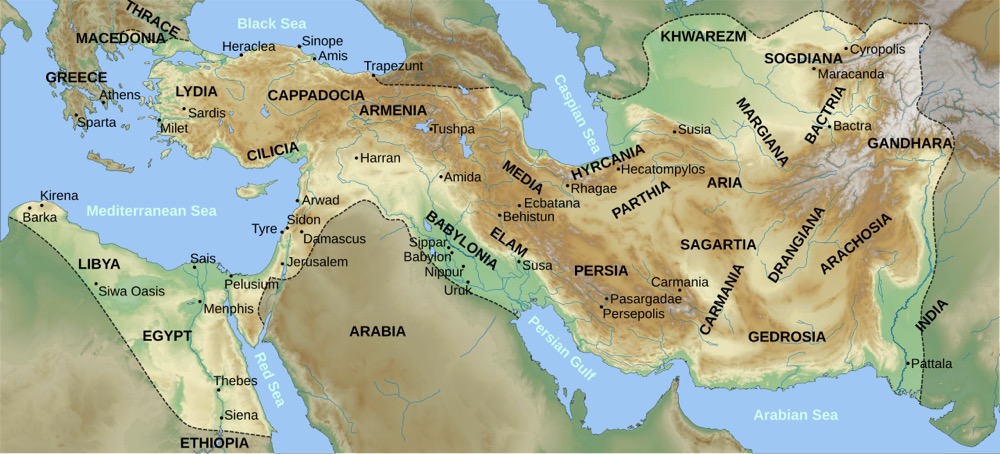
What does this map show?
The Mauryan Empire
The Roman Empire under Constantine
The Hellenistic Seleucid kingdom only
The Achaemenid Persian Empire at its height
The empire stretched from Egypt and Thrace to the Indus. The labels (Persepolis, Susa, Babylon, Sardis) are clues. Image: Anton Gutsunaev, Uirauna, CC BY-SA 3.0, via Wikimedia Commons.
Which fact best challenges the idea that Egyptian pyramids were built by slave labor?
Workers' villages and tombs near Giza with food and medical care
Herodotus's account, written some 2,000 years later
Medieval legends about the pharaohs
Biblical stories of Hebrew labor
Excavated villages near Giza show organized, fed and cared-for labor forces. Later written accounts are not direct evidence.
Which Roman development came first?
Pax Romana
Edict of Milan
Twelve Tables
Julius Caesar's dictatorship
The Twelve Tables were c. 450 BCE, Caesar's rule was in the 40s BCE, the Pax Romana began in 27 BCE and the Edict of Milan was in 313 CE.
Which pairing describes the Minoans and Mycenaeans accurately?
Minoans: Crete, palace at Knossos; Mycenaeans: mainland, fortified citadels and Linear B
Minoans: mainland warriors; Mycenaeans: Cretan traders
Both used the same script, Linear B
Both were Persian colonies
Minoan Linear A is undeciphered. Mycenaean Linear B is early Greek.
Why is Cleopatra VII not considered ethnically Egyptian?
She belonged to the Ptolemaic dynasty, descended from a Macedonian Greek general
She was Nubian
She was Persian
She was Roman
The Ptolemies descended from Ptolemy I, a general of Alexander. She was notable for learning Egyptian.
Which was an effect of the Silk Road under the Han?
It made China a naval power
It created the Great Wall
It spread goods and ideas such as Buddhism, but also disease
It ended contact between Rome and China
Buddhism spread from India through Central Asia to China along trade routes. Silk Road contact between Rome and China was indirect, via middlemen.
Where did the Olmec live, and what is their significance?
Peru; builders of Machu Picchu
Gulf Coast of Mexico; often called the 'mother culture' of Mesoamerica
Yucatán; Chichén Itzá builders
Central Mexico; Aztec capital
Colossal stone heads are their trademark. Machu Picchu is Inca, Chichén Itzá is Maya, and Tenochtitlan is Aztec.
What is this building, famous for the largest unreinforced concrete dome in the world?
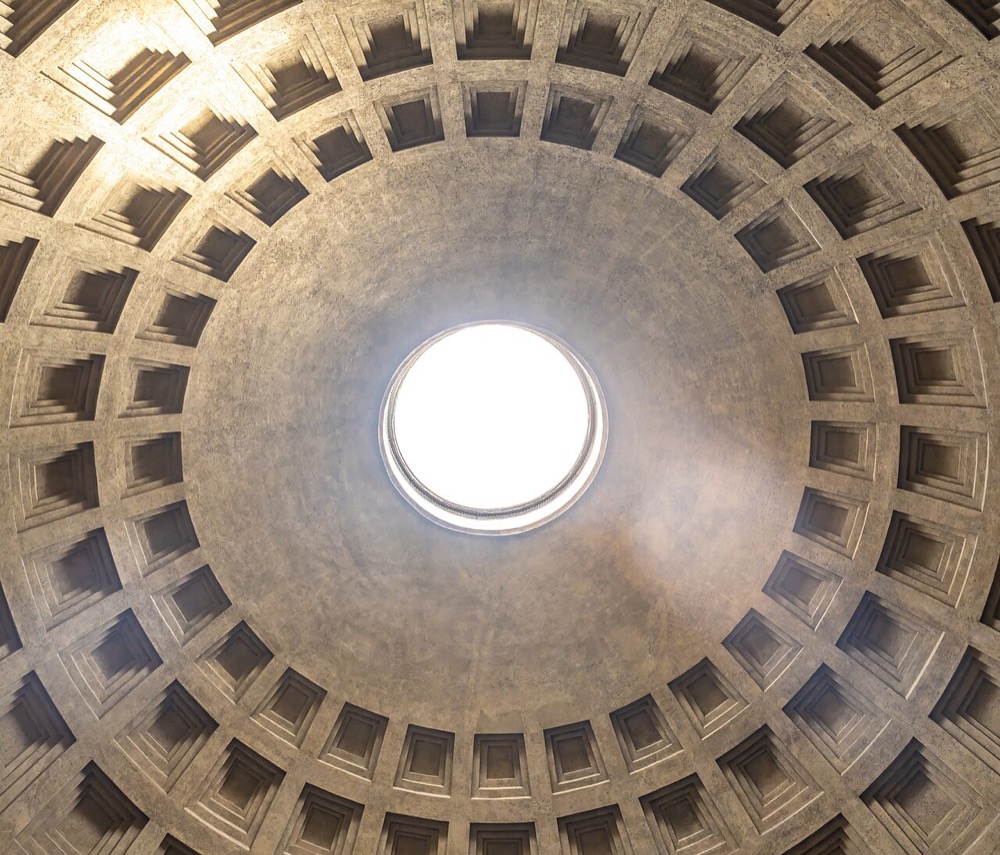
The Pantheon in Rome
The Colosseum
The Ziggurat of Ur
The Parthenon in Athens
The Pantheon (rebuilt under Hadrian) shows Roman concrete and vault engineering. The Parthenon is a Greek temple, and the Colosseum is an amphitheater.
